Are you wealthy? Or poor?

Luciene update: Surgery yesterday went well, and she is home at Val and Cesar’s house. Pray for pain management today and for God’s provision of $50,000 to pay for the surgery! Thank you!!

But God chose the poor to be rich in faith  

Isaiah 3:14-15 The Lord comes forward to pronounce judgment on the elders and rulers: “How dare you crush my people, grinding the faces of the poor into the dust?” demands the Lord, the Lord of Heaven’s Armies.

James 2:1, 5, 8 My dear brothers and sisters, how can you claim to have faith in our glorious Lord Jesus Christ if you favor some people over others? … Hasn’t God chosen the poor in this world to be rich in faith? … Yes indeed, it is good when you obey the royal law as found in the Scriptures: “Love your neighbor as yourself.”

Strong words from Isaiah today, echoed by James almost 800 years later, reminding us that God’s character doesn’t change. It’s so easy for us, who are among the world’s and history’s most wealthy, to equate poverty with crime, with character defects like laziness, with bad habits and lifestyle choices, with inferior intellect and wisdom. In so doing, of course, we elevate ourselves and justify our own ways of living.

As I sit here, though, a series of snapshots flit through my mind of people who would be considered poor by most standards who have, out of kindness and generosity, deeply blessed my life. Of wisdom and perspective I gained from the fruit of the Spirit shining through people living lives of grace within terrifically difficult circumstances. Of gentle care extended to me as a child by people living in one-room earthen floor thatched roof homes. Of friends who grew up in favelas (urban slums), who were abused and hungry and cold, yet whose hearts were wide open to God’s love and somehow carried forgiveness instead of grudges.

I feel like I’ve had the privilege of at least some insight into God’s tenderness toward his people, the ones he chose to be rich in faith, the poor.

Poverty is such a relative concept. Everyone (almost!) is “poor” when compared to some others—and wealthy when compared to a different set of people. I felt this viscerally when our family spent a year in the US when I was eleven. In our small village in Guatemala, we were considered unbelievably wealthy. Even though our house was small (especially for our large family!), we had a tile floor, and Dad devised a way for us to have running water, heated by our wood stove. We children went away to school. We each had more than one set of clothes. We ate fruits and vegetables. We owned a vehicle. We had games and toys and jigsaw puzzles and a crank record player. We had resources to help other families.
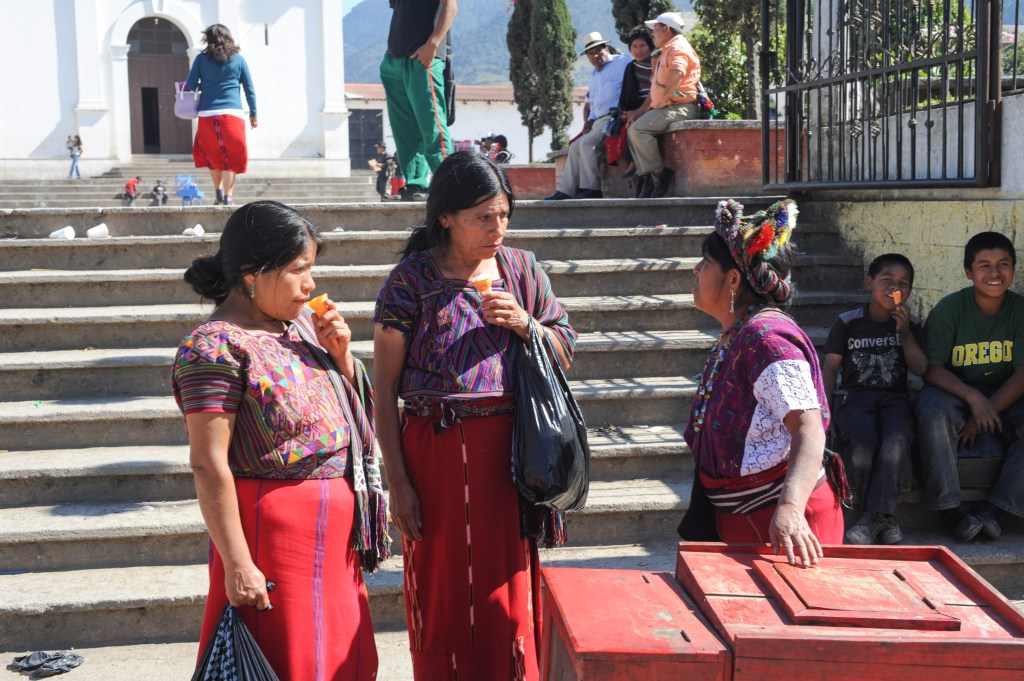
The complexity of two cultures (and ours as a third) with lopsided power and wealth sharing, occupying the same physical space in the town where I grew up (Shutterstock: Stefano Ember)

A week of travel, though, took us to a city in the US where we were considered poor. My classmates wore new clothes, not hand-me-downs. (We joked about the used tea bags included with missionary donations.) When special events came to town, they could attend. Their teenage siblings didn’t have to go to work after school as mine did, leaving me, at eleven, responsible for my four younger sisters and brother, along with housework and cooking. So they could visit each other’s homes and play after school or learn special skills like gymnastics or other sports. At age eleven, I resented being different from my peers.

But was I poor? No, I don’t think so. I had a home to go to, food to eat, clothes to wear. I spoke (to some degree) three languages. I had grown up amid two other cultures that interfaced in complex fashion in my part of Guatemala. (After I left home, my town was caught in the crossfire of a brutal, years-long civil war engendered by these disparities.) My parents were well-educated (Dad that year was earning an advanced degree in linguistics at the University of Chicago) and good at their work of Bible translation. I had been well cared for at my boarding school, learning enough that the academic part of life in the US seemed easy to me (except latitude and longitude—for some reason I could never remember which was which!).

God’s point, recorded by Isaiah, is of course about kindness and generosity, living by the royal law rather than greed and abuse. Today I am filled with gratitude, for the unexpected riches of a zillion blessings, for many opportunities to share them with others. And for daily invitations from the Lord to grow in faith.

Hope for our grandchildren’s future

But God will mediate between nations

Luciene update: Surgery is now scheduled for Thursday. Though it’s painful, Lu can wiggle her toes. She’s finding grace for enduring each day and says thank you for your prayers for her. Her son (my son-in-law) Cesar has found two possible pathways toward funding.

Isaiah 2:3-4, 11, 22 The Lord will teach us his ways … He will mediate between nations … Nation will no longer fight against nation, nor train for war anymore. … Human pride will be brought down, and human arrogance will be humbled. Only the Lord will be exalted on that day of judgment. (Verse 11 is restated in v. 17)Don’t put your trust in mere humans. They are as frail as breath.

The other day I had a conversation with another grandmother, both of us expressing dismay over the world we see our grandchildren growing up in.**

Juliana is now an expert crawler

That’s why I think Isaiah 2 is one of the most thrilling passages in the whole Bible. As I re-read it this morning, I found myself with goosebumps. Have you ever watched someone mediate a dispute, honoring the needs and perspectives of both parties and bringing them to a place of understanding? It’s one of the most beautiful creative endeavors I have ever been privileged to witness.

Imagine, then, the breathtaking beauty of God mediating between nations! Take a minute just to picture this in your mind.

Imagine no more war, with all those resources invested instead in positive purposes. Imagine a world without fear, without the greed for domination and power that propels people to devastate one another.

Imagine people trusting God so deeply that they understand and want what he wants and love what he loves.

With this post I want to honor those who, every day, humbly walk in God’s paths, creating, building, mediating, honoring and loving one another, generating peace wherever they go.

I want to honor the Lord, for giving us hope, a future to anticipate with joy!

**It’s becoming more acceptable to end sentences with a preposition—hurrah!

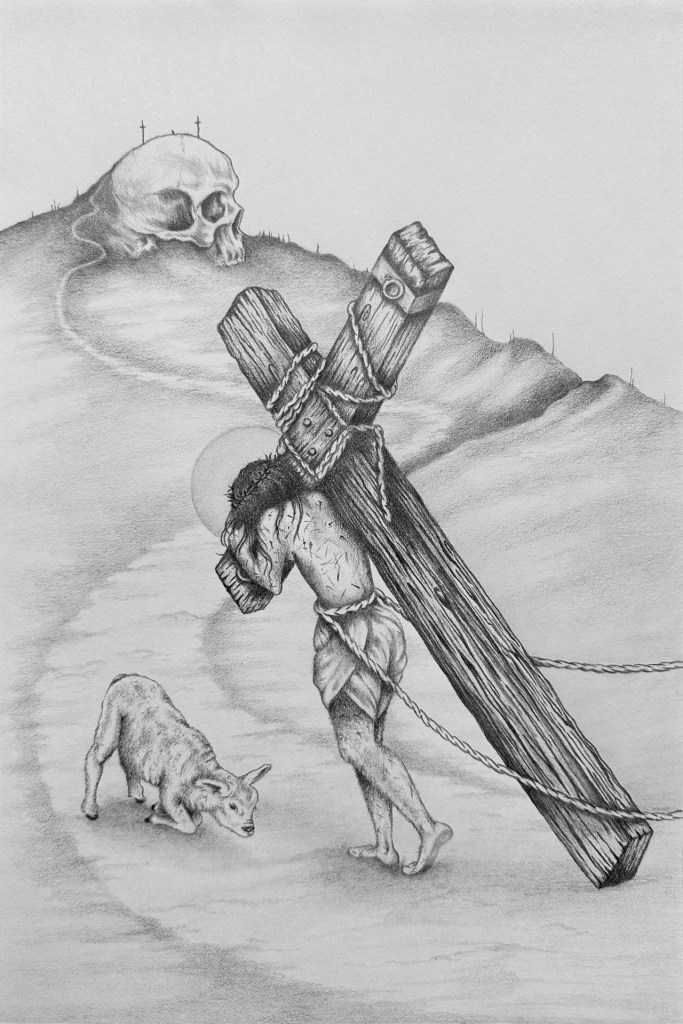
“I found myself rather emotional,” by artist Marissa Bowles, Pittsburgh

But Jesus carried his cross  April 27, 2023

Then Pilate turned Jesus over to them to be crucified. So they took Jesus away, carrying the cross by himself. … Even though Jesus was God’s Son, he learned obedience from the things he suffered. … He was led like a sheep to the slaughter. And as a lamb is silent before the shearers, he did not open his mouth. … Worthy is the Lamb who was slain, to receive power and riches and wisdom and strength and honor and glory and blessing. (John 19:16-17, Hebrews 5:8, Acts 8:32/Isaiah 53:7, Revelation 5:12)

Station 2: Jesus Takes Up His Cross

Marissa wrote the following about the significance and the process of creating this drawing:

Before anything else, I prayed. I prayed that the gift of art God gave me would be used to first and foremost glorify him. That after some time away from creating fine art, God would melt away feelings of self-doubt and use me and my now willing hands and heart to create again. I prayed to be led by the Holy Spirit to create something that would be a blessing to many and tell of the immeasurable love that God has for everyone.

Then, I spent time meditating on the Station 2 Scriptures [quoted above]: 

I found myself drawn to the use of symbolism. The skull-shaped hilltop with cavernous, tomb-like recesses represents death. Ropes tied about Jesus’ waist, held out of view by soldiers and intended to pull him onward like a lamb led to slaughter, instead trail behind him, symbolizing Jesus’ willing spirit. A halo of light surrounds Jesus’ head, symbolizing his coronation as King of Heaven and Earth. A lamb, traveling the rocky, dirt path opposite Jesus, bows in reverence and gratitude to the truly sinless, spotless Lamb of God, illustrating Jesus as the once-for-all perfect sacrifice for sin. The little lamb is set free from death by Christ’s sacrifice as we too are set free and redeemed — the sheep of his pasture bowing before our Lord. The scene is one of solitude, inviting us to imagine the loneliness that Jesus may have experienced as he selflessly walked the path ahead of him.

I chose graphite on paper as my medium as it has always been a favorite of mine and is forgiving. It often provides me with a feeling of being more connected to the image and the details as they begin to emerge. In particular, I found myself rather emotional, holding back tears, when I began to render Jesus’ wounds. With each stroke of lead, I felt uneasy, sorrowful, guilty and repentant.

I’m so thankful to have had the opportunity to create a piece like this and to be in the company of so many talented artists within the body of the church. I pray that this experience will be a catalyst for more art inspired by Scripture to come into being, not only in the reflective time of Lent, but year round.

In Christ, Marissa

The power of story

But God is powerful and mighty

Psalm 78:2-4 I will teach you hidden lessons from our past—stories we have heard and known, stories our ancestors handed down to us. We will not hide these truths from our children; we will tell the next generation about the glorious deeds of the Lord, about his power and his mighty wonders.

Jeremiah 32:17-19 NASBOh, Lord God! Behold, You Yourself have made the heavens and the earth by Your great power and by Your outstretched arm! Nothing is too difficult for You … great and mighty God. The Lord of armies is His name; great in counsel and mighty in deed, whose eyes are open to all the ways of the sons of mankind.

Zechariah 8:6 This is what the Lord of Heaven’s Armies says: … All this may seem impossible to you now, a small remnant of God’s people. But is it impossible for me? says the Lord of Heaven’s Armies.

I love spending Tuesdays with my grandchildren Caleb (4) and Talita (2). Last Tuesday while I folded laundry, Talita napped, and Caleb played near me with his cars, he started singing a song I remember from my own childhood, “Nothing is too difficult for thee.” Google tells me it was written by Don Moen.

Caleb and Talita with their dad, Cesar

Caleb sang it several times. I asked him whether he learned the song at school, at church, or from his mom. “My mom,” he said.

It’s been running through my mind ever since, encouraging me regarding some tough situations. Nothing is too difficult for thee …

It’s caused me to reflect on the power of story. In this case, the story of God creating the universe illustrates his ability to do everything else. Nothing is impossible for him.

How interesting, that a story I learned to sing at my mission boarding school when I was small, and then sang to my children, my daughter Valerie sings to hers. And God used her child innocently singing it back to me to encourage me when I needed it.

Do you see why I want you to tell your story of what God has done for you? And generously share it with me and those who read this blog? You have no idea how much it may encourage someone else.

I hope this story is one Caleb never forgets and passes on in turn to his own children one day.

We don’t know what we don’t know

But God cleanses and heals

2 Peter 1:8-9 The more you grow like this, the more productive and useful you will be in your knowledge of our Lord Jesus Christ. But those who fail to develop in this way are shortsighted or blind, forgetting that they have been cleansed from (their) old sins.

I put parentheses around “their” because this word is not there in the Greek.

Why does this matter? Because our souls are handicapped not only by our own sins, but by the sins of others against us. It’s hard to grow healthy, strong, and productive when emotional pain drains our energy from the inside.

Years of experience with soul care showed us that the major impediment to people’s growth in the qualities Peter lists in verses 5-7 is not our own sins (which many wounded people confess over and over and internalize as evidence they are “bad,”), but the unhealed damage we haven’t known how or had enough support to open to the Lord for his healing.

Trauma, stress, threat, physical or emotional pain, conflict, and fear all narrow our vision to what is immediately in front of us; what Peter calls “shortsighted.” I’m sure you’ve experienced this, as I have. We lose the benefit of perspective.  

And these things expand our blind spots. We may later think or say, “How could I have been so blind?” The soul-healing we need usually requires support from someone else. We don’t know what we don’t know.

Ask God for help and direction: “Help, Lord! Show me how to find healing!” God loves to answer this prayer. He wants us to live peacefully, joyfully, productively. Abundantly.

Gather your courage and talk with someone you trust. Dare to verbalize your anguish.

Jesus said, “I am the gate for the sheep. … Those who come in through me will find safety. They will come and go freely and will find good pastures. The thief’s purpose is to steal and kill and destroy. My purpose is to give them a rich and satisfying life (John 10:7, 9-10).

Shutterstock: funstarts33

What does this mean to you today?

But God cares about us

1 Peter 5:7 Give all your worries and cares to God, for he cares about you.

My dad was a Bible translator for the Nebaj Maya-Ixil people in Guatemala. He told us the story of translating this verse, 1 Peter 5:7, with the help of an Ixil assistant. Dad read to him his initial attempt and his assistant said, “No, no, you can’t say that.” So, Dad tried again. And again. Until he had exhausted all his vocabulary.

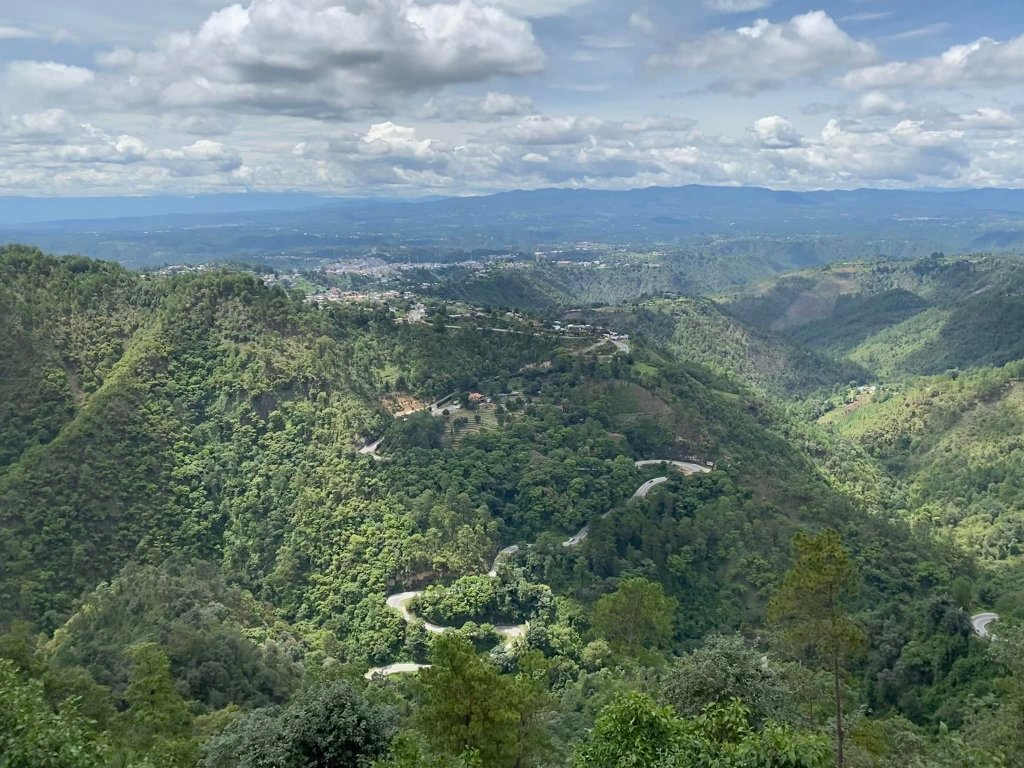
On the way to Nebaj, which is over the farthest mountain in this photo.

Then Dad had an inspiration. He went back to his original wording and asked his assistant, “If we were to say this, what would it mean to you?”

His assistant said, “Why, it would mean what matters to me, matters to God. That’s not possible!”

The god he knew was self-centered, cruel, and vindictive. He had no categories in his mind for a God of love. Eventually, he came to believe in a different God, one who knew him and thought about him with affection, who cared about him.

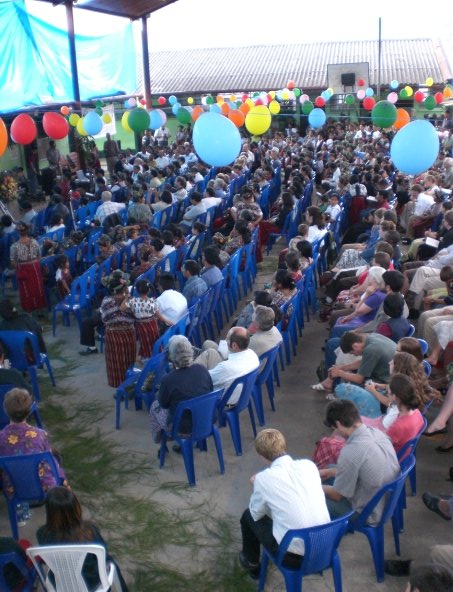
Dad speaking at the dedication of the Ixil translation of the New Testament in August, 2008. All of his children and 17 of his grandchildren were in attendance–you can see some of them in the photo to the left. In November, God took Dad Home.

Today, I’m asking myself and you Dad’s question: If we were to say God cares about you, what would that mean to you?

I’m entering this day with worries and cares. You too? God invites us to give our burdens to him. He’s the only one strong, wise, and caring enough to carry them.

Confidence, not fear

But God is our helper

Matthew 28:11-15 As the women were on their way [to tell the disciples Jesus was alive!], some of the guards went into the city and told the leading priests what had happened [the earthquake, the angel, the stone rolled away, Jesus gone from the tomb]. A meeting with the elders was called, and they decided to give the soldiers a large bribe. They told the soldiers, “You must say, ‘Jesus’ disciples came during the night while we were sleeping, and they stole his body.’ If the governor hears about it, we’ll stand up for you so you won’t get in trouble.” So the guards accepted the bribe and said what they were told to say. Their story spread widely among the Jews and they still tell it today.

Hebrews 11:26, 13:5-6 Moses thought it was better to suffer for the sake of Christ than to own the treasures of Egypt, for he was looking ahead to his great reward. … Don’t love money; be satisfied with what you have. For God has said, “I will never fail you, I will never abandon you.” So we can say with confidence, “The Lord is my helper, so I will have no fear: What can mere people do to me?”  

Shutterstock: glenda

Truth standing up to power is so rare my heart thrills when I see it happen. Especially when the consequences of not going along with deception is as serious as it would have been for these guards.  Acts 12:19 indicates what the soldiers faced if they didn’t accept the bribe: execution. In our day, what’s at stake may be political death, loss of reputation and being shamed before a constituency, accusations of disloyalty, etc. We care so much about prestige, position, and prosperity in this world that we may be willing to sacrifice our integrity to preserve them.

I find Hebrews 13:6 (quoting Psalm 118:6) one of the most challenging verses in all of Scripture. For a long time, I’ve realized I am a coward. I don’t think I would be tempted by money. But if threatened by torture or death or by harm coming to my family, or even, I’m ashamed to say, by private or public contempt or defamation, I’m afraid I would respond more like the soldiers—or even like Peter, denying he knew the Lord—than like the heroes of the faith in Hebrews 11. I feel a chill in the pit of my stomach just thinking about it. I have confessed to the Lord I do fear what “mere people” could do to me. Or to those I love.

My hope is that should the time come, the Lord, my helper (my ezer), will be right at my side, giving me his courage by the Holy Spirit.

Meanwhile, I can cultivate and grow my love and loyalty to Jesus in first place in my life, above love for myself or even for my family. In small decisions along the way, strengthen my soul.

You too? We can pray for each other.

Do you practice lament?

But Jesus grieves

Matthew 23:23; 37-39 “What sorrow awaits you hypocrites! For you are careful to tithe even the tiniest income from your herb gardens, but you ignore the more important aspects of the law—justice, mercy, and faith. … O Jerusalem, Jerusalem, the city that kills the prophets and stones God’s messengers! How often I have longed to gather your children together as a hen protects her chicks beneath her wings, but you wouldn’t let me. And now look, your house is abandoned and desolate. For I tell you this, you will never see me again until you say, ‘Blessings on the one who comes in the name of the Lord.’”

A new month. Are we any wiser? Or just older, continuing in our same patterns of behavior as we conclude Lent and prepare for Holy Week … We still have time, time to sit before the Lord and ask him to reveal to us our own hearts and his. Time to soften our resistance to his still, small voice of love, inviting us to be freed from our selfishness and blindness. Inviting us into his care.

Matthew 23 is a chapter we tend to skip over, except for verse 37. Jesus pours out a blistering rebuke of the leaders of his day, repeating the phrase “What sorrow awaits you” seven times. It’s an anguished cry of lament. “They don’t practice what they teach … They crush people and never lift a finger to ease the burden … Everything they do is for show …”

The last line I quoted refers back to Jesus’ “triumphal entry”–after which the Jewish leaders, indignant, began to plot how to kill him.

I find most shocking Jesus’ declaration to these leaders that they will be held responsible for the murder of “all godly people of all time,” beginning with Cain’s murder of Abel. “This judgment will fall on this very generation,” Jesus says, before launching into his lament over Jerusalem. We know he would shortly bear on the cross the penalty for all the sin committed for all time.

Can you feel his anguish over innocent people who are killed by others with evil motives? It’s the lament of the Old Testament prophets, a revelation of God’s tender heart. “I hate all your show and pretense—the hypocrisy of your religious festivals and solemn assemblies” the Lord said through the prophet Amos after decrying those who oppress the poor and crush the needy. “Instead, I want to see a mighty flood of justice, an endless river of righteous living” (Amos 5:21, 24).

And then comes the phrase Jesus appropriated: “What sorrow awaits you …” (Amos 6:1). “How foolish you are when you turn justice into poison and the sweet fruit of righteousness into bitterness” (Amos 6:12).

Lord, you see our nation. You see all that’s going on in our broken, weary, bleeding world. And you see my heart. Take the blinders from my eyes so I can see it too. Let me find refuge beneath your wings.

Recapturing the joy of serving others

But Jesus came to serve

Matthew 20:25-28 But Jesus called his disciples together and said, “You know that the rulers in this world lord it over their people . . . But among you it will be different. Whoever wants to be a leader among you must be your servant, and whoever wants to be first among you must become your slave. For even the Son of Man came not to be served but to serve others and to give his life as a ransom for many.”

I enjoy the way my just-turned-two, almost-two, and four-year-old grandchildren love to help. Of course, “helping” can mean dumping more water on the floor than over the dishes and spreading dirt around more than sweeping it into the dustpan. The pancake batter requires a few more stirs from Grammy before it goes in the pan.

Shutterstock: Ole.CNX

But what I do, they want to do too. “I myself,” says Talita, struggling to get one foot into each pant leg and her shoes on the right feet–easier with Caleb’s shoes than her own. Last winter, Caleb walked behind his father industriously spreading snow back over a cleared walk, proud of his mastery of a shovel. Liliana claps her hands when she successfully clicks the upper clasp of her car seat belt and gets all her playthings back in the toy basket. The suggestion of cleaning up as a surprise for Mommy still elicits smiles and enthusiasm.

Why is it such fun for kids to copy each other and adults? Ah, a better question, perhaps: Why isn’t it more fun for me to imitate Jesus? How can I recover the simple delight of service?

Food for thought as I head into my day!