Choose your own adventure

But Jesus heals our vision Lenten question from John #11

John 9:32-38[The formerly blind man told the Jewish leaders] “Ever since the world began, no one has been able to open the eyes of someone born blind. If this man were not from God, he couldn’t have done it.” “You were born a total sinner!” they answered. “Are you trying to teach us?” And they threw him out of the synagogue. When Jesus heard what had happened, he found the man and asked, “Do you believe in the Son of Man?” The man answered, “Who is he, sir? I want to believe in him.” “You have seen him,” Jesus said, “and he is speaking to you!” “Yes, Lord, I believe!” the man said. And he worshiped Jesus.

Hmm. Deflecting a legitimate perspective by using contempt. Where have we seen that before?

My seven-year-old grandson recently received from his uncle a set of “choose your own ending” stories. My husband spent an hour with him a few nights ago exploring all the possible conclusions to one set of scary circumstances before finding the one happy ending that could allow Caleb to sleep in peace.

Shutterstock: Sarayut Sridee

I’ve written before on this blog about John 9, one of the most carefully crafted, intriguing chapters in the whole Bible with its intricate word play on the concept of blindness and vision. Since John doesn’t tell us what happened next in the formerly blind man’s life, we can imagine a number of possible outcomes of his rejection by the Jewish leaders when he naively (it seems) spoke truth to power. His vision went far beyond his new experience of physical sight.

  • Did his parents continue to reject him, to preserve their status in the synagogue?
  • Did the newly sighted man join the disciples in following Jesus around the countryside? If so, what did this lead to? Successful integration in the church birthed at Pentecost? Martyrdom? A mission to some other country?
  • What skills other than begging and dormant abilities and passions did he develop?
  • Did he meet a wonderful woman to marry and create his own family?

Hey, you could start with John 9, invent a past and a future for this man based on historical research, give him relationships with intriguing events and people and write a novel! The theme to explore: What did it mean for a man blind from birth, assumed to be paying the consequence of his own sin (in the womb??) or his parents’ to respond affirmatively to Jesus’ question: Do you believe in the Son of Man?

And what does this question mean to you today, in your circumstances, with your history, your relationships, your fears and expectations for your future? John’s entire Gospel compels our response to this question. What adventure will you choose?

You had to have been there

But Jesus speaks about what he has seen and heard March 17, 2025

One of many rainy days in Ireland, we ate delicious fish pie at the Old Thatch, featured in Horse Thief 1898 and Facing the Faeries 1906. This inn ad bar has fostered community in the small town of Killeagh since 1650. Roaming the emerald isle, we could have used the umbrella Dave received as a birthday gift at his family party yesterday. Dave and I have learned to bundle up enough to walk in subzero weather. Now we can walk together in the rain too! A goal for the rest of 2025: walk outside every day, even if only around the block, once we get home from our trip to Colombia next week..

Happy birthday, Dave! Happy St. Patrick’s Day, everyone! Two years ago today, Dave and I landed in Dublin, with a triple purpose: to celebrate his 70th birthday, to (belatedly) celebrate our 45th wedding anniversary, and to experience and research parts of Ireland for Facing the Faeries 1906, Book 3 of the Cally and Charlie historical fiction series. I had already written this blog, featuring Ghana, when I realized it would be posted on March 17. I could have used Ireland instead, an equally relevant experience to communicate “you had to have been there,” as we consider our Lenten question(s) #3 from the gospel of John. Oh well, here you go …

John 3:7-10 Jesus replied [to Nicodemus], “I assure you; no one can enter the Kingdom of God without being born of water and the Spirit. Humans can reproduce only human life, but the Holy Spirit gives birth to spiritual life.” … “How are these things possible?” Nicodemus asked. Jesus replied, “You are a respected Jewish teacher, and yet you don’t understand these things?If you don’t believe me when I tell you about earthly things, how can you possibly believe if I tell you about heavenly things?

John 3: 31-32 [John the Baptist said] “We are of the earth, and we speak of earthly things, but he [Jesus] has come from heaven and is greater than anyone else. He testifies about what he has seen and heard. … For he is sent by God. He speaks God’s words, for God gives him the Spirit without limit.”

I’d read about Ghana, exchanged emails with Ghanaians, talked with a Ghanaian visitor to Pittsburgh, and even seen videos and documentaries based in Accra. But being there was something else entirely. Those few days enriched and changed me, not only sensorially but spiritually as well. I can try to describe to you, and you can imagine to some degree, but unless you visit Accra and participate in worship there, you’ll have only a shadow of understanding what my words mean: the wonder and joy of full-throated, dancing praise in a dozen languages at the same time, embellished by the blazing colors of Ghanaian fashions. I experienced it as a foretaste of Heaven.

So I empathize with Nicodemus, and I think Jesus does too. I’ve read Jesus’ question, “yet you don’t understand these things?” as a rebuke. But as I read it now, I imagine Jesus saying this with a different tone of voice, one of sympathy and acknowledgement of the limitations of Nicodemus’s experience. For all his learning, Nicodemus can no more understand Heaven than I could accurately imagine Accra. Even now, having been there only once and only for a few days, I know my knowledge of Ghana, vivid as it is in my memory, remains woefully small.

But Jesus lived in Heaven from all eternity. He speaks, John the Baptist says, of what he has seen and heard. When he speaks of the infinitely costly Trinitarian love behind his incarnation, for the sake of saving the world (not condemning it), he knows what he’s talking about. I imagine Jesus’s mind flooded with memories of the divine consensus that resulted in his sitting beside Nicodemus in the darkness of that night, shining eyewitness light into the dimness of this scholar’s third- (fourth-? fifth-? hundredth-?) person understanding of Scripture.

In concert with the Trinity, Jesus had created Earth and humanity. And now, he experienced human emotions, limitations, and frailties firsthand, allowing him to personally connect with Nicodemus’s doubts and questions and needs. Through the Holy Spirit, he does the same with us. Because he became a man, breaking down the barriers between Heaven and Earth, we can walk straight into God’s throne room to share our joys and sorrows, anxieties and hopes with the King of kings, with no fear of recrimination. The same ease, I thought yesterday, with which our grandchildren soak up Dave’s warm affection.

Birthday banner the four grandkids made for Dave yesterday

So then, since we have a great High Priest who has entered heaven, Jesus the Son of God, let us hold firmly to what we believe. This High Priest of ours understands our weaknesses, for he faced all of the same testings we do, yet he did not sin. So let us come boldly to the throne of our gracious God. There we will receive his mercy, and we will find grace to help us when we need it most (Hebrews 4:14-16).

P.S. The planning team for the huge event in Bogotá next week just sent Dave this sweet tribute:

Happy birthday, David.

https://drive.google.com/file/d/14vlyIDml6xHiXzdqW8b1kILvDiRUULxF/view?usp=sharing

Hiding in plain sight

But Jesus asked, “Do you believe this because I saw you?”

John 1:47-50 Jesus said, “Now here is a genuine son of Israel—a man of complete integrity.” “How do you know about me?” Nathanael asked. Jesus replied, “I could see you under the fig tree before Philip found you.” Then Nathanael exclaimed, “Rabbi, you are the Son of God—the King of Israel!” Jesus asked him, “Do you believe this just because I told you I had seen you under the fig tree? You will see greater things than this.

“I see you!” or “I found you!” my granddaughter shouts gleefully. Then it’s her turn to hide, and at age two, she’s not expert in concealing herself. Part of my role is pretending to look in multiple places, detailing my “search” aloud, before I “find” her. A bit younger, she thought that if she couldn’t see me, if her eyes were closed or covered, I couldn’t see her.

Three of our littles, resting after an intense game of hide and seek

“’Hiding’ from God is like this,” I muse. “Even if I want to, I can’t actually hide from him, physically, emotionally, or spiritually.”

If you’ve seen the episode about Nathanael in Season 1 of The Chosen, you remember his turmoil and grief as he sat under that fig tree. In such a moment of despair, doesn’t each of us long to be truly seen, fully understood? There is so much more going on here than physical sight. Jesus sees Nathanael from a great distance, yes. But more than seeing his body, Jesus sees his heart, his soul, his desperate need.

As I’ve thought about Jesus’ earlier question, “What do you want?” highlighted in Monday’s blog, I realized this is what I want most, to be seen by the Lord. And to clearly see him. In all the complexity of life, all the competing desires and motivations, confusion of judgment and action, to be seen and to see truly, to be understood and to understand, feels to me right now to be the greatest gift I could ever desire.

The words “see,” “seen,” “saw,” occur twelve times in John 1, along with many other vision words: light in darkness, recognize, glory, reveal(ed), testimony (eyewitness), look (or behold), find, found. “Come and see,” Jesus invites two men (v. 39), and what he showed them in a few hours—far beyond what they had asked, simply to know where he was staying—convinced Andrew that Jesus was the Christ, the Messiah, the Anointed One for whom every faithful Jew had been waiting for their entire lives, for hundreds of years.

John states explicitly why he wrote his Gospel, some three decades after Matthew, Mark, and Luke had written theirs: “so that you may believe [continue to believe] that Jesus is the Messiah, the Son of God, and that by believing in him you will have life by the power of his name” (20:31).

John’s book is crafted with this purpose in mind, from the first chapter to the twenty-first. I’m intrigued by the names of Jesus John records in chapter one. He is the Word (the Logos, the source and expression of all creation). The true light. The unique One. Consistent with his prophetic insight, John the Baptist calls him the Lamb of God and the Chosen One of God. Andrew tells Simon Peter he has found the Messiah, the Christ.

And in the last few verses of the chapter, John offers us this sequential revelation:

              Philip calls Jesus the son of Joseph (v. 45).

(Not quite right, Philip, but good try. True, he’s the adopted son of Joseph.)

              Nathanael calls Jesus the Son of God (v. 49).

Amazing for him to recognize this on first meeting Jesus.

              Jesus calls himself the Son of Man (v. 51).

For a long time, I’ve puzzled over why “Son of Man” is Jesus’ favorite name for himself. I think now I kind of get it, in an awestruck kind of way. I’m writing a book that is largely set in Heaven. From Heaven’s point of view, the Son has always been Son within the holy Trinity. What is new, incredible, too remarkable to be contained in words, is that the Son of God became a son of mankind, born of a human mother, taking on our humanity, laying aside his glory—too bright for human eyes—so that, in the fullness of the Spirit, he can reveal God to us. Truly, for Nathanael to understand the meaning of “Son of Man” is a “greater thing” for him (and for us) to see (v. 50).

Like when I drive around a corner and a rising or setting sun shines straight into my eyes, I’m blinded to anything else and must shield my eyes to be able to see anything else and drive safely. Jesus shields his glory as Son of God within his human body so that we can look at him and understand the Father.

Shutterstock: CGN089

The name “Son of Man” references the miracle of incarnation, a turn of events the angels could never have imagined. John’s sequence of increasing revelation makes sense. And leaves me with goosebumps.

No one has ever seen God. But the unique One, who is himself God, is near to the Father’s heart. He has revealed God to us (John 1:18).

So, do you believe? Has John’s purpose in writing this Gospel already impacted your life? If so, what have you seen and understood of Jesus that led to this belief?

Or is it the case that he sees you, hiding in plain sight?

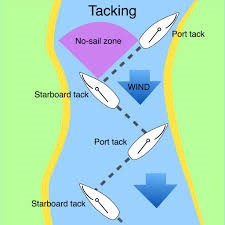
Tacking against the wind, by David Kornfield, OC International

But God calls us to sail together

Ephesians 4:16 Christ makes the whole body fit together perfectly. As each part does its own special work, it helps the other parts grow, so that the whole body is healthy and growing and full of love.

How do you sail against the wind?

Here’s a visual answer.

The sailboat needs to zigzag. The most efficient tack is at a 45-degree angle. The wind pushes off the back of the sail, moving the sailboat forward. With more than a 45-degree angle, the boat will move forward much slower. With less than a 45-degree angle, it will move faster, but not in the direction you really want to go. After tacking at a 45-degree angle, you need to bring the boat around 90 degrees. However, you need to be careful because the sail will swing across the boat as you turn. The boom, the bottom of the sail, could knock you into the water if you don’t duck.

Bob Mumford back in the eighties wrote about the Christian life using this image. Whether as an individual, a church or a denomination, we often find ourselves needing to go against the wind. This applies to following the will of God when you can’t simply go directly against the wind. You tack. You move forward on an angle.

The problem comes when we forget that we’re tacking. We slide into thinking the tack is the right way to go. New denominations often start by someone saying, “Hey, we’re missing something important. We need to change in a major way!” The veterans who started the denomination are likely to resist because in their day, they began the denomination exactly because it responded to a need that others were missing. And so, another division happens and there are now two denominations with a great deal in common, but some fundamental differences. This happened in the charismatic renewal in Brazil in a big way. Almost every major non-Pentecostal denomination birthed a charismatic version in the seventies and eighties.

What we forget is that whatever version we embrace, we are on a tack. We always need to be ready to change in a major way again, whether in our individual lives, our church or our denomination.

This happened in my life in a big way in 2020 with the advent of COVID. My ministry shifted profoundly from pastoring of pastors to discipling and pastoring of pastors (DPP) in Latin America. There was some resistance, but we gradually shifted—some more quickly, some more slowly. Around 2022 I tacked again. Our ministry’s outcome was no longer healthy pastors but rather healthy, disciple-making churches. Again, some resisted, especially those who hadn’t made the first change.

Now I’m tacking a third time, creating consternation among some DPP leaders.

The great dechurching in Latin America is forcing us to recognize, though, that we can’t just make adjustments. We need profound changes. And we need to make them in cooperation with other churches and para church ministries. In addition to the motivation of the Great Commandment (Mt 22.34-40) and the strategy of the Great Commission (Mt 28.16-20), we need a Great Collaboration (Jn 17.20-24).

This is the heart of the call to the Latin American Disciplers’ Summit planned for March 2025 in Bogotá, Colombia, which seeks to draw fifty principal leaders from each country. Its intent is not to be “an event,” but rather a call to cooperative action across the Spanish-speaking world.

I am convinced that nothing less than working together, across denominations and ministries, will reverse the great dechurching. The challenges we face require revival and renewal of the whole Body of Christ.

For good reasons, some DPP leaders are slow to commit to this. I’ve noticed four variables that affect people’s ability to change, to tack into the wind on a new ninety-degree angle.

  • Fatigued vs energized. Those who are in chronic fatigue, some level of burnout or overwhelmed naturally resist change. This can include those who are dealing with future shock – too many changes too quickly. Those who are inspired by the new vision, however will be energized by the proposed change.
      • Personality or temperament. According to the DISC model, D’s (direct, decisive, dominant) are likely to embrace change while S’s (secure, stable, solid) are more likely to resist it.
      • Commitment to earlier changes. Those who feel comfortable with earlier commitments will fear losing them. This can include deep-seated fear of losing something valuable and unnegotiable.
      • Innovators, early adopters, early majority, late majority, and laggards (best described by American sociologist Everett Rogers). In some ways this model summarizes the variables we’ve already listed.

      Isaiah 43.18-19 challenges me this year as I consider the new tack I believe God is calling us to:

      “Forget about what’s happened;

      don’t keep going over old history.

      Be alert, be present. I’m about to do something brand-new.

      It’s bursting out! Don’t you see it?

      There it is! I’m making a road through the desert,

      rivers in the badlands.

      (The Message, Is 43:18-19)

      May God give us both vision and the experience of His doing a new thing in our midst. May revival and renewal of the Church extend even beyond Latin America as we together follow the orders of the Captain of our ship.

      Captain, by Hillsong United

      Photosynthesis

      But Jesus’ light leads to life

      John 8:12, 9:5 I am the light of the world. If you follow me, you won’t have to walk in darkness, because you will have the light that leads to life. … While I am here in the world, I am the light of the world.

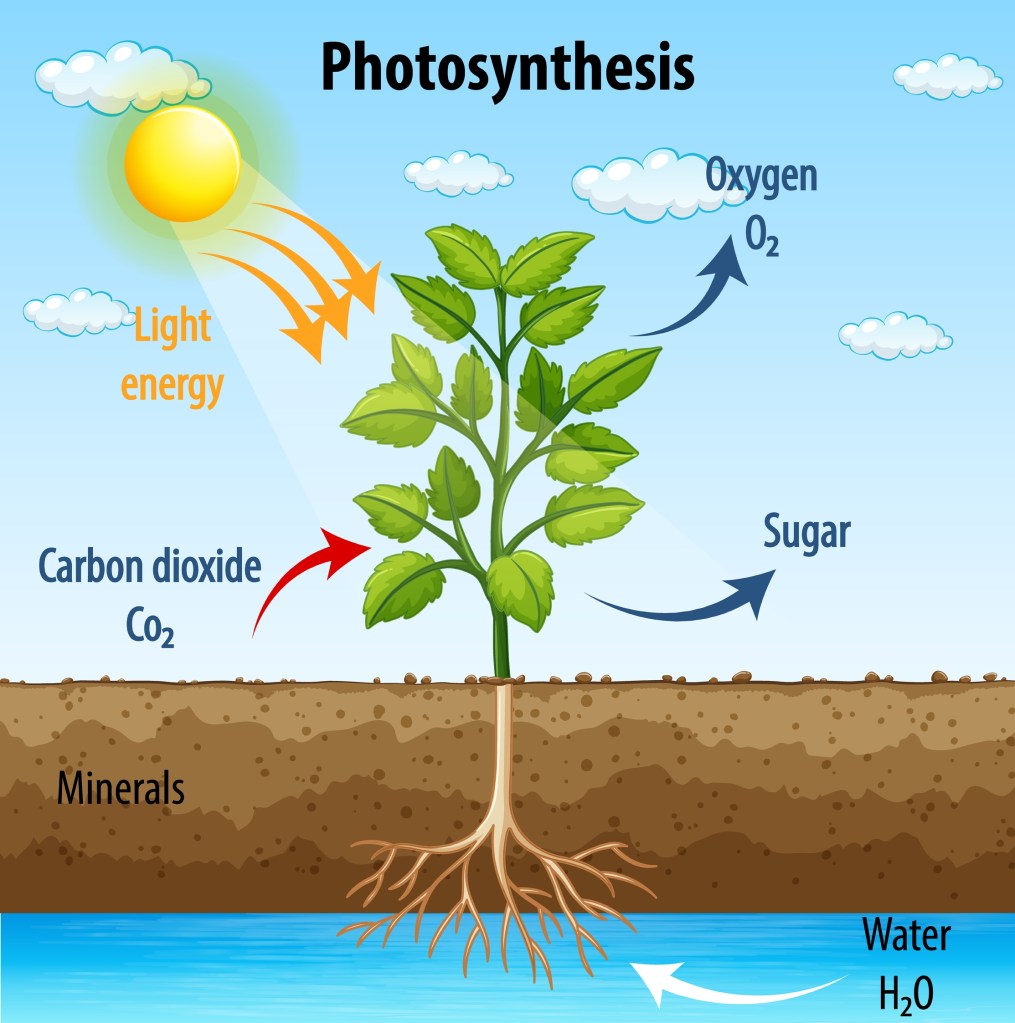
      It happens all around us and fuels our lungs and muscles. Photosynthesis is the process by which plants and trees use sunlight, water, and carbon dioxide to create oxygen and energy. Light generates life!

      I could so easily get off on the (mostly illegal) destruction of the rain forest, but I’ll spare you the soapbox (except to say one thing: the more beef we eat, the faster the Amazon Forest will be cut down for pasturing methane-belching cows, top of the food chain and doubly injurious to our planet’s health).

      Shutterstock: GraphicsRF.com

      Though a description of photosynthesis wasn’t published until 1779, Jesus the Creator, of course, understood it perfectly. As he so often did, he used nature to express spiritual truth. Light is life.

      Speaking in the Temple in Jerusalem on the last day of the week-long fall harvest Festival of Sukkot, or Tabernacles, or Booths, or Shelters, Jesus promised living water, another necessary element for life (John 7:37-39)—probably in connection with the daily Sukkot water ceremony, when the priest poured out collected rainwater from the previous season.

      And then, sixteen gold bowls in the inner courts of the Temple were filled with oil and lighted. Likely, Jesus stood beneath these lights to declare that he was the Light of the world (John 8:12). The light at the center of Temple worship—but more. Light that could leave the Temple and walk into the world, confronting the darkness found there. Like falsehood, and slavery, and unbelief, and wrong judgment. Some people were so angry they wanted to kill Jesus.

      And the intrigue—or offense—intensifies when Jesus repeats the claim of being the light of the world (John 9:5) when on the Sabbath, he heals a man born blind. The intricate interplay of light and darkness in this chapter, of who can see and who can’t, of what is sin and who commits it, challenges all assumptions and the very order and fabric of society.

      The man formerly blind who for the very first time can see—imagine!—has the gall to say, “Ever since the world began, no one has been able to open the eyes of someone born blind. If this man were not from God, he couldn’t have done it.” He was thrown out of the synagogue, as people often are who dare to speak truth (Liz Cheney comes to mind). Jesus, who had given the man physical sight, found him and gave him spiritual vision as well.

      “If you were blind, you wouldn’t be guilty,” Jesus told the angry leaders. “But you remain guilty because you claim you can see” (John 9:41). In chapter 8, he called people liars. He clearly hadn’t read up on social etiquette. So cringey for this Enneagram 9 who hates conflict and upset apple carts.

      Will you and I welcome Jesus’ light shine into the dark corners of our hearts, confronting our sin, healing our blindness, synthesizing new life in us?

      True Home, by Susannah Davenport, Pittsburgh

      Note from Debbie: We’re just home from Ireland, a bit jet lagged–more about that soon. While we were there, our dear “transplant friend” Carissa went to her True Home. Meanwhile, a Pittsburgh friend sent me this “But God” experience. Thank you, Susannah. We travel today to participate in Carissa’s memorial service tomorrow.

      But God’s light overcomes darkness

      John 1:5 The light shines in the darkness, and the darkness can never extinguish it.

      In 2015 my older sister Jessica was diagnosed with Stage IV Brain Cancer. She was 36 years old and had two daughters, aged 9 months and three years old. After her first operation to remove the biggest part of her brain tumor, my sisters and I went to visit her. In her darkened recovery room, my sister Shelley said, “Jess, you know we would all take this from you in a heartbeat.”

      Jessica responded, “Oh, no. I’m glad it’s me because I couldn’t bear it if it were any of you.” She then revealed to us that she had lost her faith in God many years before, and instead of trying to find Him, she was waiting for God to find her. But if she died, which the doctors said she most likely would, she hoped He would find her before then.

      Jessica’s brain cancer progressed quickly, and by Thanksgiving she was in Hospice at home. She was fading quickly, growing weak and frail. Her head was swollen and she lost sight in her left eye.

      By Christmas, her cognitive functions were failing, and she could barely understand what was happening around her. She still recognized us, but time was running out. Her husband, who is Catholic, begged her to see a priest and join the Catholic church to receive communion before her death. She agreed, and on the morning of Christmas Eve a priest came to give her communion.

      We gathered around Jessica’s bed, and he anointed her. The room was very dark because it was cloudy outside. She was propped up in bed, staring to the side as he tried to talk to her. Her eyes began to droop and for a moment we thought she might be falling asleep. But after the priest finished praying, she looked up suddenly. She was alert and clearly recognized us—her siblings—standing around her.

      Each member of my family remembers a little differently what happened next. I saw the room fill with sunlight. My sister Shelley said Jessica’s face was glowing. Regardless, the room was no longer dark. Jess said softly in surprise, “Oh. It’s so light in here. You have no idea how dark it’s been.” She looked around at each of us with a weak smile of relief.

      The priest said, “That’s the light of Christ, Jessica.”

      She said, “Oh…I’m hungry. Let’s have bacon and eggs!” 

      We lost Jessica less than two weeks later, on January 6th, 2016. She had multiple military honors at her funeral and was buried with the American Flag draped over her coffin.

      The night before her passing Shelley and I had the same dream that a lion (much like Aslan) was guiding a dark-haired girl into the trees, her hand resting on his mane as they walked. 

      Shutterstock: Sharon Vitor

      I know, without a shadow of a doubt, that Jessica received the gift of eternal life and our Heavenly Father called her to her True Home.

      No, don’t be quiet

      But Jesus heals us so we can see

      Mark 10:46-52 As Jesus and his disciples left Jericho, a blind beggar named Bartimaeus was sitting beside the road. When he heard that Jesus of Nazareth was nearby, he began to shout, “Jesus, Son of David, have mercy on me!” “Be quiet!” many of the people yelled at him. … But Jesus stopped and said, “Tell him to come here.” So they called the blind man. “Cheer up! Come on, he’s calling you!” Bartimaeus threw aside his coat, jumped up, and came to Jesus. “What do you want me to do for you?” Jesus asked. “My rabbi,” the blind man said. “I want to see!” And Jesus said to him, “Go, for your faith has healed you.” Instantly the man could see, and he followed Jesus.

      Epiphany. A season of revelation. Of a clearer vision of Jesus.

      It seems fitting that the last story in Mark before the events of Holy Week is about seeing. And that yesterday, Christians around the world considered Jesus’s transfiguration, as a portion of Jesus’s glory was revealed to his followers, Moses (representing the law), and Elijah (representing the prophets). The Father said, “This is my beloved Son. Listen to him” (Mark 9:1-8), then Moses and Elijah were gone, and the disciples saw only Jesus.

      How have you seen Jesus during these weeks of Epiphany? Has God opened your eyes in some way? Has he spoken to you personally or acted on your behalf to change the direction things were going? What’s your story of encounter with God?

      Between Epiphany and Holy Week, we walk with Jesus through Lent. Many evangelical Christians don’t have experience with observing Lent. I knew nothing about it when I was growing up. On Thursday I plan to post my current thoughts and recent experience of Lent. Perhaps you’ll want to take steps toward honoring this in-between season, observed by many in Christ’s church almost from the beginning.

      Also during the weeks of Lent (Feb. 23-April 1), I want to publish your story about how you have seen God’s revelation of Jesus during Epiphany. Write it down in one page and send it to me at debrakornfield@gmail.com. Your story will encourage others and you’ll have it to refer to yourself when you need reassurance that God sees you and cares for you.

      During Epiphany, we’ve been looking at the question, “Who is this man?” from Mark’s point of view. Perhaps you’d like to look back over the topics we’ve considered since January 6. Ask God to open your eyes to see what he wants to show you and to open your ears to hear the words of love he is always speaking to you.

      “I want to see!” The passion and desire of a lifetime poured into Bartimaeus’s words. I love that Jesus asked him what he wanted, giving this man the opportunity to use his voice and express what had been stomped down inside him his whole life.

      Do you, too, want to see? Don’t be quiet. Cry out to the Lord for his mercy and healing.

      But Jesus is the light

      John 9:1-5, 39-41 As Jesus was walking along, he saw a man who had been blind from birth. “Rabbi,” his disciples asked him, “why was this man born blind? Was it because of his own sins or his parents’ sins? “It was not because of his sins or his parents’ sins,” Jesus answered. “This happened so the power of God could be seen in him. We must quickly carry out the tasks assigned us by the one who sent us. The night is coming, and then no one can work. But while I am here in the world, I am the light of the world.” … Then Jesus told him [the man who had been born blind], “I entered this world to render judgment—to give sight to the blind and to show those who think they see that they are blind.” Some Pharisees who were standing nearby heard him and asked, “Are you saying we’re blind?” “If you were blind, you wouldn’t be guilty,” Jesus replied. “But you remain guilty because you claim you can see.”

      From Shutterstock, Fractal Graphics #3 by NataVilman

      Before I go back to the judge and judgment verses in chapter 5, I want to look at this one in 9:39. This story of the blind man Jesus healed is one of my favorites in the Bible, and John takes a whole chapter to tell it. When Karis was born with a defect in her intestines, some people asked Dave and me to examine our lives to repent of whatever sin in us had caused this. So that question, which Jesus responds to so clearly, is as relevant in our time as it was two thousand years ago. Karis believed her entire life was meant as a showcase of God’s power and love. Reading that in her journals is what motivated me to write Karis, All I See Is Grace.

      The story shows the blind man growing in his understanding of Jesus, from calling him “the man they call Jesus” in v. 11, to “he must be a prophet” in v. 17, to rejection of the Pharisees’ conclusion that Jesus is a sinner for healing on the Sabbath (v. 24). Verse 25 rings with courage, in contrast to the man’s parent’s trepidation: “I know this: I was blind, and now I can see!” I can only begin to imagine how thrilling it was for a man who had never seen anything in his life to see colors, and people’s faces (even the Pharisees’ frowning faces), and his own parents!

      When the Pharisees ask the man to tell them AGAIN how Jesus healed him, he asks “Do you want to become his disciples too?” (v. 27). I think the “too” refers to himself: He wants to know the man who healed him. In verse 33 he explains to the Pharisees why Jesus must be from God. In verse 36, he exclaims, “Who is the Son of Man? I want to believe in him.” Jesus responds, “You have seen him!” And in verse 38 the man worships Jesus and calls him Lord.

      That’s when we have verse 39, which the NLT translates “I entered this world to render judgment.” I think this can be translated differently, “I entered the world to be judged” or to be the object of judgment. (This is one time I disagree with the NLT, which I love—most translations say, “for judgment,” leaving unclear who is doing the judging.) Those doing the judging in this story are the man and his parents, and the Pharisees. The issue is, who is Jesus? Just a man? A sinner? A prophet? A true miracle-worker, by God’s power? Son of Man? Lord? How will the people who encounter Jesus respond to him?

      That’s the central question of John’s gospel. He introduces it in chapter one and asks it again and again. No one can be neutral regarding Jesus. Is he who he says he is, or is he the biggest fraud ever? Each of us must judge him. Each of us must decide. Jesus is the light, John says (1:9). Can we see his glory, or are we blind? (1:10-14).

      Hang in here with me for a moment. I have a reason for reaching this conclusion about the meaning of the word judgment in 9:39. John uses three words for judge or judgment in his gospel: krino (verb), krisis (noun), and krima (noun). He chooses the word krima only here, in 9:39. Krima is the result of a judgment that has been rendered, a decision made for or against. The man who was blind started choosing for Jesus from the beginning and grew into the clear vision he celebrated in worship. The Pharisees who thought they could see have been choosing against him since their first contact with Jesus. By their judgments, the people in this story revealed their hearts. They revealed what they could see, given their prior decisions. The difference between who Jesus was to the man who could now see and to the Pharisees could not be more dramatic. And John capitalizes on this in his delightful word plays.

      One more grace note in this story: Isn’t it cool that Jesus let the blind man participate, have a role, be a partner in his healing? “I went and washed, and now I can see!” (v. 11). All his life, he’d been the object: of people’s pity, of their scorn, of their judgment of him and his family (“Who sinned…?”). Jesus gives him agency, makes him an actor, setting him up for a brand-new experience of life. How is Jesus empowering you today?