
But Jesus receives highest honor
Romans 14:11 [Isaiah 45:23] “As surely as I live,” says the Lord, “every knee will bend to me, and every tongue will confess and give praise to God.”
Philippians 2:9-11 [Isaiah 45:23] God elevated Jesus to the place of highest honor and gave him the name above all other names, that at the name of Jesus every knee should bow, in heaven and on earth and under the earth, and every tongue confess that Jesus Christ is Lord, to the glory of God the Father.
My friend Barb lives in a small village in northern France. She’s very active in this community. Here’s Barb:
Yesterday morning, as is usual for most every Sunday in my life, I went to church. I long ago noted that drums are the only percussion instrument played during the worship time. So, being a musical person myself, I bring my little tambourine-on-a-stick in my purse each week, and I play it appropriately to add to the spirit of the livelier songs.
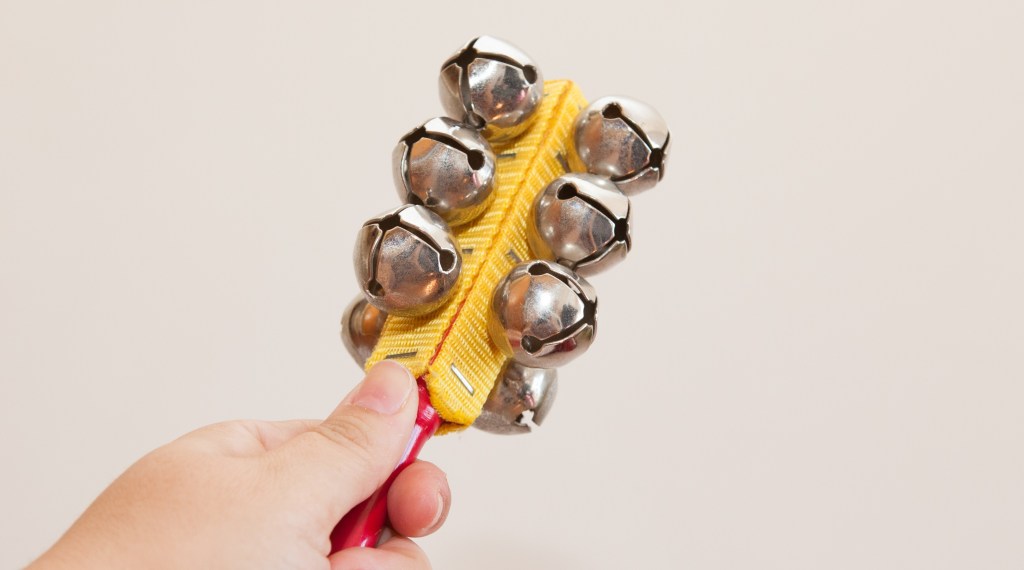
Occasionally one of the little kids in church (who know me from being in our home group together) sidles up to me with a hand outstretched toward my tambourine, ready to play it. Yesterday it was little 5-year-old Paul. So I placed his right hand on the wooden stick, tapping his left palm to the beat of the music, as he’s seen me do. My hands remained on top of his hands to make sure he played the instrument correctly.
We were both enjoying the dinging sound of the tambourine and how it added to the joy of the worship songs as I guided his hands. But every now and then Paul would begin his own rhythm and tapping, and I could feel his resistance to my guidance. When this began happening, I tried to gently encourage him. “Relax, Paul,” I’d say. “Let my hands help you do the rhythm.” After these words, he’d ease up and let me guide him, which kept a better rhythm than he made on his own. And we both enjoyed the sound we heard and were pleased with our contribution to the worship time.
In the midst of this experience, the thought occurred to me that it’s just like what God wants to do in my life. It was as if I heard Him saying, “Relax, my daughter – let My hands – My infinite hands – guide yours, let Me make the music you’re trying to make, and let Me send it through your life to those around you.” Wow! What a message!!
And the more I thought on it, the more it struck me how true it is – He’s got His infinite hands on my finite ones, and if I don’t resist Him, He will guide me to fulfill His perfect will for my life – He’ll make His music – the BEST music – in my life for those around me to hear – His words drawing them to Himself. All because I submitted to Him as my Sovereign Guide to help me “play my tambourine.”
I guess it all boils down to submission, doesn’t it? Just like little Paul, when he submitted to the guidance of my adult hands covering his childish ones. My prayer now: “Father, help me to see where I’m resisting You in my life, where I’m not letting You make Your music in and through me. I now submit to Your infinite Lordship. In Jesus’ Powerful, Almighty Name, Amen.”
Praise him with the tambourine and dancing; praise him with strings and flutes! Psalm 150:4




 Debra Kornfield