Celebrating Roots, by Sue Long Hammack, Richmond, VA

But God had other plans: He knew what lay under the desert land

Ephesians 3:17 Christ will make his home in your hearts as you trust in him. Your roots will grow down into God’s love and keep you strong.

Hebrews 10:24 Let us think of ways to motivate one another to acts of love and good works.

I (Debbie) was fascinated by the story my Wheaton College classmate Sue Long told in their last newsletter and am excited to share it with you. It coordinates with the “God Most Loving” chapter in Jen Wilkin’s book, In His Image, which calls us to agape love like God’s: holy, infinite, and costly. “For agape, there is no such category as “unlovable” (page 41).

Here’s Sue:

SIM (at that time Sudan Interior Mission; now SIM International) entered Niger in 1924. Terry and I and my brother Jack will return to Niger in December to celebrate this centennial. SIM’s initial work concentrated on trekking and nomadic outreach. After a decade, SIM asked the French government in Niger for property to establish a surgical hospital among the poorest of the poor in the vast rural areas of the Sahara Sahel. Finally, following 15 years of vigorous discussion, the French ceded to SIM what looked like a wasteland on which to build. It seemed a mockery: “You can try, but you won’t succeed.” But God had other plans!

In July 1950, after a year of French study in Paris, Sue’s parents, Dr. Burt and Ruth Long, landed on a desolate stretch of runway, having leapfrogged across the mighty Sahara Desert to this isolated destination. With two young sons in tow, they reached their new home in a small village scalding in the heat of brilliant sunshine. They would add four more children to the family over the next years.

The village was called Galmi, located far from anywhere, with scrubby bushes, hard, stony ground, lonely thorn (acacia) trees upon which camels chewed, no electricity, and limited water. And HOT. Burt and Ruth had agreed to open the hospital in Galmi as a channel for the gospel and a beacon of hope in a seemingly godforsaken place. Thousands of people lived in scattered villages of the Sahel with no access to medical help and no knowledge of a Savior who offers forgiveness of sins and eternal salvation.


Others had come before them. Two houses and a few other buildings, built with rocks, mud, cement, and tin-pan roofs stood ready to receive the first permanent mission workers. Way down the path from the houses stood the completely empty T-shaped hospital, with cement floors and metal shutters over screened windows.
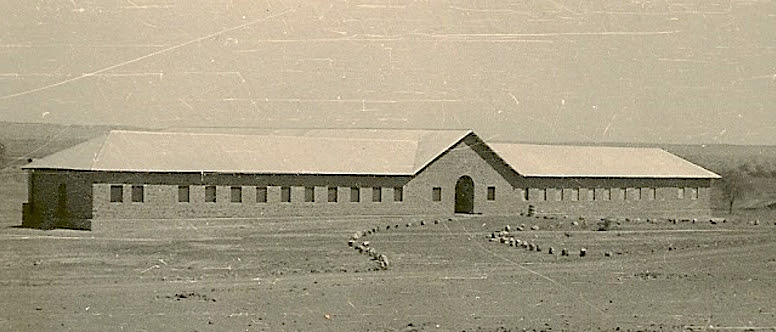
Galmi became an oasis in the desert after a lake of water was discovered under the property in 1980. God knew the value of the French gift!

You can read the rest of the story in A Family Living under the Sahara Sun, by Sue’s mother Ruth Long, available on Amazon.

Debbie: I’ve just ordered the book. Imagine those thirty years of faithful love and service by the Long family before the underground lake was discovered. Sue says her roots grew down deep into Galmi’s hard soil. Even there, she discovered God’s wonderful love, which propelled her and her husband Terry into a lifetime of service in Nigeria.

Does the soil of your heart feel hard? Your roots growing into his love will make you strong.

Blessings by Laura Story
The whole story

But God knows our story beginning to end

Acts 11:1-4 The apostles and the believers throughout Judea heard that the Gentiles also had received the word of God. So, when Peter went up to Jerusalem, the circumcised believers criticized himand said, “You went into the house of uncircumcised men and ate with them.” Starting from the beginning, Peter told them the whole story.

When you are criticized or misunderstood, do you ever wish you could tell your whole story? Surely then, whatever happened would make more sense to the person who has jumped to a premature conclusion! But telling the whole story requires the other person to listen, and that’s not something easily come by, right? It requires time, and patience and attention.

Fortunately for Peter, his critics weren’t distracted by their phones or the latest news cycle. They took time to listen. Verse 18 tells us the result:

When the others heard this, they stopped objecting and began praising God. They said, “We can see that God has also given the Gentiles the privilege of repenting of their sins and receiving eternal life.

This was a major paradigm shift for them. A game changer. A huge “But God” moment. It wouldn’t have happened if they had not been willing to take time to listen, with hearts open to understand not just what Peter was doing, but what God was doing.

Have you noticed that when you tell your story, you understand it better yourself? Perspective emerges that isn’t possible when we keep our stories inside our own heads.

September 4-8 Dave and I will have the privilege of participating in a biannual retreat with the IMT (International Ministry Team), which is our formal place of connection and accountability with our mission organization, One Challenge International. Our team leader just notified us that we will each be given half an hour to tell our story, a quick overview of our life journey. What an interesting task, to choose what to include in thirty minutes from seventy years of living! Knowing my teammates, I expect we’ll be thrilled by God’s faithfulness, and our love for each other will deepen.

Perhaps you don’t have a context in which you can tell your “whole story.” But what if you start with thirty minutes? If someone were to listen to you for half an hour, what would you want them to understand about your life? What stands out to you? What particular incident illustrates what God has done for you and through you?

Perhaps in thinking about this, you’ll realize you would like to share a particular But God moment with those who read this blog. If so, please let me know. If the challenge of writing it down is what’s stopping you, call or text me or email me, and we can plan a time to do it together. I’m confident that when you do this, you will encourage both yourself and other people. And you will give glory to God.

Take My Life by Frances R. Havergal, sung by Chris Tomlin

Uncluttered

But God calls us to offer our stories to others

Isaiah 47:8, 10-11 “Listen to me, you pleasure-loving kingdom, living at ease and feeling secure. You say, ‘I am the only one, and there is no other.’ … But your ‘wisdom’ and ‘knowledge’ have led you astray, and you said, ‘I am the only one, and there is no other.’ So disaster will overtake you, and you won’t be able to charm it away …”

Psalm 40:1-3 [David sang] I waited patiently for the Lord to help me, and he turned to me and heard my cry. He lifted me out of the pit of despair, out of the mud and the mire. He set my feet on solid ground and steadied me as I walked along. He has given me a new song to sing, a hymn of praise to our God. Many will see what he has done and be amazed. They will put their trust in the Lord.

“Bottom line, it’s all about me. I deserve comfort and security, happiness and pleasure. I should put myself first in the choices I make. I deserve this.”

Last Friday on a delightful tramp through the autumn woods with my son Dan (20,000 steps!), I laughed over the relentless message in our culture that I should prioritize “self-care.” How do I know that choosing this afternoon to abandon my to-do list and everyone else’s concerns and just enjoy the beauty of fall and the heartening company of my son isn’t my first step down a slippery slope to self-centered hedonism?

Part of the trail at Harrison Hills Park lies along the edge of a bluff above the Allegheny River.

Dan grinned and told me he had just read a book (here’s a review) about substitutes for faith, ways people choose to meet their needs for purpose, significance, community, and ritual when they don’t want “religion.” The author identifies self-care and wellness culture as one of those ways—literally, a substitute for God, what Scripture calls an idol.

I mused that maybe spontaneously taking off one workday afternoon a year might not result in total self-indulgence. Dan said he wouldn’t worry even if I did so once a week. Hmmm…

How do we find the balance between obsessive self-focus and appropriate care of our own bodies and souls? I would love to know your thoughts about this! I suspect it has to do with Who or what is primary in our lives. What matters most to you? What does it mean in practice to love God with all our heart, soul, mind, and strength, and to love others as we love ourselves (Mark 12:30/Luke 10:27)?

Yesterday I read the last pages of a book I’ve mentioned before, To Be Told, by Dan B. Allender, a psychologist who has devoted his life to the healing of abuse survivors. To my surprise, he addressed the topic of this post. He describes becoming a hilarious giver, passing “payment” forward of a debt to God we can never repay, and says we are indebted even to those who did us harm—“I am a debtor to those who sexually abused me because they aroused in me fury and defiance against injustice.” He then reminds us of a basic premise of this book, that we co-author our stories with God, for purposes greater and more joy-filled than just ourselves.

Here’s a taste of what Allender says in this last chapter:

“We are not our own; we are God’s. We invest in another when we see ourselves as uniquely privileged and available to join his or her story. Gabriel Marcel speaks of ‘availability’ as a ‘being who is ready for anything, the opposite of him who is occupied or cluttered up with himself.’ Not to be cluttered with oneself means that we have first embraced our life as God’s story, whether we understand or even like what he has written. Further, not to be cluttered with oneself is to embrace enough of our story to say to God and to others, ‘He is good. And he has written me well.’

“And perhaps even more, being uncluttered calls me to wrestle with those stories that confuse me, the stories I continue to hold at arm’s length. We will never be fully at ease with our story, but we can come to love our story profoundly and with more joy. Finally, to be uncluttered is to offer all of who we are, even the parts that are still unredeemed, for the redemption of others … What we give away often returns with greater goodness than what we originally gave.

“Will I receive from [Christ’s] wounded hands my day’s portion of story, and will I bring my tears and battered questions for him to engage? Will I bring my story to the gospel and cry out for him to answer? And will I offer my broken story as a gift to others to taste and see that God is both odd and good? If I will do this, then the gift that I receive will stagger me—God’s story will be my own.”

Like the boy who offered his lunch to Jesus and saw it multiplied to feed thousands of people. Like David, who wrote his “new song” so that three thousand years later, we can be encouraged. Like my friend who offers hope and skills to other trauma survivors through her DBT classes because of her hard work facing into the confusing and painful parts of her own story. Like my friend who regularly shares her own story of alcoholism to encourage other strugglers through her leadership in AA. Like so many others I admire and learn from.

Today, I am offering my story back to God, not just my personal story, but Facing the Faeries 1906 as well, which I fully believe he coauthored with me. I deeply desire he use this complex, multi-entwined story to nurture and hearten others.

Advent’s two stories

But God performs mighty acts

Psalm 145:1-4 I will exalt you, my God and King and praise your name forever and ever… No one can measure the Lord’s greatness. Let each generation tell its children of your mighty acts; let them proclaim your power.

Advent is a time for storytelling. Not just any story, but two stories filled with complex and vulnerable characters who grow and change, amazing adventures, and awesome rescues by the greatest, most powerful, most admirable actor of all time.

One story is about what happened on planet Earth two thousand years ago: the birth of a poor baby who was actually a Prince, sent by his father, the King, to rescue the world from the clutches of an evil tyrant.

The second story foretells the Prince’s return to Earth to set everything right. It’s the happy ending which will begin a new story, a wonderful sequel.

What story am I telling my children and grandchildren?

This Advent, I want to challenge you to think as well about your own story. In Psalm 145, David repeatedly calls us to share with others our own stories of God’s power and greatness, beginning with our children and grandchildren and others of the next generations.

I want to leave you with three questions today:

  1. Does your story matter? Why should you invest in remembering, understanding, and sharing your story?
  2. Where do you see God in your story? What mighty acts has he performed for you?
  3. What impact can your response to question #2 have on your children and grandchildren and/or others of the next generations? What has your life experience shown or taught you that you would like to pass on to them?

I hope these questions will help you begin to see and value your story differently.

As I think about the legacy my husband Dave and I received from our parents and grandparents, I’m both sad and encouraged. Some parts of their stories were never resolved or healed, and we were bruised from the impact of their pain. In other ways, their stories challenge and strengthen us to move forward, to offer our descendants hope as we embrace and share God’s grace and mighty acts in our lives.

I hope you will join me in storytelling this Advent! Of both Great Stories, and the ways your experiences weave their unique part of the fabric the Great Stories continue creating.

What’s your story?

But God cares

Psalm 40:1-3, 17 I waited patiently for the Lord to help me, and he turned to me and heard my cry. He lifted me out of the pit of despair, out of the mud and mire. He set my feet on solid ground and steadied me as I walked along. He has given me a new song to sing, a hymn of praise to our God. Many will see what he has done and be amazed. They will put their trust in the Lord. … I am poor and needy, but the Lord cares for me.

Hey, friend! I know you have a story about God’s care for you. If you share it, others will be encouraged to trust God when they are in despair. And the Lord will be honored.

To help motivate you to post your story on ButGod.blog, I will send the first five responders a copy of Mary’s Diary, a charming booklet written by Karis when she was thirteen that will make a great Christmas gift once you’ve enjoyed it yourself. Karis imagined Mary writing in her diary about her experiences prior to the birth of her son Jesus. Warning: several readers have told me they now think it happened the way Karis imagined it.

In this charming story, Karis imagines she is Mary, writing about her experiences prior to Jesus’ birth

So, remember and tell what God did for you when you were in trouble, as David does in this Psalm. Write no more than a page and send it to me: debrakornfield@gmail.com. If you’re among the first five, I’ll send you Mary’s Diary as a thank you.

I want this blog to be a place where all of us can remember and tell!

Give thanks to the Lord and proclaim his greatness. Let the whole world know what he has done. Sing to him, yes, sing his praises. Tell everyone about his wonderful deeds (Psalm 105:1-2).

But Jesus stood among them

John 20-21 Mary Magdalene found the disciples and told them, “I have seen the Lord!” … That Sunday evening, the disciples were meeting behind locked doors because the were afraid of the Jewish leaders. Suddenly Jesus was standing there among them! … Eight days later the disciples were together again, and this time Thomas was with them. The doors were locked; but suddenly, as before, Jesus was standing among them. … Then Jesus told Thomas, “You believe because you have seen me. Blessed are those who believe without seeing me. … Later, Jesus appeared again to the disciples beside the Sea of Galilee. … “Now come and have breakfast!” Jesus said. … Jesus also did many other things. If they were all written down, I suppose the whole world could not contain the books that would be written.

How has Jesus appeared to you? What happened? I would so love to know! Have you, like Mary Magdalene, been overwhelmed by grief? Have you, like the disciples, been trapped by fear? Like Thomas, have you struggled to believe God is alive, that he cares? Have you, like the fishing disciples, become discouraged because your hard work seems to have resulted in nothing? Like Peter, have you betrayed your Lord or someone else you love, and need restoration? What is your story?

TippaPatt: Shutterstock

I would particularly like to know how you have seen God through these long months of Covid. Could you take a few minutes to write, no more than a page, and send me your “But God” Covid story to encourage other people?

When we write our stories, we preserve and honor them, and thereby we honor God. What if John hadn’t taken the time to write his Gospel? Much of what Jesus said and did we simply wouldn’t know.

Something special happens for us when we write. Our experience clarifies. We see aspects we hadn’t noted before. We understand details and connections; we perceive more of what God is doing in our lives. We grow.

And sharing our stories encourages others to share theirs. Together, we know God better.

So, will you do it? During this Easter season, the days between Easter and Pentecost, I would love to publish your story, for the glory of God and encouragement of his people. I’ll be watching my Inbox! Send me your story at debrakornfield@gmail.com.

Thanks!!