
But Jesus’ light leads to life
John 8:12, 9:5 I am the light of the world. If you follow me, you won’t have to walk in darkness, because you will have the light that leads to life. … While I am here in the world, I am the light of the world.
It happens all around us and fuels our lungs and muscles. Photosynthesis is the process by which plants and trees use sunlight, water, and carbon dioxide to create oxygen and energy. Light generates life!
I could so easily get off on the (mostly illegal) destruction of the rain forest, but I’ll spare you the soapbox (except to say one thing: the more beef we eat, the faster the Amazon Forest will be cut down for pasturing methane-belching cows, top of the food chain and doubly injurious to our planet’s health).
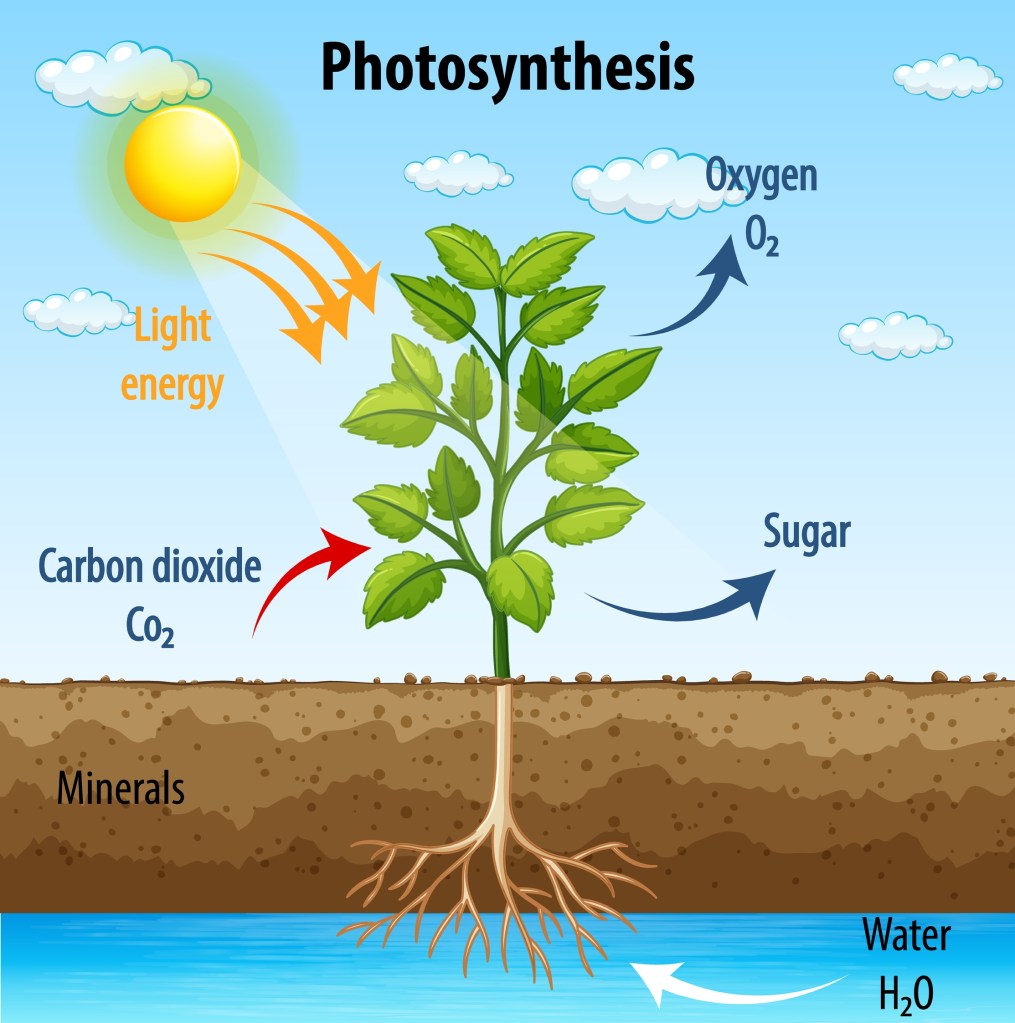
Shutterstock: GraphicsRF.com
Though a description of photosynthesis wasn’t published until 1779, Jesus the Creator, of course, understood it perfectly. As he so often did, he used nature to express spiritual truth. Light is life.
Speaking in the Temple in Jerusalem on the last day of the week-long fall harvest Festival of Sukkot, or Tabernacles, or Booths, or Shelters, Jesus promised living water, another necessary element for life (John 7:37-39)—probably in connection with the daily Sukkot water ceremony, when the priest poured out collected rainwater from the previous season.
And then, sixteen gold bowls in the inner courts of the Temple were filled with oil and lighted. Likely, Jesus stood beneath these lights to declare that he was the Light of the world (John 8:12). The light at the center of Temple worship—but more. Light that could leave the Temple and walk into the world, confronting the darkness found there. Like falsehood, and slavery, and unbelief, and wrong judgment. Some people were so angry they wanted to kill Jesus.
And the intrigue—or offense—intensifies when Jesus repeats the claim of being the light of the world (John 9:5) when on the Sabbath, he heals a man born blind. The intricate interplay of light and darkness in this chapter, of who can see and who can’t, of what is sin and who commits it, challenges all assumptions and the very order and fabric of society.
The man formerly blind who for the very first time can see—imagine!—has the gall to say, “Ever since the world began, no one has been able to open the eyes of someone born blind. If this man were not from God, he couldn’t have done it.” He was thrown out of the synagogue, as people often are who dare to speak truth (Liz Cheney comes to mind). Jesus, who had given the man physical sight, found him and gave him spiritual vision as well.
“If you were blind, you wouldn’t be guilty,” Jesus told the angry leaders. “But you remain guilty because you claim you can see” (John 9:41). In chapter 8, he called people liars. He clearly hadn’t read up on social etiquette. So cringey for this Enneagram 9 who hates conflict and upset apple carts.
Will you and I welcome Jesus’ light shine into the dark corners of our hearts, confronting our sin, healing our blindness, synthesizing new life in us?
 Debra Kornfield