Repair

But Jesus sees right into our hearts Lenten/Easter question #20

John 21:15-19 After breakfast Jesus asked Simon Peter, “Simon son of John, do you love me?” …

Normally, Pittsburgh weather is what my grandson Caleb calls “boring.” The main question we have to ask at this time of year while nature is bursting into all its bright colors is whether it will be raining or whether we’ll be blessed with a few coveted hours of sunshine.

Tuesday, though, broke the mold. No, not a hurricane or even a tornado, as I explained to Caleb–I was at their house when the storm hit. But we had wind gusts up to 80 mph that killed three people; according to our local news:

Tuesday evening’s storm left a wake of destruction in the Pittsburgh area. Large oak trees toppled from the strength of the winds and roofs were torn off of buildings. Duquesne Light said restoration across the area could take five to seven days, calling the event “unprecedented.”

Over 400 workers rolled into town yesterday to aid Duquesne Light with restoration efforts. We were without power for only 24 hours. The main thing we have to show for it is this “storm art.” Pretty cool, eh?

For our daughter Rachel’s family, though, the adventure is ongoing.  “Fireworks!” my granddaughter Liliana exclaimed looking up at the electric pole by their house as she and her sister arrived home from preschool in a torrent of rain, with downed wires on the sidewalk. We hope some of the emergency workers will make it to their neighborhood today. Unfortunately, everything in their house is electric, including their stove.

Here’s what the electric pole right by their house looks like, with the top section snapped off and lying precariously on other wires:

Photo by Rachel’s husband Brian

Needless to say, they’re not parking by their house right now!

All this pales before the devastation, self-inflicted, Peter experienced after Jesus’s arrest in Gethsemane. Just that evening he had declared, “I’m ready to die for you.” Instead, he buckled at three suggestions that he was associated with Jesus. Luke tells us Peter went out and wept bitterly (22:62).

The time has finally come, in this last chapter of John, for Peter to confront his cowardice. Just as he had denied Jesus three times, Jesus asks him, reverting to his old name, the name used in Luke 5, “Simon, do you love me?”

Interestingly, Jesus asks Peter twice, “Do you agape me?” Agape is supernatural, grace-filled, absolutely dependable love. But Peter responds, “Yes, Lord, you know I phileo you.”

The third time, Jesus accommodates Peter. Apparently, he recognizes phileo (brotherly or family love) is all that Peter is capable of claiming at this moment. Jesus has made his point. He has steadfastly loved Peter with agape love through thick and thin, and this is what he wants Peter to grow into.

Agape is the love Jesus shares with his Father. In his prayer for his disciples recorded in John 17, Jesus says, “I have revealed you to them, and I will continue to do so. Then your love (agape) for me will be in them” (John 17:26). Jesus wants all of his followers—you and I included—to experience and practice agape.

In his little book The Four Loves, C. S. Lewis delves into the diverse nuances we miss because four different Greek words are all translated into one English word “love.” At the same time this wordplay is going on between Jesus and Simon Peter, though, another dynamic is at play. Jesus has been preparing Peter to lead. What will Peter’s leadership look like, when Jesus is no longer around to be the leader?

Jesus sums it up in two simple phrases: “Feed my lambs,” the Shepherd tells him (can you feel the affection?) and “Take care of my sheep.” “Be like me in this way too,” I hear Jesus speaking into Peter’s brokenness. “Care for others in the same gentle, committed, insightful, sacrificial way I am caring for you right now.” THIS is leadership in the Kingdom (see Matthew 20:25-28), the same servant love Jesus demonstrated in washing the disciples’ feet.

It’s a reprise not just of Luke 5, but of John 13 after Jesus washed the disciples’ feet, just before Jesus warns Peter he will deny Jesus. “I am giving you [all the disciples] a new commandment: Love (agape) each other. Just as I have loved (agape) you, you should love (agape) each other. Your love (agape) for each other will prove to the world that you are my disciples.”

How’s that going in your part of the world?

The fruit in our lives comes from God

But God makes fruit grow 

Hosea 14:8 [The Lord says] Stay away from idols! I am the one who answers your prayers and cares for you. I am like a tree that is always green; all your fruit comes from me.

John 15:5 [Jesus said] I am the vine; you are the branches. Those who remain in me, and I in them, will produce much fruit. For apart from me you can do nothing.

Shutterstock: MVolodymyr

We’re home from our vacation, spent tucked away in a small town in Ohio. For two weeks, Dave and I delighted in extended devotional times, hiked in the snow and cold, played games, built jigsaw puzzles, read books, had important conversations, slept (!), and watched a few movies. We are grateful for this restorative time, balancing and healing the intense stress of the last weeks of 2024. The challenge now will be not to get sucked back into running on adrenaline 24/7, as we are both committed to big projects in 2025.

I found myself drawn to the prophets, particularly the minor prophets, those I don’t often read or pay attention to. So from now to Easter, I plan to deep dive for “pearls” from the prophets to share with you.

In light of the work Dave and I believe God has called us to, I chose Hosea 14:8, quoted above, as my “year verse” for 2025. It reminds me of how easily I can get distracted from what God wants for me and make other things more important. These “idols” don’t yield good fruit. Neither do our own efforts, in themselves. The fruit in our lives comes from God, from his life active in us.

I would love for you to join me in exploring “pearls from the prophets”—not just reading my thoughts, but sharing your own as well.

Where did you last have it? by Rev. Jim Hobby, House of Gladness, Thomastown, Georgia

But God restores joy

Psalm 16:11 You make known to me the path of life; in your presence there is fullness of joy; at your right hand are pleasures forevermore.

Note from Debbie: If you are a pastor or perceive that your pastor has lost his or her joy, contact the House of Gladness to schedule a retreat, a time to be heard and supported in one of the most difficult jobs on earth. Here’s an idea: Make it a gift from your congregation for Father’s Day. Write to Jim for availability: jim@houseofgladness.com.

As we talk with pastors, we continue to hear a deep weariness in their voices. The partisan ethos of our culture has so thoroughly marinated their congregations that every slight difference of opinion in the congregation often becomes a major point of disagreement that requires stances to be taken by the leadership of the congregation. Who knew that green carpets were signs of complete capitulation to the works of Satan? (Only a slight exaggeration!) As you pray for the ministry of House of Gladness, pray for weary and discouraged pastors who are berated by all sides. Research continues to show that a large percentage of pastors (just over 1/3) are giving serious thought to finding a less stressful occupation (like used car salesman, middle school social studies teacher, or alligator farmer).

When raising children, it can seem like 20-80% of one’s day is spent finding lost items: shoes, cups, coats, socks, books, papers, tablets…anything and everything. After the tragedy of the lost treasure is announced (because every lost item is always, by definition, “my favorite!”) the parental mantra is, “Where did you last have it?”

That question is a great starting point for pastors and lay leaders who have lost their joy in ministry. “Where did you last have it?” To remember a time of joy, many of us would need to go back before COVID-19 threw our worlds into turmoil.

When you do remember a time when you were serving the Lord with gladness, where did the joy come from? Quite likely, your joy bubbled up from some blend of satisfying accomplishments, supportive relationships, a clear purpose, and consistent prayer times. If you are looking for lost joy, starting with those four sources is wise. The most critical one is time with the Lord because, when the other three wells of joy dry up, there is fullness of joy in the Lord’s presence.

Before you toss this aside as an admonition from a person standing on the beach to someone caught in a rip current to “swim harder,” let me assure you that praying harder (at least in my experience) rarely increases joy. Guilt, shame, frustration, yes; rarely joy. Instead, I’m inviting you to rediscover the presence of the Lord. You may encounter the Lord on your knees at set times of formal prayer (which the Church from the beginning has declared important). But you might also experience His presence while walking, or conversing with a friend, or reading, or painting, or bird watching, or lying in a hammock.

Added by Debbie: Or at a personal retreat at the House of Gladness. I have myself found rest and renewal in the Hobbys’ home several times—before this tender ministry was formalized as the House of Gladness. God has gifted Jim and his wife Shari for this work and equipped them through deep suffering of their own. They offer their love with empathy, grace, and prayer.

Crackpot

But God is the source of our strength

2 Corinthians 4:7 We now have the light of Jesus shining in our hearts, but we ourselves are like fragile clay jars containing this great treasure. This makes it clear that our great power is from God, not from ourselves.

At the REVER Congress in Pereira, discussing the theme “Finding Joy in Chronic Suffering,” I shared several ways Karis drew strength from 2 Corinthians 4. The whole chapter was important to her. From verse 7, and from a story her mentor Claudia Limpic told her, she adopted for herself the nickname “Crackpot.”

Claudia’s story, as I heard it, is this:

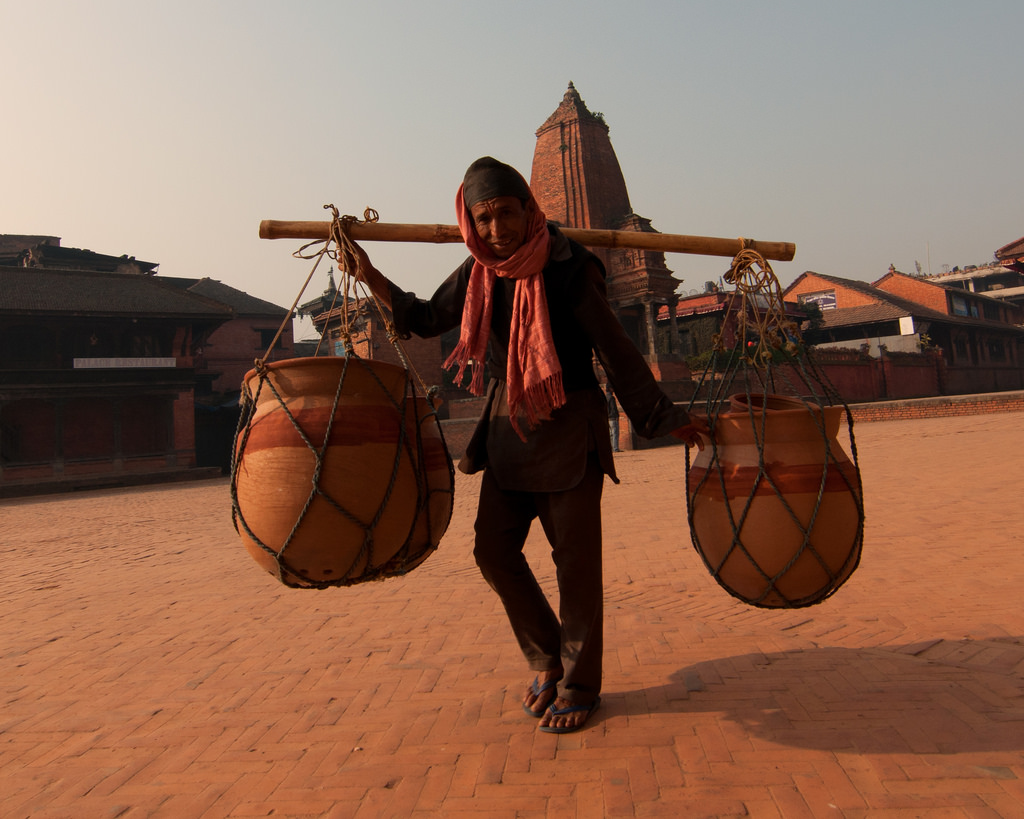
A farmer carried water on his back in two clay pots to his garden each day. On one side of the path from the well to his garden, flowers sprung up. The other side remained barren.

The farmer puzzled over this until one day he noticed that one of the pots was cracked. Each day as he walked to his garden, water dripped out of the cracked pot, watering one side of the path.

Enchanted by this story, Karis prayed that from the “cracked pot” of her “broken” body, beauty would be created in other people’s lives. That through the cracks in her life, God’s light would shine.

Another “cracked pot” concept has been important enough in REVER to make it onto a T-shirt. Kintsugi is the Japanese art of repairing broken pottery with gold, making it stronger and more beautiful than it was originally. In REVER, this represents God’s healing work in our lives.

GAVS stands for “Support groups for victims and survivors,” for those who have suffered sexual abuse.

As Karis put it, “All I see is grace.” May you and I find that grace in our own cracked places.

Longing for Restoration, by Meg Sateia, Pittsburgh mom and educator and artist

But God makes beautiful things

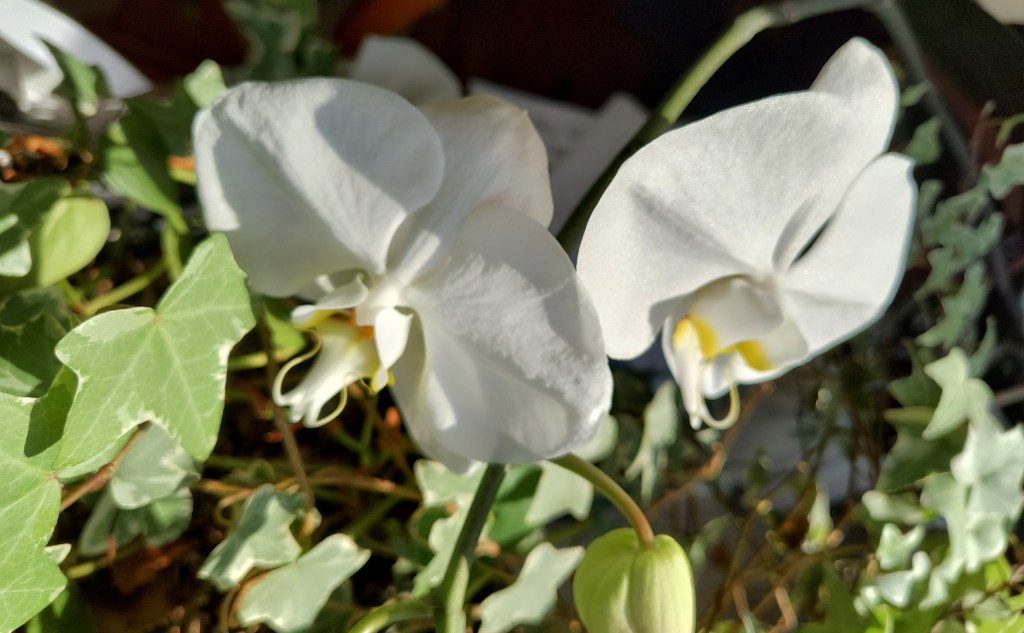
Isaiah 35:1-2 The desert and the parched land will be glad; the wilderness will rejoice and blossom. Like the crocus, it will burst into bloom; it will rejoice greatly and shout for joy.

This is what we found when we came home from Colombia. More about that next time!

Longing for restoration has been a theme for me as I waited for two surgeries last year, after a long time of attempting to resolve my problems non-surgically, and as I tried to be patient though the recovery process. Ever since sin came into the world, we exist in a perpetual state of longing for things to be made right.

Because of Jesus’ resurrection, we can have hope that God cares about the pain in our world enough to enter it Himself and that He is powerful enough to put an end to death and sadness. He promises to come back again someday and mend all that is broken.

Isaiah 35 gives a glimpse of what God’s kingdom will look like when it is restored to its intended design. It will not just be improved, but perfected. Beyond meeting our basic needs, all of creation will flourish and be made beautiful.

This year I’ve taken comfort in the fact that God doesn’t ask or expect us to fix all our problems in our own strength, but that He invites us to participate with Him in His work of renewing what has decayed and creating new things that are good. When we think about the current wars, our deteriorating bodies, relational conflicts, or our selfish hearts we can feel overwhelmed. But help is coming. Justice is coming. Jesus is coming.

In the meantime, we don’t have to sit back and say, “Nothing matters, because it’s all going to fall apart anyway, and God will just fix it all.” Just as I give small tasks to my young children to help with a bigger job than they can do on their own, the Lord gives us our small part in his work. He uses us despite our past or ongoing faults, with whatever limited resources we have.

As we humbly engage in God’s redemptive work, our values become more fully aligned with God’s values. We become invested in the people and things we’re responsible for and we grow in desiring their good. 

For me, working for good means homeschooling our kids, teaching classes on our homeschool community days, helping out in Kids Church, taking meals to people, and hosting people for dinner. I also enjoy weekly time for creative projects like drawing and songwriting. 

What’s going on in your corner of the world? Where do you long for restoration? What areas of growth or healing have encouraged you? How are you working to bring about goodness and beauty? I would love to learn from you!

Beautiful Things by Gungor

He decides

But God isn’t slow

2 Peter 3:8-9, 13 A day is like a thousand years to the Lord, and a thousand years is like a day. The Lord isn’t really being slow about his promise, as some people think. No, he is being patient for your sake. He does not want anyone to be destroyed but wants everyone to repent … what holy and godly lives you should live, looking forward to the day of God and hurrying it along. … We are looking forward to the new heavens and new earth he has promised, a world filled with God’s righteousness.

Chapter 1 of 2 Peter gives us a pattern of godly living. Chapter 2 warns us not to follow false teachers, showing us the antithesis of godly living. Chapter 3 reminds us Jesus will return and set the world right.

It’s the hope Christians have held on to for two thousand years.

Imagine: already when Peter wrote this, just a few years after Jesus returned to Heaven, believers—including people who personally knew Jesus—already felt like it was taking a long time for him to come back. And here we are, almost two thousand years later, still yearning for the day we will meet our beloved Lord face to face.

But what catches my attention as I read chapter 3 is the word “repent” in verse 9, because it reminds me of Peter’s repentance and restoration after he denied Jesus. Hours before he had brashly said, “I’m ready to die for you” (John 13: 37). Jesus answered, “Die for me? I tell you the truth, Peter—before the rooster crows tomorrow morning, you will deny three times that you even knew me.”

Ouch.

No wonder Peter escaped into fishing. And then Jesus performed a miracle that mirrored one of Peter’s early encounters with him, with one critical difference. Compare Luke 5:5-7 with John 21:11: The first time, the nets were so full they began to tear. In writing about the second time, John makes a point of detailing that there were 153 large fish, and yet the net did not tear.

The first time Jesus performed this miracle, Peter wasn’t ready for his role as a fisher of men. Here’s The Chosen’s dramatization of this event. https://www.youtube.com/watch?v=hWGCkovAUWM

The second time, Jesus took Peter through an intriguing process of repentance and restoration, entrusting his “lambs” to Peter’s care, and gave him a new identity: a shepherd.

A friend in Brazil sent us a moving song about Peter. You’ll capture its soul by listening even if you don’t understand Portuguese. Jesus tells Peter, “I know you own your boat. But I own the sea.” And Jesus reminds Peter how to live his life: “Your knowledge will only matter if you know how to love.”

I’ve seen 2 Peter 3:9 and 15 applied to evangelism, the role of the fisherman. I think there’s more to it than that. I think they applies to each of us in the areas we each need to repent and be made whole, as we are cared for by our Shepherd. Like Peter himself.

Through the centuries, people have made predictions about Jesus’ return and have exhorted believers to prepare for that Day, sailing their boats as well as they knew how. Let’s remember: The Lord owns the sea. He decides.

And meanwhile, our instructions are clear. Make every effort to be found living peaceful lives that are pure and blameless in God’s sight. … Grow in the grace and knowledge of our Lord Jesus Christ.

The Lord whom Peter came to know very, very personally.

But God gives hope of freedom from death and decay

Romans 8:20-23 Against its will, all creation was subjected to God’s curse. But with eager hope, the creation looks forward to the day when it will join God’s children in glorious freedom from death and decay. For we know that all creation has been groaning as in the pains of childbirth right up to the present time. And we believers also groan, even though we have the Holy Spirit within us as a foretaste of future glory, for we long for our bodies to be released from sin and suffering.

In São Paulo, we lived a few blocks uphill from one of the city reservoirs, Represa Guarapiranga, a sizeable lake surrounded by grass and trees and flowers and birds. A flock of herons occupied an inlet; exotic pheasant-like birds whose name I don’t remember nested on the shore. Cows, horses and stray dogs wandered there (watch your step!). Neighborhood men and boys fished and played soccer, flew kites and maneuvered battery-powered miniature airplanes.

Hungry for green space in our industrial city of 22 million (our house had no yard), our family celebrated Easters with sunrise breakfasts at the represa and on clear nights sometimes glimpsed a few stars. We jogged there and picnicked, enjoying the gracious accent of sailboats and other craft.

Our neighbors were less sanguine about using the represa shoreline. Drugs were sold and smoked. Assaults and murders, kidnappings and rapes were too-often reported. Vagrants bathed and slept there. Soccer fields flooded during rainy season, while mosquitos thrived.

From our upstairs windows, the represa offered a soothing touch of nature amid the concrete and traffic. Such a lovely image—from a distance. Up close—hmm, not so much:

Sadly, I can’t find the photo I took of the Guarapiranga shoreline, but this gives you the idea. Shutterstock: Wipas Rojjanakard

My friend Loide, an architect who worked for the city, long nurtured a vision for our neighborhood shoreline. On a visit several years after Karis and I left São Paulo for Pittsburgh, I discovered Loide’s plans had been embraced and funded! Cultivated flora framed walking/jogging paths, exercise equipment, benches, and concrete tables with painted-on gameboards. The half-mile park hugging the shoreline of “our” represa was fenced, protected and maintained by a staff of guards and gardeners. Hundreds of people, from infants to elderly, now safely enjoyed the reclaimed space.

For me, Loide’s park, infusing hope in a setting of violence and violations, is an image of restoration—what Paul calls “a foretaste of future glory.”

Almighty and everlasting God, mercifully hear the supplications of your people, and in our time grant us your peace.