Reprise

But Jesus is a master of reconnection Lenten/Easter question #19

John 21:3-5 Simon Peter said, “I’m going fishing.” “We’ll come too,” they all [six other disciples] said. So they went out in the boat, but they caught nothing all night. At dawn, Jesus was standing on the beach, but the disciples couldn’t see who he was. He called out, “Fellows, have you caught any fish?

Luke 5:10 (Matthew 4:19, Mark 1:17) Jesus replied to Simon, “Don’t be afraid! From now on you’ll be fishing for people!”

Sudoku. That’s my “go to” when I want something familiar and comfortable. When I’ve been stretched mentally, socially, spiritually, or emotionally. What I love about sudoku, beyond the satisfaction of solving the puzzle, is the fact that there’s only one right answer. The rest of the world may present confusing, chaotic conundrums and confounding challenges. Sudoku is “safe.”

The disciples do something similar in John 21. They are comforted, of course, by knowing Jesus is alive again, but he “randomly” shows up and then disappears again. It’s not clear, though, what happens next. Without his leadership, they don’t know what to do with themselves. Peter and Jesus have not yet dealt with the elephant in the room, his three-fold denial. Beyond his grief and self-recrimination, I’m sure he feels disqualified from the leadership role Jesus had been mentoring him into.
Shutterstock: wanida tubtawee

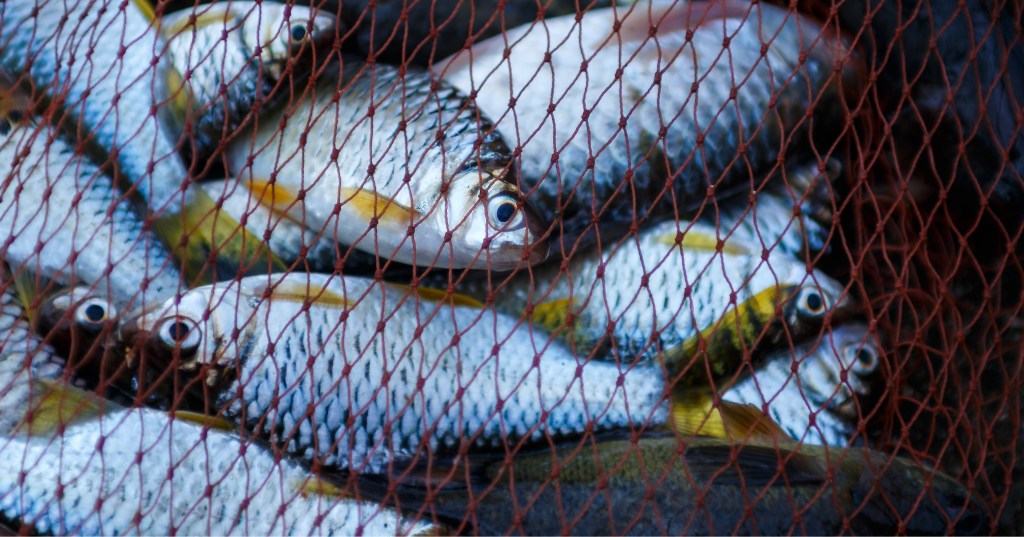
Going fishing, a familiar throwback to the disciples’ old lives before they met Jesus, promises a time out, an activity they can do with confidence and competence. Sunshine above them sparkling on the water, the fresh breeze, the creaking and smells of the boat, the feel of the nets in their hands, the joy of working together with beloved companions, of doing something (not just waiting for Pentecost), the anticipation of roast fish … Ahhh

How often do you do something similar when you’ve been overwhelmed, stretched beyond your comfort zone?

There’s a lot more to Jesus’s simple question “Have you caught any fish?” than a request for information from someone wanting to cook fish for breakfast. John 21 is a masterfully creative reprise of Luke 5 that only an omniscient designer could have achieved. To appreciate it, re-read Luke 5:1-11. For a vivid visual, watch The Chosen’s interpretation of this so-important day in Peter’s life.

“Don’t be afraid! From now on you’ll be fishing for people!” Jesus told Simon, whom he later renamed Peter (Luke 5:10), in a lifechanging “But God” moment Peter doubtless never forgot.

Fast forward a year and a half. “Have you caught any fish?”

I see Jesus accomplishing several things with this question, beyond the disciples’ physical need for nourishment after fishing all night.

*Jesus validates their deeper calling, to be “fishers of men,” a calling they had ample reason to abandon, after they abandoned Jesus in his hour of deepest need.

*Jesus refocuses their attention, after the trauma of the crucifixion and the confoundment of his resurrection. In essence, I think he’s saying, “It’s time to get back to the real work—you know what to do.”

*With his invitation to breakfast (v. 12), Jesus tells them he still cares about them; he still treasures time with them; the rich conversations they had shared on countless such mornings, tramping around Palestine; the friendships they had all cultivated with each other.

*Jesus sets Peter up for the final questions he asks in the gospel of John, the subject of our next post, the last of our “twenty questions.”


Advent 1, Hope: Already and not yet, by David Kornfield, Pittsburgh, PA

BUT JESUS will return and set everything right

Hebrews 9:28 Christ will come again, not to deal with our sins, but to bring salvation to all who are eagerly waiting for him.

Revelation 1:7 Look! He comes with the clouds of heaven, and everyone will see him.

On days like today, with occasional sun breaking through clouds, I often say to Debbie, “It could be today!”

Shutterstock: Trofimenko Nickolai

A person’s last words carry weight. How much more if he is the author and completer of human history? Of my story. Of your story. Of our story as the church of Jesus Christ. His last recorded words in the Gospels are: “Be sure of this: I am with you always, even to the end of the age” (Matthew 28:20).

There will come an end to the world as we know it. Advent recognizes this fact and gives us time to prepare our hearts for our Lord’s return. It’s a time of tension between:

1. His arrival as a baby and his imminent arrival as the King of Kings.

2. What we have already experienced of Christ and what is yet to be revealed.

3. The maturity we have already attained and what we still lack.

The world is lost in the commercial focus of Christmas. We must get “lost” in anticipation of the imminent arrival of our King of Kings.

We live in the space between what Jesus has already done and what He will do. He has already performed miracles in our lives, our marriages, our families and our churches. AT THE SAME TIME, we deeply need Him to become real and present to us again today.

We honor these four weeks of Advent, celebrating Christ’s Incarnation as a tiny, totally dependent infant and his arrival in each of our hearts. At the same time, let us cry out, asking that he arrive for each of us in a new way, to transform what is still missing within us during this in-between time. Let us live fully in the revival and anointing he has already given us, even while we stretch forward to the greater revival and anointing that we so desperately need.

Lord, break in me everything that needs to be broken.

Heal in me everything that needs to be healed.

Fill in me everything that needs to be filled.

Anoint in me everything that needs to be anointed.

“The celebration of Advent is possible only to those who are troubled in soul, who know themselves to be poor and imperfect, and who look forward to something greater to come.” Dietrich Bonhoeffer

A new nature

But God forgives sin; he doesn’t excuse it.

Ephesians 4:21-24 Since you have heard about Jesus and have learned the truth that comes from him, throw off your old sinful nature and your former way of life, which is corrupted by lust and deception. Instead, let the Spirit renew your thoughts and attitudes. Put on your new nature, created to be like God—truly righteous and holy.

Colossians 3:10 [see 3:1-17] Put on your new nature and be renewed as you learn to know your Creator and become like him.

I’ve enjoyed watching a bed of ferns at my daughter Valerie’s house this spring, and wish I had taken pictures of each stage. After frost killed last year’s growth and the dry stems were cut away, the patch looked dry and dead, not at all pretty. Before we traveled in March, tiny green shoots appeared. In April, the ferns looked like balls, with a few beginning to uncurl. Now, the ferns look like this, fresh and lovely in their new life. An analogy for me of renewal and transformation.

Our pastor in Brazil, invited to speak in another church one Sunday, asked his adolescent son to tell him about the sermon Vini had heard at home. Having spent the sermon time messing around with his friends in the balcony, Vini scrambled for an answer and finally responded, “It was about sin!”

“What did the preacher say about sin?” asked Vini’s father.

“He was against it!” replied his resourceful son.

God is too. Because sin harms his beloved children and it harms those around us. Colossians 3 lists the kinds of attitudes and actions God opposes: sexual immorality, impurity, lust, evil desires, greed, idolatry, anger, rage, malicious behavior, slander, dirty language, lying …. (v. 5-9).

In stark contrast, the new nature Christ offers looks like this: tenderhearted mercy, kindness, humility, gentleness, patience, forgiveness, love, harmony, peace, thankfulness, wisdom (v. 12-17).

Which of these takes more strength and courage? Destroying something beautiful is always easier than creating it. Anyone can blow something up, including someone else’s reputation.

Still, God forgives our sin, when we name it, confess, and turn away from it. Jesus gave his life to make this possible.

God doesn’t, however, rationalize, gloss over, condone, excuse, or justify sin, any more than a loving parent would laugh and pat the head of a child getting into trouble, or an oncologist would ignore a cancer in order to not cause pain and distress to his patient. Nor does God say, “It’s OK to do wrong as long as you achieve good ends.” He says, “Don’t be misled—you cannot mock the justice of God. You will always harvest what you plant.” (See the rest of that passage too, Galatians 6:7-10.)

Forgiveness isn’t the same as excusing. It’s costly. It says, “This is wrong, and deserves punishment. I accept the punishment in your place, to free you from sin’s power over you.” That freedom often comes, though, with discipline, through experiencing the consequences of what we’ve done.

During our long trek through the world of transplant, I saw a patient recovering from lung transplant outside the hospital, smoking.

In those years, people waited two to three years for a lung transplant. While waiting, around 20% of them died. (See the statistics here.)

So you can imagine my feelings when I saw this patient. I felt it as a punch in the gut, as a slap in the face of each person still waiting for a lung, or for two lungs, as well as to the family of her donor. As total disregard for the preciousness of the gift she had been given.

Is God unkind and unreasonable when he asks us to honor and nurture our new nature, the new abundant life his Son died to offer us?

P.S. This article prompted some of the thoughts in this post. I have no idea how true the author’s premise is, but the question he addresses is one I hear often from puzzled observers.

Create in Me, The Acappella Company