But God had other plans: He knew what lay under the desert land
Ephesians 3:17 Christ will make his home in your hearts as you trust in him. Your roots will grow down into God’s love and keep you strong.
Hebrews 10:24 Let us think of ways to motivate one another to acts of love and good works.
I (Debbie) was fascinated by the story my Wheaton College classmate Sue Long told in their last newsletter and am excited to share it with you. It coordinates with the “God Most Loving” chapter in Jen Wilkin’s book, In His Image, which calls us to agape love like God’s: holy, infinite, and costly. “For agape, there is no such category as “unlovable” (page 41).
Here’s Sue:
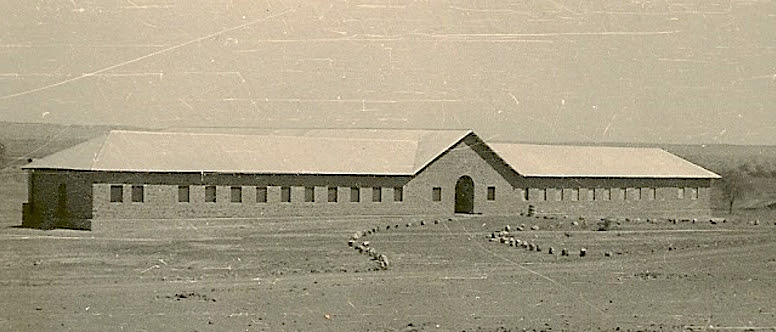
SIM (at that time Sudan Interior Mission; now SIM International) entered Niger in 1924. Terry and I and my brother Jack will return to Niger in December to celebrate this centennial. SIM’s initial work concentrated on trekking and nomadic outreach. After a decade, SIM asked the French government in Niger for property to establish a surgical hospital among the poorest of the poor in the vast rural areas of the Sahara Sahel. Finally, following 15 years of vigorous discussion, the French ceded to SIM what looked like a wasteland on which to build. It seemed a mockery: “You can try, but you won’t succeed.” But God had other plans!
In July 1950, after a year of French study in Paris, Sue’s parents, Dr. Burt and Ruth Long, landed on a desolate stretch of runway, having leapfrogged across the mighty Sahara Desert to this isolated destination. With two young sons in tow, they reached their new home in a small village scalding in the heat of brilliant sunshine. They would add four more children to the family over the next years.
The village was called Galmi, located far from anywhere, with scrubby bushes, hard, stony ground, lonely thorn (acacia) trees upon which camels chewed, no electricity, and limited water. And HOT. Burt and Ruth had agreed to open the hospital in Galmi as a channel for the gospel and a beacon of hope in a seemingly godforsaken place. Thousands of people lived in scattered villages of the Sahel with no access to medical help and no knowledge of a Savior who offers forgiveness of sins and eternal salvation.
Others had come before them. Two houses and a few other buildings, built with rocks, mud, cement, and tin-pan roofs stood ready to receive the first permanent mission workers. Way down the path from the houses stood the completely empty T-shaped hospital, with cement floors and metal shutters over screened windows.
Galmi became an oasis in the desert after a lake of water was discovered under the property in 1980. God knew the value of the French gift!
You can read the rest of the story in A Family Living under the Sahara Sun, by Sue’s mother Ruth Long, available on Amazon.
Debbie: I’ve just ordered the book. Imagine those thirty years of faithful love and service by the Long family before the underground lake was discovered. Sue says her roots grew down deep into Galmi’s hard soil. Even there, she discovered God’s wonderful love, which propelled her and her husband Terry into a lifetime of service in Nigeria.
Does the soil of your heart feel hard? Your roots growing into his love will make you strong.
Hebrews 13:21 I fervently ask God to create in you the desire to please Him by doing all kinds of good, accomplishing through your daily activities the things which only Jesus, God’s Appointed One, can equip you for. Such things are especially pleasant in His eyes, for the glory He receives through them endures through all eternity. May it be so in you! (“Consider How the Son Shines!” translation of Hebrews by Ray Elliott)
Last Sunday, October 20th, would have been my dad’s 100th birthday. Thinking about him, I wrote, with contributions from my siblings, a brief synopsis of his adventurous and remarkable life.
Raymond Leroy Elliott, October 20, 1924-November 12, 2008
Birth through age 10, 1924-1934: Born in Independence, Kansas, the second of four boys (Richard, Raymond, Roland, Roger), my father and his family experienced two bitter losses during his first decade of life. First was the death by accident of their baby sister. Second was the loss of their house, foreclosed by their bank for lack of $3.70 to pay their mortgage one month. This sounds unbelievable now. In those years of the Great Depression, the family never fully recovered from the loss of their home.
In his teens, 1934-1944: Dad was a quiet boy, deeply involved in pursuing several interests and hobbies. He couldn’t decide whether he wanted to become a printer or a professional musician or a photographer. In high school, he fell in love with my mom, two years younger. One of her earliest memories of Dad was seeing him stretched out on the floor of his living room eating a huge bowl of popcorn, so immersed in the book he was reading he was oblivious to the high-energy chaos generated by his three brothers and their friends. Dad was 17 when Japan attacked Pearl Harbor. The army refused his service because he had clear vision in only one eye. He decided the best way he could serve people would be as a pastor and began a course of study at Phillips University in Enid, Oklahoma. Mom followed him there after graduating early from high school.
In his 20s, 1944-54: Dad married Helen Ruth Belcher June 10, 1945; he was 20 and she was 18. They took on an interim pastor role for the summer in a small church in the Oklahoma panhandle. To their surprise, that summer they together came to understand the Gospel for the first time (an amazing story). They returned to Enid, OK, where Dad worked and Mom birthed her first baby, Linda, as they prayed for direction. During that year they learned about and moved to Wheaton, Illinois to attend Wheaton College. Both graduated, Dad completed an M.A. in theology, and gained another daughter, Marsha. He and Mom became interested in Bible translation, initially in China, and when those doors closed, in Guatemala.
Back in Independence, a son, Stephen, was born and Dad’s father died. Dad and Mom joined Wycliffe Bible Translators and completed linguistic training. After “jungle camp” in Mexico—training in living in rustic conditions—they moved to Nebaj, a Mayan Ixil village nestled in the Cuchumatanes mountains of Guatemala, where no other white foreigner lived at that time. I was born a year later, in the middle of a CIA-sponsored revolution against the government of Guatemala, two months before Dad turned 30.
In his 30s, 1954-64: Many stories have been told of how Dad and Mom overcame cultural barriers and fear, won acceptance by the Ixil people, and learned their language, which had never been written down. Dad creatively made a tiny two-bedroom home livable, devised an Ixil alphabet, began figuring out Ixil grammar and syntax, ventured into early translation efforts, and fathered two more daughters, Janice and Sharon. Mom offered emergency medical care in a village which had none. Dad transmitted his love of classical and marching band music and singing to his children through LP recordings. One by one, we children left home to study at a boarding school about four hours away on rough roads. Parents were allowed to visit once each semester and had their children at home only for summer vacation and Christmas.
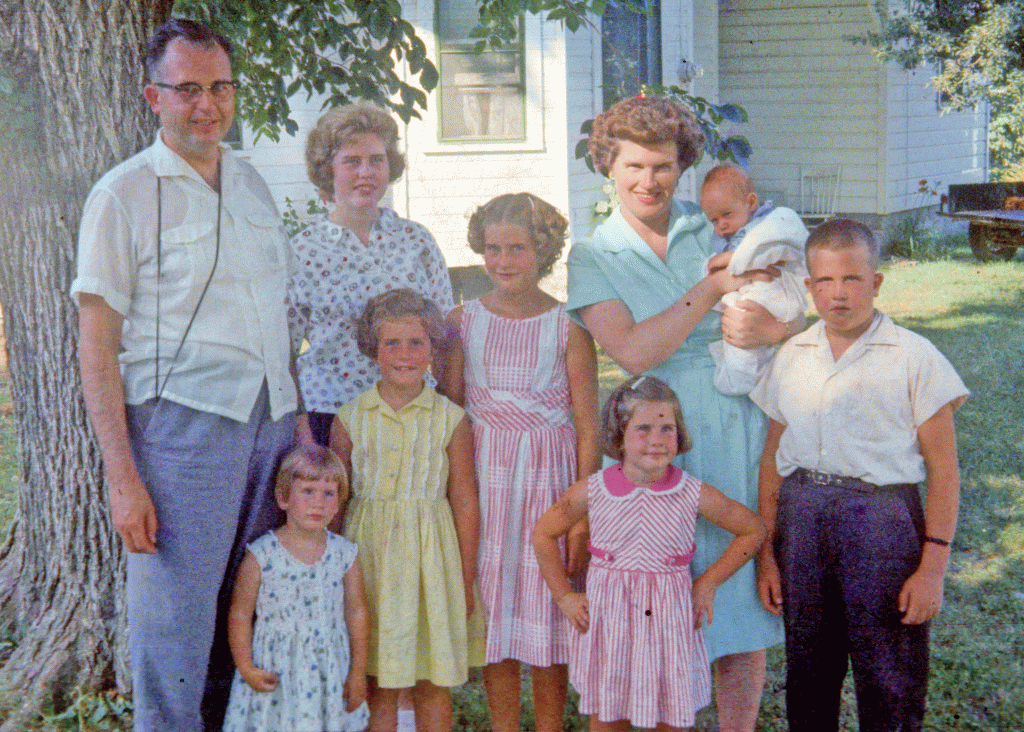
On a furlough in 1961 in Independence, my younger brother, Daniel was born, and Linda moved to Colorado for high school. Back in Guatemala, our youngest sister, Karen, completed the family. Because Dad and his two sons were born in the same hospital in Independence, and all six daughters elsewhere, we joked that if only Mom and Dad had stayed in Independence, perhaps they would have had more sons and fewer daughters.
Dad with his family in Independence, KS 1961 (I’m in the yellow dress.)
Just missing Karen …
By God’s grace and with careful nursing, almost thirteen-year-old Marsha survived a severe case of nephritis, but her recovery was slow. Linda took a semester off from college to help the family through this time, since Karen was a toddler and Danny a preschooler. Dad moved the family to a house across the street from our boarding school for a few months so Marsha could continue studying and graduate from eighth grade with her class.
Guatemala, May 1965
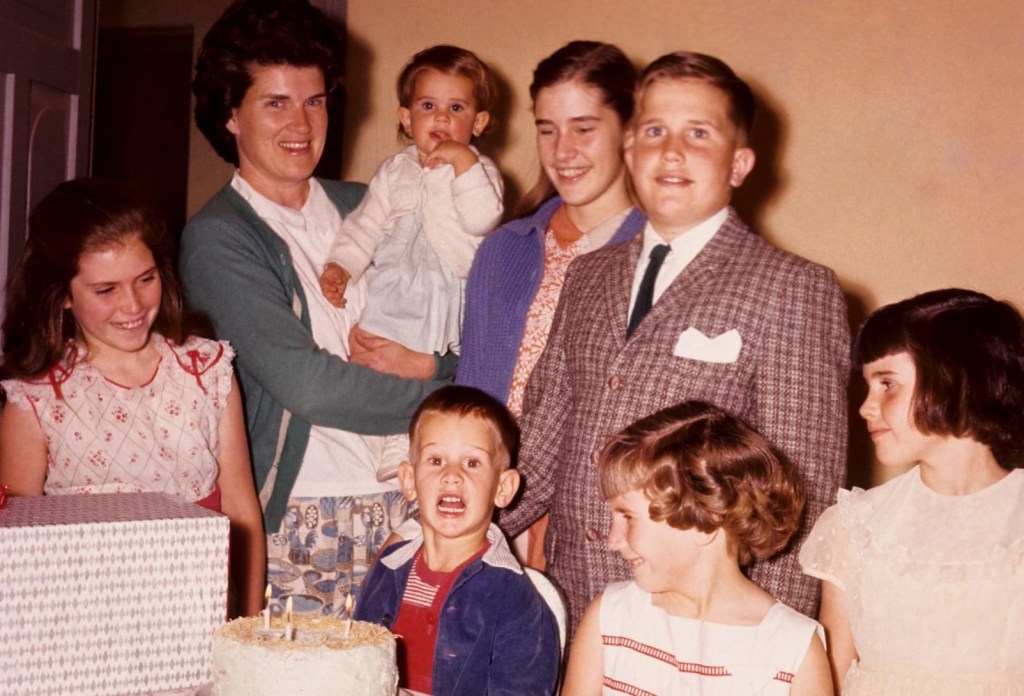
Danny’s 3 year old birthday: Karen 1; Linda in the US for high school. Dad taking the photo.
In his 40s-60s, 1964-94: Dad was asked to become the director of Wycliffe’s Guatemala branch, which required living in Guatemala City more than in Nebaj for a few years and hindered his own Ixil translation work. Dad cultivated his hobby of photography and designed his own needlepoint creations as a way to get through long meetings.
A second furlough, 1965-66, took us to Wheaton, so Dad could complete an M.A. in linguistics at the University of Chicago. Marsha and Steve stayed on in Wheaton for high school. One by one as we in turn graduated from boarding school in Guatemala, the rest of us transitioned to various cities in the U.S. Dad continued Ixil translation work while Mom focused on designing literacy materials and teaching people to read and then train others. Mom invested in building a school in another Ixil village, Salquil, which continues teaching children today. Some years, both of them taught in Wycliffe’s Summer Institute of Linguistics. A brutal civil war (1960-1996) deeply affected the Ixil region of Guatemala in the 1980s, forcing Mom and Dad to spend time in Guatemala City while contributing to relief efforts for the suffering Ixil people.
In his 70s-early 80s, 1994-2008: Dad had a very hard time acknowledging Mom’s early-onset Alzheimer’s. A family intervention when we were together in California for a grandson’s wedding in 1999 forced Dad to accept that he could not safely take Mom back to Guatemala. After some time living with Dan and his family in Wheaton, Dad and Mom moved to a retirement center, Go Ye Village, in Tahlequah, Oklahoma. Finding the silver lining, Dad said, “Helen laughs at my jokes no matter how many times I repeat them.” Dad cared for Mom until his neglect of a leg wound resulted in gangrene (Dad was diabetic). He did not lose his leg, but while he was in the hospital, Mom was moved into a memory care unit and did not live at home again.
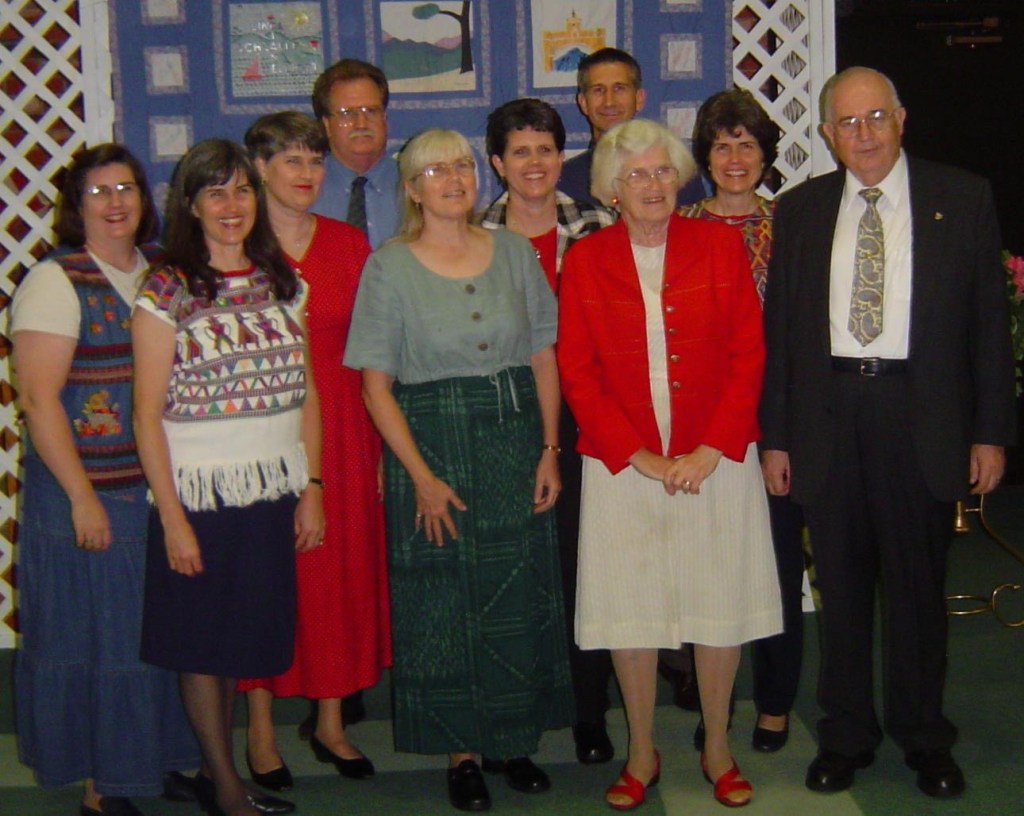
Tahlequah, OK 2004 Dad, Mom, and their eight children on his 80th birthday
With a new lease on his own life after convalescing, Dad began traveling to visit his children and twenty-five grandchildren and participated in a large family reunion in Iowa, where he entertained the kids with his creative whittling. Every day, he called his granddaughter Karis, in and out of hospitals, to encourage her.
In August of 2008, the translation of the New Testament into Ixil was finally published. All eight of Dad’s children, most of his sons- and daughters-in-law and seventeen of his grandchildren joined him in Guatemala for this wonderful celebration. Dad did not feel well while in Guatemala, but attributed this to the travel, joyful stress, and different food of the reunion. On his 83rd birthday two months later, he was diagnosed with metastatic cancer. His eight children and our daughter Karis gathered around him for his last weeks of life, while Dad protested that he had too much to do to take time out for being sick.
Just three weeks after his diagnosis, in the early hours of November 12, with Steve at his bedside, Dad died. Karen had gone home to attend to needs there, escorting Karis back to the hospital in Pittsburgh on her way. The other seven of us sat around his bed for hours talking about our father’s life. We felt he had been snatched away from us too soon. None of us were prepared to lose him. We were just beginning to restore our relationships with him after his years of devotion to Mom, who was too advanced in Alzheimer’s to understand what had happened.
As family and friends, including Karen and her family, gathered for Dad’s funeral a few days later, among many other attributes, we remarked on his sense of humor and love of puns, his resilience, his inventiveness, his thoughtfulness and kindness, and his delight in singing in a barbershop quartet at Go Ye Village.
We are grateful for all Dad gave to us and to the Ixil people through his remarkable life and faithful obedience, and his deep love of Scripture.
Romans 8:39 Nothing in all creation will ever be able to separate us from the love of God that is revealed in Christ Jesus our Lord.
In the airport, I saw a toddler harnessed to his mother, who also pushed a baby in a stroller. And then heard a passerby say, “That is so wrong! Treating a child like a dog!”
I reacted differently. I thought, “Oh, that is so smart! The child won’t experience the terror of getting lost and separated from his mom. And navigating the crowded concourse, she doesn’t have to worry so much about losing him, while also caring for her baby.”
Perhaps my positive response is linked to the challenge our mission team has given to each of us, to summarize our life story (60, 70, 80 years of intense living) in 35 minutes for our teammates. This begins today, as we are gathered at a Quaker retreat center on the beautiful coast of Oregon.
Twin Rocks at Rockaway Beach, OR Shutterstock: Cynthia Liang
As I’ve thought about my story, the phrase “tethered to God’s love” seems a perfect summary statement. All kinds of forces, both external and internal, have threatened my relationship with my Father. Yet here I am, at seventy, more attached to him than ever. Not because of me, who would so easily wander or run away, but because he holds onto me—while at the same time giving me enough slack to move “on my own.”
As I’ve thought about my life, I’ve recalled numerous times when I’ve not even been sure I wanted to continue living. Everything felt just too hard. But God intervened each time, through people, through circumstances, through his Word, through the Holy Spirit’s comfort. He kept on holding on.
But God doesn’t want us to live in fear August 1, 2024
2 Corinthians 13:11 Live in harmony and peace. Then the God of love and peace will be with you.
2 Timothy 1:7 For God has not given us a spirit of fear and timidity, but of power, love, and self-discipline.
Wow. August already. Does it seem to you too that time is just flying by?
I love the way Paul concludes his second letter to the Corinthians, “Live in harmony and peace.” Yes! He’s speaking my language! I love harmony and peace (no surprise that I identify as an Enneagram 9).
I’m in Idaho visiting my sister and remembering how she and her husband drove me all over southern Idaho to research Treasure Hunt 1904. This is the view from my windowin their home.
Is it possible, though, to obey Paul’s instruction, when there is so much chaos and conflict in the world? When fear might seem a more “rational” response, how can we so center ourselves in the God of love and peace that we live in harmony with God, with ourselves, and with others?
Yesterday while chatting with friends, I recalled Karis’s radical trust in God’s sovereignty, even when she faced incredibly difficult circumstances. On her way to the hospital, if she was well enough to speak, she would say, “I wonder who God has for me in the hospital this time?”
As soon as she was strong enough to get out of bed, she would be out on the unit visiting other patients, encouraging and praying with them. Their nationality, gender, politics, etc. were simply points of interest in loving them better. What she saw was a person going through a hard time, in need of understanding and comfort. A person whom God, who was always with her, could love through her.
It’s not that God was with Karis more than with anyone else—he promises to be with all of us, always. I think her trust and her need for him simply made her more aware of his presence with her.
Karis’s radical belief in God’s sovereignty included a conviction that nothing happened to her by accident. In every situation, she believed, God had a purpose. Her job was to discern that purpose and cooperate with it. This kept her focus on others’ needs rather than on her own suffering and losses. She allowed herself occasionally to indulge in a “pity party,” as she called it. But soon she would laugh, shake it off, say “OK, enough of that,” and start listing the things and people she had to be grateful for. This practice (perhaps it fits under Paul’s word to Timothy, “self-discipline”) made it possible for her to say, “All I see is grace.”
Karis could have let herself be paralyzed by fear. Instead, she used the challenges she faced to help her empathize with others. She didn’t get there automatically. She made choices every single day. And she allowed other people to help her with this intention. She knew her challenges were too big for her alone. She knew the value of transparency and community.
When I grow up, I want to be like Karis.
It occurs to me to mention, in this context of love and harmony, an organization committed to bridging the gap in America between the right and the left, called Braver Angels. At every level of their leadership, they maintain equal numbers of “reds” and “blues” who have learned to respect, listen to, and build friendships with each other. Here’s a quote from their website:
“As we separate into groups that increasingly do not even know, or interact with, people of differing opinions, we lose trust in our institutions, eroding the ability to govern ourselves and lowering the caliber of citizenship. This growing trend coarsens public debate, produces policy gridlock, shrinks our capacity for goodwill, and harms our family and personal relationships. Effective self-government depends precisely on what this type of polarization destroys. We believe the American Experiment can survive and thrive for every American who contributes to the effort. Where we go from here is up to us. This is the driving force that fuels our mission.”
Check it out!
I’m reading Tasha Cobbs Leonard’s story, Do It Anyway. So here’s one of her songs to encourage us today, “Gracefully Broken.”
But God doesn’t want what we have. He wants us. July 8, 2024
2 Corinthians12:14-15, 19 I don’t want what you have—I want you. After all, children don’t provide for their parents. Rather, parents provide for their children. … I will gladly spend myself and all I have for you. Everything we do is to strengthen you.
1 John 3:1, 16; 5:3, 21 See how very much our Father loves us, for he calls us his children. … We know what real love is because Jesus gave up his life for us. … Loving God means keeping his commandments, and his commandments are not burdensome.
My young grandchildren often give me things. A drawing (rainbows predominate these days). A dandelion, carefully tucked in a buttonhole or behind my ear. A bite of a cookie. A song.
These offerings are sweet because of the love that infuses them. At the same time, I need to remind them from time to time, what really shows me that you love me is your obedience. What I ask of you is not for myself—it’s for you, to help make your lives orderly and peaceful and happy. And the same is true for your mommy and daddy. You often tell me that you love them. Don’t just say it; show it—by obeying them, by doing cheerfully the simple things they ask of you.
Love and generosity are meant to be a two-way street. But that’s not what everyone experiences, and it’s hard—and not safe—to give our hearts and our obedience to those who aren’t trustworthy. In REVER (the restoration ministry Dave started in Brazil in the ‘90s), we talk about a “father wound” and a “mother wound.” So many people resonate with these concepts. They were hurt, rather than loved appropriately by their fathers and/or their mothers. This wounding made them profoundly vulnerable to abuse by other people. Often, they struggled with loving God, their parents, and other people, because in their formative years, they did not feel generously loved and cared for by the most important people in their lives.
Our heavenly Father, out of his profound, pure, self-giving love, can and longs to heal these soul wounds. Jesus said, “Let the little ones come to me.” I think that’s each one of us. His heart breaks when he sees abuse carried out in his name, throwing up barriers to him rather than a helping hand.
I’m reminded to be careful of my own heart, words, and actions. I want to open a way to the Father, not clutter it with pitfalls or align God’s pure name with harmful words and behavior.
Where I grew up, this was a common way to clear a path. Shutterstock: n_defender
If someone asks you about your Christian hope, always be ready to explain it. But do this in a gentle and respectful way … Let them see the good life you live because you belong to Christ. … who died to bring us safely home to God (1 Peter 3:15-16, 18).
2 Corinthians 8:2-3, 5, 9 The churches in Macedonia are being tested by many troubles, and they are very poor. But they are also filled with abundant joy, which has overflowed in rich generosity [to the suffering church in Jerusalem]. For I can testify that they gave not only what they could afford, but far more. And they did it of their own free will … for their first action was to give themselves to the Lord. … You know the generous grace of our Lord Jesus Christ. Though he was rich, yet for your sakes he became poor, so that by his poverty he could make you rich.
I think these verses describe well many pastors and leaders to whom God has given a passion for discipleship and disciplemaking across Latin America. They inspire us daily.
If those terms sound strange or antiquated to you, here’s a simple definition of discipleship and disciplemaking: a commitment to grow and to help others grow into being more like Jesus.
What then does “being more like Jesus” look like? For me, it’s a blue butterfly. More on that below.
This isn’t the blue butterfly in my vision, but enough to give you the idea
The best summary of being like Jesus is his own: “Love each other. Just as I have loved you, you should love each other. Your love for one another will prove to the world that you are my disciples” (John 13:34-35).
“Just as I have loved you.” Until we personally experience Jesus’ love for us, we can’t love others in the same way. As Paul puts it: First, we give ourselves to the Lord.
And when we feel dry, we return to him. We offer our needy hearts to him again.
Maybe because I grew up “poor” by some standards, I tend to feel uncomfortable and insecure around people for whom wealth is a value. I know I will fall short in every direction when judged by their standards.
Perhaps that’s why Jesus’ choice to live as a poor man means so much to me. I can approach him without that paralyzing feeling of unacceptability. I know he values what matters to me: people’s selves, their souls.
One time God blessed me with a vision of myself as a child, playing in a beautiful meadow with Jesus and a lovely blue butterfly. This is the scene I return to when I feel needy of a fresh experience of his rich, unhurried, unpressured, uncomplicated love.
And when we feel his love so filling us that it spills over to others, we return to him, in thanksgiving. As noted in the last blog, “we ourselves are like fragile clay jars containing this great treasure. This makes it clear that our great power is from God, not from ourselves” (2 Corinthians 4:7).
I know, and you know, the Source of anything good in our lives. I invite you to join me today in taking time to relax in his presence, opening our hearts to his great love. Then—be amazed at what he chooses to do through the overflow to others of his richly generous love.
Hebrews 13:9 Your strength comes from God’s grace.
Psalm 23:4 Even when I walk through the darkest valley, I will not be afraid, for you are close beside me.
The image I chose for “Ordinary Time” is a father holding his child’s hand. It speaks to me of security, love, and strength.
Shutterstock: Vyestekimages
This day in “Ordinary Time” is a crunch day for Dave and me as we prepare to fly to Colombia early Wednesday for the first Latin American REVER Congress. (REVER stands for “to take another look,” a fitting acronym for emotional restoration ministry.) The theme of the congress is “Finding Joy in Difficult Times.”
This special event is drawing participants from across Latin America. Dave and I, as the “grandparents” of REVER, which we started in Brazil in 1996, will be speaking for 15 hours Friday and Saturday. Luciene, international director of REVER, has the opening plenary Thursday evening. (For those who prayed Lu through her terrible accident almost a year ago: I learned yesterday that she’s walking short distances now without a cane!)
I don’t expect to post this Thursday. By the time we get home next week, I hope my Inbox will be full of your “But God” stories—a feast of rejoicing in God’s work in your lives! I promise: YOU will be the one who benefits most, as you remember and tell and find yourself encouraged by what God has done for you, your hand in His.
1 John 2:7-8 Dear friends, I am not writing a new commandment for you; rather it is an old one–to love one another. Yet it is also new. Jesus lived the truth of this commandment.
John 15:9, 12, 26 [Jesus said] I have loved you even as the Father has loved me. Remain in my love. … This is my commandment: Love each other just as I have loved you. … I will send you the Spirit of truth. He will come to you from the Father and will testify all about me.
And they’re off on the thousand-mile drive to Oklahoma: Linda, my brother Dan, his wife Diane, and friend John, sharing the driving of the moving van and Linda’s car. The end of a chapter in Linda’s life, and the beginning of a whole new adventure.
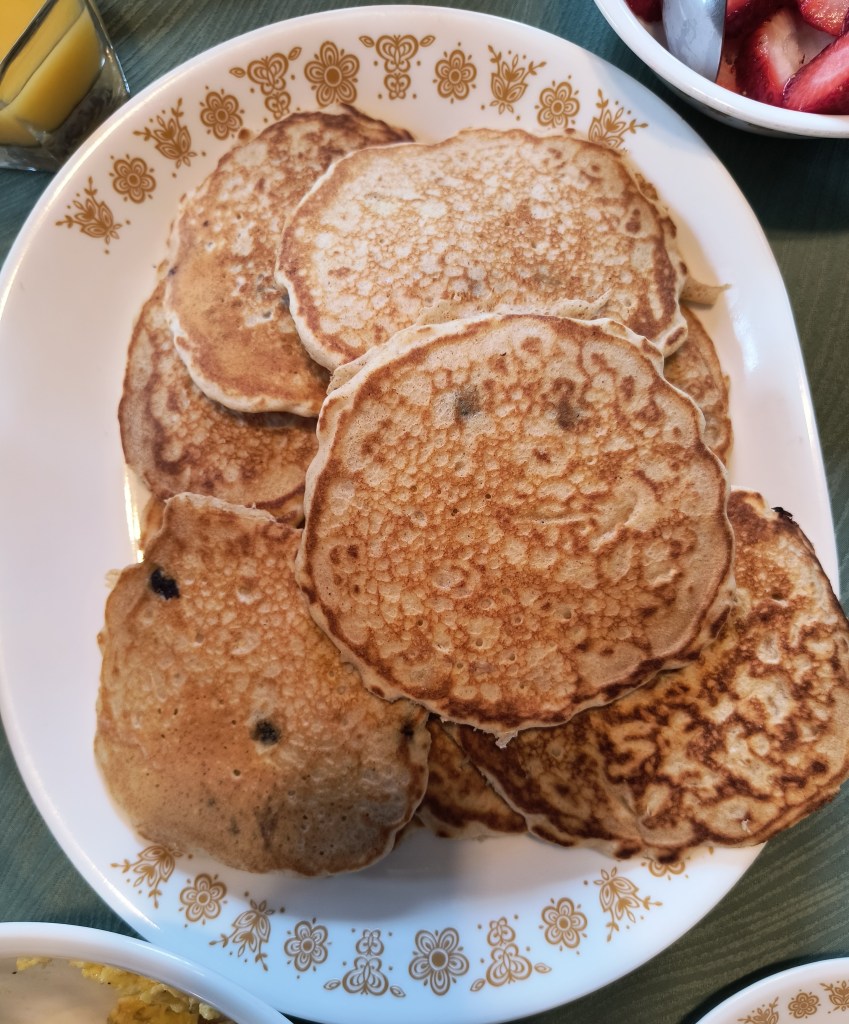
Saturday I made pancakes for the crew. I doled out the first six pancakes on the griddle and placed toppings on the table while the pancakes cooked. They looked weird, though, flat and rubbery. I stared at them, puzzled, and suddenly realized I hadn’t put baking powder or soda in the batter.
Everything there except one essential ingredient.
The difference between the first batch and the second was notable enough to take a photo.
It occurred to me that my pancakes could be an analogy of trying to love in our own power vs. including the Holy Spirit to help us love like Jesus did. On my own, my love for others can be flat and flabby. When the Holy Spirit is in charge, though, everything changes: gentleness, beauty, and good humor take the place of tension, stress, and conflict. Have you noticed that?
So now I have another image to remind me of the Holy Spirit “essential ingredient”: pancakes WITH leavening. “Don’t try harder,” they remind me. “Try smarter. Invite the Spirit to work his magic. Then relax into Jesus’s gracious love; his understanding of what each of us needs.”
1 Peter 2:1-2 Be done with all deceit, hypocrisy, jealousy, and all unkind speech. Like newborn babies, crave pure spiritual milk so that you will grow into a full experience of salvation. Cry out for this nourishment, now that you have had a taste of the Lord’s kindness.
Psalm 34:8 Taste and see that the Lord is good.
My granddaughter scrunches her face. “Yuck!”
“But you haven’t even tasted it! I promise you, this tastes good. I’m quite sure you’ll like it.”
She pushes the plate away. “I won’t. I can tell.”
“Just a tiny taste.”
“No!”
I sigh. Is this battle one I want to fight today? I finally convince her to try a tiny taste. She makes a horrible face and spits it out.
“See? I told you I wouldn’t like it.”
“Then what do you want?”
“Cucumber slices and baby carrots and tomatoes. And sweet peppers. Four of each because I’m four.”
I can live with that.
The next week I serve the yucky food and don’t say anything about it. She eats it with gusto.
“How often am I like a four-year-old?” I muse. “The struggle isn’t really about food. It’s about whether she gets to choose for herself. Like she used to say, I can do this ‘my byself.’”
You too? From the overflowing table of God’s provision for us, what nourishment do you crave today?
I crave words of kindness and gentleness. Understanding. Hope. I want to know the Lord is with me; that he perceives the weight of my concerns and is willing to share them. Today, I am drawn to drink from Psalms 145 (one of Karis’s favorites), 146, 147:
The Lord is merciful and compassionate, slow to get angry and filled with unfailing love … The Lord always keeps his promises; he is gracious in all he does. The eyes of all look to you in hope; you give them their food as they need it. … The Lord is close to all who call on him (145:8, 13-15, 18).
Joyful are those who have God as their helper, whose hope is in the Lord their God. … The Lord lifts up those who are weighed down (146:5, 8).
The Lord heals the brokenhearted and bandages their wounds. … His understanding is beyond comprehension! … The Lord delights in those who fear him, those who put their hope in his unfailing love (147:3, 5, 11).
I feel the Lord’s benevolent smile as I savor this spiritual milk, relaxing into his love and kindness. And in the fact that though he gives me choices, he is in control; I’m not. All will be well.
Psalm 103:17-18 But the love of the Lord remains forever with those who fear him. His salvation extends to the children’s children of those who are faithful to his covenant, of those who obey his commandments.
The Hebrew word for covenant(beriyth) in this verse is a blood covenant, a compact made by cutting flesh. Jesus offered his body to the thorns, the nails, the whip—out of love for us. He paid the whole price of his covenant with us on the cross. For you. For me. He is the only one with whom I have this kind of relationship. Yet how often do I honor other people’s opinion of me more than his, enough to get my tail in a knot when I think they don’t like or approve of what I believe or do or think or say or create?
Litany of Penitence 11
For seeking the praise of others
Rather than the approval of God,
Lord, have mercy upon us,
For we have sinned against you.
Chatting with a friend this week, we both admitted we tend to let other people’s opinions of what we do affect us too much. As we expressed it, we give them too much power over our emotions. I used the example of letting a negative review of something I have written cancel the joy of finding out someone was blessed by what they read. I’m learning to ask myself, “Is my conscience clear before God? Have I, as well and faithfully as I know how, followed what I believe was his direction?” If so, even though I always have room to grow, I can live from a center of peace no matter what others think or say.
Holy Spirit, cleanse, renew, and grow my awe of what Jesus did for me. Shutterstock: LovelyDay
This doesn’t mean I can’t learn from other people. I’m talking about letting their opinion rob me of joy and confidence. My temptation is to criticize myself and become self-centered (preoccupied with myself) rather than nurturing a solid confidence in God’s love that fosters a balanced perspective of both myself and others.
Here are a few more texts I’ve been thinking about in connection with today’s confession: Mt 6:1-2, 16-21, 23:5-12, Mark 6:1-3, John 12:42-43. Perhaps you can suggest other Scriptures on this topic.











 Debra Kornfield