Better together

But God’s Spirit gives us power to do what he asks

Judges 6:34 Then the Spirit of the Lord clothed Gideon with power.

Acts 1:8 But you will receive power when the Holy Spirit comes upon you.

1 Corinthians 4:20 For the Kingdom of God is not just a lot of talk; it is living by God’s power.

2 Corinthians 12:9 God said, “My grace is all you need. My power works best in weakness.”

Gideon, self-identified as the least important member of the weakest family in Israel, hid at the bottom of a winepress to thresh wheat for fear of the cruel oppression of Midianites.

(Remember Jesus’s disciples hiding in a locked room for fear of the Jewish rulers?)

Out of all Israel, the angel of the Lord appeared to this frightened young man and greeted him with “Mighty hero, the Lord is with you!”

(Remember Jesus’s disciples hearing him say to them, “I am with you always, to the end of the age”?)

It must have felt to Gideon like a sarcastic joke. I picture him, startled, looking around the small space where he was hiding to see who this strange guy was talking to. It couldn’t be to him. Mighty hero??               

Gideon responds with bitter questions, an overflow of anguish ending with, “The Lord has abandoned us.” How could this stranger possibly believe the Lord was with them?

(Remember that on the mountain in Galilee where God gave the disciples the Great Commission, Matthew makes a point of telling us that some of them doubted—even after walking so closely with Jesus for three years?)

And the angel, speaking for God, says, “Go with the strength you have, and rescue Israel from the Midianites. I am sending you!” Gideon replies, “But Lord, how can I …?” (Judges 6:14-15 and on). He didn’t realize that the strength he had was God’s strength, not his own.

(Remember Jesus saying to the disciples, “I have all authority … therefore, go”?)

The unlikely interchange between Gideon and the angel of the Lord reminds me of Moses at the burning bush. “Who, me? You want me to do what?? You’ve got to be kidding! Send someone else better qualified!”

You know these stories, right? If not, read Judges 6 and 7 and Exodus 3. If you’re like me, you’ll find a LOT to identify with in Gideon’s and Moses’s protests.

I am with you. With God’s call comes the power to accomplish what God asks of us. And because we know our own inadequacies, we know it’s only the Lord who can fulfill through us his purposes. All glory goes to him.

The Lord walked closely with both Gideon and Moses, patiently encouraging them and giving them specific instructions along the way. In each case, they started from a place of acknowledged, painful loss and defeat and failure. Their relationship with God was transparent from the beginning, with no pretense of being worthy of God using them. They learned to recognize and rely on the Lord’s voice. They depended absolutely on him.

In both cases, later, after God successfully accomplished his initial call to them, Gideon and Moses tried to go forward on their own and got into trouble. King Saul is another biblical example of the way self-confidence can become self-defeating (1 Samuel 15). The author of 1 Chronicles summarizes Saul’s life in this terse statement, “Saul died because he was unfaithful to the Lord. He failed to obey the Lord’s command” (10:13).

We don’t ever outgrow our need to depend on the Lord and submit ourselves to him. We are always beginners in this walk of obedience and faith; forever, the rest of our lives, learning and growing.

And on the flip side, in our desperate dependency, we can feel the delight of watching God do through us what we could never do in our own strength. I experience this every time I hear someone say that the Karis book has encouraged or challenged them in some way. I wrote that book with so much fear and trembling, so keenly aware of my own inadequacy.

Like Gideon and Moses, I tried to get out of doing it, asking God to choose someone else, a better writer, someone with a platform and experience in the publishing industry. Someone not so closely tied to Karis. I feared being accused of bias and lack of objectivity; that what I wrote couldn’t be relied on because I am her mother. I feared not being capable of summarizing her thirty years of life in a way that would do justice both to her faith and the Lord’s faithfulness to her. I fussed and protested for months.

And in the end, holding this little book in my hand three years later, I experienced the truth God’s Spirit expressed to Paul, which became Karis’s life verse: “My grace is all you need. My power works best in weakness.”

How is the Lord stretching you? What is he asking of you that seems impossible?

Can you hear him saying, as he did to Gideon, “I am with you”?

Are you willing for the Spirit to clothe you with power to do what he is asking you to do?

Happy birthday, Karis!

But God’s mercy never fails

Isaiah 43:2 When you go through deep waters, I will be with you.

When you go through rivers of difficulty, you will not drown.

When you walk through the fire of oppression, you will not be burned up;

the flames will not consume you.

Lamentations 3:22-23 The faithful love of the Lord never ends! His mercies never cease. Great is his faithfulness. His mercies begin afresh each morning.

By Earth time, Karis would have turned 42 today. I woke up with the song Goodness of God in my head:

I love You, Lord
For Your mercy never fails me
All my days, I’ve been held in Your hands
From the moment that I wake up, Until I lay my head
Oh, I will sing of the goodness of God

And all my life You have been faithful
And all my life You have been so, so good
With every breath that I am able
Oh, I will sing of the goodness of God

I love Your voice
You have led me through the fire
In the darkest night You are close like no other
I’ve known You as a Father; I’ve known You as a Friend
And I have lived in the goodness of God

And all my life You have been faithful
And all my life You have been so, so good
With every breath that I am able
Oh, I will sing of the goodness of God

‘Cause Your goodness is running after, it’s running after me
Your goodness is running after, it’s running after me
With my life laid down, I’m surrendered now
I give You everything
‘Cause Your goodness is running after, it’s running after me [and you, too]

He makes all things new

But Jesus IS life Lenten question #13

John 11:23-25 Jesus told Martha, “Your brother [Lazarus] will rise again.” “Yes,” Martha said, “he will rise when everyone else rises, at the last day.” Jesus told her, “I am the resurrection and the life. Anyone who believes in me will live, even after dying. Everyone who lives in me and believes in me will never ever die. Do you believe this, Martha?

1 Thessalonians 4:13-14 And now, dear brothers and sisters, we want you to know what will happen to the believers who have died so you will not grieve like people who have no hope. For since we believe that Jesus died and was raised to life again, we also believe that when Jesus returns, God will bring back with him the believers who have died.

Yesterday my husband and I flew from Colorado back home to Pittsburgh, watching the transformation of desert into well-watered spring. I found myself thinking about a similar flight soon after our daughter Karis’s death, gripped by pain sharper than any other I have experienced. Would this grief ever soften into some version of beauty less stark?

I don’t know even how to describe it. A transplant friend, whose son had died a few months earlier, texted me: “Just BREATHE.” For as long as I owned that phone, I looked back often at that text as loss stabbed me yet again.

Jesus, who wept with Mary and Martha at Lazarus’s grave even though he knew he would shortly bring Lazarus back to life, understands that pain. He offers himself, his presence with us, as we grieve.

As intense as this grieving has been, I’ve often wondered, with deep compassion, what it would have felt like if I didn’t have the hope of life after death. I’ve watched people without that hope enter profound despair. What if I didn’t know that Karis’s SELF did not die, but is whole and well? What if I didn’t know I will see her again, healed, released from her suffering, exuberantly alive? Would I have survived the grief? I don’t know.

I love imagining what people who have gone before us are like now, freed from all that hampered and troubled them on earth and face to face with Jesus, who IS life. Death could not keep him in its grip (Acts 2:24 NLT). Because he broke death’s power, we too can know life after death—the truly abundant life for which God created us.

As I hear Jesus asking me today the question he asked Martha, I can say with profound thankfulness, “Yes. I do believe his resurrection makes possible eternal life for us.” Lazarus did eventually die again, yet I know he now celebrates along with his beloved sisters the unlimited joy of forever resurrection.

A friend whose father recently died shared with me this beautiful anthem, All Things New, by Elaine Hagenberg, sung at the funeral. The text is adapted from a 19th c. poem by Frances Havergal. So appropriate as we walk into next week:

Light after darkness, gain after loss

Strength after weakness, crown after cross.

Sweet after bitter, hope after fears

Home after wandering, praise after tears.

Alpha and Omega, beginning and the end

He is making all things new.

Springs of living water shall wash away each tear.

He is making all things new.

Sight after mystery, sun after rain

Joy after sorrow, peace after pain

Near after distant, gleam after gloom

Love after loneliness, life after tomb. (Refrain)

The plow’s blades are sharp

But God’s planting produces a harvest of love

Hosea 10:1-4, 12 The richer the people get, the more pagan altars they build. The hearts of the people are fickle. … They spout empty words and make covenants they don’t intend to keep. So injustice springs up among them like poisonous weeds in a farmer’s field. … The Lord says, “Plant the good seeds of righteousness, and you will harvest a crop of love.” Plow up the hard ground of your hearts, for now is the time to seek the Lord, that he may come and shower righteousness upon you.

In April 2013, I asked Karis how she wanted to celebrate her 30th birthday. By then she wasn’t very mobile and often rested in the recliner we positioned for her in our dining room, looking out on our back yard. Most Pittsburgh yards slope either up or down. Ours curves up with a flattish strip along the back fence.

For her 30th birthday (May 5, 2013), Karis requested turning the grass strip into a perennial garden, created with transplants from her friends’ gardens. As she enjoyed the flowers, she would remember their amazing and beautiful love for her.

A Notre Dame friend, Georges, offered to take on the project of transformation. With a borrowed rototiller, he broke up roots and plowing the grass under.

Shutterstock: Janice Higgins

Once Georges declared the space ready, we invited friends to come over and plant something from their gardens. Spring brought a profusion of blooms to delight and encourage Karis as her kidney failure worsened.

All this came to mind when I read this passage from Hosea. Weeds (in our case, grass) can be dealt with several different ways. The most gentle and time-consuming is to pull them out. They can be killed with chemicals. Or they can be plowed, like Georges did to create Karis’s perennial garden, using sharp blades to destroy both the plants and their roots.

Through Hosea, God asked his people to plow up the hard ground of their hearts, so the seeds of righteousness could flourish. Georges’ rototilling illustrates for me how painful that work can sometimes be, when it’s not just a weed here or there, easy to pull out by hand, but rather a whole section of my heart given over to bad habits, attitudes, and behavior because of neglect or resentment or idolatry (something else becoming more important to me than loving God and others).

I’ve had to do some painful plowing of my heart the last couple of weeks. You too? I can’t wait to see the beautiful crop of love God promises to grow from his seeds of righteousness.

Press on

But God says our love matters more than sacrifices

Hosea 6:1-3, 6 Come, let us return to the Lord. He has torn us to pieces; now he will heal us. In just a short time he will restore us, so that we may live in his presence. Oh, that we might know the Lord! Let us press on to know him. … [The Lord says] I want you to show love, not offer sacrifices. I want you to know me more than I want burnt offerings.

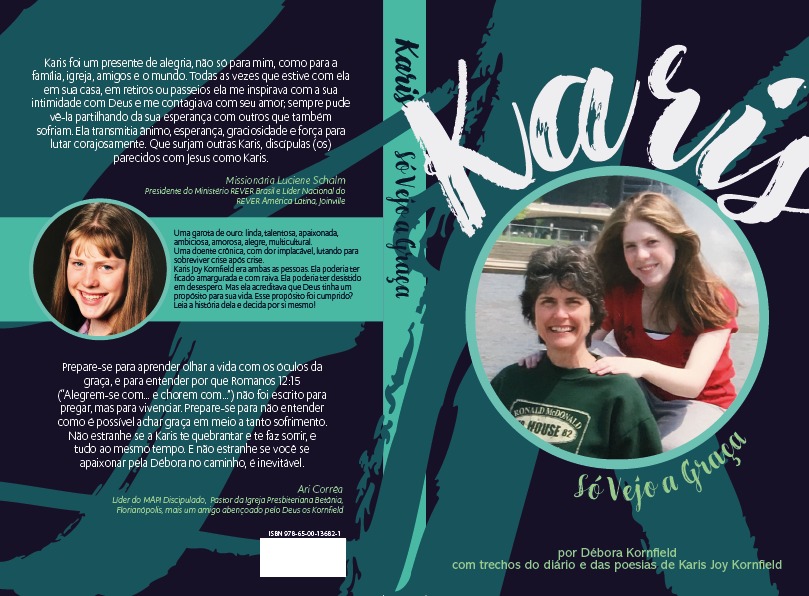
Over the last week and a half, as we marked eleven years since Karis left us, I have re-read Karis: All I See Is Grace. I couldn’t remember which parts of her life—of the three thousand pages of my first draft—had made the editing cut and into the book. I hadn’t remembered how often she referenced this passage from Hosea.

To understand this, it’s necessary to know that Karis had a high view of God’s sovereignty. She believed that NOTHING happened without the permission of God. He, all-powerful and all-knowing, could end or cause anything at any time. Often, she believed, he did not act when he could have because he so honors human free will. He wants us to choose him of our own volition. He wants us to obey him because we love him, not from force or manipulation. He gives us more latitude in our choices than perhaps we are wise enough to handle. Yet we learn from our mistakes. Painful as their consequences may be, God doesn’t usually step in to shield us from the results of what we have chosen. But this doesn’t mean he doesn’t see, or know, or care what we are going through.

A harder concept for me is Karis’s belief that her birth defect, with all its mosaic of positive and negative impacts on her life, was chosen for her by God. That his purposes for her required the suffering she endured. That had she not spent so much time in clinics and hospitals, she would not have met the people with whom she was meant to share God’s love.

I tend to think that Karis was born without functional intestinal nerves not because God so willed, but because we live in a fallen, imperfect world in which this kind of thing can happen. The question for me is whether we allow God to act within our circumstances to accomplish his desire to love others through us.

Either way, it’s clear God longs for us to know him. To personally know his heart of love toward us. To put ourselves intentionally in the way of knowing him better, in every way we can “pressing on” to know him and to love him, not whatever image of him we have inherited or invented. This, for Karis, was her lifelong quest.

Sovereign by Chris Tomlin

Remembering …

Yesterday we marked eleven years since we said goodbye to Karis. Her sister Valerie reminded us of a beautiful song by Rich Mullins which I consider Karis’s “signature song.” I am flooded with memories of hearing it, both at home and in the hospital. Enjoy.

Karis in the Montefiore solarium listening to Rich Mullins

There’s more that rises in the morning than the sun
And more that shines in the night than just the moon
It’s more than just this fire here that keeps me warm
In a shelter that is larger than this room

And there’s a loyalty that’s deeper than mere sentiments
And a music higher than the songs that I can sing
The stuff of Earth competes for the allegiance
I owe only to the Giver of all good things

So if I stand let me stand on the promise
That you will pull me through
And if I can’t, let me fall on the grace
That first brought me to You
And if I sing let me sing for the joy
That has born in me these songs
And if I weep let it be as a man
Who is longing for his home

There’s more that dances on the prairies than the wind
More that pulses in the ocean than the tide
There’s a love that is fiercer than the love between friends
More gentle than a mother’s when her baby’s at her side

And there’s a loyalty that’s deeper than mere sentiments
And a music higher than the songs that I can sing
The stuff of Earth competes for the allegiance
I owe only to the Giver of all good things

So if I stand let me stand on the promise
That you will pull me through
And if I can’t let me fall on the grace
That first brought me to You
And if I sing let me sing for the joy
That has born in me these songs
And if I weep let it be as a man
Who is longing for his home

Advent 4, faith: we can’t do it alone

But Jesus perfects our faith

Hebrews 10:38, 11:1 My righteous ones will live by faith. … Faith is the confidence that what we hope for will actually happen; it gives us assurance about things we cannot see.

Hebrews 12:1-2 … Let us run with endurance the race God has set before us. We do this by keeping our eyes on Jesus, the champion who initiates and perfects our faith.

Collage by my friend Carol Amidi CarolAmidi.net

Have you ever had your confidence in God severely threatened? Have you come to the end of your own ability to keep on believing?

Often, I have found, people make judgments about each other regarding the sincerity and adequacy of their faith.

The thing is, life can be very tough, and messy, and confusing, and painful. Not one of us is strong enough to maintain faith all by ourselves.

The good news is that God doesn’t ask this of us. He surrounds us with love and support—his own, and the Body of Christ. Hebrews 12, coming just after the litany of faithful ones in chapter 11, encourages us that even those who have gone before us are supporting and rooting for us.

I’ve found too that people still alive do this also—sometimes in completely unexpected ways. Here’s a treasured example.

If you’ve followed this blog, you know that our daughter Karis was born with nonfunctional intestines. Day after day in the hospital, test after test came back normal, yet even a teaspoon of fluid by slow drip into her stomach prompted bilious vomiting, and nothing at all came out as waste. When the surgeons finally opened her up and biopsied her intestinal tract, they asked us to remove all life support and let her die, because there was no hope that her intestine would ever function.

A missionary friend of Dave’s from Florida visited us on a trip to Chicago. The timing couldn’t have been better. Though Dave wasn’t there, Harold inspired enough confidence that I was able to confess I didn’t feel I had any faith left. Harold said two things. Faith is not grounded in circumstances. It’s grounded in the unchanging character of God. And, he said, if my faith was faltering, it was time for the Body of Christ to have faith for us.

I’ve never forgotten Harold’s compassionate words. I felt so cared for, so supported, so understood. He didn’t criticize me or blame me or require something of me. He asked me instead to let go. To let others share my burden. To rest in God’s immutable love, for Karis and for our family, and for all whom her little life touched.

Faith, I think, asks us to find courage to share our needs not just with God, but with each other. As Advent so quickly morphs into Christmas this year, I pray you find a trusted friend with whom you can do just that.

Advent 2, Peace: No fear?

But God loves us perfectly

Hebrews 13:5-6 God has said, “I will never fail you. I will never abandon you.” So we can say with confidence, “The Lord is my helper, so I will have no fear. What can mere people do to me?”

1 John 4:16-18 We know how much God loves us, and we have put our trust in his love. … Such love has no fear, because perfect love expels all fear.”

Some people had trouble posting responses to the question in my last blog (no idea why—I hope it fixes itself) and wrote me by email. I asked Elaine whether I could quote part of what she wrote:

“Fearing God eliminates our other fears.  As John says, his perfect love removes them.  And Romans 8 is so beautiful in affirming that nothing can separate us from his love.  So both of these things give me peace no matter what crazy and terrible things are going on.”

I’ve been thinking about this, and how it works in my life practically. Last week, I said to a friend, “I lived in fear for thirty years—the thirty years of Karis’s life. Her wellbeing turned on a dime. I walked in high alert. She could be well in the morning and fighting for her life in the ICU by afternoon. All plans were held loosely …”

Evaluate with me the statement that I “lived in fear for thirty years.” On the face of the Scriptures quoted above and Elaine’s affirmation, it seems I was telling my friend I didn’t trust God or his love. Some of the most profound hurts that I suffered were from people telling me (who didn’t live the Karis reality 24/7 or understand more than surface facts about what it entailed) that I was in sin because I was afraid.

Is it true that in my fear I didn’t trust God? I don’t think so. Is it possible there is a difference between fear in response to specific frightening circumstances, and fear as an existential state that bars us from the comfort God can give us? It was exactly because I trusted God that I could express my fears to him. I knew that HE would not stand apart and judge me or criticize my “spirituality.” He instead walked with me through the dark valleys.

Fear is, after all, an emotion that warns us of trouble or threat. It helps us recognize when all is not well; when action needs to be taken. Healthy, appropriate fear can save us from taking life-threatening risks. We teach our children not to run into the street without looking both ways, because cars can kill them. It’s appropriate to fear what wind and waves can do to us (yes, there are family stories behind this example, that involve exhaustion and jellyfish stings and … ). We call someone “foolhardy” when they choose to swim despite red high hazard signs on the beach (thinking of you, David Kornfield). Having no fear can literally kill us.

Another thought: Often fear is linked to our sense of impotence, our lack of control over circumstances or other people’s choices. Sometimes this leads to blaming God for things that happen to us or to people we care about. What does it mean to me in my everyday life that God is in control of the universe? Doesn’t he see me? If he loves me, and has all power, why doesn’t he act to remove my suffering or the suffering of others? This age-old question is called “theodicy.” Suffering forces us into asking these questions.

As you can tell, I’m not offering any pat answers here. I want to engage you in thinking more deeply about your own suffering, your own fears. And whether peace, biblical all-encompassing shalom, is a reality in your life, and if so, what pathway you walked to discover and experience the “perfect love that expels all fear.” Join the conversation!

Angels, again

But God’s angels serve us!

Hebrews 1:14; 2:9 Are not all angels ministering spirits sent to serve those who will inherit salvation?

She did WHAT?!

I was reading one of Karis’s journals, age fourteen. She described a habit she had developed, when she couldn’t sleep because of pain. In the early morning hours, she would slip outside and sit on our front step, watching the sun rise and our neighborhood slowly come to life, greeting and blessing passersby hurrying up the hill to catch buses to their jobs across town. We lived in a sort of rowhouse, fronting directly on the street, sharing walls with neighbors right, left, and back.

A view of our street, our open carport on the left, the step where Karis sat behind the neighbor boy in blue (one of Karis’s closest friends). Karis, center, between Rachel and Valerie, holds her dog Buddy. Dave’s dad was visiting us. See the trees and lake in the middle distance? This is the water reservoir for our part of the city; it now boasts a park and walking track designed by a beloved member of our church. Living near the “represa” was one of the perks we enjoyed–along with our wonderful neighbors, who looked out for us in every way they could. We cherish friendships with them still, and visit whenever we can.

Why did I feel alarm—and outrage, if I’m honest—learning about this seventeen years later?

  1. We lived in a dangerous neighborhood in São Paulo, Brazil, where assaults, robberies, and kidnappings were frequent, especially of white, blond children and teens, presumed to be from rich families. Karis knew this. Every one of our neighbors’ homes had been broken into; a teen across the street had been shot; one family’s young children tied up and terrorized; every home robbed … Most of this occurred in the vulnerable early hours of the day. All the horror stories sprung to my mind; our neighbors gathered in our living room seeking solutions. Yet Karis consciously and deliberately exposed herself to harm while the rest of the family slept.
  2. It’s difficult to adequately express the complexity of keeping Karis alive day to day, totally apart from these external threats. On any given day, she could wake up feeling well enough to go to school, and I would proceed with my ministry and household plans for the day, only to be called a few hours later: “We found Karis passed out in the bathroom …” The race across the city to emergency care … the inevitable scolding by her doctor for not acknowledging school was not really an option for a person like Karis. (An extrovert, she hated every single day she missed being with her friends and all the activities of school.)
  3. The cost of Karis care to each of our other children, when so often, for example, family plans had to be cancelled because Karis was once more in the hospital. Christmases, birthdays, weekends spent in one hospital or another. I couldn’t believe Karis would so brazenly add the danger of assault or abduction to her life and ours.
Our family in 1999, Karis age 16

So why did she do this? We didn’t allow our daughters to walk anywhere alone. Not ever.

I took some time to calm down, then kept reading.

Over the course of her high school journals, Karis justified her early-morning breach of family rules because:

  1. She needed those hours away from her pain-filled bedroom. She needed to breathe fresh air and commune with God in the beauty of sunrise, a beauty hard to come by in our concrete jungle.
  2. She needed people. Anytime other people were present, even peripherally, she could focus on them and not on her distressed body. (This reached the point when she was in college that her doctor told us he couldn’t care for her anymore. That’s another story.)
  3. She knew precisely when she had to slip back into the house and her bedroom before others in our home woke up—and figured “What they don’t know, won’t hurt them.”
  4. She wanted to LIVE–and her health limited her in so many ways.
  5. And finally, Karis felt perfectly safe, because she wasn’t alone: her angels were with her. Her angels, Faith, Hope, and Love, whom she could see, whom she talked to and often referenced in her journals.

Hmm, I thought. Perhaps this explains something. I had always wondered why in twenty years there, our house was the only one on our street never broken into. We were the “rich Americans,” the natural target of robbers and kidnappers. And we knew, because neighbors easily made their way into our house to put out a fire while we were away one Sunday, that getting in wouldn’t pose any problem to professional criminals.

Unknown to us, three powerful angels, apparently, resided at our address.

Karis never suffered harm for disobeying our family rules. Each successful escapade reinforced doing it again. And it seems, from her journals, that Karis’s angels supported her adolescent misconduct in this and in many other ways. For example:

  • Riding buses across town (our “town” was a city of 22 million people) without telling us or asking permission.
  • Maintaining relationships with people, including guys, she met on the bus.
  • A whole night spent with her friends in a city park without letting us know where she was. Why didn’t she call when she missed the last bus home after a concert in the park? Because she “knew” we would be asleep and didn’t want to wake us. (We and the other parents, of course, spent the night phone-tagging and worrying and praying.)

How does God assess all that? Some mysteries, we will only understand in Heaven. But once we’re in the presence of the Lord, they probably won’t matter anymore.

Pity party or thankfulness?

But God doesn’t want us to live in fear August 1, 2024

2 Corinthians 13:11 Live in harmony and peace. Then the God of love and peace will be with you.

2 Timothy 1:7 For God has not given us a spirit of fear and timidity, but of power, love, and self-discipline.

Wow. August already. Does it seem to you too that time is just flying by?

I love the way Paul concludes his second letter to the Corinthians, “Live in harmony and peace.” Yes! He’s speaking my language! I love harmony and peace (no surprise that I identify as an Enneagram 9).

I’m in Idaho visiting my sister and remembering how she and her husband drove me all over southern Idaho to research Treasure Hunt 1904. This is the view from my window in their home.

Is it possible, though, to obey Paul’s instruction, when there is so much chaos and conflict in the world? When fear might seem a more “rational” response, how can we so center ourselves in the God of love and peace that we live in harmony with God, with ourselves, and with others?

Yesterday while chatting with friends, I recalled Karis’s radical trust in God’s sovereignty, even when she faced incredibly difficult circumstances. On her way to the hospital, if she was well enough to speak, she would say, “I wonder who God has for me in the hospital this time?”

As soon as she was strong enough to get out of bed, she would be out on the unit visiting other patients, encouraging and praying with them. Their nationality, gender, politics, etc. were simply points of interest in loving them better. What she saw was a person going through a hard time, in need of understanding and comfort. A person whom God, who was always with her, could love through her.

It’s not that God was with Karis more than with anyone else—he promises to be with all of us, always. I think her trust and her need for him simply made her more aware of his presence with her.

Karis’s radical belief in God’s sovereignty included a conviction that nothing happened to her by accident. In every situation, she believed, God had a purpose. Her job was to discern that purpose and cooperate with it. This kept her focus on others’ needs rather than on her own suffering and losses. She allowed herself occasionally to indulge in a “pity party,” as she called it. But soon she would laugh, shake it off, say “OK, enough of that,” and start listing the things and people she had to be grateful for. This practice (perhaps it fits under Paul’s word to Timothy, “self-discipline”) made it possible for her to say, “All I see is grace.

Karis could have let herself be paralyzed by fear. Instead, she used the challenges she faced to help her empathize with others. She didn’t get there automatically. She made choices every single day. And she allowed other people to help her with this intention. She knew her challenges were too big for her alone. She knew the value of transparency and community.

When I grow up, I want to be like Karis.

It occurs to me to mention, in this context of love and harmony, an organization committed to bridging the gap in America between the right and the left, called Braver Angels. At every level of their leadership, they maintain equal numbers of “reds” and “blues” who have learned to respect, listen to, and build friendships with each other. Here’s a quote from their website:

“As we separate into groups that increasingly do not even know, or interact with, people of differing opinions, we lose trust in our institutions, eroding the ability to govern ourselves and lowering the caliber of citizenship. This growing trend coarsens public debate, produces policy gridlock, shrinks our capacity for goodwill, and harms our family and personal relationships. Effective self-government depends precisely on what this type of polarization destroys. We believe the American Experiment can survive and thrive for every American who contributes to the effort. Where we go from here is up to us. This is the driving force that fuels our mission.”

Check it out!

I’m reading Tasha Cobbs Leonard’s story, Do It Anyway. So here’s one of her songs to encourage us today, “Gracefully Broken.”