
Live generously

But God honors those with generous hearts

Psalm 112:4, 6, 9 Light shines in the darkness for the godly. They are generous, compassionate, and righteous. … Those who are righteous will be long remembered. … They share freely and give generously to those in need. Their good deeds will be remembered forever. They will have influence and honor.

I didn’t anticipate this month-long break from writing blogs. These weeks have been intense. If I can add to Allen Saunders’ quote (popularized by John Lennon), “Life and death are what happen to you while you’re busy making other plans.”

During Holy Week, while we remembered Jesus’ sacrifice of himself for us, our son’s best friend, Silas, suddenly died of a massive heart attack, leaving his wife and kids 6 and 3. As we joined a mosaic of people crowded into a large church and overflow room in DC a week later to honor Silas, the theme “Live generously” captured his life perfectly.
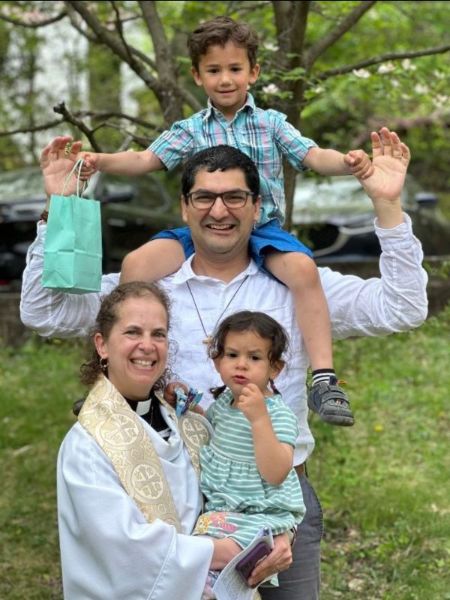

We arrived home from DC just a few hours before heading to the Pittsburgh airport in the wee hours of April 13 for a flight to Colorado Springs. While engaged with mission teammates there we received the shocking news that our beloved, vivacious niece Marie had suddenly died, also of a heart attack. How can it be true that she is gone from us?

While looking through my photos of Marie, I found this one, with our daughter Karis in 2011. This is a special photo in part because Karis hated the way she looked at that time, her “chipmunk cheeks” a consequence of high steroids required to keep her from rejecting her second intestinal transplant. She rarely allowed people to take photos of her. But when her wonderful cousin Marie visited, she made an exception. Marie came to Pittsburgh from San Diego to care for Karis for a week while Dave and I traveled, an example of her generous nature.
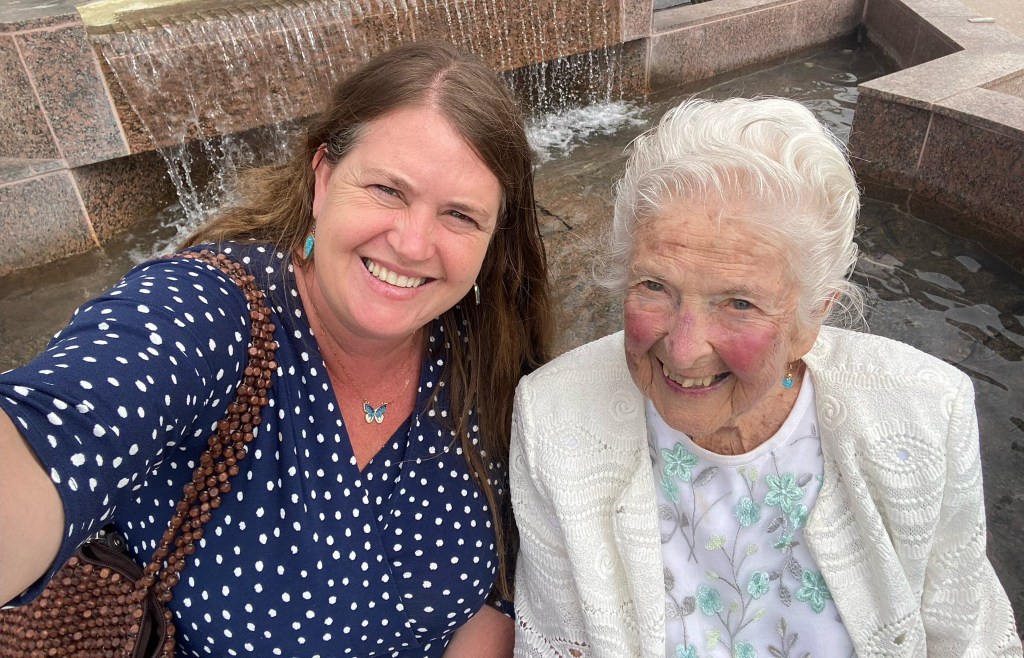
Marie with her grandmother Margaret Daly. I posted a blog written by Margaret a few years ago. She helped translate the Bible into two languages. Marie loved butterflies. She grew up in Guatemala and called herself “Mariposa,” butterfly in Spanish.

A few hours after we arrived back home in the middle of the night Friday, our friend Lori (related to us by marriage) went Home. And at the same time Saturday, we learned that another person precious to us has stage 3 or 4 cancer. And now the mother of a dear friend is “actively dying.” I keep checking my phone for updates about her.

It’s a lot to grapple with all at once. Grief drains a lot of energy.

Silas, Marie, and Lori lived generously. Each of them left a legacy of love that won’t be forgotten.

Influenced by my own book, Three-in-One: The Mysterious Friendship of Derry and Benny, I’ve been imagining Karis greeting each of these dear ones and showing them the ropes in Heaven. I imagine the party they’re having: Silas, Marie, and Karis are all party people. I imagine Silas’s reunion with his father, who died when Silas was 17. I imagine Lori’s joy in her reunion with her daughter and husband, who went before her. I imagine Marie delighting in her Aunt Bev and in her grandmother Margaret and grandfather John.

And most of all, I imagine each of them thrilled to be with Jesus, discovering with him the grand mysteries of true Life.

Our grief is profound. It’s painful. And it’s temporary.

Joy, though, is eternal.

I think and dream about Karis, and Silas, and Marie, and Lori, and Bill, and Bev, and Margaret, and John, and other dear ones, asking: How can I honor their example by living more generously myself?


Paul’s Songs: In Community

But God wants us to worship with understanding

1 Corinthians 14:15-17 I will sing in the Spirit, and I will also sing in words I understand. For if you [a rare singular] praise God only in the Spirit, how can those who don’t understand you praise God along with you? How can they join you in giving thanks when they don’t understand what you are saying? You will be giving thanks very well, but it won’t strengthen the people who hear you.

While writing Three-in-One: The Mysterious Friendship of Derry and Benny, I thought a lot about worship in Heaven. Will the gathered believers from around the world and through all human history each worship in their own language? Will it be like Pentecost in Acts 2, when the Holy Spirit empowered Jesus’ followers to understand and speak languages they had never learned? Will everyone there speak the same language?

If you read Three-in-One,you’ll see how handled these questions for the sake of the story. But of course, I don’t know for sure. As I say in my letter to parents prior to the story, I can’t wait to find out what Heaven is really like.

Here on Earth, Paul thought it important that communities of believers be able to sing together, understanding the words they sang, to encourage and strengthen each other’s faith. I’ve described before my experience of worship in Ghana, where the people who gathered for a conference on discipleship spoke dozens of languages. The worship leader wisely chose songs that had been translated into all these different tongues—and I knew them as well, in English, Spanish, and Portuguese! While not understanding a word of what the people around me sang, we praised God with the same lyrics. The music bound us together in our love for the Lord—a taste of Heaven!

Ghanaian Joy Shutterstock: Sura Nualpradid

The Spirit guides and fills our worship. And understanding each other’s worship enfolds us in a crescendo of praise to our compassionate, all-powerful, all-knowing, incomparable God.

When I discovered Darlene Zschech’s wonderful song Shout to the Lord (All the Earth) sung by Darlene with Ana Paula Valadão, Ingrid Rosario in my three languages, I wept at its beauty.

Simeon’s song: a long wait rewarded

But God kept his promise

Luke 2:25-35 Simeon was righteous and devout and was eagerly waiting for the Messiah … The Holy Spirit was upon him and had revealed to him that he would not die until he had seen the Lord’s Messiah. That day the Spirit led Simeon to the Temple. So, when Mary and Joseph came to present [eight day old] baby Jesus to the Lord as the law required, Simeon was there. He took the child in his arms and praised God, saying,

Sovereign Lord, now let your servant die in peace, as you have promised.

I have seen your salvation

which you have prepared for all people.

He is a light to reveal God to the nations

Shutterstock: Lopolo

Jesus’ parents were amazed … Then Simeon blessed them, and he said to Mary, “This child is destined to cause many in Israel to fall, but he will be a joy to many others. … The deepest thoughts of many hearts will be revealed. And a sword will pierce your very soul.”

What are you “eagerly waiting” for?

On a walk last week, Dave and I discussed what we each feel we must accomplish before we die. Mine is publishing the book Three-in-One. It’s taking much longer than I expected. Several times I’ve thought I had the final version nailed down. And then one of my early readers comes through with valuable suggestions; each revision has made the book better. I’ve learned that the timeline of my readers doesn’t match mine. I’ve had to practice Simeon’s “eager waiting.”

Can you imagine Simeon’s emotions as he held baby Jesus in his arms, while the Spirit whispered to him, “I’ve kept my promise to you. This tiny baby is the one you’ve been waiting for so long! He will reveal God to the nations!

That’s exactly my hope for Three-in-One, that it will reveal God in ways that delight us as we wait for Jesus’ return. If readers experience even a part of what has thrilled my heart as I have written this book, all my investment—all my waiting—will be more than worthwhile.

What are you waiting for?

Pure light for the glory of God. Hope. Mercy. Healing balm. A song of joy. Your name. Your Kingdom, Lord; not an earthly kingdom. Your power for salvation; not earthly power. Your will be done. “Song for the Nations” by Jim Gilbert, two versions:

(with lyrics; choir) Note: there’s a mistake on the second-to-last lyric slide. It should say in the peoples of the earth, not to the peoples of the earth.

(with inspirational pics; women’s voices)

Lord, may your Kingdom come in us. In me. Here. Today.

Mary’s song of joy

Mary’s song of joy

But God notices

Luke 1:46-55

Oh, how my soul praises the Lord.

How my spirit rejoices in God my Savior!

For he took notice of his lowly servant girl,

And from now on all generations will call me blessed.

For the Mighty One is holy,

And he has done great things for me.

I saved Mary’s song for this week because the theme of Advent 3 is joy. Few songs in Scripture are as joy-filled as the Magnificat as Mary praises the Lord with her whole being.

When our daughter Karis was thirteen, she imagined what it might be like to be Mary and wrote what she called “Mary’s Diary.” It’s available as a booklet, which I’ll be glad to mail to anyone upon request.

Karis imagined Mary writing:

“I guess that’s when God seems the greatest: when he takes a nobody (like me) and makes something out of them. Oh, thank you, God, for your amazing grace … Oh, even this moment, I praise the Lord. Jehovah gave me a song that I have written down, and I am singing it back to him every day. … Oh, how my soul praises the Lord! All my fears for myself have been put to rest. How amazing is Jehovah.”

What song can you sing to the Lord today, from delight at his work in your life?

Magnificat (with Wexford Carol), Keith and Kristyn Getty

What does obedience look like?

But God’s Spirit teaches us

Ezekiel 36:26-27 [A message from the Sovereign Lord] “I will give you a new heart, and I will put a new spirit in you. I will take out your stony, stubborn heart and give you a tender, responsive heart. And I will put my Spirit in you so that you will follow my decrees and be careful to obey my regulations.”

John 14:15-17, 26 [Jesus told his disciples at the last supper] “If you love me, obey my commandments. And I will ask the Father and he will give you another Advocate, who will never leave you. He is the Holy Spirit, who leads into all truth. … He will teach you everything and will remind you of everything I have told you.”

While waiting in stillness for a worship service to begin, my heart and hands open to what the Lord would offer me that day, God’s Spirit told me clearly, “It’s time to let this go.”

Shutterstock: Wanan Wanan

For years, I had struggled with my relationship with a member of this church. This person had moved away, yet every time I walked into the building, I still automatically steeled myself, still reacted to memories of difficult encounters with that person in this place. In word and intent, I had forgiven her, yet my soul had not released her.

“How do I let this go?” I asked Spirit.

“Give her to me.”

I did, and just like that, the anguish of years lifted and has not returned.

Why did it take so long? Had my deep sense of injury dulled me to Spirit’s prior attempts to free me from this burden? Likely. I don’t know. Perhaps I was just ready to hear and obey Spirit’s prompting to release a root of bitterness in my heart.

We all obey.

The question is who, or what, holds authority over us. Our lives reflect whoever, or whatever, we bow to: our own inclinations and desires and perceived injustices, the influences and pressures of our culture and society, the temptations fashioned to match our individual vulnerabilities by the enemy of our souls, the urge to conform to our peer group …

Or, the King of Love, our Shepherd, creator, redeemer, advocate, and teacher, who wants us to live in freedom and joy.

The King of Love My Shepherd Is, John Rutter (Scroll down for the lyrics of this beautiful Irish hymn.)

Strengthen self-control

But God’s power must be used rightly June 5, 2025

Galatians 5:22-23 But the Holy Spirit produces this kind of fruit in our lives: love, joy, peace, patience, kindness, goodness, faithfulness, gentleness, and self-control. There is no law against these things!

Proverbs 16:32 Better to have self-control than to conquer a city.

Proverbs 25:28 A person without self-control is like a city with broken-down walls.

I’m writing today in lovely Meridian, Idaho, remembering the impact on me of previous experiences in this beautiful state and their influence on Treasure Hunt 1904, book two of the Cally and Charlie historical fiction series. My sister Jan and I are here for a few days visiting our sister Marsha and brother-in-law Vance. I’ve not been here before in June. The flowers are stunning.

Marsha’s roses

The themes of Treasure Hunt 1904 directly relate to the final virtue in Paul’s description of agape, the lovely fruit the Spirit produces in our lives when we give him freedom to garden our hearts.

Self-control, translated “temperance”—moderation, self-restraint—in the KJV, is enkrateia in Greek, derived from the word kratos, which means strength. Like praos (see the last blog about gentleness), enkrateia is a strong word. It calls us to the right use of power. That power, as we know, is the operation of the Spirit of God in our lives, which we will recognize and celebrate this Sunday, Pentecost.

Along with the other virtues, gentleness calls us to choose how we treat others. Enkrateia reminds us we have the ability and responsibility to choose how we manage ourselves, circling us back to “Love others as you love yourself,” as Jesus taught us (Matthew 22:39). The Spirit empowers us to do both with godliness (God-likeness, the God who is love) as we practice agape.

Paul uses enkrateia (as a verb): we must discipline ourselves to win the race of life. Not to win temporary earthly rewards, but an eternal prize: God’s “Well done, faithful servant” (see 1 Corinthians 9:24-27; Philippians 3:12-14; Matthew 25:21).

So, what’s the connection with Treasure Hunt 1904? Using the motifs of a multi-layered treasure hunt and of water (see John 7:38-39), so critically important to transform into fruitfulness the fertile deserts of Idaho, we see Cally grapple with the wounds of trauma in her life (book one), emerging from the grief and paralysis of victimhood into proactive purpose. As she grows into acceptance of the love the Malcomson family offers her, Cally begins to recognize her own power. She can make choices for herself, rather than being controlled, for good or ill, by others.

This book also includes scenes of the devastating, ongoing impact of previous decades of misuse of power, sometimes, tragically, in the name of God, as western settlers and the U.S. government claimed a “manifest destiny” over the lives and territory of native Americans and others. Is not this false equivalence, still plaguing the world today, a breaking of the third commandment and of Jesus’ command to love others as he loves us?

Pentecost Sunday initiates the liturgical season of “ordinary time.” Ordinary, for you and me and all followers of Jesus, means practicing the wonderful fruit of the Spirit, in the agape love of the Father, empowered by Jesus’ conquest of sin and death by his sacrifice on the cross and his resurrection. “Live clean, innocent lives as children of God, shining like bright lights.. your faithful service is an offering to God” (Philippians 2:15-17).

In ordinary time, let’s shine! Let’s bear fruit that adorns the world with joy.

Holy Spirit, today I offer you freedom to grow the good fruit of agape love in my heart, in all its dimensions. Pull out the weeds, heal the wounds, rebuild healthy boundaries, and water the fertile soil of God’s love. Amen.

Whiplash

But Jesus too felt distress  Lenten question #14

John 12:7, 23-28, 32 [Mary, sister of Lazarus, anointed Jesus with expensive perfume and was criticized for doing so.] Jesus replied, “Leave her alone. She did this in preparation for my burial. … Now the time has come for the Son of Man to enter into his glory. … My soul is deeply troubled. Should I pray, ‘Father, save me from this hour?’ But this is the very reason I came! Father, bring glory to your name. … And when I am lifted up from the earth, I will draw everyone to myself.”

Hebrews 4:7-8 While Jesus was here on earth, he offered prayers and pleadings, with a loud cy and tears, to the one who could rescue him from death. And God heard his prayers because of his deep reverence for God. Even though Jesus was God’s Son, he learned obedience from the things he suffered.

Yesterday was “Whiplash Sunday.”

To begin, we waved palms like the crowd welcoming Jesus to Jerusalem, singing hosannas in triumphal procession.

A few minutes later, as performers narrated the events of Holy Week (using Luke’s account this time), we yelled, “Crucify him! Crucify him!”

Whiplash.

Imagine what it was like for Jesus, knowing even as the crowd shouted their Hosannas, that soon exuberant acclamation would turn to hostile condemnation and most bitter suffering and death.

And then, in the great Reversal, the glorious resurrection.

Whiplash.

As we walk through this week, we will probably feel the whole range of emotions. Take extra time to go deeper with Jesus in this eventful week. Ask him to help you understand WHY he chose to walk this road.

Via Dolorosa, Sandi Patty

He makes all things new

But Jesus IS life Lenten question #13

John 11:23-25 Jesus told Martha, “Your brother [Lazarus] will rise again.” “Yes,” Martha said, “he will rise when everyone else rises, at the last day.” Jesus told her, “I am the resurrection and the life. Anyone who believes in me will live, even after dying. Everyone who lives in me and believes in me will never ever die. Do you believe this, Martha?

1 Thessalonians 4:13-14 And now, dear brothers and sisters, we want you to know what will happen to the believers who have died so you will not grieve like people who have no hope. For since we believe that Jesus died and was raised to life again, we also believe that when Jesus returns, God will bring back with him the believers who have died.

Yesterday my husband and I flew from Colorado back home to Pittsburgh, watching the transformation of desert into well-watered spring. I found myself thinking about a similar flight soon after our daughter Karis’s death, gripped by pain sharper than any other I have experienced. Would this grief ever soften into some version of beauty less stark?

I don’t know even how to describe it. A transplant friend, whose son had died a few months earlier, texted me: “Just BREATHE.” For as long as I owned that phone, I looked back often at that text as loss stabbed me yet again.

Jesus, who wept with Mary and Martha at Lazarus’s grave even though he knew he would shortly bring Lazarus back to life, understands that pain. He offers himself, his presence with us, as we grieve.

As intense as this grieving has been, I’ve often wondered, with deep compassion, what it would have felt like if I didn’t have the hope of life after death. I’ve watched people without that hope enter profound despair. What if I didn’t know that Karis’s SELF did not die, but is whole and well? What if I didn’t know I will see her again, healed, released from her suffering, exuberantly alive? Would I have survived the grief? I don’t know.

I love imagining what people who have gone before us are like now, freed from all that hampered and troubled them on earth and face to face with Jesus, who IS life. Death could not keep him in its grip (Acts 2:24 NLT). Because he broke death’s power, we too can know life after death—the truly abundant life for which God created us.

As I hear Jesus asking me today the question he asked Martha, I can say with profound thankfulness, “Yes. I do believe his resurrection makes possible eternal life for us.” Lazarus did eventually die again, yet I know he now celebrates along with his beloved sisters the unlimited joy of forever resurrection.

A friend whose father recently died shared with me this beautiful anthem, All Things New, by Elaine Hagenberg, sung at the funeral. The text is adapted from a 19th c. poem by Frances Havergal. So appropriate as we walk into next week:

Light after darkness, gain after loss

Strength after weakness, crown after cross.

Sweet after bitter, hope after fears

Home after wandering, praise after tears.

Alpha and Omega, beginning and the end

He is making all things new.

Springs of living water shall wash away each tear.

He is making all things new.

Sight after mystery, sun after rain

Joy after sorrow, peace after pain

Near after distant, gleam after gloom

Love after loneliness, life after tomb. (Refrain)

Advent 3, Joy: and darkest night

Hebrews 12:2-3 … keeping our eyes on Jesus, the champion who initiates and perfects our faith. Because of the joy awaiting him, he endured the cross

Hebrews 5:7 While Jesus was here on earth, he offered prayers ad pleadings, with a loud cry and tears, to the one who could rescue him from death. And God heard his prayers because of his deep reverence for God.

Psalm 116:10 I believed in you, SO I said, “I am deeply troubled, Lord.”

My daughter Rachel invited me to a “Darkest Night” gathering at her home tomorrow evening. Here’s part of her invitation:

“As we approach the longest night of the year on 12/21, we remember that in the midst of Christmas joy we also hold distress, loss and longing – sometimes especially at holiday times when there’s a face missing from around the table or we recognize distance from those we love or we realize that there is darkness just outside the candlelight of our world.”

How does joy fit together with grief and trauma?

The first Christmas week after Karis died, I lay on the couch where she had so often rested, trying to get myself together enough to do my part toward making Christmas happy for the rest of my family.

While I still had not managed to overcome my grief enough to pull out the Christmas boxes, a friend came to visit me. She looked around at the absence of decorations in my home, and said, “Debbie, I am so disappointed in you. I always thought you were a woman of faith.”

On that note, she left me. Oppressed by an added layer of guilt and shame, and the sense that I had another loss to grieve—the loss of trust in my friend—I returned to the couch.

In stark contrast, another friend appeared at my home. She quickly discerned my condition, and said, “Debbie, talk to me. Tell me what you’re feeling.” She wasn’t shocked or offended by my outpouring of grief and tears. She didn’t say, “If you only had faith, you would get your act together.”

She said, “What is the most important thing you want to do for Christmas? I have time. I’ll help you do it.”

This friend understood and shared my grief. She didn’t take it on herself, but she walked with me through it.

After she helped me put up my family’s stockings, each with their name, including Karis’s, my friend left me. The comfort of her presence and compassion lifted my spirits enough that I continued decorating my house. Later, my two daughters completed what I didn’t manage to do. I hold their kindness in my heart as the most precious gift of that Christmas.

The invitation to lament, to acknowledge and express grief, can open space in our souls for joy.

Advent 3, Joy: the flip side of peace

But God’s joy is our strength

Hebrews 10:32-37 You suffered … and you accepted it with joy. You knew there were better things waiting for you that will last forever.

Philippians 4:4-9 Rejoice! … Don’t worry about anything; instead, pray about everything. Tell God what you need, and thank him for all he has done. Then you will experience God’s peace. …

Collage by my friend Carol Amidi https://www.carolamidi.net/

Yesterday I confided in a friend some of my worries. Though they hardly qualify as the suffering the author of Hebrews addresses, my friend helped me take my worries to the Lord. I came home with peace and enJOYed the rest of the day. I don’t yet know the outcome of my concerns, but I have a renewed sense of trust in the care of my Father.

On a walk this morning I thought of Habakkuk 3:17-19: the wonderful “Even though … yet” passage with which the prophet concludes his book of complaints. How would you personalize the verses of this song? Here are three of mine:

Even though the date (12/21) is simply unworkable for many people, yet I am confident those who can attend the Campfire Song Stories launch party this Saturday will have a delightful time and I’ll be able to express my gratitude to the artists and their families.

Even though I don’t know whether Karis can “see” the book from Heaven, yet it gives me joy to showcase her sense of humor.

Even though people have judged the book as expensive, yet those who have acquired it for their children have loved it.

Not very “spiritual,” right? But Paul doesn’t tell the Philippians they can only entrust to God their spiritual concerns. And Habakkuk’s list of “Even thoughs” has to do with fears about invaders, and about crops and flocks—his livelihood. This exercise allows him to “wait quietly” to see what God will do (3:16).

Try it out! Make a list of your “Even though” situations and tell God about them. With open hands and thankfulness, receive his peace.  

Then join me in Habbakuk’s song of praise:

Yet I will rejoice in the Lord!

I will be joyful in the God of my salvation!

The Sovereign Lord is my strength!

He makes me as surefooted as a deer,

Able to tread upon the heights.

Habakkuk’s song includes an instruction to the choir director: “to be accompanied by stringed instruments.” So here you go: (Sovereign Lord, by Lantern Music)