Photosynthesis

But Jesus’ light leads to life

John 8:12, 9:5 I am the light of the world. If you follow me, you won’t have to walk in darkness, because you will have the light that leads to life. … While I am here in the world, I am the light of the world.

It happens all around us and fuels our lungs and muscles. Photosynthesis is the process by which plants and trees use sunlight, water, and carbon dioxide to create oxygen and energy. Light generates life!

I could so easily get off on the (mostly illegal) destruction of the rain forest, but I’ll spare you the soapbox (except to say one thing: the more beef we eat, the faster the Amazon Forest will be cut down for pasturing methane-belching cows, top of the food chain and doubly injurious to our planet’s health).
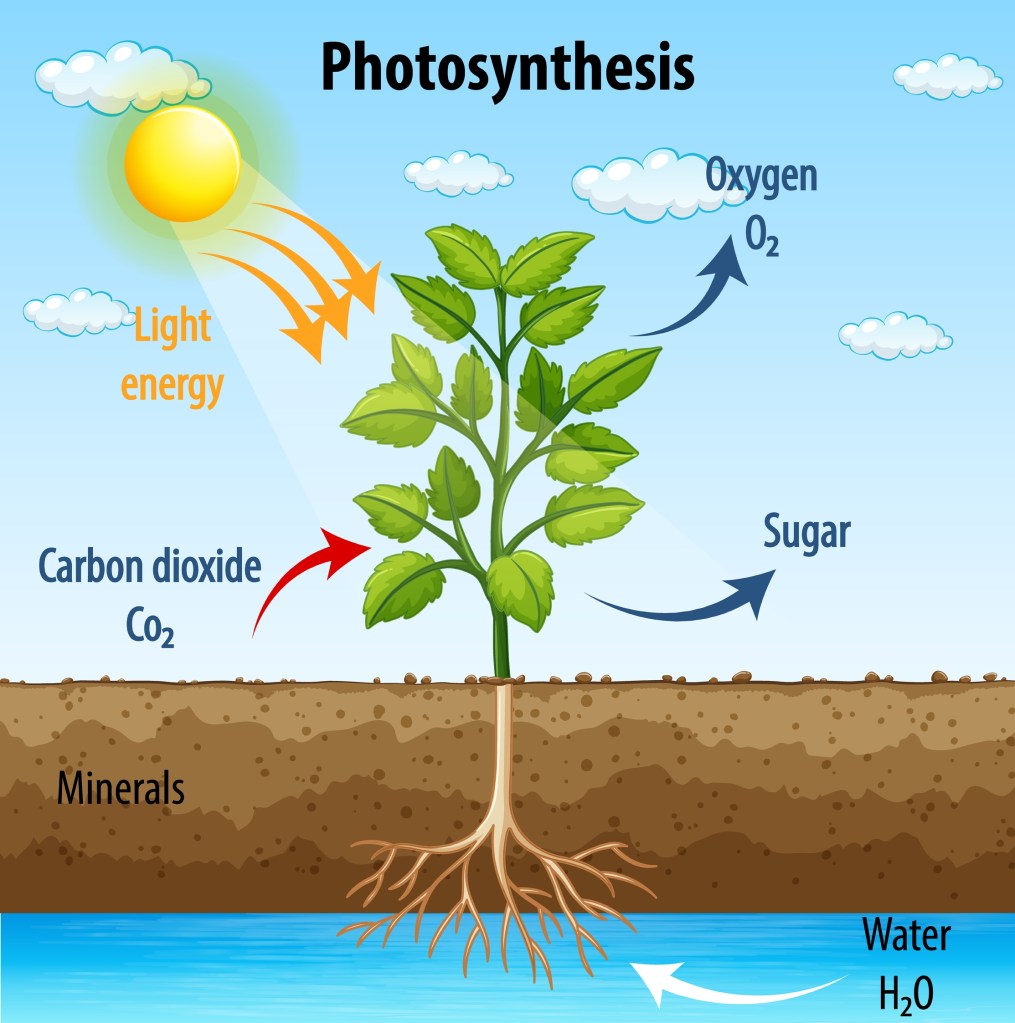
Shutterstock: GraphicsRF.com

Though a description of photosynthesis wasn’t published until 1779, Jesus the Creator, of course, understood it perfectly. As he so often did, he used nature to express spiritual truth. Light is life.

Speaking in the Temple in Jerusalem on the last day of the week-long fall harvest Festival of Sukkot, or Tabernacles, or Booths, or Shelters, Jesus promised living water, another necessary element for life (John 7:37-39)—probably in connection with the daily Sukkot water ceremony, when the priest poured out collected rainwater from the previous season.

And then, sixteen gold bowls in the inner courts of the Temple were filled with oil and lighted. Likely, Jesus stood beneath these lights to declare that he was the Light of the world (John 8:12). The light at the center of Temple worship—but more. Light that could leave the Temple and walk into the world, confronting the darkness found there. Like falsehood, and slavery, and unbelief, and wrong judgment. Some people were so angry they wanted to kill Jesus.

And the intrigue—or offense—intensifies when Jesus repeats the claim of being the light of the world (John 9:5) when on the Sabbath, he heals a man born blind. The intricate interplay of light and darkness in this chapter, of who can see and who can’t, of what is sin and who commits it, challenges all assumptions and the very order and fabric of society.

The man formerly blind who for the very first time can see—imagine!—has the gall to say, “Ever since the world began, no one has been able to open the eyes of someone born blind. If this man were not from God, he couldn’t have done it.” He was thrown out of the synagogue, as people often are who dare to speak truth (Liz Cheney comes to mind). Jesus, who had given the man physical sight, found him and gave him spiritual vision as well.

“If you were blind, you wouldn’t be guilty,” Jesus told the angry leaders. “But you remain guilty because you claim you can see” (John 9:41). In chapter 8, he called people liars. He clearly hadn’t read up on social etiquette. So cringey for this Enneagram 9 who hates conflict and upset apple carts.

Will you and I welcome Jesus’ light shine into the dark corners of our hearts, confronting our sin, healing our blindness, synthesizing new life in us?


Hope or dystopia?

But Jesus’ light can’t be extinguished by darkness

John 1:1-18 In the beginning the Word already existed. … The Word gave life to everything that was created, and his life brought light to everyone. The light shines in the darkness, and the darkness can never extinguish it. … So the Word became human and made his home among us. He was full of unfailing love and faithfulness. And we have seen his glory, the glory of the Father’s one and only Son. … Jesus Christ has revealed God to us.

I’ve missed you! And I’ve enjoyed focusing on other things, like vacation. And the details of publishing Facing the Faeries 1906.

I’m returning to this blog halfway through the season of Epiphany, which ends with the beginning of Lent on February 14. The readings for this season have included the Gospel of John, with his emphasis on Christ as the Light of the world.

Epiphany began on January 6, the day selected by early church fathers to remember the magi visiting baby Jesus in Bethlehem and bringing him gifts. The magi were not Jewish, hence the connection with Jesus bringing light to the world, not just to the people God chose to be his earthly family and lineage. The wise men illustrate for us the fulfillment of God’s promise to Abraham that through him and his descendants, all the earth would be blessed (Genesis 22:18).

Returning to twice weekly postings on this blog, I have four opportunities to think about John’s view of Jesus as the Light of the world before we enter Lent. It seems John can hardly wait to get into this theme. As one of Jesus’ disciples, walking with him for at least three years, John was well positioned to tell us what he personally saw and experienced of what he calls Jesus’ glory, the divine light of unfailing love and faithfulness shining through him.

John was no pushover. Jesus called him and his brother James “Sons of Thunder” (Mark 3:17). They wanted to call fire from heaven to burn up a Samaritan village that didn’t accept Jesus (Luke 9:52-54). Yet in John’s writings (he’s the most prolific New Testament writer after Paul), his emphasis is on love. His life was transformed by the light of Jesus shining into his personal darkness, gentling him and dramatically changing his perspective on the “others” in his world.

For us, you and me, grappling daily with the darkness, violence, and brokenness of the world, John’s introduction to his Gospel is tremendously encouraging. “The light shines in the darkness, and the darkness can never extinguish it.Think about that. Isn’t it good news, solid rock on which to place our feet, a promise we can count on no matter how dark things get? We don’t see it yet, but the ending of the story will be glorious!

Tucked inside my fortune cookie! Isn’t that cool?

Thinking about this promise, I feel my anxiety for the world dissipate like air leaking from a balloon. My thoughts turn to my small role in shining his light into the darkness around me, beginning in my own heart. What a relief to know I’m just a minor character in this huge story God is writing. He has the whole thing figured out! Hallelujah!

Amy Grant celebrates this: Lighten my darkness …

And have you been enjoying the Advent ABC playlist? It still brings me to tears.

Speaking of stories, watch this space for an announcement about Facing the Faeries 1906!

Advent ABC: God of all the earth

Isaiah 54:5 (Acts 3:25) For the Lord is the God of all the earth.

I’ve been invited to write a chapter for a book on patriotism. Perhaps because I was born and grew up in Guatemala, have lived in several countries and have visited many others, when I think of patriotism, I first think of Jesus saying the Gospel would preached to every nation.

Shutterstock: magr80

The Lord is God of all the earth, with sons and daughters in every country who are my brothers and sisters. This makes every war feel to me like a civil war. Does this impact my sense of patriotism? Of course, it does. One day the “artificial” boundaries between countries that matter so much to the world today will no longer divide us. Advent helps us anticipate that day.

Come Let Us Worship the King Sandi Patty