A call and response for the beginning of Lent

But God’s love knows no bounds

Hosea 14

[Hosea says]

Return, my people, to the Lord your God

For your sins have brought you down.

Bring your confessions and return to the Lord.

Say to him, “Forgive all our sins and graciously receive us,

So that we may offer you our praises.

The Lord says,

Then I will heal you of your faithlessness;

My love will know no bounds,

For my anger will be gone forever.

I will be to my people like a refreshing dew from heaven.

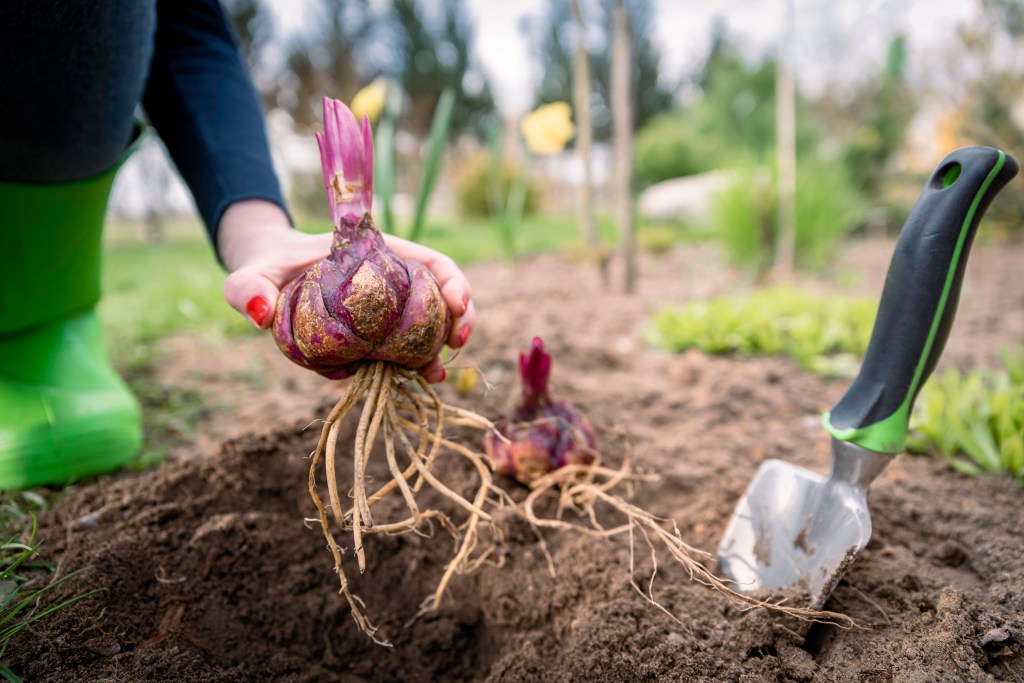
My people will blossom like the lily; it will send roots deep into the soil.

Shutterstock: Damian Lugowski

O my people, stay away from idols!

I am the one who answers your prayers and cares for you.

I am like a tree that is always green;

All your fruit comes from me.

Let those who are wise understand these things.

Let those with discernment listen carefully.

The paths of the Lord are true and right,

And righteous people live by walking in them.

Loving shame more than honor

But God grieves over us

Hosea 4:1, 3, 6, 7, 12, 18 The Lord has brought charges against you, saying: “There is no faithfulness, no kindness, no knowledge of God in your land … That is why your land is in mourning. … My people are being destroyed because they don’t know me. … They have exchanged the glory of God for the shame of idols. … Longing after idols has made them foolish. … They love shame more than honor.

Nearly three thousand years ago, long before writers like John Bradshaw and Brené Brown helped us understand shame, the prophet Hosea linked it with not knowing God, not understanding his compassion and love, his yearning for a close relationship with his beloved people.

Instead, in Hosea’s day, both leaders and ordinary people turned to idols [anything that takes God’s place in our hearts], pleasures, addictions, violence, unfaithfulness in relationships, sexual depravity, cheating, and other forms of robbery.

Has anything changed in the last three thousand years?

The Hebrew word Hosea uses is gâlôwn, translated shame in most English versions. Associated words are disgrace, confusion, dishonor, ignominy [public disgrace], reproach. This shame is vile, base, and despicable.

“My people are being destroyed because they don’t know me,” laments the Lord (Hosea 4:6, 2:20). “Oh, that we might know the Lord,” cries Hosea (6:3).

The kind of shame Hosea describes is extremely painful. Why would we choose shame rather than honor? Perhaps we fear God’s judgment? Fear the loss of things we’ve come to love? Fear rejection by others if anyone detects our true struggles? As Brené Brown often points out, shame thrives in secrecy, in darkness, in isolation. Shame flees when brought into the light. Yet we fear exposing our shame to God, to others, and even to ourselves, even though that’s the best way to be free from it.

A friend recently described to me her cycle of shame. She feels lonely, or disappointed, or betrayed. To ease those feelings, she escapes into her addiction, soothing herself with a temporary pleasure. When she comes out of that, she’s embarrassed and frustrated with herself that she gave in to a temptation that she knows is harmful to her health. When she’s alone, those feelings are so uncomfortable that she again buries them with her addiction. And on and on her cycle of shame spirals. When she’s with other people, her shame prevents her from indulging, and prevents her from finding help, because she doesn’t want to expose her struggle and become an object of pity or of disdain or of judgment.

Every one of us can relate. Each of us has our own way of trying to escape painful feelings. If we realize it’s not just us, maybe we can become more willing to let an understanding friend listen to our struggle. And go with us into the presence of God, who longs to heal us and show us his compassion—as my friend courageously did with me. And I with her.

This high priest of ours [Jesus] understands our weaknesses, for he faced all the same testings we do, yet he did not sin. So let us come boldly to the throne of our gracious God. There we will receive his mercy, and we will find grace to help us when we need it most (Hebrews 4:15-16).

Dog and cat theology

But God still loves his people

Hosea 3:1, 5 The Lord still loves his people, even though they have turned to other gods and love to worship them. … But afterward they will return and devote themselves to the Lord their God. … In the last days, they will tremble in awe of the Lord and of his goodness.

You feed and walk your dog and give it affection and shelter.

Your dog thinks, “You must be God.”

You feed and care for your cat and give it affection and shelter.

Your cat thinks, “I must be God.”

Shutterstock: Bachkova Natalia

We, too, inevitably worship. If not ourselves, then something or someone else.

We worship what we most prize or most fear, that which at our core orients and motivates us, that which we count on and build our lives on. Our highest value may be our own pleasure or happiness or “fulfillment,” which we think we can obtain on our own or we manipulate others into creating for us.

Hosea talks a LOT about the misplaced worship of the people of his day—which doesn’t end well. Yet he keeps repeating this message of hope: God still loves you. He invites you to turn to him, so that he can heal you and share his goodness with you (Hosea 3:5; 5:4, 15; 6:1; 7:10; 11:5; 14:1-2).

Humans fight with each other over what or whom they worship, fearful, often, that if others get more, we will get less. We take sides to defend what we have and are often aggressive in taking from others what we tell ourselves the “others” don’t deserve or have obtained unjustly. We even claim God is on our side (making him into our image, rather than God making us into his) and decide the others are not only wrong; they are evil.

Thinking about this, I received an email from Jim Hobby (houseofgladness.com). Jim wrote, “The question for us is never whether the Lord is on our side. Human “sides” will never circumscribe the Lord’s side. Every human ‘side’ will always fall short of God’s kingdom. The question is whether we are on His side. Are we following Him, imitating Him, listening to His voice, being transformed by His presence, transcending our ‘side’?”

God keeps on inviting us to his side. Not because we deserve it. Simply because he loves us. And when we choose to worship him above all else and all others, including ourselves, we may discover those “others” aren’t so very different from us. We all need God’s provision and care and affection and shelter. And forgiveness for our arrogance.

Rest

But God is full of compassion

Isaiah 44:6, 10 This is what the Lord says—Israel’s King and Redeemer, the Lord of Heaven’s Armies: “I am the First and the Last; there is no other God. … Who but a fool would make his own god—an idol who cannot help him one bit?”

James 5:11 The Lord is full of compassion and mercy.

On my trip home from Colombia, I read a book called And I His Servant by Dr. Dick Hillis, the founder of our mission organization, OC International. It’s a collection of his stories, many of them about his experiences in Asia beginning in 1933. (Dr. Hillis’s biography is also available, called Steel in His Soul.)

One chapter, “Sincerely Yours,” would fit neatly into Isaiah 44. Dr. Hillis describes the process of making a mud idol, then says this:

But before I made a further judgment about their sanity, I decided to ask why the people bowed before these idols. “Madam,” I said, “for the last ten minutes you have been on your knees bowing before this deity. Would you please tell me why?”

“Sir,” she replied. “My husband is out of work. My children are hungry. The landlord has threatened to throw us out. My burdens are heavy and I am asking for help.”

“And you, Sir,” I said. …

“We have seven children. The youngest is two weeks old. Her mother is very sick. The midwife can’t stop her bleeding. She has a fever and won’t eat and I am afraid for my children and their mother’s life.”

The answer to why people bow before gods who have eyes and cannot see and ears and cannot hear, is simple. They have burdens they cannot carry and fears they cannot quiet. They have never met the One who said, “Come to Me, all who are weary and heavy laden, and I will give you rest” (Matthew 11:28-30).

It occurs to me today that perhaps we create idols—likely not made of wood or mud, but rather of other things that matter more to us than the Creator, Redeemer, and Lord of Heaven’s Armies—for the same reasons: burdens we cannot carry and fears we cannot quiet. We deny, numb, and distract ourselves with our choices of addictions and indulgences, but nothing is really solved or healed. We fight for our independence only to discover we’re not capable of managing life all by ourselves.

And the Lord says to us with compassion, “Come to Me. I will give you rest.”