Loving shame more than honor

But God grieves over us

Hosea 4:1, 3, 6, 7, 12, 18 The Lord has brought charges against you, saying: “There is no faithfulness, no kindness, no knowledge of God in your land … That is why your land is in mourning. … My people are being destroyed because they don’t know me. … They have exchanged the glory of God for the shame of idols. … Longing after idols has made them foolish. … They love shame more than honor.

Nearly three thousand years ago, long before writers like John Bradshaw and Brené Brown helped us understand shame, the prophet Hosea linked it with not knowing God, not understanding his compassion and love, his yearning for a close relationship with his beloved people.

Instead, in Hosea’s day, both leaders and ordinary people turned to idols [anything that takes God’s place in our hearts], pleasures, addictions, violence, unfaithfulness in relationships, sexual depravity, cheating, and other forms of robbery.

Has anything changed in the last three thousand years?

The Hebrew word Hosea uses is gâlôwn, translated shame in most English versions. Associated words are disgrace, confusion, dishonor, ignominy [public disgrace], reproach. This shame is vile, base, and despicable.

“My people are being destroyed because they don’t know me,” laments the Lord (Hosea 4:6, 2:20). “Oh, that we might know the Lord,” cries Hosea (6:3).

The kind of shame Hosea describes is extremely painful. Why would we choose shame rather than honor? Perhaps we fear God’s judgment? Fear the loss of things we’ve come to love? Fear rejection by others if anyone detects our true struggles? As Brené Brown often points out, shame thrives in secrecy, in darkness, in isolation. Shame flees when brought into the light. Yet we fear exposing our shame to God, to others, and even to ourselves, even though that’s the best way to be free from it.

A friend recently described to me her cycle of shame. She feels lonely, or disappointed, or betrayed. To ease those feelings, she escapes into her addiction, soothing herself with a temporary pleasure. When she comes out of that, she’s embarrassed and frustrated with herself that she gave in to a temptation that she knows is harmful to her health. When she’s alone, those feelings are so uncomfortable that she again buries them with her addiction. And on and on her cycle of shame spirals. When she’s with other people, her shame prevents her from indulging, and prevents her from finding help, because she doesn’t want to expose her struggle and become an object of pity or of disdain or of judgment.

Every one of us can relate. Each of us has our own way of trying to escape painful feelings. If we realize it’s not just us, maybe we can become more willing to let an understanding friend listen to our struggle. And go with us into the presence of God, who longs to heal us and show us his compassion—as my friend courageously did with me. And I with her.

This high priest of ours [Jesus] understands our weaknesses, for he faced all the same testings we do, yet he did not sin. So let us come boldly to the throne of our gracious God. There we will receive his mercy, and we will find grace to help us when we need it most (Hebrews 4:15-16).
An extraordinary celebration, by Elaine Elliott, La Antigua, Guatemala

But God is honored when we honor each other

Romans 12:10 Be devoted to one another in love. Honor one another above yourselves.

(Debbie) Expand your horizons through Elaine’s rich and fascinating Art and Scripture. I love celebrating the determination, faithfulness, and stamina represented in golden wedding anniversaries! Here is Elaine’s description of an extraordinary day in Ordinary Time. It took place in San Diego, where all three of Steve and Elaine’s children and their families live.

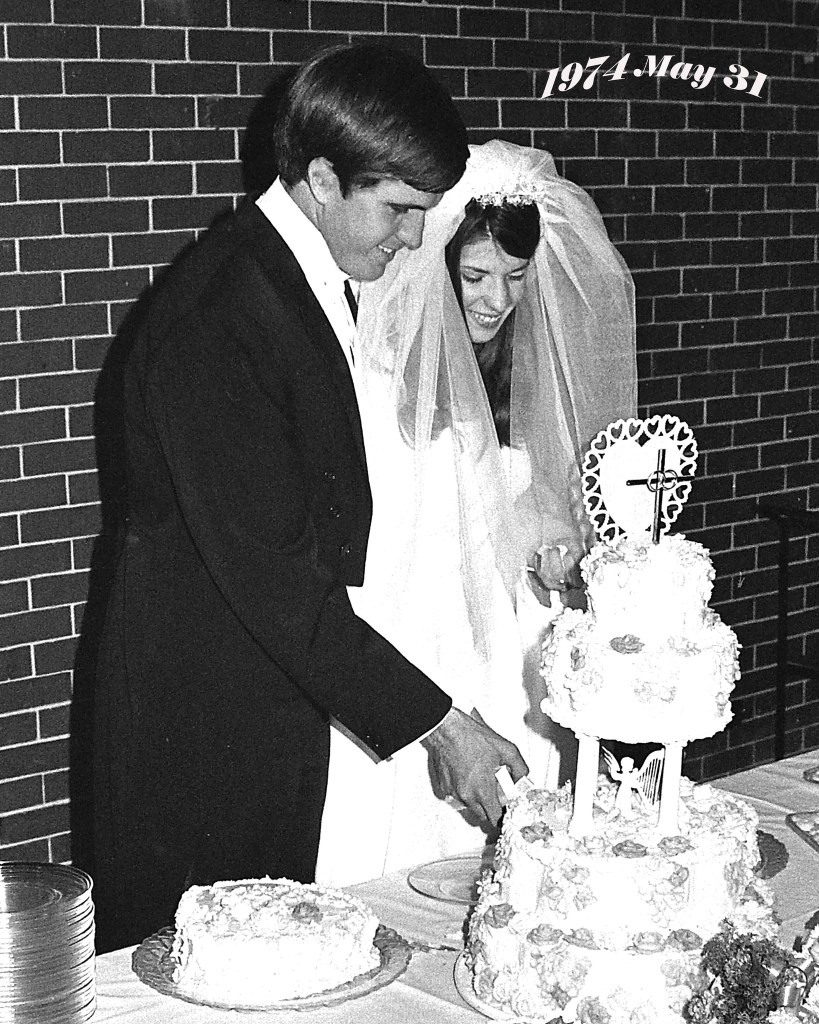
On our 50th wedding anniversary (May 31) we received congratulations all day long. On Facebook, my husband Steve posted a picture of younger us cutting the cake and was delighted to receive many likes and comments.

The wedding took place in Mexico, where Elaine grew up as a Wycliffe missionary kid.

Unexpectedly, we received a video message from our pastor in Antigua honoring us, expressing love and appreciation. This should not have been surprising since the church articulates a vision for church culture in which honoring others is one of a dozen values (see the But God post on July 20, 2023):

“We give honor—to those we lead, we work beside, and those we follow. The cross gives every human being immeasurable worth. And we will treat people with the honor the cross displays and demands they deserve.”

To feel this deeply in our church context has been a great gift.

We decided to celebrate multiple family milestones and held a special luncheon on June 22 for 48 extended family members. Each milestone includes a back-story of God’s faithfulness.  My mother, Margaret Daly, reached 95 the previous week, and we celebrated her. Many had not seen one another since our last gathering to celebrate her 90th birthday, and her good health is a sign of the excellent care that my sister Sharon and her husband Todd have provided. Before she moved in with them, her health was declining, she was falling, and definitely would not have reached this milestone. (Margaret wrote for But God on July 27, 2023.)

Our daughter Bec and her partner Paul sponsored the location for the luncheon. We celebrated Bec’s new business, which emerged from a dream she talked about as a young person. Our grandson Ja’Quan’s graduation from an elite private Christian high school came about because of his adoption into our son Jon and Lissa’s family. Multiple family members (twelve!) have June/early July birthdays and God has cared for each one, including Steve, our oldest daughter Marie, our daughter-in-law Lissa, and my sister Sharon. At the event, we acknowledged the birthdays of two of the great-grandchildren, but we have been celebrating birthdays all month!

Family members arrived from Oregon, North Carolina, Arizona, and even Kazakhstan (!) to celebrate. We engaged in activities together, ate special food, dressed up, decorated festively, gave/received gifts and said words of praise—all familiar ways of honoring others.

Fifty years!

Our daughter Marie’s toast for our anniversary left us feeling deeply honored with her comments on reconciliation and unity. The consensus was that the place, décor, food, and program turned out wonderfully and we were grateful.

The backstory of God’s grace in our marriage involves post-traumatic stress in the context of civil war where we worked in Guatemala, a five-year separation, life in the US, reconciliation, and a return to Guatemala where we see the good results of the peace process. Our story is not tidy, but we really did make it through fifty years of marriage, most of them happy ones! At our 25th anniversary Steve joked, “We’ve been happily married twenty years which is really not bad out of twenty-five.” We’ve recycled that to “happily married forty-five years…”

We don’t want honoring to take place only at special events. Honoring others in ordinary times “brings heaven to earth.”  Let’s do it!

Advent ABC: eXalted Yahweh (Lord)

Isaiah 52:13, Acts 2:33 See, my servant will prosper; he will be highly exalted. … Now Jesus is exalted to the place of highest honor in heaven, at God’s right hand.

When Jesus appeared in human form,

he humbled himself in obedience to God

and died a criminal’s death on a cross.

Therefore, God exalted him to the place of highest honor

and gave him the name above all other names,

that at the name of Jesus …

every tongue should confess that Jesus Christ is Lord,

to the glory of God the Father.

Philippians 2:7-11

Exalted (Yahweh), Chris Tomlin

Don’t think like everyone else

But God is the one we should fear

Isaiah 8:11-13 The Lord has given me a strong warning not to think like everyone else does. He said, “Don’t call everything a conspiracy, like they do, and don’t live in dread of what frightens them. Make the Lord of Heaven’s Armies holy in your life. He is the one you should fear.”

Romans 12:16-21 Live in harmony with each other. And don’t think you know it all! … If your enemies are hungry, feed them. If they are thirsty, give them something to drink. … Don’t let evil conquer you, but conquer evil by doing good.

I had a wonderful experience on our recent 1500-mile trip to visit friends and mission supporters west of us. We stopped to visit a friend we haven’t seen in many years. He brought up a political issue that is very important to him, asking what we thought about it. As carefully as I could, I expressed agreement while saying that for me there were other important issues to consider as well. He listened. He did not immediately dismiss or diss me. His expression of affection for me did not waver.

I felt honored by this friend. Rather than “cancelling” me because I didn’t agree with him 100% about one-issue voting–a heartbreak I’ve experienced before–he noted how much we have in common. He protected our relationship rather than negating all that we’ve witnessed together of the Lord’s work in our lives.

Shutterstock: fizkes

The times I have felt dishonor, once the sting wore off, I have wondered whether fear might be at the root of cancelling or ghosting a friend over something so relatively unimportant to me (maybe because I didn’t grow up in this country?) as political issues. Certainly, the media can foster fear in us, especially if we pay attention only to one perspective on a given issue or decide certain political figures are wearing the white hats and the rest are black, along with everyone who gives them a hearing. Fear can result in rejection of those we’re told are destroying what we value. It can leave us vulnerable to believing things that are simply not true. It can narrow our experience of life, to the point that we miss out on abundance and the freedom to live joyfully.

But the Lord calls us to think and act differently. When our trust is solidly rooted in him and his sovereignty over history, we don’t have to live in fear. We can dare to honor others, as our friend did on our delightful visit with him and his family.

Elaine Elliott, who has contributed to this blog in the past, recently sent me notes from an online sermon on honor she listened to. She’s referencing one of the values of the church she and her husband attend in Antigua, Guatemala:

Here’s the value: “We give honor—to those we lead, work beside and follow. The cross gives every human being immeasurable worth. We will treat people with the honor the cross displays.” 

Dishonor disrupts the supernatural. The Greek word for dishonor means “to treat as common.” Honor is mentioned 147 times in Scripture—usually in reference to people. The word means to value, to treat as precious, to give weight. 

Honor creates a space for the Holy Spirit to be released. Honor must be chosen; it is not a feeling but a choice. 

All honor starts with honoring God. God says, “Those who honor me, I will honor” (1 Samuel 2:30). God LOVES the world–and calls us to consider precious what he does, the sinners–including you and me–for whom Jesus died.

Some ways we can choose to honor others: not compare, make it a daily habit, practice gratitude. Daily think of something positive about your spouse and friends, for example, and share it with them. Each day think of something you can be grateful for about someone with whom you’re in a struggle and share it with them. Speak words of honor over your home, declaring your spiritual purpose. One purpose: “I love my husband. I will make him glad he married me.”

Romans 12:9-10 says, “Don’t just pretend to love others. Really love them … with genuine affection. Take delight in honoring each other” (NLT). “Outdo one another in showing honor” (RSV).

Respect is earned; honor is a gift. If someone is dishonoring you and you honor them, you have already won the competition by outdoing them! If your effort is sincere and heartfelt, it has value even if the other person is not able to receive it as intended. It’s a kind of defense against bitterness and anger when we are misunderstood and mistreated.

Thank you, Elaine! While recognizing the complexity culturally, relationally, and emotionally of what is perceived as honor or dishonor, I think these ideas–and the example of my friend–can help us think and act more like Jesus would in our challenging culture.