Real authority

But Jesus came to serve

Mark 1:22 The people were amazed at Jesus’s teaching, for he taught with real authority, quite unlike the teachers of religious law.

Mark 10:42-45 Jesus called his disciples together and said, “You know that the rulers in this world lord it over their people, and officials flaunt their authority over those under them. But among you it will be different. Whoever wants to be a leader among you must be your servant … for even the Son of Man came not to be served but to serve others and to give his life as a ransom for many.”

Philippians 2:5-7, 14 You must have the same attitude that Christ Jesus had. Though he was God, he did not think of equality with God as something to cling to. Instead, he gave up his divine privileges; he took the humble position of a slave and was born as a human being. … Live clean, innocent lives as children of God.

One of my favorite books when I was a child was The Scarlet Pimpernel, published in 1905 by Baroness Orczy. I loved the fact that Sir Percy led a double life, apparently a wealthy fop, but secretly risking his life to save others. The ridicule Percy experienced actually protected him–no one suspected he could be the one carrying out amazing heroic deeds. Orczy wrote this long before Marvel popularized the idea of a superhero who seemed a mild-mannered, ineffectual, or unremarkable person. In fact–just after writing that–I read on Wikipedia that Stan Lee, the Marvel co-creator, read The Scarlet Pimpernel as a boy and has called Sir Percy the first character who could be called a superhero.

I’m not sure I can agree with Stan Lee, and you probably anticipate what I’m going to say. The Gospels show us members of Jesus’s family and his neighbors not thinking there was anything special about Jesus. He was looked down on for his humble place in society, for coming from a nothing place (“Can anything good come from Nazareth?”), for not having wealth or credentials or position. He was killed like a common criminal.

Yet Jesus’s words and acts as a teacher, a healer, a servant, and a redeemer have impacted the world, transforming lives, for two thousand years.

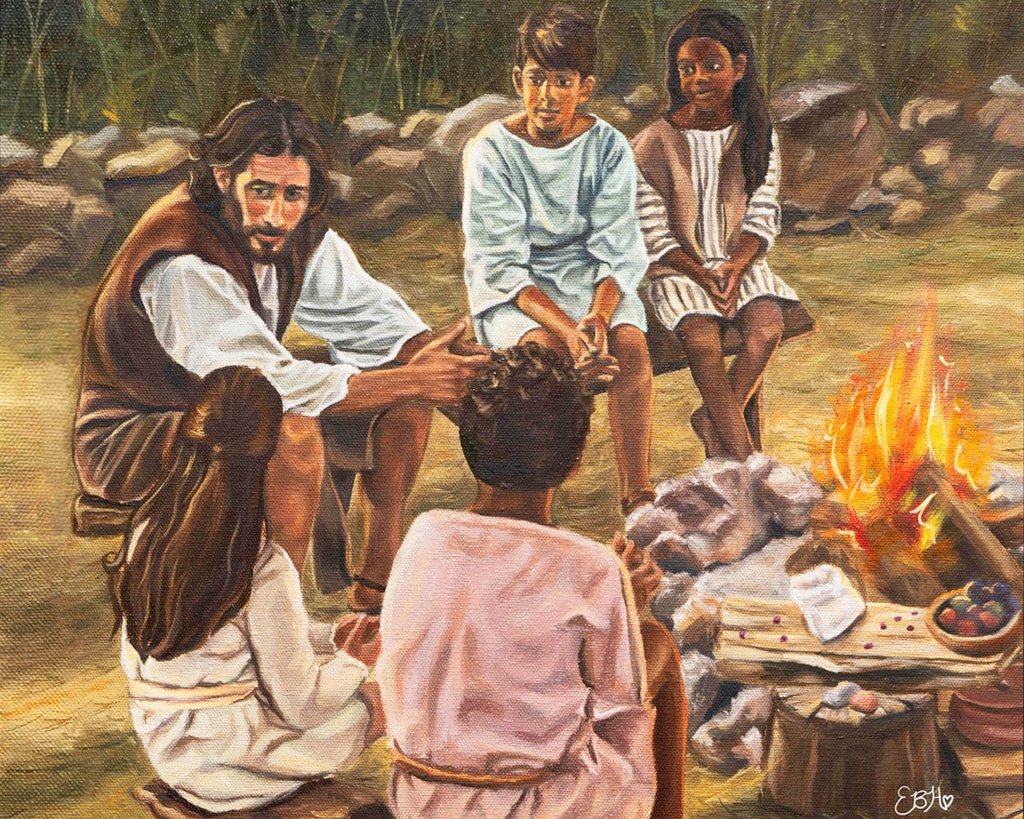
In the current film series “The Chosen,” early episodes show us Jesus playing with children. In the episode about Jesus healing the paralytic let down through the roof, kids watch the spectacle from another roof nearby. OCD Matthew awkwardly climbs up beside them and starts to tell the children who Jesus is. “We know him,” they nod, startling Matthew. We can imagine Matthew’s churning thoughts: Who is this man?

By Allen Hogan. I couldn’t find one of the kids on the wall with Matthew.

Real authority comes not from words alone, but from deeds and attitudes that match the words, done not to garner attention but out of love. It’s called integrity. Some of integrity’s fruits are safety and trustworthiness. I love this passage from Henri Nouwen’s little book, The Inner Voice of Love (pages 49 and 50):

A part of you was left behind very early in your life … it is full of fears. Meanwhile, you grew up with many survival skills. But you want your self to be one. So you have to bring home the part of you that was left behind. That is not easy, because you have become quite a formidable person, and your fearful part does not know if it can safely dwell with you. … Jesus dwells in your fearful, never fully received self. Where you are most human, most yourself, weakest, there Jesus lives. Bringing your fearful self home is bringing Jesus home. As long as your vulnerable self does not feel welcomed by you, it keeps so distant that it cannot show you its true beauty and wisdom. Thus, you survive without truly living. … When you become more childlike, your small, fearful self will no longer feel the need to dwell elsewhere. It will begin to look to you as home. Be patient … Gradually you will become one, and you will find that Jesus is living in your heart and offering you all you need.

Nothing enchants me more than discovering quiet integrity. It’s as thrilling now in real life as it was for me through fiction as a child. And no one embodies this more than Jesus, loving us in the past, the present, and the future.

This is an old song with a still-relevant message.

Healing wounds and trauma, by Alexandra Hudson

But God is compassionate

Psalm 145:8-9 The Lord is merciful and compassionate, slow to get angry and filled with unfailing love. The Lord is good to everyone. He showers compassion on all his creation.

Psalm 103:8, 13 The Lord is compassionate and merciful, slow to get angry and filled with unfailing love. … The Lord is like a father to his children, tender and compassionate to those who fear him. For he knows how weak we are; he remembers we are only dust.

Ephesians 5:1 Imitate God, therefore, in everything you do, because you are his dear children.

Compassion: to suffer together; to recognize the suffering of others and wish or take action to help them. It’s the desire to take action to help that separates compassion from empathy.

Our ability to have compassion toward others is nurtured by the compassion we extend to ourselves, just as Jesus calls us to love others as we love ourselves. For those of us who have experienced trauma, this can be difficult. This week Alexandra Hudson (https://www.civic-renaissance.com/?utm_source=substack&utm_medium=email) wrote about a book called The Body Keeps the Score by Bessel Van Der Kolk. I’m quoting an excerpt, with her permission. Another resource that I’ve found helpful is Try Softer by Aundi Kolber.

Here’s Alexandra:

Our trauma and wounds

We all have wounds that inform how we interact with others today.

Trauma is a specific kind of wound that can chronically inhibit our relationships with others and ourselves. Trauma is an upsetting experience that brings us to the point of being overwhelmed by feelings of helplessness, rage, confusion, and an inability to escape or function in the face of threat. Trauma isn’t about the event itself per se—it’s about how we respond to it, how we’re comforted after it, and how it continues to affect us.

If a child is in a horrible car accident but has a support system around him as he heals both physically and emotionally, the chances of him having long-term trauma are low.

By contrast, if a child endures sustained emotional or physical neglect or abuse growing up—and they have nowhere to turn, no one with whom they can feel safe and process their experience—the chances of long-term trauma are high.

When we encounter stress, it ends when the situation ends.

Trauma stays with us. It continues to be relived and played out in our minds and by our bodies.

Trauma begins as something that happens TO us, but then our brain begins to change: instead of smelling smoke just when there is fire, we begin to smell smoke everywhere. Everyone we meet is a possible threat to our safety and well-being.

The traumatic event is over, but we continue to react to the things around us as if we’re in survival mode. We are in a perpetual state of fight, flight, freeze, fawn, or mental collapse, which is taxing on the mind and body—“metabolically costly” as van der Kolk’s book says.

The brain and body are so preoccupied with survival—with interpreting everything around us as a life threat—that we are left with little energy to think, learn, be creative, perceive nuance, experience pleasure and joy.

We are emotionally, psychosocially and physically handicapped from bringing our best selves, and living our best lives, and bringing the fullness of ourselves to relationship with others.

The cost is not just exhaustion, but a variety of physiological issues that have no perceptible cause. The author of The Body Keeps the Score mentions chronic pain, auto-immune diseases, and headaches as just a few examples that he’s encountered in his practice.

We are not disembodied minds. We are mind, body and spirit. Too often, though, our treatments of malaise are segmented: treatments of psychological issues focus on the mind, while treatments of physiological issues focus on the body.

But seeing human beings in their fullness—as mind, body, spirit, all—and addressing the needs of each in turn and in relation to the other is the path toward fullness of life and healing.

Human beings are infinitely complex. There is so much that goes on within the human mind, body and spirit beneath the surface—beyond what people can see or understand.

Because we are uncomfortable with gaps in our knowledge—for example, “Why was my boss unnecessarily brusque to me this morning?”—we fill in those knowledge gaps with stories to help us explain things we don’t understand, even if the accounts are inaccurate or incomplete.

What would it mean to have a little more humility in our interactions with others—not presuming to know the entirety of their character and life story, reducing them to our experience with them in a single exchange—and be open to the stories that lie beneath the surface? Stories of tragedy, abuse, loss and grief that may help us better understand why people are the way they are and give us greater grace and empathy in interacting with them.

Where was God in your hardest times?

But God rescues the poor from trouble

Psalm 107:41-43 But God rescues the poor from trouble . . . The godly will see these things and be glad. . . . Those who are wise will take all this to heart; they will see in our history the faithful love of the Lord.

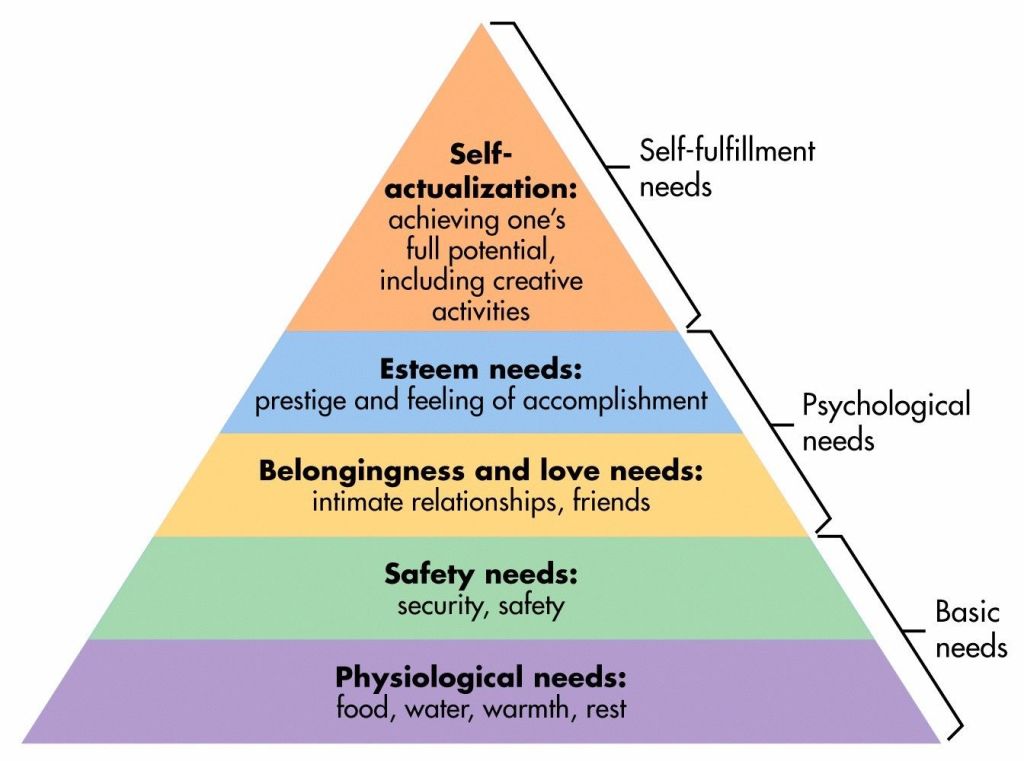
Every one of us has been “poor” in some way during our lives: lacking something important that we need. Whether our needs fall in the most basic of Maslow’s Hierarchy of Needs or further up the pyramid, they create trouble and distress in our bodies, minds, souls, and spirits.

I believe God is present with us in these circumstances, caring for us in ways we may not be aware of in the moment of our anguish. And I believe significant healing can come from being able to see where God was in those anxious times. Not only did he not abandon us (although important people in our lives may indeed have done so) but he acted proactively on our behalf.

My own story is chock full of evidence to support this premise. I wrote about some of them in my memoir about my daughter, Karis: All I See Is Grace. But God has graciously let me see him present and at work in my life from my earliest memories: growing up in a violent and abusive home, boarding school, living as a “foster child” with a family in another country for high school, feeling forced into engagement for two years to an emotionally disturbed man, the challenges of my marriage to Dave, moving to Brazil with a chronically ill child, and so much more.

My PTSD after Karis’s death was not “just” about her death. It was about a long history of traumas I had never dealt with. Because of shame. Because of fear. Because I didn’t feel worthy of the kind of attention and support I needed in order to heal. Because I had been taught a super-spiritual kind of Gospel in which if I truly had faith, I wouldn’t be in emotional trouble.

I might have continued to struggle with the horrors of PTSD for much longer had God not spoken to a woman I hardly knew, telling her I had PTSD and needed help. She showed up at my house to tell me what God had told her and offered financial assistance so I could get the help I needed. How amazing is that? At a time when I felt God had abandoned me, he made it crystal clear that if I couldn’t hear the words of compassion he was whispering to me, he would speak to me through another of his children, able at that time to hear him and take action on my behalf.

Once I started viewing my story through this lens, I began to see him everywhere. I began to experience his love, not just know about it theoretically. I began to heal. I longed to share this way of seeing with others, first through the Karis book as she helped me see God present in her story. It’s the impetus behind the novels I’m writing. I pray those who read them will catch this vision and see God’s faithful love in their own stories.

We don’t know what we don’t know

But God cleanses and heals

2 Peter 1:8-9 The more you grow like this, the more productive and useful you will be in your knowledge of our Lord Jesus Christ. But those who fail to develop in this way are shortsighted or blind, forgetting that they have been cleansed from (their) old sins.

I put parentheses around “their” because this word is not there in the Greek.

Why does this matter? Because our souls are handicapped not only by our own sins, but by the sins of others against us. It’s hard to grow healthy, strong, and productive when emotional pain drains our energy from the inside.

Years of experience with soul care showed us that the major impediment to people’s growth in the qualities Peter lists in verses 5-7 is not our own sins (which many wounded people confess over and over and internalize as evidence they are “bad,”), but the unhealed damage we haven’t known how or had enough support to open to the Lord for his healing.

Trauma, stress, threat, physical or emotional pain, conflict, and fear all narrow our vision to what is immediately in front of us; what Peter calls “shortsighted.” I’m sure you’ve experienced this, as I have. We lose the benefit of perspective.  

And these things expand our blind spots. We may later think or say, “How could I have been so blind?” The soul-healing we need usually requires support from someone else. We don’t know what we don’t know.

Ask God for help and direction: “Help, Lord! Show me how to find healing!” God loves to answer this prayer. He wants us to live peacefully, joyfully, productively. Abundantly.

Gather your courage and talk with someone you trust. Dare to verbalize your anguish.

Jesus said, “I am the gate for the sheep. … Those who come in through me will find safety. They will come and go freely and will find good pastures. The thief’s purpose is to steal and kill and destroy. My purpose is to give them a rich and satisfying life (John 10:7, 9-10).

Shutterstock: funstarts33

Healing work is an act of love, principles 6-10 by Elaine Elliott

But Jesus’ wounds heal us May 23, 2022

1 Peter 2:19-21, 24 For God is pleased with you when you do what you know is right and patiently endure unfair treatment. Of course, you get no credit for being patient in you are beaten for doing wrong. But if you suffer for doing good and endure it patiently, God is pleased with you. For God called you to do good, even if it means suffering, just as Christ suffered for you. He is your example, and you must follow in his steps. … He personally carried our sins in his body on the cross so that we can be dead to sin and live for what is right. By his wounds you are healed. [quoting Isaiah 53:4-6]

I could write a book about home health aides. Karis and I entertained each other with aide stories, many of them wonderful, and some leaving us shaking our heads. Here’s one of the latter:

It was transplant clinic day and I had multiple errands to run, so I asked our new aide to meet us in the waiting room at the hospital. She could care for Karis through the many hours we had to wait between the early blood draw and when the doctor showed up for clinic, so I could attend to my errands. I carefully explained to the aide what Karis needed, especially how important it was that she not leave her unattended, since Karis was unsteady on her feet and with her walker couldn’t navigate opening the heavy bathroom door, nor safely do all that was needed inside. “I’ll be back by 10:30,” I told her.

I buzzed through my errands and returned to the hospital earlier than I expected. The aide was nowhere to be seen and Karis was so desperate for relief she burst into tears when she saw me. “The aide left right after you did,” she told me. “I didn’t know what to do.”

We cared for her needs, which included a change of ostomy bag because the one she had was so full it was about to rupture. We had just made it back to the waiting room when the aide wandered in, chatting on her cell phone and munching fast food. When she saw me, her eyes widened, and she hastily ended her conversation. “I just stepped out for a few minutes because I was hungry,” she said.

I asked the aide to accompany me to a secluded place so we wouldn’t disturb others in the waiting room and described for her the condition in which I had found Karis and what would have happened if the ostomy bag had ruptured. I asked her why she had not followed my instructions. “But I didn’t!” she protested. “I was only gone for, like, ten minutes!”

Aides were hard to come by. Without one, I couldn’t leave Karis ever for more than a few minutes at a time. I didn’t want my relationship with this one to end before it had even begun. My spiritual director had been telling me God is easy to please because he loves us. I wanted to be easy to please too.

But Karis’s anguished face and her tears and what had almost happened, unbearable shame and mess in a public place, burned my heart.

“I’m sorry to hear you say that,” I said. “If you had told me the truth, we could have talked about giving you another chance. But I can’t entrust my daughter’s wellbeing to someone who disregards my instructions and then lies to me.”

A series of emotions crossed the aide’s face, then she said, “I understand that you are overly attached to your daughter because she’s been sick. For that reason, I have decided to forgive you for the terrible words you just said to me. But really, you need to let her grow up. Helicopter moms are not attractive.” She stood and walked away.

She decided to forgive me … ?

I called the home health agency, told them what had happened, and requested a substitute. They didn’t have anyone else, they said. It might take a few weeks for them to find another aide for us.

With the shortage of aides, did that girl get a by at the agency? Did she learn anything? I’ll never know. The experience was traumatic enough for Karis it took her a while to be able to laugh at what happened. A small illustration of Elaine’s healing principle #6:

Principle 6: Healing may take time

Among the many stories of healing in the gospels, one describes Jesus touching a blind man.  At first, the partially healed man saw people walking around, looking like trees. (Mark 8:24) The story shows that some healings take time, since Jesus’ second touch healed him completely.  Among family and friends, we have seen many healings, and most of them have taken time.  In fact, I now have a far less romanticized view of healing and realize it may take nursing care, doctor’s appointments, physical therapy, and patience.   Sitting patiently with someone ill, or simply prayer over a long period of time, is challenging. 

When my sister Sharon could not walk or raise her hands after a seizure and stroke, recovery took time.  She held on in faith and kept doing the physical therapy, and within several months had become completely well.

Principle 7: Healing ministry honors Christ and is a way of following him

When Jesus sent out his disciples, he told them to Heal the sick, raise the dead, cure those with leprosy, and cast out demons.” (Matthew 10:8) Healing became an important part of their message, bringing kingdom life through their good news. Today we still deal with life-threatening illness, bacterial infections, and psychological challenges.  We can follow Jesus’ instructions and include modern methods.

My mother-in-law had a “return to life” when headed to a life of ministry in Guatemala.  The tetanus shot given her sent her into anaphylactic shock, the doctor arrived late and found she was no longer breathing.  A shot to the heart brought her back.

Principle 8: The one healed has received a gift of healing

Some have suggested that those who are healed are the ones we should say have the gift of healing.  They received something amazing they can share with others and their testimony honors Christ and may encourage faith for others.  Those who Christ or the apostles healed became important parts of the story, evidence that something wonderful is at work in the world.  In the gospels, at least 37 individuals healed become characters we do not forget. Out of 3,779 verses in the four Gospels, 727 regard healing of physical and mental illnesses, nearly a fifth of the whole, demonstrating its importance. Our stories of healing today have similar importance in sharing Christ.

Principle 9: Simultaneously ask for healing and accept the current reality

We can always ask for people to be healed—we should have no shame or embarrassment in making the request.  When we have received positive answers, we are encouraged to keep asking for the next case.  When healing has not occurred, we still trust God’s wisdom.  As the Psalmist prayed, “My health may fail, and my spirit may grow weak, but God remains the strength of my heart; he is mine forever.” (Psalm 73:26)

This challenges us when we face chronic illness where medical research has not come up with any known cures.  In these cases, we can get discouraged and feel like it is hopeless to ask.  But faith keeps asking and stays alert for any help or aids to improvement, even small improvements.  We persist in prayer looking for breakthroughs, and as people exercise their trust in God in the middle of illness and suffering, they give him glory. 

Principle 10: Always be grateful

We can remain grateful however God chooses to act.  We remember that only one of ten lepers came back to offer thanks, but Jesus commended him. (Luke 17:17,18) We can say under the threat of suffering, If we are thrown into the blazing furnace, the God whom we serve is able to save us. He will rescue us from your power, Your Majesty. But even if he doesn’t…” (Daniel 3:17,18) “Even if he doesn’t” answer when we want and what we want, we will still be grateful.  And, unsurprisingly, gratitude has a healing effect.

My ten principles have emerged from my experiences.  Doubtless others can improve or add or change these to create a theological explanation of healing for our time that avoids the extremes of “healing doesn’t happen” versus “healing must happen right now if we have faith—no doctors needed!”

Karis’ life illustrates the principles:  she received cutting edge medical interventions which preserved her life far beyond expectations; when her suffering reached a critical point she received her entry into heaven; thousands of people became engaged in praying for her; many joined with faith when things seemed discouraging; clearly Karis did not have any fault in having a life-threatening birth defect and her story awakened compassion; some of her hospital stays were incredibly long, but she recovered; her story is an announcement of the gospel at work in a community of believers; her life became a gift of healing, a sign of God at work; many (like myself) never gave up hoping for healing while accepting reality; and Karis expressed joy and gratitude in a way that blessed so many of us.

I now know that healing is normally not flashy.  Instead, it is based on love responding to need, something Karis’ family certainly offered her.  Over and over, we are told that Jesus was moved with compassion, and his concern led him to heal.  It was one of the strongest characteristics of his ministry. Healing work is an act of love.  It is a way of loving our neighbor as ourselves.  Healing is far more about love than about power—love is at the root of this gift.  I think I liked the idea of the gift because it seemed glamorous and powerful.  Now I think of healing as humble, patient, and quiet, motivated by love.  We saw that at work in Karis’ story.

I (Debbie) will add that we saw God’s miraculous healing in Karis’s life so many times I lost count. In 2009, for example, doctors told us four times to call our family together (from Brazil, Italy, and several places in the U.S.) to say goodbye to her, because there was nothing more to do; this was the end. Each time God intervened, and Karis recovered. She was not surprised by this. “God still has work for me to do here on earth,” she said. “Why were all of you so worried? It’s nice to see you. But go back now to your own work.”

The only scars in Heaven …

But Jesus stands with us  February 5, 2022

John 20:24-28 One of the twelve disciples, Thomas (nicknamed the Twin), was not with the others when Jesus came. They told him, “We have seen the Lord!” But he replied, “I won’t believe it unless I see the nail wounds in his hands, put my fingers into them, and place my hand into the wound in his side.” Eight days later the disciples were together again, and this time Thomas was with them. The doors were locked; but suddenly, as before, Jesus was standing among them. “Peace be with you,” he said. Then he said to Thomas, “Put your finger here, and look at my hands. Put your hand into the wound in my side. Don’t be faithless any longer. Believe!” “My Lord and my God!” Thomas exclaimed.

A surprising thing happened as Dave and I listened to Bach’s Toccata and Fugue in E minor this morning, as we always do on February 5th. I lit several candles, thinking not only of Karis but of Mary and so many other beloved friends who joined the company of Heaven this last year. The flame of one of the candles danced wildly the entire time, while the other flames held steady. I wish you could have seen it! What a gift, bringing smiles to our lips and joy to our hearts.

We also listened to “The Only Scars in Heaven” by Casting Crowns, a wonderful tribute to the One who bore our sin and our sorrow so we could be healed. The lyrics are there, but I suggest the second time you close your eyes and imagine the joy and peace our loved ones enjoy in his presence.

One day we too will dance and celebrate with them. No more tears. No more sorrow.

She’s free now. Hallelujah!

But God longs to heal us

Acts 28:17-31 Three days after Paul’s arrival [in Rome], he called together the local Jewish leaders. … “I asked you to come here … to explain that I am bound with this chain because I believe that the hope of Israel—the Messiah—has already come. … The Holy Spirit was right when he said to your ancestors … ‘the hearts of these people are hardened … their hearts cannot understand, and they cannot turn to me and let me heal them’” [Isaiah 6:9-10; Matthew 13:15].

I’m at Fall Run Park with two-year-old Caleb, his baby sister Talita in a pack on my chest. Caleb dawdles on footbridge #5, watching the brook gurgle over the rocks. I turn to see whether he’s coming. He looks up and runs as fast as he can to catch up to us, trips over a stone in the path and falls flat. In an instant he is up and running to me, shrieking, blood running down his arms and legs. Others on the path reach out, wanting to help.

But it’s to me he runs, even as I jog the few steps back toward him, wanting to care for his wounds, but even more, to comfort his heart. I know I can do this. The bond between us is strong. In that moment, there is nothing else in my mind and heart but the desire to restore my grandson to the joy he had been experiencing moments before.

Shutterstock: Maria Sbytova

“Turn to me and let me heal you.” Can you hear the yearning in the Father’s heart? He sees me in need, and he has the solution to my needs. His arms are open wide, an expression of love and compassion and tenderness on his face. He longs to care for me. But I am afraid and shrink away. It was my own fault I fell. I am so clumsy! I should have—so many things! Not run so fast, watched where I was running, not dawdled in the first place . . . I am ashamed. I turn to others, seeking comfort and protection and healing in other places, inadequate places. The Father’s face falls, even while his arms still stretch toward me. His heart is broken because I have listened to other voices, telling me I must heal myself before I can turn to him—something I can do no better than my two-year-old grandson could care for himself.

The Father’s invitation still stands, his arms open wide, hope and love on his face. Turn to me and let me heal you.

But God brought them out

Acts 5:16-20, 32, 40-41 Crowds came from the villages around Jerusalem, bringing their sick and those possessed by evil spirits, and they were all healed. The high priest and his officials were filled with jealousy. They arrested the apostles and put them in the public jail. But an angel of the Lord came at night, opened the gates of the jail, and brought them out. Then he told them, “Go to the Temple and give the people this message of life!” … [When they were arrested again] Peter replied to the high priest, “God raised Jesus from the dead … We are witnesses of these things and so is the Holy Spirit, who is given by God to those who obey him.” … The high council had them flogged. Then they ordered them never again to speak in the name of Jesus, and they let them go. The apostles left the high council rejoicing that God had counted them worthy to suffer disgrace for the name of Jesus.

What imprisons you?

For me, as I mentioned in the last blog, it can be fear, or worry that I’m not capable of doing things “right,” in a way that will bless other people. Sometimes I’m paralyzed by anger at human injustice, deception and manipulation, and the suffering people endure at the hands of others, rather than using the energy of that anger to try to make a difference. Old messages from childhood can creep up and cripple me. The enemy of our souls knows where we’re vulnerable.

But God frees and heals me as I turn to him. He longs to free and heal you, too.

In Brazil, my husband Dave started a ministry of emotional healing called REVER. The acronym means “to see again,” or “to take a second look.” It stands for “restoring lives, equipping restorers.” Our kids grew up in the context of healing prayer ministry in our home and in our church. We watched God do one miracle of release and healing after another, as dramatic as the physical healings in Acts 5. Our church doubled, tripled, quadrupled in size as people met Jesus and experienced his love for them. Under Brazilian leadership, REVER has spread across Brazil and is active now in several Spanish-speaking countries. The Holy Spirit is alive and well!

Take a risk. Show God your shackles and your wounds. Ask him to release and heal you. If you know someone who loves God, ask him or her to support you in this prayer. Find people who can walk with you as you grow into freedom and health. Discover for yourself the joy of God’s care for you, the message of life he is speaking just for you.

I want to share with you one of Karis’s favorite songs: