Press on

But God says our love matters more than sacrifices

Hosea 6:1-3, 6 Come, let us return to the Lord. He has torn us to pieces; now he will heal us. In just a short time he will restore us, so that we may live in his presence. Oh, that we might know the Lord! Let us press on to know him. … [The Lord says] I want you to show love, not offer sacrifices. I want you to know me more than I want burnt offerings.

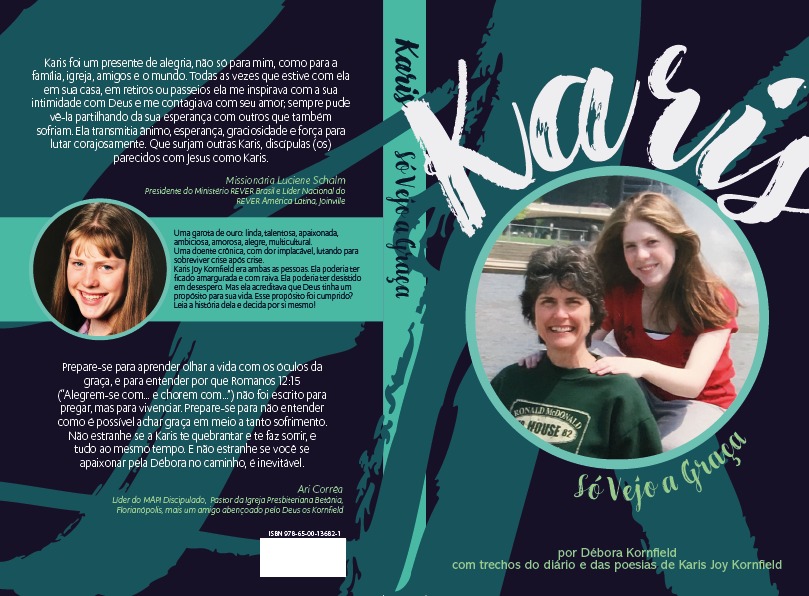
Over the last week and a half, as we marked eleven years since Karis left us, I have re-read Karis: All I See Is Grace. I couldn’t remember which parts of her life—of the three thousand pages of my first draft—had made the editing cut and into the book. I hadn’t remembered how often she referenced this passage from Hosea.
To understand this, it’s necessary to know that Karis had a high view of God’s sovereignty. She believed that NOTHING happened without the permission of God. He, all-powerful and all-knowing, could end or cause anything at any time. Often, she believed, he did not act when he could have because he so honors human free will. He wants us to choose him of our own volition. He wants us to obey him because we love him, not from force or manipulation. He gives us more latitude in our choices than perhaps we are wise enough to handle. Yet we learn from our mistakes. Painful as their consequences may be, God doesn’t usually step in to shield us from the results of what we have chosen. But this doesn’t mean he doesn’t see, or know, or care what we are going through.

A harder concept for me is Karis’s belief that her birth defect, with all its mosaic of positive and negative impacts on her life, was chosen for her by God. That his purposes for her required the suffering she endured. That had she not spent so much time in clinics and hospitals, she would not have met the people with whom she was meant to share God’s love.

I tend to think that Karis was born without functional intestinal nerves not because God so willed, but because we live in a fallen, imperfect world in which this kind of thing can happen. The question for me is whether we allow God to act within our circumstances to accomplish his desire to love others through us.

Either way, it’s clear God longs for us to know him. To personally know his heart of love toward us. To put ourselves intentionally in the way of knowing him better, in every way we can “pressing on” to know him and to love him, not whatever image of him we have inherited or invented. This, for Karis, was her lifelong quest.

Sovereign by Chris Tomlin

Gently

But God understands

Isaiah 40:11, 27-29 He will feed his flock like a shepherd. He will carry the lambs in his arms, holding them close to his heart. He will gently lead the mother sheep with their young. … How can you say the Lord does not see your troubles? … The Lord is the everlasting God, the Creator of all the earth. He never grows weak or weary. No one can measure the depths of his understanding. He gives power to the weak and strength to the powerless.

From the time Karis was small, Isaiah 40 was important to us, she the lamb carried in the Lord’s arms, I the mother sheep He gently led. During long nights in hospitals and surgeries, we knew He was not weak or weary. No matter what our current crisis, dilemma, or grief, we knew He understood what we faced.

Karis with her sisters and cousins at a family reunion in Bolivia, 1992 (age 9). On this trip, Karis started getting sick again, after God gave her (and us!) two years of good health to adapt to living in Brazil. Karis was the oldest of eight granddaughters of Dave’s parents. Dan was their only grandson–adored by all the girls. Age 9 was the year Karis started keeping journals.

Aligned with Isaiah 40, two songs encouraged us. The first one you will likely recognize, “Holy, Holy, Holy,” which contains the beautiful line, “merciful and mighty.” It invoked our “lifeline” verses, Lamentations 3:22-24. We counted on God’s mercy and his power, renewed for us every single day.

The other, “Tu és soberano” (You are sovereign), we learned after we moved to Brazil when Karis was seven. Karis had a profound belief that NOTHING happened to her except by her Father’s permission and for some divine purpose. She was always asking not “Why did this happen to me?” in a self-pitying kind of way, but rather “What purpose does God want to accomplish through this?”

Because she asked this question, she was alert to what was going on around her. Who else was in the hospital this time to whom she could extend love? Who would God bring to her whose troubles she could better understand at a heart level because of her own pain and losses?

“Tu és soberano” includes this beautiful line: “Apesar dessa glória que tens, Tu te importas comigo também, e esse amor tão grande eleva-me, amarra-me a Ti, Tu es tremendo” (Despite the glory you have as Sovereign of the universe, you care about me too, and this love lifts me up and binds me to you. You are amazing).

Tears come to my eyes as I remember singing this beautiful worship song, full-throated, with my beloved brothers and sisters in Brazil. They have been God’s human arms to care for us and lift us to the Father not only while we lived in São Paulo, but through their prayers ever since.

I hope Isaiah 40 will encourage you today too.