Be a window

But God shines his light through us

Matthew 5:16 Let your good deeds shine out for all to see, so that everyone will praise your heavenly Father.

Hebrews 13:21 May the God of peace equip you with all you need for doing his will. May he produce in you, through the power of Jesus Christ, every good thing that is pleasing to him.

Last year, our church sent to be cleaned several of the stained-glass windows of our historic building. The difference is stunning, to the point that I’m sometimes distracted from the service by the play of colored light on the huge painting of Jesus’ ascension above the altar. I find this enriching, because I know what those windows convey of the Gospel story.

Cleaning of one of the smaller Ascension windows: photo Marilyn Chislaghi

I know too the passion and prayer of the church to not only receive light through its beautiful windows, but to reflect light into its cosmopolitan neighborhood of Oakland, which attracts people from around the world through its universities and medical center (including us from our beloved Brazil!).

Hence my appreciation of George Herbert’s poem “The Window,” which I’m connecting to chapter 3, “God Most Good,” in the book In His Image I’ve been referencing. Jen Wilkins says “Be good. Others will see it. You’ll be a light causing others to glorify the Father of lights.” Here’s the poem:

The Windows

Lord, how can man preach thy eternal word?

He is a brittle crazy glass;

Yet in thy temple thou dost him afford

This glorious and transcendent place,

To be a window, through thy grace.

But when thou dost anneal in glass thy story,

Making thy life to shine within

The holy preachers, then the light and glory

More reverend grows, and more doth win;

Which else shows waterish, bleak, and thin.

Doctrine and life, colors and light, in one

When they combine and mingle, bring

A strong regard and awe; but speech alone

Doth vanish like a flaring thing,

And in the ear, not conscience, ring.

George Herbert, 1593-1633

How clean is the beautiful window of my redeemed life?

Our great Ebenezer

But God faithfully keeps his word

Hebrews 2:17 Therefore, it was necessary for him [Jesus] to be made in every respect like us, his brothers and sisters, so that he could be our merciful and faithful High Priest before God.

John 1:14 So the Word became human and made his home among us. He was full of unfailing love and faithfulness.

In Chapter 7 of her book In His Image, Jen Wilkin identifies the written word of God, the Bible, as “our great Ebenezer, a memorial stone to the faithfulness of God. … Between its covers a glorious truth is repeated for our great benefit: God is worthy of our trust” (pages 100-101).

What does she mean by calling the Bible a “great Ebenezer”? 1 Samuel 7:12 says, “Samuel then took a large stone and placed it between the towns of Mizpah and Jeshanah. He named it Ebenezer (which means “the stone of help”), for he said, “Up to this point the Lord has helped us!” Samuel did this to memorialize a time when God intervened with a mighty thunderstorm to save his people from an invading army.

The Bible is full of wonderful “But God” stories of God’s faithfulness, to encourage us in our own hard times. Jen continues, “When we spend time in the Bible, our lives begin to bear witness to its faithful message. We ourselves become stones of remembrance for those around us, giving faithful testimony that God is worthy of our trust, no matter what (page 101).

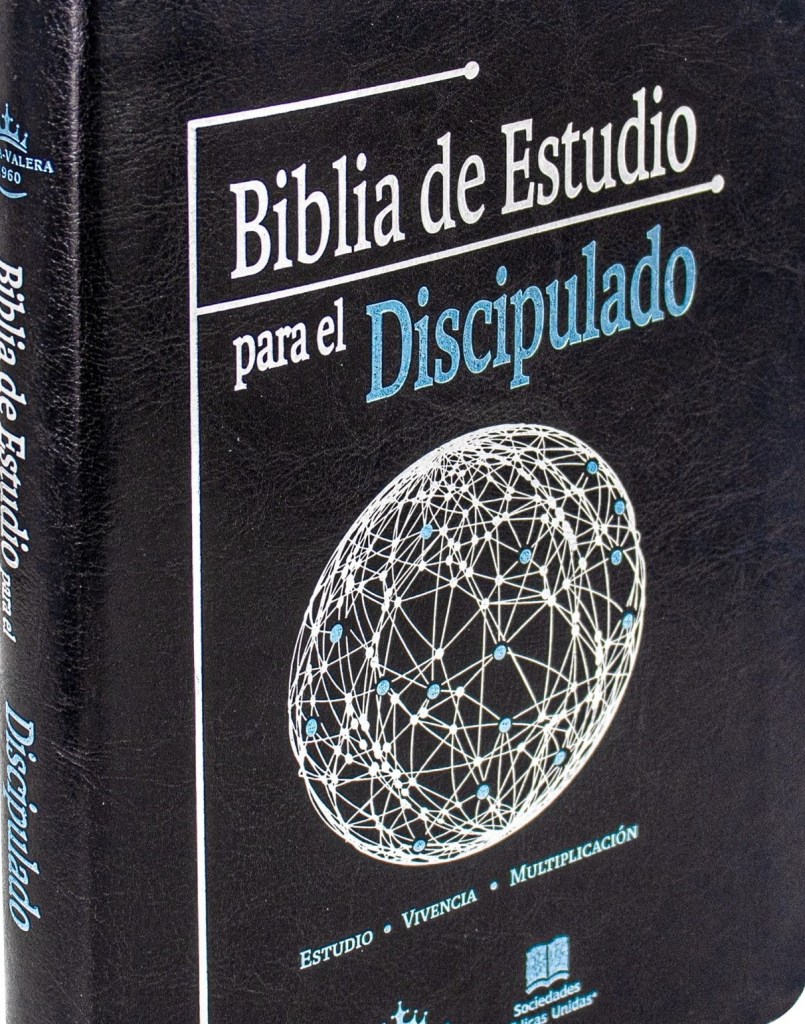
Yesterday, Dave showed me this picture of fifty pastors and leaders in Venezuela who had just been gifted with the Biblia de Estudio para el Discipulado (Discipleship Bible).

The picture triggered a memory of God’s faithfulness to Dave. For six years after Karis and I came to Pittsburgh for intestinal transplant, Dave and I lived on two different continents, always expecting Karis to get well enough for me to go home to Brazil. Finally, Dave realized Karis wasn’t going to get better, so he needed to move to Pittsburgh.

This felt to Dave like a punch in the gut. He was 100% engaged in ministry in Brazil. What would he do in Pittsburgh? Yet in agony of spirit, he took the necessary steps over the next year to obey what he knew God was asking him to do: give up Brazil and join Karis and me here.

But God had a plan. The week before he left São Paulo, Dave received a call from the Brazilian Bible Society asking him to write a Discipleship Bible in Portuguese.

Had Dave stayed in Brazil, he would never have found the time to write. In Pittsburgh, though, this work became his great joy, an eight-year project into which he could pour all that God had planted in him about being and making disciples of Jesus: 450 small group studies, notes for disciples of Jesus on every page, highlighting practical applications, introductions to each book noting what it had to offer disciplers, and a comprehensive index and cross-reference system.

The Discipleship Bible was published in 2018 in Brazil, and last year in Spanish, in multiple printings already.

Dave was faithful to what he understood God was telling him to do, though the cost to him was great. God was faithful in giving Dave a project he could work on in the “foreign land” of Pittsburgh. All so people across Latin America and Brazil who want to walk closely with Jesus, open themselves to transformation by his Word, and help others do this also, could have access to the years of experience and all the passion and wisdom about disciplemaking God had poured into Dave across his lifetime.  

What tough thing is God asking of you? Can you trust his faithfulness, even though you can’t yet see it?

All the Lord does is just and good,
    and all his commandments are trustworthy.
 They are forever true,
    to be obeyed faithfully and with integrity.

Psalm 111:7-8

Role-modeling graciousness

But God is gracious

Hebrews 4:16 So let us come boldly to the throne of our gracious God. There we will receive his mercy, and we will find grace to help us when we need it most.

Colossians 4:6 Let your conversation be gracious and attractive.

Between travel and illness, I haven’t managed to post for the last couple of weeks. If you’ve been tracking, though, you know I’ve been studying the book of Hebrews. I’m also reading Jen Wilken’s In His Image: Ten Ways God Calls Us to Reflect His Character. I intend to use Jen’s categories over the next few weeks, probably in the order she presents them.

Yesterday, though, I was impressed so much by Kamala Harris’s concession speech that I decided to skip ahead to Jen’s chapter 6: God Most Gracious. I’m not good at it yet, but I want to become a gracious person. I’m always on the lookout for role models in “real life,” people who can show me what being gracious looks like. So, Kamala’s speech and attitude and manner caught my attention.

No matter who you voted for, I think you can profit from taking twelve minutes to watch this:

I’ve done so three times already and will probably watch it again.

Graciousness requires humility. It requires caring more about others than about oneself. As Jen says, what people tend to want is not to be treated fairly, but to be treated preferentially. Our love of preferential treatment displays itself in a thousand ways, wanting the best for ourselves. But,

“Christians should have a reputation for playing favorites with everyone except ourselves. As those who have received abundant grace, we do good in abundance. … We should be known as the people who respond to ‘I hate you’ with ‘I love you,’ and as the people who respond to ‘I love you’ with ‘I love you more’” (pages 94-95).

Do everything without grumbling or arguing, so that you may become blameless and pure, children of God without fault in a warped and crooked generation. Then you will shine among them like stars in the sky as you hold firmly to the word of life (Philippians 2:14-16).

Countless thousands of angels

But God promises profound joy

Hebrews 12:18, 22 You have not come to Mount Sinai, a place of flaming fire, darkness, gloom, and whirlwind … and terror and trembling. … No, you have come to Mount Zion, to the city of the living God, the heavenly Jerusalem, and to countless thousands of angels in a joyful gathering.

Can you imagine being part of that joyful gathering, surrounded, buoyed, overwhelmed by thousands of angel voices raised in worship of the Lamb, the Lamb who laid down his life for you?

A couple of years ago, I had a tiny taste of what this might be like. I was standing in worship in my church in Pittsburgh when all at once, I could see into Heaven. I can’t explain this; I can only tell you what I experienced. I felt goose bumps; a depth of wonder I don’t know how to describe. Awe.

And gradually I realized: the angels were singing with us. They sang the song we were singing in honor of the Lord. I wish I remembered what that song was.

The time of worship ended. The vision faded. I was so overwhelmed I had to sit down. After the closing prayer I looked around me. Did no one else see what I saw? How could I ever describe it? Was I meant to share it with others? To what end had God given me this glimpse of glory? Was it for me alone, to encourage me in a time of sadness?

I don’t fully know the answer. Tonight, I feel I am to share this with you. Perhaps you are in a moment of discouragement, wondering whether your life will ever come right. Perhaps this second-hand peek into the reality of God’s “heavenly Jerusalem” will prompt you to ask for your own deepened understanding of the joy-filled wonders that await us.

I offer this as a gift, passing on a gift given to me, Heaven touching earth. May the Holy Spirit use it to bless you as only he knows how to do.

Shutterstock: Bruce Rolff

I heard the voices of thousands and millions of angels around the throne … And they sang in a mighty chorus: “Worthy is the Lamb who was slain to receive power and riches and wisdom and strength and honor and glory and blessing.” And then I heard every creature in heaven and on earth and under the earth and in the sea. They sang, “Blessing and honor and glory and power belong to the one sitting on the throne and to the Lamb forever and ever.” Revelation 5:11-13

Worthy is the Lamb, Hillsong

An anchor for our souls

New birth into a living hope

1 Peter 1:23 (Titus 3:5) Praise be to the God and Father of our Lord Jesus Christ! In his great mercy he has given us new birth into a living hope through the resurrection of Jesus Christ from the dead.

Romans 6:18-19 It is impossible for God to lie. Therefore, we who have fled to him for refuge can have great confidence as we hold to the hope that lies before us. This hope is a strong and trustworthy anchor for our souls.

So, I’m curious: Have you tried the “new song” idea from my last blog—applying praise to whatever is going on in your life today? I would love to know! I sang a “new song” as I found reasons to praise God as our family absorbs the reality and implications of our six-year-old grandson’s Celiac Disease diagnosis.

I’m quite excited about this understanding of “new song,” in part because it takes me back to a vow I made to the Lord while Karis and I were jetting to Pittsburgh from South Bend in the middle of the night in response to the first intestinal transplant call she was ready to consider.

I vowed to find something to praise God for every day of this upcoming adventure. I had no idea at the time how life- and hope-giving that practice would be. Keeping that vow forced me back to the Lord time after time when otherwise I could have floundered in the excruciating disappointments and reversals we experienced. Hope became for me–for us–a lifeline, an anchor, a safety rail, a source of strength for not giving up as Karis faced death day after day after day. I am deeply grateful to the Holy Spirit for prompting me to make that vow.

There are so many wonderful references to hope in the New Testament that I had trouble choosing, even from the book of Hebrews. The Greek words translated as hope are elpis (noun) and elpizo (verb), from the root elpo. They mean to anticipate (usually with pleasure), to trust, and to expect with confidence (and the corresponding nouns).

Peter emphasizes the fact that our hope is rooted in the resurrection of Jesus, whose victory over his own death extends to us in ours. That’s why we don’t grieve when a loved one dies or in thinking about our own mortality with the same despair as those without the hope of new life after death (1 Thessalonians 4:13).

In thinking about this, I remember Karis’s brilliant smile after she wrote in big scrawly letters with her left hand, “I love ____” each one of us. At the end she wrote, “Call the doctor. I can’t breathe,” just as a team burst into her ICU room to induce her last coma to give time for the antiviral to work (it didn’t, but this gave our family time to gather and to prepare ourselves as well as we could for her death). I believe Karis knew she was going Home, which we learned later through her journals she had been pleading with God to allow her to do.

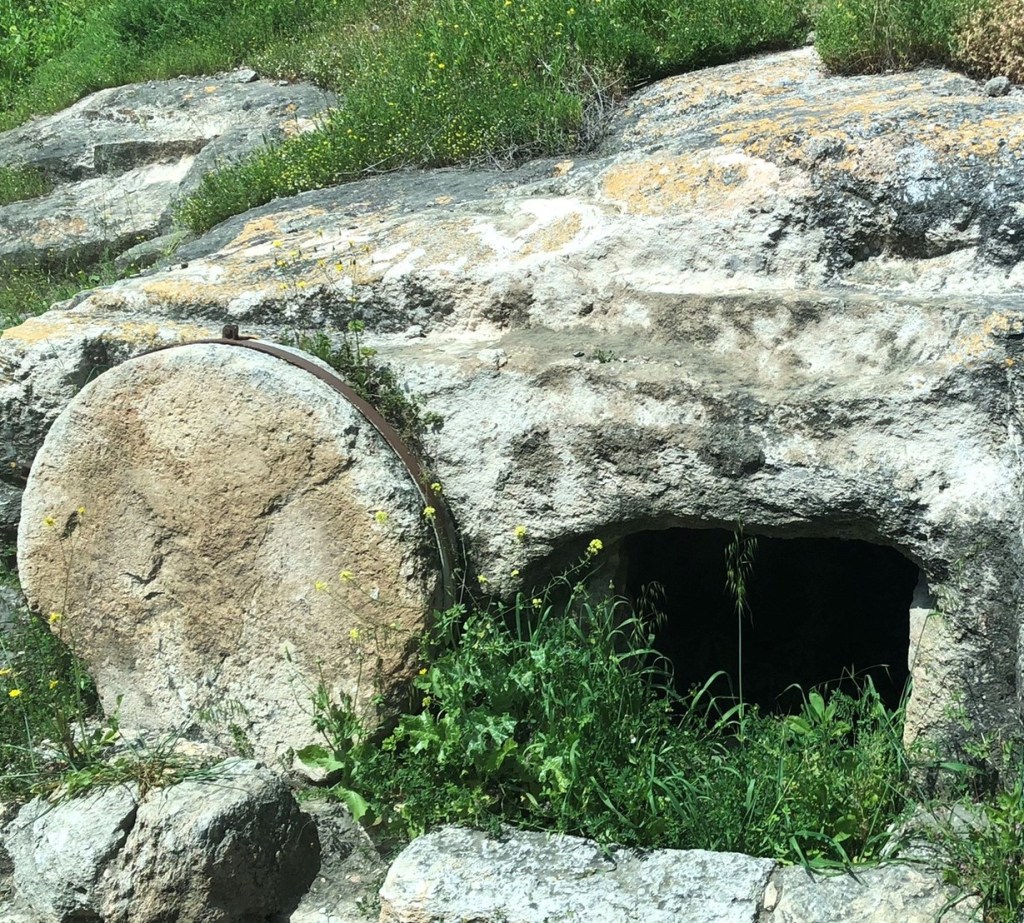
This isn’t Jesus’s tomb, but it is a preserved tomb and round stone from the first century, like his might have been. Thanks to Marilyn Chislaghi for permission to use her photo taken in Israel.

Living hope: an empty tomb. A brilliant smile. An anchor for our souls through terrible times.

The Anchor Holds, by Ray Boltz

Hope or dystopia?

But Jesus’ light can’t be extinguished by darkness

John 1:1-18 In the beginning the Word already existed. … The Word gave life to everything that was created, and his life brought light to everyone. The light shines in the darkness, and the darkness can never extinguish it. … So the Word became human and made his home among us. He was full of unfailing love and faithfulness. And we have seen his glory, the glory of the Father’s one and only Son. … Jesus Christ has revealed God to us.

I’ve missed you! And I’ve enjoyed focusing on other things, like vacation. And the details of publishing Facing the Faeries 1906.

I’m returning to this blog halfway through the season of Epiphany, which ends with the beginning of Lent on February 14. The readings for this season have included the Gospel of John, with his emphasis on Christ as the Light of the world.

Epiphany began on January 6, the day selected by early church fathers to remember the magi visiting baby Jesus in Bethlehem and bringing him gifts. The magi were not Jewish, hence the connection with Jesus bringing light to the world, not just to the people God chose to be his earthly family and lineage. The wise men illustrate for us the fulfillment of God’s promise to Abraham that through him and his descendants, all the earth would be blessed (Genesis 22:18).

Returning to twice weekly postings on this blog, I have four opportunities to think about John’s view of Jesus as the Light of the world before we enter Lent. It seems John can hardly wait to get into this theme. As one of Jesus’ disciples, walking with him for at least three years, John was well positioned to tell us what he personally saw and experienced of what he calls Jesus’ glory, the divine light of unfailing love and faithfulness shining through him.

John was no pushover. Jesus called him and his brother James “Sons of Thunder” (Mark 3:17). They wanted to call fire from heaven to burn up a Samaritan village that didn’t accept Jesus (Luke 9:52-54). Yet in John’s writings (he’s the most prolific New Testament writer after Paul), his emphasis is on love. His life was transformed by the light of Jesus shining into his personal darkness, gentling him and dramatically changing his perspective on the “others” in his world.

For us, you and me, grappling daily with the darkness, violence, and brokenness of the world, John’s introduction to his Gospel is tremendously encouraging. “The light shines in the darkness, and the darkness can never extinguish it.Think about that. Isn’t it good news, solid rock on which to place our feet, a promise we can count on no matter how dark things get? We don’t see it yet, but the ending of the story will be glorious!

Tucked inside my fortune cookie! Isn’t that cool?

Thinking about this promise, I feel my anxiety for the world dissipate like air leaking from a balloon. My thoughts turn to my small role in shining his light into the darkness around me, beginning in my own heart. What a relief to know I’m just a minor character in this huge story God is writing. He has the whole thing figured out! Hallelujah!

Amy Grant celebrates this: Lighten my darkness …

And have you been enjoying the Advent ABC playlist? It still brings me to tears.

Speaking of stories, watch this space for an announcement about Facing the Faeries 1906!

Advent ABC: A to Z, Alpha and Omega

Isaiah 46:9-10, Revelation 1:8 I alone am God! I am God, and there is none like me, declaring the end from the beginning, and from ancient times the things that are not yet done, saying, “My counsel shall stand, and I will do all my pleasure.” … “I am the Alpha and the Omega—the beginning and the end,” says the Lord. “I am the one who is, who always was, and who is still to come—the Almighty One.”

We’ve reached the end of the alphabet, but not the end of worshiping Jesus for the variegated tapestry of who he is that we learn from Isaiah. We can circle back to the beginning and celebrate him each of the remaining days of Christmas (until January 6) and for the rest of the new year. Here’s the link again for the Advent ABC playlist, which you can find as well on the home page of ButGod.blog.

Dave and I are traveling tomorrow. I’ll see you back on this blog in February.

Happy New Year!

Alpha and Omega, Gaither Vocal Band

Sanctuary/Alpha and Omega, Israel Houghton and New Breed