The fruit in our lives comes from God

But God makes fruit grow 

Hosea 14:8 [The Lord says] Stay away from idols! I am the one who answers your prayers and cares for you. I am like a tree that is always green; all your fruit comes from me.

John 15:5 [Jesus said] I am the vine; you are the branches. Those who remain in me, and I in them, will produce much fruit. For apart from me you can do nothing.

Shutterstock: MVolodymyr

We’re home from our vacation, spent tucked away in a small town in Ohio. For two weeks, Dave and I delighted in extended devotional times, hiked in the snow and cold, played games, built jigsaw puzzles, read books, had important conversations, slept (!), and watched a few movies. We are grateful for this restorative time, balancing and healing the intense stress of the last weeks of 2024. The challenge now will be not to get sucked back into running on adrenaline 24/7, as we are both committed to big projects in 2025.

I found myself drawn to the prophets, particularly the minor prophets, those I don’t often read or pay attention to. So from now to Easter, I plan to deep dive for “pearls” from the prophets to share with you.

In light of the work Dave and I believe God has called us to, I chose Hosea 14:8, quoted above, as my “year verse” for 2025. It reminds me of how easily I can get distracted from what God wants for me and make other things more important. These “idols” don’t yield good fruit. Neither do our own efforts, in themselves. The fruit in our lives comes from God, from his life active in us.

I would love for you to join me in exploring “pearls from the prophets”—not just reading my thoughts, but sharing your own as well.

Advent 4, faith: we can’t do it alone

But Jesus perfects our faith

Hebrews 10:38, 11:1 My righteous ones will live by faith. … Faith is the confidence that what we hope for will actually happen; it gives us assurance about things we cannot see.

Hebrews 12:1-2 … Let us run with endurance the race God has set before us. We do this by keeping our eyes on Jesus, the champion who initiates and perfects our faith.

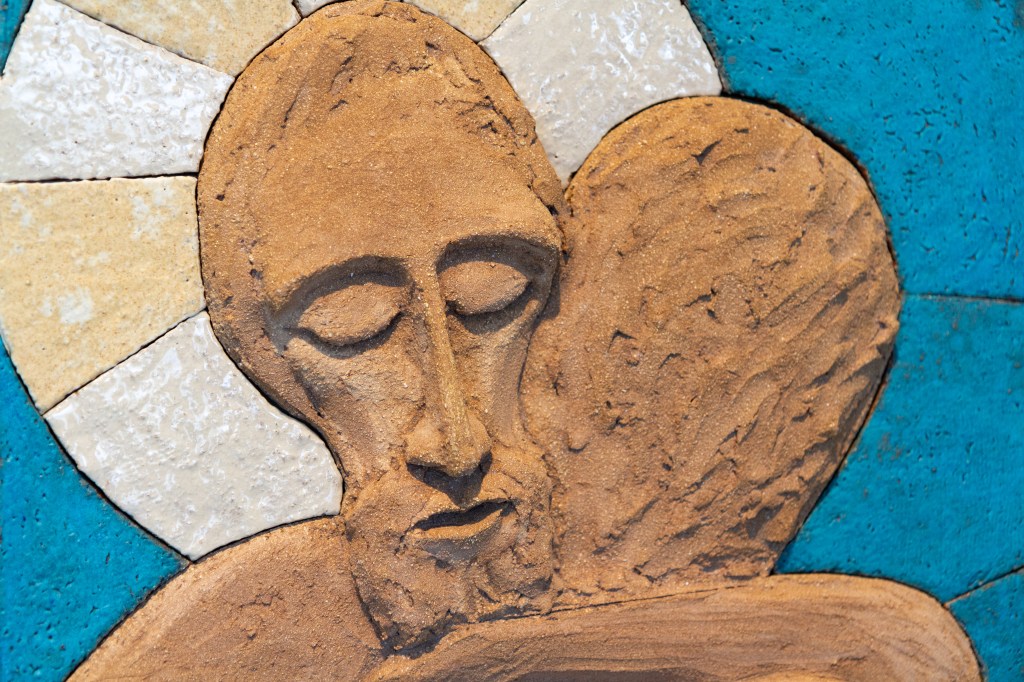
Collage by my friend Carol Amidi CarolAmidi.net

Have you ever had your confidence in God severely threatened? Have you come to the end of your own ability to keep on believing?

Often, I have found, people make judgments about each other regarding the sincerity and adequacy of their faith.

The thing is, life can be very tough, and messy, and confusing, and painful. Not one of us is strong enough to maintain faith all by ourselves.

The good news is that God doesn’t ask this of us. He surrounds us with love and support—his own, and the Body of Christ. Hebrews 12, coming just after the litany of faithful ones in chapter 11, encourages us that even those who have gone before us are supporting and rooting for us.

I’ve found too that people still alive do this also—sometimes in completely unexpected ways. Here’s a treasured example.

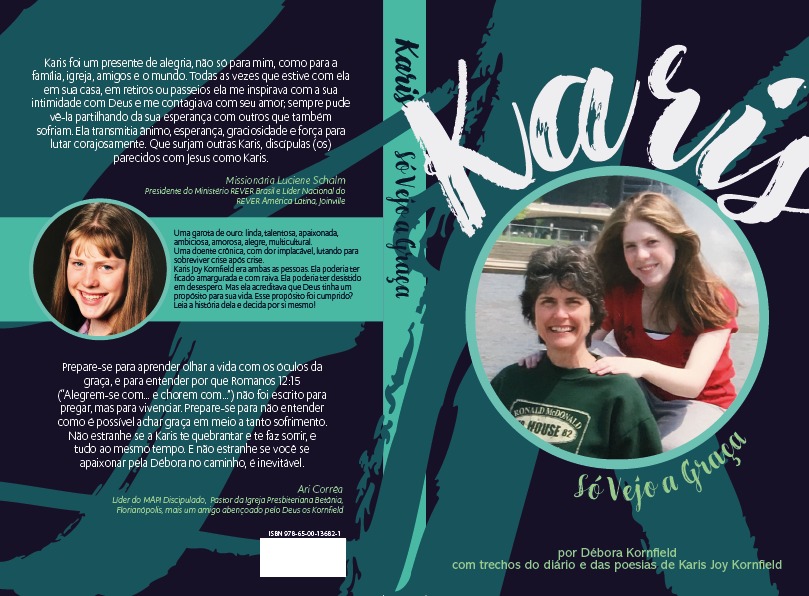
If you’ve followed this blog, you know that our daughter Karis was born with nonfunctional intestines. Day after day in the hospital, test after test came back normal, yet even a teaspoon of fluid by slow drip into her stomach prompted bilious vomiting, and nothing at all came out as waste. When the surgeons finally opened her up and biopsied her intestinal tract, they asked us to remove all life support and let her die, because there was no hope that her intestine would ever function.

A missionary friend of Dave’s from Florida visited us on a trip to Chicago. The timing couldn’t have been better. Though Dave wasn’t there, Harold inspired enough confidence that I was able to confess I didn’t feel I had any faith left. Harold said two things. Faith is not grounded in circumstances. It’s grounded in the unchanging character of God. And, he said, if my faith was faltering, it was time for the Body of Christ to have faith for us.

I’ve never forgotten Harold’s compassionate words. I felt so cared for, so supported, so understood. He didn’t criticize me or blame me or require something of me. He asked me instead to let go. To let others share my burden. To rest in God’s immutable love, for Karis and for our family, and for all whom her little life touched.

Faith, I think, asks us to find courage to share our needs not just with God, but with each other. As Advent so quickly morphs into Christmas this year, I pray you find a trusted friend with whom you can do just that.

Advent 3, Joy: the flip side of peace

But God’s joy is our strength

Hebrews 10:32-37 You suffered … and you accepted it with joy. You knew there were better things waiting for you that will last forever.

Philippians 4:4-9 Rejoice! … Don’t worry about anything; instead, pray about everything. Tell God what you need, and thank him for all he has done. Then you will experience God’s peace. …

Collage by my friend Carol Amidi https://www.carolamidi.net/

Yesterday I confided in a friend some of my worries. Though they hardly qualify as the suffering the author of Hebrews addresses, my friend helped me take my worries to the Lord. I came home with peace and enJOYed the rest of the day. I don’t yet know the outcome of my concerns, but I have a renewed sense of trust in the care of my Father.

On a walk this morning I thought of Habakkuk 3:17-19: the wonderful “Even though … yet” passage with which the prophet concludes his book of complaints. How would you personalize the verses of this song? Here are three of mine:

Even though the date (12/21) is simply unworkable for many people, yet I am confident those who can attend the Campfire Song Stories launch party this Saturday will have a delightful time and I’ll be able to express my gratitude to the artists and their families.

Even though I don’t know whether Karis can “see” the book from Heaven, yet it gives me joy to showcase her sense of humor.

Even though people have judged the book as expensive, yet those who have acquired it for their children have loved it.

Not very “spiritual,” right? But Paul doesn’t tell the Philippians they can only entrust to God their spiritual concerns. And Habakkuk’s list of “Even thoughs” has to do with fears about invaders, and about crops and flocks—his livelihood. This exercise allows him to “wait quietly” to see what God will do (3:16).

Try it out! Make a list of your “Even though” situations and tell God about them. With open hands and thankfulness, receive his peace.  

Then join me in Habbakuk’s song of praise:

Yet I will rejoice in the Lord!

I will be joyful in the God of my salvation!

The Sovereign Lord is my strength!

He makes me as surefooted as a deer,

Able to tread upon the heights.

Habakkuk’s song includes an instruction to the choir director: “to be accompanied by stringed instruments.” So here you go: (Sovereign Lord, by Lantern Music)

Advent 2, Peace: No fear?

But God loves us perfectly

Hebrews 13:5-6 God has said, “I will never fail you. I will never abandon you.” So we can say with confidence, “The Lord is my helper, so I will have no fear. What can mere people do to me?”

1 John 4:16-18 We know how much God loves us, and we have put our trust in his love. … Such love has no fear, because perfect love expels all fear.”

Some people had trouble posting responses to the question in my last blog (no idea why—I hope it fixes itself) and wrote me by email. I asked Elaine whether I could quote part of what she wrote:

“Fearing God eliminates our other fears.  As John says, his perfect love removes them.  And Romans 8 is so beautiful in affirming that nothing can separate us from his love.  So both of these things give me peace no matter what crazy and terrible things are going on.”

I’ve been thinking about this, and how it works in my life practically. Last week, I said to a friend, “I lived in fear for thirty years—the thirty years of Karis’s life. Her wellbeing turned on a dime. I walked in high alert. She could be well in the morning and fighting for her life in the ICU by afternoon. All plans were held loosely …”

Evaluate with me the statement that I “lived in fear for thirty years.” On the face of the Scriptures quoted above and Elaine’s affirmation, it seems I was telling my friend I didn’t trust God or his love. Some of the most profound hurts that I suffered were from people telling me (who didn’t live the Karis reality 24/7 or understand more than surface facts about what it entailed) that I was in sin because I was afraid.

Is it true that in my fear I didn’t trust God? I don’t think so. Is it possible there is a difference between fear in response to specific frightening circumstances, and fear as an existential state that bars us from the comfort God can give us? It was exactly because I trusted God that I could express my fears to him. I knew that HE would not stand apart and judge me or criticize my “spirituality.” He instead walked with me through the dark valleys.

Fear is, after all, an emotion that warns us of trouble or threat. It helps us recognize when all is not well; when action needs to be taken. Healthy, appropriate fear can save us from taking life-threatening risks. We teach our children not to run into the street without looking both ways, because cars can kill them. It’s appropriate to fear what wind and waves can do to us (yes, there are family stories behind this example, that involve exhaustion and jellyfish stings and … ). We call someone “foolhardy” when they choose to swim despite red high hazard signs on the beach (thinking of you, David Kornfield). Having no fear can literally kill us.

Another thought: Often fear is linked to our sense of impotence, our lack of control over circumstances or other people’s choices. Sometimes this leads to blaming God for things that happen to us or to people we care about. What does it mean to me in my everyday life that God is in control of the universe? Doesn’t he see me? If he loves me, and has all power, why doesn’t he act to remove my suffering or the suffering of others? This age-old question is called “theodicy.” Suffering forces us into asking these questions.

As you can tell, I’m not offering any pat answers here. I want to engage you in thinking more deeply about your own suffering, your own fears. And whether peace, biblical all-encompassing shalom, is a reality in your life, and if so, what pathway you walked to discover and experience the “perfect love that expels all fear.” Join the conversation!

Advent 1, Hope: Already and not yet, by David Kornfield, Pittsburgh, PA

BUT JESUS will return and set everything right

Hebrews 9:28 Christ will come again, not to deal with our sins, but to bring salvation to all who are eagerly waiting for him.

Revelation 1:7 Look! He comes with the clouds of heaven, and everyone will see him.

On days like today, with occasional sun breaking through clouds, I often say to Debbie, “It could be today!”

Shutterstock: Trofimenko Nickolai

A person’s last words carry weight. How much more if he is the author and completer of human history? Of my story. Of your story. Of our story as the church of Jesus Christ. His last recorded words in the Gospels are: “Be sure of this: I am with you always, even to the end of the age” (Matthew 28:20).

There will come an end to the world as we know it. Advent recognizes this fact and gives us time to prepare our hearts for our Lord’s return. It’s a time of tension between:

1. His arrival as a baby and his imminent arrival as the King of Kings.

2. What we have already experienced of Christ and what is yet to be revealed.

3. The maturity we have already attained and what we still lack.

The world is lost in the commercial focus of Christmas. We must get “lost” in anticipation of the imminent arrival of our King of Kings.

We live in the space between what Jesus has already done and what He will do. He has already performed miracles in our lives, our marriages, our families and our churches. AT THE SAME TIME, we deeply need Him to become real and present to us again today.

We honor these four weeks of Advent, celebrating Christ’s Incarnation as a tiny, totally dependent infant and his arrival in each of our hearts. At the same time, let us cry out, asking that he arrive for each of us in a new way, to transform what is still missing within us during this in-between time. Let us live fully in the revival and anointing he has already given us, even while we stretch forward to the greater revival and anointing that we so desperately need.

Lord, break in me everything that needs to be broken.

Heal in me everything that needs to be healed.

Fill in me everything that needs to be filled.

Anoint in me everything that needs to be anointed.

“The celebration of Advent is possible only to those who are troubled in soul, who know themselves to be poor and imperfect, and who look forward to something greater to come.” Dietrich Bonhoeffer

Be a window

But God shines his light through us

Matthew 5:16 Let your good deeds shine out for all to see, so that everyone will praise your heavenly Father.

Hebrews 13:21 May the God of peace equip you with all you need for doing his will. May he produce in you, through the power of Jesus Christ, every good thing that is pleasing to him.

Last year, our church sent to be cleaned several of the stained-glass windows of our historic building. The difference is stunning, to the point that I’m sometimes distracted from the service by the play of colored light on the huge painting of Jesus’ ascension above the altar. I find this enriching, because I know what those windows convey of the Gospel story.

Cleaning of one of the smaller Ascension windows: photo Marilyn Chislaghi

I know too the passion and prayer of the church to not only receive light through its beautiful windows, but to reflect light into its cosmopolitan neighborhood of Oakland, which attracts people from around the world through its universities and medical center (including us from our beloved Brazil!).

Hence my appreciation of George Herbert’s poem “The Window,” which I’m connecting to chapter 3, “God Most Good,” in the book In His Image I’ve been referencing. Jen Wilkins says “Be good. Others will see it. You’ll be a light causing others to glorify the Father of lights.” Here’s the poem:

The Windows

Lord, how can man preach thy eternal word?

He is a brittle crazy glass;

Yet in thy temple thou dost him afford

This glorious and transcendent place,

To be a window, through thy grace.

But when thou dost anneal in glass thy story,

Making thy life to shine within

The holy preachers, then the light and glory

More reverend grows, and more doth win;

Which else shows waterish, bleak, and thin.

Doctrine and life, colors and light, in one

When they combine and mingle, bring

A strong regard and awe; but speech alone

Doth vanish like a flaring thing,

And in the ear, not conscience, ring.

George Herbert, 1593-1633

How clean is the beautiful window of my redeemed life?

Our great Ebenezer

But God faithfully keeps his word

Hebrews 2:17 Therefore, it was necessary for him [Jesus] to be made in every respect like us, his brothers and sisters, so that he could be our merciful and faithful High Priest before God.

John 1:14 So the Word became human and made his home among us. He was full of unfailing love and faithfulness.

In Chapter 7 of her book In His Image, Jen Wilkin identifies the written word of God, the Bible, as “our great Ebenezer, a memorial stone to the faithfulness of God. … Between its covers a glorious truth is repeated for our great benefit: God is worthy of our trust” (pages 100-101).

What does she mean by calling the Bible a “great Ebenezer”? 1 Samuel 7:12 says, “Samuel then took a large stone and placed it between the towns of Mizpah and Jeshanah. He named it Ebenezer (which means “the stone of help”), for he said, “Up to this point the Lord has helped us!” Samuel did this to memorialize a time when God intervened with a mighty thunderstorm to save his people from an invading army.

The Bible is full of wonderful “But God” stories of God’s faithfulness, to encourage us in our own hard times. Jen continues, “When we spend time in the Bible, our lives begin to bear witness to its faithful message. We ourselves become stones of remembrance for those around us, giving faithful testimony that God is worthy of our trust, no matter what (page 101).

Yesterday, Dave showed me this picture of fifty pastors and leaders in Venezuela who had just been gifted with the Biblia de Estudio para el Discipulado (Discipleship Bible).

The picture triggered a memory of God’s faithfulness to Dave. For six years after Karis and I came to Pittsburgh for intestinal transplant, Dave and I lived on two different continents, always expecting Karis to get well enough for me to go home to Brazil. Finally, Dave realized Karis wasn’t going to get better, so he needed to move to Pittsburgh.

This felt to Dave like a punch in the gut. He was 100% engaged in ministry in Brazil. What would he do in Pittsburgh? Yet in agony of spirit, he took the necessary steps over the next year to obey what he knew God was asking him to do: give up Brazil and join Karis and me here.

But God had a plan. The week before he left São Paulo, Dave received a call from the Brazilian Bible Society asking him to write a Discipleship Bible in Portuguese.

Had Dave stayed in Brazil, he would never have found the time to write. In Pittsburgh, though, this work became his great joy, an eight-year project into which he could pour all that God had planted in him about being and making disciples of Jesus: 450 small group studies, notes for disciples of Jesus on every page, highlighting practical applications, introductions to each book noting what it had to offer disciplers, and a comprehensive index and cross-reference system.

The Discipleship Bible was published in 2018 in Brazil, and last year in Spanish, in multiple printings already.

Dave was faithful to what he understood God was telling him to do, though the cost to him was great. God was faithful in giving Dave a project he could work on in the “foreign land” of Pittsburgh. All so people across Latin America and Brazil who want to walk closely with Jesus, open themselves to transformation by his Word, and help others do this also, could have access to the years of experience and all the passion and wisdom about disciplemaking God had poured into Dave across his lifetime.  

What tough thing is God asking of you? Can you trust his faithfulness, even though you can’t yet see it?

All the Lord does is just and good,
    and all his commandments are trustworthy.
 They are forever true,
    to be obeyed faithfully and with integrity.

Psalm 111:7-8

Role-modeling graciousness

But God is gracious

Hebrews 4:16 So let us come boldly to the throne of our gracious God. There we will receive his mercy, and we will find grace to help us when we need it most.

Colossians 4:6 Let your conversation be gracious and attractive.

Between travel and illness, I haven’t managed to post for the last couple of weeks. If you’ve been tracking, though, you know I’ve been studying the book of Hebrews. I’m also reading Jen Wilken’s In His Image: Ten Ways God Calls Us to Reflect His Character. I intend to use Jen’s categories over the next few weeks, probably in the order she presents them.

Yesterday, though, I was impressed so much by Kamala Harris’s concession speech that I decided to skip ahead to Jen’s chapter 6: God Most Gracious. I’m not good at it yet, but I want to become a gracious person. I’m always on the lookout for role models in “real life,” people who can show me what being gracious looks like. So, Kamala’s speech and attitude and manner caught my attention.

No matter who you voted for, I think you can profit from taking twelve minutes to watch this:

I’ve done so three times already and will probably watch it again.

Graciousness requires humility. It requires caring more about others than about oneself. As Jen says, what people tend to want is not to be treated fairly, but to be treated preferentially. Our love of preferential treatment displays itself in a thousand ways, wanting the best for ourselves. But,

“Christians should have a reputation for playing favorites with everyone except ourselves. As those who have received abundant grace, we do good in abundance. … We should be known as the people who respond to ‘I hate you’ with ‘I love you,’ and as the people who respond to ‘I love you’ with ‘I love you more’” (pages 94-95).

Do everything without grumbling or arguing, so that you may become blameless and pure, children of God without fault in a warped and crooked generation. Then you will shine among them like stars in the sky as you hold firmly to the word of life (Philippians 2:14-16).

Countless thousands of angels

But God promises profound joy

Hebrews 12:18, 22 You have not come to Mount Sinai, a place of flaming fire, darkness, gloom, and whirlwind … and terror and trembling. … No, you have come to Mount Zion, to the city of the living God, the heavenly Jerusalem, and to countless thousands of angels in a joyful gathering.

Can you imagine being part of that joyful gathering, surrounded, buoyed, overwhelmed by thousands of angel voices raised in worship of the Lamb, the Lamb who laid down his life for you?

A couple of years ago, I had a tiny taste of what this might be like. I was standing in worship in my church in Pittsburgh when all at once, I could see into Heaven. I can’t explain this; I can only tell you what I experienced. I felt goose bumps; a depth of wonder I don’t know how to describe. Awe.

And gradually I realized: the angels were singing with us. They sang the song we were singing in honor of the Lord. I wish I remembered what that song was.

The time of worship ended. The vision faded. I was so overwhelmed I had to sit down. After the closing prayer I looked around me. Did no one else see what I saw? How could I ever describe it? Was I meant to share it with others? To what end had God given me this glimpse of glory? Was it for me alone, to encourage me in a time of sadness?

I don’t fully know the answer. Tonight, I feel I am to share this with you. Perhaps you are in a moment of discouragement, wondering whether your life will ever come right. Perhaps this second-hand peek into the reality of God’s “heavenly Jerusalem” will prompt you to ask for your own deepened understanding of the joy-filled wonders that await us.

I offer this as a gift, passing on a gift given to me, Heaven touching earth. May the Holy Spirit use it to bless you as only he knows how to do.

Shutterstock: Bruce Rolff

I heard the voices of thousands and millions of angels around the throne … And they sang in a mighty chorus: “Worthy is the Lamb who was slain to receive power and riches and wisdom and strength and honor and glory and blessing.” And then I heard every creature in heaven and on earth and under the earth and in the sea. They sang, “Blessing and honor and glory and power belong to the one sitting on the throne and to the Lamb forever and ever.” Revelation 5:11-13

Worthy is the Lamb, Hillsong

An anchor for our souls

New birth into a living hope

1 Peter 1:23 (Titus 3:5) Praise be to the God and Father of our Lord Jesus Christ! In his great mercy he has given us new birth into a living hope through the resurrection of Jesus Christ from the dead.

Romans 6:18-19 It is impossible for God to lie. Therefore, we who have fled to him for refuge can have great confidence as we hold to the hope that lies before us. This hope is a strong and trustworthy anchor for our souls.

So, I’m curious: Have you tried the “new song” idea from my last blog—applying praise to whatever is going on in your life today? I would love to know! I sang a “new song” as I found reasons to praise God as our family absorbs the reality and implications of our six-year-old grandson’s Celiac Disease diagnosis.

I’m quite excited about this understanding of “new song,” in part because it takes me back to a vow I made to the Lord while Karis and I were jetting to Pittsburgh from South Bend in the middle of the night in response to the first intestinal transplant call she was ready to consider.

I vowed to find something to praise God for every day of this upcoming adventure. I had no idea at the time how life- and hope-giving that practice would be. Keeping that vow forced me back to the Lord time after time when otherwise I could have floundered in the excruciating disappointments and reversals we experienced. Hope became for me–for us–a lifeline, an anchor, a safety rail, a source of strength for not giving up as Karis faced death day after day after day. I am deeply grateful to the Holy Spirit for prompting me to make that vow.

There are so many wonderful references to hope in the New Testament that I had trouble choosing, even from the book of Hebrews. The Greek words translated as hope are elpis (noun) and elpizo (verb), from the root elpo. They mean to anticipate (usually with pleasure), to trust, and to expect with confidence (and the corresponding nouns).

Peter emphasizes the fact that our hope is rooted in the resurrection of Jesus, whose victory over his own death extends to us in ours. That’s why we don’t grieve when a loved one dies or in thinking about our own mortality with the same despair as those without the hope of new life after death (1 Thessalonians 4:13).

In thinking about this, I remember Karis’s brilliant smile after she wrote in big scrawly letters with her left hand, “I love ____” each one of us. At the end she wrote, “Call the doctor. I can’t breathe,” just as a team burst into her ICU room to induce her last coma to give time for the antiviral to work (it didn’t, but this gave our family time to gather and to prepare ourselves as well as we could for her death). I believe Karis knew she was going Home, which we learned later through her journals she had been pleading with God to allow her to do.

This isn’t Jesus’s tomb, but it is a preserved tomb and round stone from the first century, like his might have been. Thanks to Marilyn Chislaghi for permission to use her photo taken in Israel.

Living hope: an empty tomb. A brilliant smile. An anchor for our souls through terrible times.

The Anchor Holds, by Ray Boltz