Strengthen self-control

But God’s power must be used rightly June 5, 2025

Galatians 5:22-23 But the Holy Spirit produces this kind of fruit in our lives: love, joy, peace, patience, kindness, goodness, faithfulness, gentleness, and self-control. There is no law against these things!

Proverbs 16:32 Better to have self-control than to conquer a city.

Proverbs 25:28 A person without self-control is like a city with broken-down walls.

I’m writing today in lovely Meridian, Idaho, remembering the impact on me of previous experiences in this beautiful state and their influence on Treasure Hunt 1904, book two of the Cally and Charlie historical fiction series. My sister Jan and I are here for a few days visiting our sister Marsha and brother-in-law Vance. I’ve not been here before in June. The flowers are stunning.

Marsha’s roses

The themes of Treasure Hunt 1904 directly relate to the final virtue in Paul’s description of agape, the lovely fruit the Spirit produces in our lives when we give him freedom to garden our hearts.

Self-control, translated “temperance”—moderation, self-restraint—in the KJV, is enkrateia in Greek, derived from the word kratos, which means strength. Like praos (see the last blog about gentleness), enkrateia is a strong word. It calls us to the right use of power. That power, as we know, is the operation of the Spirit of God in our lives, which we will recognize and celebrate this Sunday, Pentecost.

Along with the other virtues, gentleness calls us to choose how we treat others. Enkrateia reminds us we have the ability and responsibility to choose how we manage ourselves, circling us back to “Love others as you love yourself,” as Jesus taught us (Matthew 22:39). The Spirit empowers us to do both with godliness (God-likeness, the God who is love) as we practice agape.

Paul uses enkrateia (as a verb): we must discipline ourselves to win the race of life. Not to win temporary earthly rewards, but an eternal prize: God’s “Well done, faithful servant” (see 1 Corinthians 9:24-27; Philippians 3:12-14; Matthew 25:21).

So, what’s the connection with Treasure Hunt 1904? Using the motifs of a multi-layered treasure hunt and of water (see John 7:38-39), so critically important to transform into fruitfulness the fertile deserts of Idaho, we see Cally grapple with the wounds of trauma in her life (book one), emerging from the grief and paralysis of victimhood into proactive purpose. As she grows into acceptance of the love the Malcomson family offers her, Cally begins to recognize her own power. She can make choices for herself, rather than being controlled, for good or ill, by others.

This book also includes scenes of the devastating, ongoing impact of previous decades of misuse of power, sometimes, tragically, in the name of God, as western settlers and the U.S. government claimed a “manifest destiny” over the lives and territory of native Americans and others. Is not this false equivalence, still plaguing the world today, a breaking of the third commandment and of Jesus’ command to love others as he loves us?

Pentecost Sunday initiates the liturgical season of “ordinary time.” Ordinary, for you and me and all followers of Jesus, means practicing the wonderful fruit of the Spirit, in the agape love of the Father, empowered by Jesus’ conquest of sin and death by his sacrifice on the cross and his resurrection. “Live clean, innocent lives as children of God, shining like bright lights.. your faithful service is an offering to God” (Philippians 2:15-17).

In ordinary time, let’s shine! Let’s bear fruit that adorns the world with joy.

Holy Spirit, today I offer you freedom to grow the good fruit of agape love in my heart, in all its dimensions. Pull out the weeds, heal the wounds, rebuild healthy boundaries, and water the fertile soil of God’s love. Amen.


Find freedom in faith

But God’s faithfulness never ends May 29, 2025

Galatians 5:22-23 But the Holy Spirit produces this kind of fruit in our lives: love, joy, peace, patience, kindness, goodness, faith [many translations say faithfulness instead of faith], gentleness, and self-control. There is no law against these things!

Lamentations 3:22-23 The faithful love [hesed] of the Lord never ends! His mercies never cease. Great is his faithfulness; his mercies begin afresh each morning.

“Great is Thy Faithfulness,” we sang at my dad’s funeral, his favorite hymn. “Morning by morning, new mercies I see.” God’s faithfulness anchored him through incredible challenges and trials, even through failures.

And Dad’s death was just the beginning of his story. After his death, we sibs let our imaginations fly as we pictured him in Heaven with all the time in the world to indulge his many passions and interests. Why could we do this? Because God’s faithfulness is ETERNAL. It doesn’t stop here.

“One day at a time” has been my instinctive response when people ask me how I survived the Karis years. “Sometimes one hour at a time. Counting on God’s faithfulness, his manna for this one day.” Thinking about an elusive “tomorrow” was too overwhelming. I gripped God’s faithfulness for this moment, this challenge. And then the next one. I lived this way for 30+ years.

Karis’s move to Heaven–I’m so curious about what she’s been up to there in her ongoing experience of God-s faithfulness!–didn’t automatically change me. Living intensively in the present, without margin in my life for worrying about the future, became so habitual that for better or worse, it’s with me still. I’m able to engage with this morning, or today—maybe that stretches out now to thinking about this week. But I plan for and set personal longer term objectives in only the vaguest of terms, such as “I want to publish three books this year, so I’ll have them to take to homeschool conventions next spring.”

(Unless I see that my lack of planning will negatively impact others. That somehow feels different, requiring more detailed attention to “how” something could be done.)

“How exactly will you accomplish this?” my husband asks of my vague desires. He wants a Plan, as do our mission leaders. I’m immediately flooded with stress and a compulsion to retreat, to give the whole thing up. I think, “If God wants me to do this, he’ll show me how.” But my ideas about what I want to do aren’t the most important thing. I need to stay flexible to understand what God is asking of me on any given day.

Is that the kind of faith Paul is talking about? Or is it irresponsibility; just an excuse handily available (principally to myself) if I don’t reach my “goals”? The jury is out.

Vine’s says pistis, the word Paul uses in Galatians 5:22, is used in the New Testament always of faith in God or Christ. It’s not faith in myself or faith in other people or circumstances. It’s not even faith in God’s promises. It’s persistent trust in God’s faithfulness, rooted in personal surrender to him, himself.

For me, this is freedom. It’s not all up to me. The weight of the world is on HIS shoulders, not mine. I just have to do my wee part.

Here’s the cool thing: even faith in God’s faithfulness is not something I have to generate. It’s something the Spirit produces in me.

My part is giving him space in my soul to do his work. And then letting his faithfulness motivate me to live faithfully.

Faith and Wonder, Meredith Andrews

Practice patience

But God gives us power for patience

Galatians 5:22-23 But the Holy Spirit produces this kind of fruit in our lives: love, joy, peace, patience, kindness, goodness, faithfulness, gentleness, and self-control. There is no law against these things!

Colossians 1:11 We also pray that you will be strengthened with all God’s glorious power so you will have all the endurance and patience you need. May you be filled with joy.

“What? It won’t arrive for two weeks!?”

This was my reaction when I recently ordered a birthday gift for a person I love. I own my part in our impatient society.

But patience with delayed gratification isn’t what Paul is talking about in Galatians 5:22.

Since the gift arrived, two more weeks have passed without me actually placing the gift in my friend’s hands. Her birthday was in April! I finally gave it to her yesterday.

My forgetfulness required patience on the part of my friend—not patience regarding the gift itself—she didn’t care about that—but loving patience with me in my impatience with myself.

This relational patience as a dimension of love is what Galatians 5:22 is about.

This week I’ve been deliberately noticing my own impatience. Here’s one example: I noticed I was frustrated when I realized my book The Giggly Bug might not be out by the end of May. Yet I hadn’t fully considered the impact on my publisher of the unexpected death of the person who had been scheduled to put my book together, a beloved man who had worked there for thirty years, who held the company’s history in his mind and heart.

My impatience became relational.

And their response? Out of love for me, they doubled up on my book so it can be out by the end of May—in fact, they sent me the proofs yesterday afternoon. I deeply appreciate the patience of the folks at EA Books, since I’m on an unending learning curve. While professional, they prioritize their relationships.

Until I started deliberately noticing my impatience, I might have thought I’m a patient person. Now I realize how much I need God’s power (glorious power, Paul says!) to strengthen me in my practice of love manifested in patience.

Please, Holy Spirit, grow more agape patience in my soul.

I think this is interesting:

Two Greek words are most often translated as patience in the New Testament. Hupomone is endurance under trials and undeserved affliction. Makrothumia (usually translated in the KJV as “longsuffering”) is self-restraint in the face of provocation, especially by other people. Colossians 1:11, quoted above, uses both words, translated in the NLT as endurance (hupomone) and patience (makrothumia).

In Galatians 5:22, Paul uses makrothumia. Vine’s says this kind of patience “does not hastily retaliate or punish.” It’s the opposite of both anger and despondency. It’s imbued with both mercy and hope.

Makrothumia has to do with our relationships. Hupomone relates more to resilience.

So, this reference surprises me: “Be patient (makrothumia) as you wait for the Lord’s return” (James 5:7). I would have expected hupomone in this context. Could James be more concerned about how we treat one another than about our endurance through suffering while we wait for the Lord to make everything right?

“Always be humble and gentle. Be patient (makrothumia) with each other, making allowances for each other’s faults because of your love” (Ephesians 4:2).

Wage peace.

But God’s “weapons” are mighty

Galatians 5:22-23 But the Holy Spirit produces this kind of fruit in our lives: love, joy, peace, patience, kindness, goodness, faithfulness, gentleness, and self-control. There is no law against these things!

2 Corinthians 10:3-5, 8 We are human, but we don’t wage war as humans do. We use God’s mighty [dunamis, Acts 1:8] weapons, not worldly weapons, to knock down the strongholds of human reasoning and to destroy every proud obstacle that keeps people from knowing God. … Our authority builds you up; it doesn’t tear you down.

A friend recently spent several days investing in a historically and potentially fraught family situation. When I asked her how it went, she said, “I decided my mission was to ‘wage peace’ as Lauren challenged in her sermon.” (This is the sermon I recommended to you in my last post.) By God’s grace, my friend was able to see wonderful results from her time waging peace.

Yesterday, Josh Bennett followed up on Lauren’s sermon, discussing the enemies we are fighting. You can hear his remarkable sermon using the same link—it should be posted today. I know I’ll be re-listening to both, since they resonate so clearly with how I want to live and grow. The “warfare” we face is impossible without the Spirit’s action on our behalf and without the fruit of the Spirit as Paul elaborates in Galatians 5:22-23.

“Fruit” in this passage is singular, not plural. We can say there is one fruit, agape love. The other virtues describe the Spirit’s love. In the last blog, I talked about joy. God’s love is joyful.

God’s love is also peaceful. How then can I associate it with warfare?

The response is counter-cultural, the dramatically different value system that Josh calls us to. This peace is eirene: agreement and harmony among parties, with a resulting internal sense of wellbeing. Loving ourselves and others is to live in concord with God, aligning ourselves with him, with his values and priorities. When you listen to Josh’s sermon, you’ll see how radically different this is from our culture and the way most people think about life and relationships.

When we’re centered in God’s love for us and for others, we will experience internal wellbeing that allows us to “wage peace” nondefensively. Our energy is freed to look outward in blessing rather than being preoccupied with our own needs. I’m sure you’ve experienced, as I have, the wounding that comes when we try to meet our own needs and ambitions through manipulation, domination, or other kinds of dishonoring of other people. When instead we “wage peace” in God’s way, empowered by the Spirit, we have the chance to see healing instead of destruction of our relationships.

And when we’re in harmony with the Lord, we aim not to align others with us, but with God. We desire that they experience God’s love, his healing, his direction, his—yes—his peace.

Counter-cultural. Not my way. Not the world’s way. The Kingdom way.

Father, Let Your Kingdom Come, Urban Doxology

May the works of my hands bring you joy.

May the words from my mouth speak your peace.

Father, let YOUR Kingdom come.

Rabbits in the garden

But God’s authority builds up; it doesn’t tear down July 1, 2024

2 Corinthians 10:8, 17, 11:3 Our authority builds you up; it doesn’t tear you down. … As the Scriptures say, “If you want to boast, boast only about the Lord.” … I fear that somehow your pure and undivided devotion to Christ will be corrupted.

I am grieving today. After a devastating aneurysm and stroke last week, our dear friend Donna left us yesterday. We will miss her so much.

At the same time, we KNOW where Donna is now, and that we’ll see her again (1 Thessalonians 4:13). God’s Spirit hovered over her and her family in precious ways these last sacred days. I hope, as I always do, that Karis was there to meet her and help orient her to the wonders of her new Home, face to face with her beloved Savior.

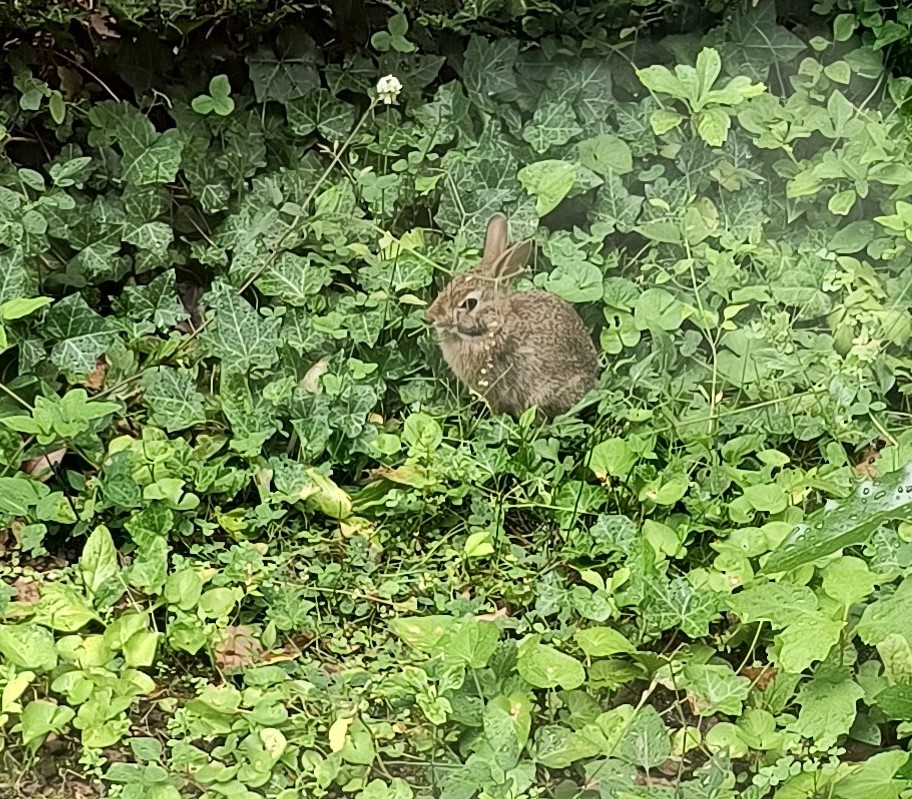
Another thing happened yesterday, before we knew it would be Donna’s Homegoing day. I was chatting with a friend in the hallway after the early service when she noticed a bunny in the church’s meditation garden. SOOO cute!

As we watched, the wee rabbit attacked one of the flowers. Suddenly it didn’t look quite as cute, even though it was simply acting according to its nature. My mind flipped to the morning I looked outside to see two rabbits devouring my flowers, and my grandson saying, “We should have looked for rabbit-resistant, not just deer-resistant.”

How did that bunny get into the completely enclosed “courtyard” garden at church? No idea.

Sooo cute — until it started attacking the flowers

I kept thinking about the bunny while participating in a discussion of a book by Michael Wear called The Spirit of Our Politics, in which the author calls us back to loyalty to God in first place, rather than allowing politics to usurp our Lord’s place in our hearts. Politics, Wear says, while important for the betterment of our society, is penultimate, not ultimate. It is prudential and conditional, not absolute. He calls us to daily growth in character, so we can become the people who faithfully live out the way of Jesus in every area of our lives, including politics. The fruit of the Spirit—love, joy, peace, patience, kindness, goodness, faithfulness, gentleness, and self-control—will be evident as we seek to serve our communities.

So, I wondered, how did the rabbit of self-interest get into the enclosed garden of our hearts, trampling and consuming the beautiful fruit the Spirit wants to grow there? How is it possible that we look to politics to meet our heart-needs? How can we justify allowing the precious, holy name of Christ to be associated with a political “brand,” while behaving nothing like him? How do othering, aversion, and misplaced moralism advance the Gospel (Wear’s terms—you’ll have to read the book)?

I’m grateful for the shining life of our friend Donna, who showed us so consistently the beautiful fruit of the Spirit.

Almighty God, your truth endures from age to age. Direct in our time, we pray, those who speak where many listen and write what many read; that they may speak your truth to make the heart of this people wise, its mind discerning, and its will righteous, to the honor of Jesus Christ our Lord. Amen. BCP 51

Combining Valentine’s Day with Ash Wednesday

But God wants our hearts

Joel 2:12-13 That is why the Lord says,
    “Turn to me now, while there is time.
Give me your hearts.
    Come with fasting, weeping, and mourning.
13 Don’t tear your clothing in your grief,
    but tear your hearts instead.”
Return to the Lord your God,
    for he is merciful and compassionate,
slow to get angry and filled with unfailing love.

    He is eager to relent and not punish.

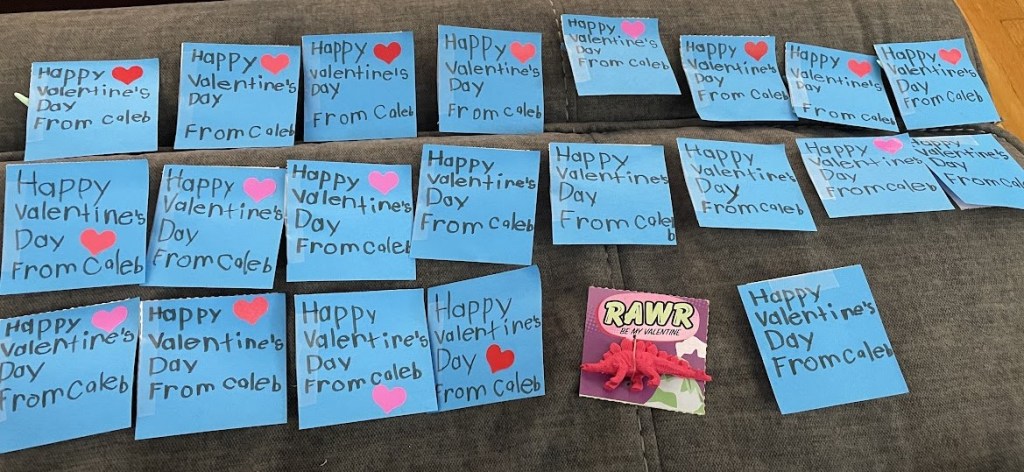
Today and tomorrow, I’m helping get Caleb and Talita to school and home again because their dad is traveling for work and their mom is a nurse who leaves home early and gets back late. The kids have spent hours laboring over their valentines for their classmates and teachers. Caleb wrote his greetings by himself.

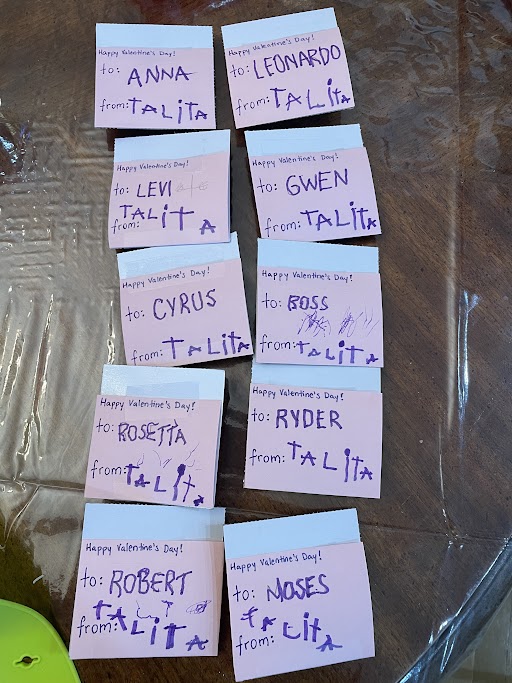
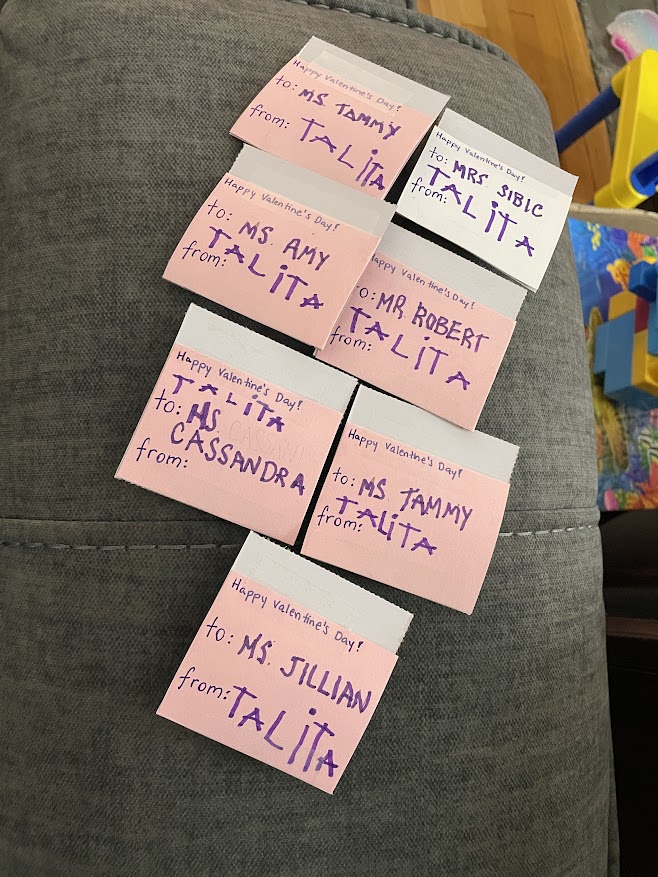
Valerie “dotted” the names for almost-four Talita to trace, and she wrote her name by herself on all these cards:

So much effort to communicate friendship and appreciation!

I’ve been musing over how to combine Valentine’s Day with Ash Wednesday. The prophet Joel gave me the answer. God’s heart is full of unfailing love for us, and he wants us to love him back. He wants to repair his broken relationship with us. He can do so if we turn back to him, admitting and grieving what we’ve done that hurts him.

Our “valentine” for him is humility, and honesty, and a desire to hear and honor his heart of love.

And there’s no better source of love for those we care about than his Spirit, free to flow within and through us (John 7:37-39). That’s why I’ve chosen a flowing river as an image for Lent. The Spirit wants to cleanse us and grow and water his fruit in the garden of our hearts. Starting with love.

Shutterstock: Liinna Lilli

The Holy Spirit produces this kind of fruit in our lives: love, joy, peace, patience, kindness, goodness, faithfulness, gentleness, and self-control (Galatians 5:22-23).

River of Life by Mac Powell