A love song from a broken heart

But God yearns for his people 

Hosea 11:1-4, 7, 8, 11; 12:6 When my people were children, I loved them … I myself taught them to walk, leading them by the hand. But they don’t know or even care that it was I who took care of them. I led them along with my ropes of kindness and love. I myself stooped to feed them. … But my people are determined to desert me. … Oh, how can I give you up? How can I let you go? My heart is torn within me, and my compassion overflows. … Someday, the people will follow me. … And I will bring them home again, says the Lord. … So come back to your God.

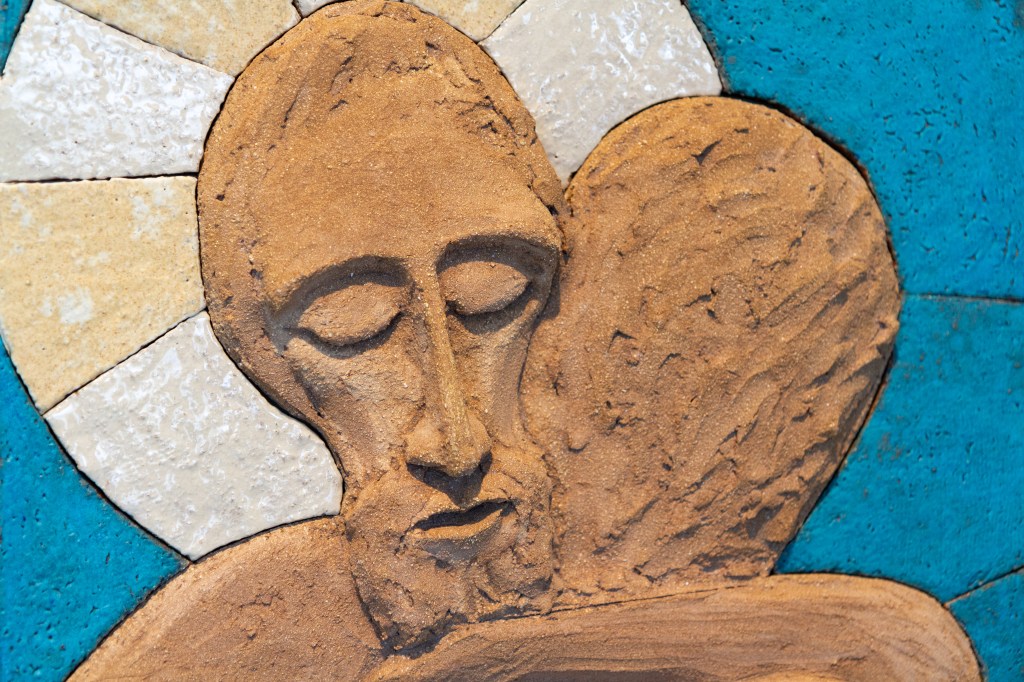
In Hosea 10, God spoke like a farmer. In chapter 11, he is a parent, broken over his children’s rebellion against him. A New Testament parallel is Jesus’ parable often called “The Prodigal Son.” In both cases, the father yearns for the return of his beloved, fugitive child, longing for restoration.

Shutterstock: Adam Jan Figel

I may have commented before that when I write stories, the characters themselves tell me what happens to them, and I just write it down. One scene, reminiscent of Luke 15, still brings tears to my eyes.

In Horse Thief 1898, Cally and Teddy went missing because they had been kidnapped by abusive relatives who wanted to use the orphans as farm labor. The loving people who had been caring for them did all they could to find and free them, but it was the children themselves who found their way home.

Nathanael, prepared to attend Ignacy Paderewski’s Carnegie Hall piano concert,

… sat on his porch swing singing an off-key tune to [his baby] Jimmy, waiting for James to bring the brougham. How grand to hear the famous Mr. Paderewski in the new concert hall!

Tobias wandered out holding the hand of his brother Ben, faces scrubbed, hair still wet.

“Father, look! Is that—”

Nathanael leaped to his feet, thrust Jimmy into Tobias’s arms, and ran down the street, his arms open wide.

Cally and Teddy were filthy. It didn’t matter.

Just so, our Father is thrilled when we come home to him. Even when we’re filthy. He is the one who makes us clean again; to quote Curt Thompson, “Seen, soothed, safe, and secure.”

The plow’s blades are sharp

But God’s planting produces a harvest of love

Hosea 10:1-4, 12 The richer the people get, the more pagan altars they build. The hearts of the people are fickle. … They spout empty words and make covenants they don’t intend to keep. So injustice springs up among them like poisonous weeds in a farmer’s field. … The Lord says, “Plant the good seeds of righteousness, and you will harvest a crop of love.” Plow up the hard ground of your hearts, for now is the time to seek the Lord, that he may come and shower righteousness upon you.

In April 2013, I asked Karis how she wanted to celebrate her 30th birthday. By then she wasn’t very mobile and often rested in the recliner we positioned for her in our dining room, looking out on our back yard. Most Pittsburgh yards slope either up or down. Ours curves up with a flattish strip along the back fence.

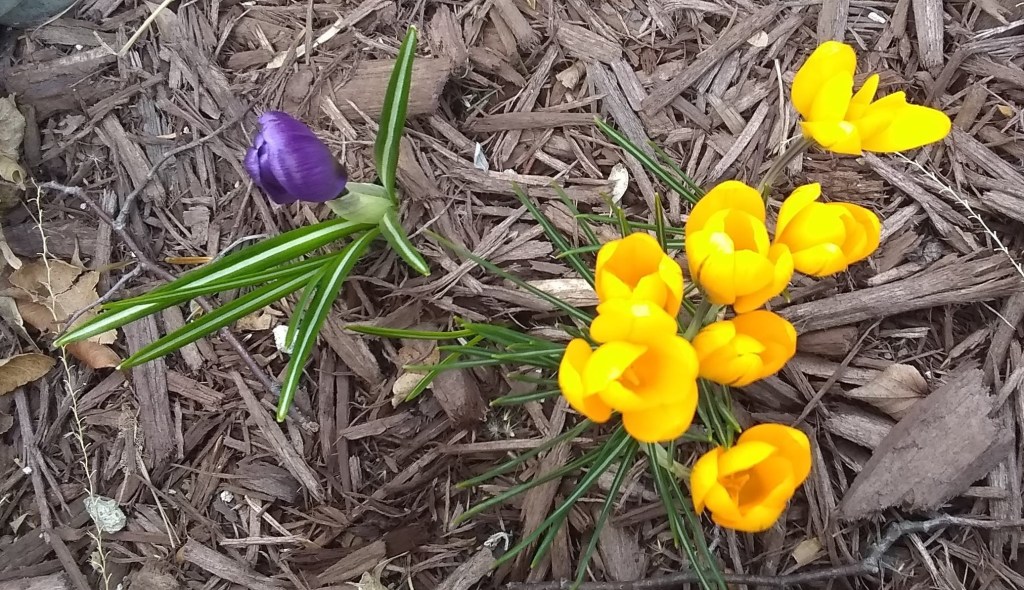
For her 30th birthday (May 5, 2013), Karis requested turning the grass strip into a perennial garden, created with transplants from her friends’ gardens. As she enjoyed the flowers, she would remember their amazing and beautiful love for her.

A Notre Dame friend, Georges, offered to take on the project of transformation. With a borrowed rototiller, he broke up roots and plowing the grass under.

Shutterstock: Janice Higgins

Once Georges declared the space ready, we invited friends to come over and plant something from their gardens. Spring brought a profusion of blooms to delight and encourage Karis as her kidney failure worsened.

All this came to mind when I read this passage from Hosea. Weeds (in our case, grass) can be dealt with several different ways. The most gentle and time-consuming is to pull them out. They can be killed with chemicals. Or they can be plowed, like Georges did to create Karis’s perennial garden, using sharp blades to destroy both the plants and their roots.

Through Hosea, God asked his people to plow up the hard ground of their hearts, so the seeds of righteousness could flourish. Georges’ rototilling illustrates for me how painful that work can sometimes be, when it’s not just a weed here or there, easy to pull out by hand, but rather a whole section of my heart given over to bad habits, attitudes, and behavior because of neglect or resentment or idolatry (something else becoming more important to me than loving God and others).

I’ve had to do some painful plowing of my heart the last couple of weeks. You too? I can’t wait to see the beautiful crop of love God promises to grow from his seeds of righteousness.

Press on

But God says our love matters more than sacrifices

Hosea 6:1-3, 6 Come, let us return to the Lord. He has torn us to pieces; now he will heal us. In just a short time he will restore us, so that we may live in his presence. Oh, that we might know the Lord! Let us press on to know him. … [The Lord says] I want you to show love, not offer sacrifices. I want you to know me more than I want burnt offerings.

Over the last week and a half, as we marked eleven years since Karis left us, I have re-read Karis: All I See Is Grace. I couldn’t remember which parts of her life—of the three thousand pages of my first draft—had made the editing cut and into the book. I hadn’t remembered how often she referenced this passage from Hosea.

To understand this, it’s necessary to know that Karis had a high view of God’s sovereignty. She believed that NOTHING happened without the permission of God. He, all-powerful and all-knowing, could end or cause anything at any time. Often, she believed, he did not act when he could have because he so honors human free will. He wants us to choose him of our own volition. He wants us to obey him because we love him, not from force or manipulation. He gives us more latitude in our choices than perhaps we are wise enough to handle. Yet we learn from our mistakes. Painful as their consequences may be, God doesn’t usually step in to shield us from the results of what we have chosen. But this doesn’t mean he doesn’t see, or know, or care what we are going through.

A harder concept for me is Karis’s belief that her birth defect, with all its mosaic of positive and negative impacts on her life, was chosen for her by God. That his purposes for her required the suffering she endured. That had she not spent so much time in clinics and hospitals, she would not have met the people with whom she was meant to share God’s love.

I tend to think that Karis was born without functional intestinal nerves not because God so willed, but because we live in a fallen, imperfect world in which this kind of thing can happen. The question for me is whether we allow God to act within our circumstances to accomplish his desire to love others through us.

Either way, it’s clear God longs for us to know him. To personally know his heart of love toward us. To put ourselves intentionally in the way of knowing him better, in every way we can “pressing on” to know him and to love him, not whatever image of him we have inherited or invented. This, for Karis, was her lifelong quest.

Sovereign by Chris Tomlin

“Don’t fret”

But God calls leaders to account for their treatment of the poor, helpless, and oppressed

Hosea 5:1, 4, 5, 7-8, 15 Hear this, you priests. Pay attention, you leaders. … You have led the people into a snare by worshipping idols. … Your arrogance testifies against you. … You have betrayed the honor of the Lord. … Sound the alarm! … Admit your guilt and return to me.

Amos 2:4-7; 5:15, 21, 24 This is what the Lord says: “The people have been led astray by lies. … They sell honorable people for silver and poor people for a pair of sandals. They trample helpless people in the dust and shove the oppressed out of the way. … You twist justice, making it a bitter pill for the oppressed. … You trample the poor. …  Instead, hate evil and love what is good: turn your courts into true halls of justice. … I hate all your show and pretense. … Instead, I want to see a mighty flood of justice, an endless river of righteous living.”

Before I went to sleep, my friend said, “Don’t fret.”

But several times I woke up in distress.

I kept dreaming that I was with friends in a church, or a school, or a home, when ICE came and dragged my friends away. Not criminals. Not illegals. My friends, who had followed all the protocols to enter this country legally. Friends who love the Lord and their families, who work hard and pay taxes, even though they don’t yet receive the benefits of citizenship. Friends who were suddenly jerked away from their children, leaving them in shock and confusion.

Each time, an ICE person yelled, “Sorry, we can’t find enough criminals so we need you to meet our quota!”

Distraught, I went to the Lord. It seemed that current events fit alarmingly well into the prophets I’ve been studying: Hosea and his early contemporary, Amos.

When Hosea and Amos prophesied, King Jeroboam II of Israel had expanded its territory and its trade, making some people very wealthy and many others poor and destitute, ignoring the laws of Moses that would have preserved a level of economic equality. Instead of caring for all people equally, the king and his cronies engaged in and fostered syncretism. They pretended belief in God, while in fact practicing idolatry. They did all kinds of horrible things (including sexual slavery) to keep their god Baal happy, since they credited him with being the source of their prosperity. Instead of protecting needy people through the courts, the needy were “trampled” (Amos 2:7), used and abused and treated unjustly.

Amos preached at Bethel (“House of God”), which Hosea often calls Beth-Aven (“House of Wickedness”) because of the syncretism at this place of worship. Amos was not poor himself: the Hebrew words he uses in calling himself a shepherd denote an owner of sheep and orchards, not a laborer. Yet he anguished over the oppression inherent in the wealth gap of his day. He quotes God as saying, in the words of Eugene Peterson, “I’ve had all I can take of your noisy ego-music … Do you know what I want? I want justice—oceans of it. I want fairness—rivers of it. That’s what I want. That’s all I want” (Amos 5:24, The Message).

Curious about parallels to our time, I discovered that the wealth disparity in the United States has shifted dramatically in the last forty years. “Trickle down” economics hasn’t worked. The most recent figures I found show that the top 10% control 67% of the wealth, whereas the bottom 50% has access to only 2.5%. And this disparity continues to increase, as those with money and power control the laws and the courts to benefit themselves.

Can we expect God’s blessing on us under these conditions?

Interesting in terms of timing: the lesson this week for my international Zoom discipleship group includes Acts 2:42-47 and 4:32-37. “There were no needy people among them” (Acts 4:34), because everyone shared what they had, voluntarily and joyously.

How did this early church portrait become so distorted in practice over time? I know there are still many, many followers of Jesus—we ourselves are supported in missions by these beloved ones—who lovingly and generously share what they have in order to further the work of the Kingdom. Yet I’m left wondering what has happened to the community of believers, that we have supported such a different model nationally.

Don’t fret? “Trust God,” my friend told me. “Everything will work out fine in the end.”

I believe that is true. Ultimately God will bring justice to the world. Come, Lord Jesus. Meanwhile, though, people’s lives, already traumatized, are being smashed to pieces.

I appreciated a song we sang in worship yesterday (God of All Comfort, Resound Worship):

God of all comfort, God of compassion, reveal your mercy through us your church;

Disturb our slumber, move us to action, to show your kingdom on the earth.

Make us like Jesus, full of your Spirit, declaring good news to the poor,

Proclaiming freedom for every captive and the favor of the Lord.

Show us the value of every person, show us your image in every face.

We all are equal, we all are broken, and need the kindness of your grace.

We stand together, here in the margins, here in the hardship and the pain.

We cry for justice and restoration, until the silent sing again.

Loving shame more than honor

But God grieves over us

Hosea 4:1, 3, 6, 7, 12, 18 The Lord has brought charges against you, saying: “There is no faithfulness, no kindness, no knowledge of God in your land … That is why your land is in mourning. … My people are being destroyed because they don’t know me. … They have exchanged the glory of God for the shame of idols. … Longing after idols has made them foolish. … They love shame more than honor.

Nearly three thousand years ago, long before writers like John Bradshaw and Brené Brown helped us understand shame, the prophet Hosea linked it with not knowing God, not understanding his compassion and love, his yearning for a close relationship with his beloved people.

Instead, in Hosea’s day, both leaders and ordinary people turned to idols [anything that takes God’s place in our hearts], pleasures, addictions, violence, unfaithfulness in relationships, sexual depravity, cheating, and other forms of robbery.

Has anything changed in the last three thousand years?

The Hebrew word Hosea uses is gâlôwn, translated shame in most English versions. Associated words are disgrace, confusion, dishonor, ignominy [public disgrace], reproach. This shame is vile, base, and despicable.

“My people are being destroyed because they don’t know me,” laments the Lord (Hosea 4:6, 2:20). “Oh, that we might know the Lord,” cries Hosea (6:3).

The kind of shame Hosea describes is extremely painful. Why would we choose shame rather than honor? Perhaps we fear God’s judgment? Fear the loss of things we’ve come to love? Fear rejection by others if anyone detects our true struggles? As Brené Brown often points out, shame thrives in secrecy, in darkness, in isolation. Shame flees when brought into the light. Yet we fear exposing our shame to God, to others, and even to ourselves, even though that’s the best way to be free from it.

A friend recently described to me her cycle of shame. She feels lonely, or disappointed, or betrayed. To ease those feelings, she escapes into her addiction, soothing herself with a temporary pleasure. When she comes out of that, she’s embarrassed and frustrated with herself that she gave in to a temptation that she knows is harmful to her health. When she’s alone, those feelings are so uncomfortable that she again buries them with her addiction. And on and on her cycle of shame spirals. When she’s with other people, her shame prevents her from indulging, and prevents her from finding help, because she doesn’t want to expose her struggle and become an object of pity or of disdain or of judgment.

Every one of us can relate. Each of us has our own way of trying to escape painful feelings. If we realize it’s not just us, maybe we can become more willing to let an understanding friend listen to our struggle. And go with us into the presence of God, who longs to heal us and show us his compassion—as my friend courageously did with me. And I with her.

This high priest of ours [Jesus] understands our weaknesses, for he faced all the same testings we do, yet he did not sin. So let us come boldly to the throne of our gracious God. There we will receive his mercy, and we will find grace to help us when we need it most (Hebrews 4:15-16).

A challenging choice today

But the Spirit’s fruit is always in season

Hosea 1:7 I [the Lord] will show love to the people of Judah. I will free them from their enemies—not with weapons and armies or horses and charioteers, but by my power as the Lord their God.

Zechariah 4:6 It is not by force nor by strength [that God’s plans will succeed], but by my Spirit, says the Lord of Heaven’s Armies.

God spoke these words to and through Hosea and Zechariah at times of challenge and crisis, when it seemed there was no way for God’s people to overcome their enemies and return to peace and blessing.

We need these words today. I need these words today. My personal wellbeing depends on choosing to put my full trust in God’s sovereignty over history and nations and people. His plans will succeed—though not likely the way or in the timing I think best.

Meanwhile, despite my grief as I watch current events hurt people I love, I have the opportunity today, and then tomorrow, and then the next day, to affirm and to stand on God’s promises. And to open myself to the Spirit’s work—his way of doing things—in the garden of my heart, even when pulling out the weeds is painful.

The Holy Spirit produces this kind of fruit in our lives:

Love, joy, peace, patience, kindness, goodness, faithfulness, gentleness, and self-control.

Shutterstock: MVolodymyr

My daughter Valerie reminded our family yesterday of several of Martin Luther King Jr.’s sayings. One that particularly struck me is this: “Let no man pull you so low as to hate him.”

Hatred isn’t the Spirit’s way. It hurts us, and it hurts others. I’m challenged to put my mental, emotional, and spiritual energy into Spirit ways, while trusting God to manage what I can’t control anyway—even when I don’t see what he’s actively doing behind the scenes.

I’m remembering too one of my son’s middle school teachers telling him, “Don’t let people or circumstances rob you of your joy.” Letting myself savor joy—an expression of trust in God, even in the midst of grief—will accomplish more good in my small world than any amount of “warfare.”

It’s the Spirit’s way.

The fruit in our lives comes from God

But God makes fruit grow 

Hosea 14:8 [The Lord says] Stay away from idols! I am the one who answers your prayers and cares for you. I am like a tree that is always green; all your fruit comes from me.

John 15:5 [Jesus said] I am the vine; you are the branches. Those who remain in me, and I in them, will produce much fruit. For apart from me you can do nothing.

Shutterstock: MVolodymyr

We’re home from our vacation, spent tucked away in a small town in Ohio. For two weeks, Dave and I delighted in extended devotional times, hiked in the snow and cold, played games, built jigsaw puzzles, read books, had important conversations, slept (!), and watched a few movies. We are grateful for this restorative time, balancing and healing the intense stress of the last weeks of 2024. The challenge now will be not to get sucked back into running on adrenaline 24/7, as we are both committed to big projects in 2025.

I found myself drawn to the prophets, particularly the minor prophets, those I don’t often read or pay attention to. So from now to Easter, I plan to deep dive for “pearls” from the prophets to share with you.

In light of the work Dave and I believe God has called us to, I chose Hosea 14:8, quoted above, as my “year verse” for 2025. It reminds me of how easily I can get distracted from what God wants for me and make other things more important. These “idols” don’t yield good fruit. Neither do our own efforts, in themselves. The fruit in our lives comes from God, from his life active in us.

I would love for you to join me in exploring “pearls from the prophets”—not just reading my thoughts, but sharing your own as well.

Advent 4, faith: we can’t do it alone

But Jesus perfects our faith

Hebrews 10:38, 11:1 My righteous ones will live by faith. … Faith is the confidence that what we hope for will actually happen; it gives us assurance about things we cannot see.

Hebrews 12:1-2 … Let us run with endurance the race God has set before us. We do this by keeping our eyes on Jesus, the champion who initiates and perfects our faith.

Collage by my friend Carol Amidi CarolAmidi.net

Have you ever had your confidence in God severely threatened? Have you come to the end of your own ability to keep on believing?

Often, I have found, people make judgments about each other regarding the sincerity and adequacy of their faith.

The thing is, life can be very tough, and messy, and confusing, and painful. Not one of us is strong enough to maintain faith all by ourselves.

The good news is that God doesn’t ask this of us. He surrounds us with love and support—his own, and the Body of Christ. Hebrews 12, coming just after the litany of faithful ones in chapter 11, encourages us that even those who have gone before us are supporting and rooting for us.

I’ve found too that people still alive do this also—sometimes in completely unexpected ways. Here’s a treasured example.

If you’ve followed this blog, you know that our daughter Karis was born with nonfunctional intestines. Day after day in the hospital, test after test came back normal, yet even a teaspoon of fluid by slow drip into her stomach prompted bilious vomiting, and nothing at all came out as waste. When the surgeons finally opened her up and biopsied her intestinal tract, they asked us to remove all life support and let her die, because there was no hope that her intestine would ever function.

A missionary friend of Dave’s from Florida visited us on a trip to Chicago. The timing couldn’t have been better. Though Dave wasn’t there, Harold inspired enough confidence that I was able to confess I didn’t feel I had any faith left. Harold said two things. Faith is not grounded in circumstances. It’s grounded in the unchanging character of God. And, he said, if my faith was faltering, it was time for the Body of Christ to have faith for us.

I’ve never forgotten Harold’s compassionate words. I felt so cared for, so supported, so understood. He didn’t criticize me or blame me or require something of me. He asked me instead to let go. To let others share my burden. To rest in God’s immutable love, for Karis and for our family, and for all whom her little life touched.

Faith, I think, asks us to find courage to share our needs not just with God, but with each other. As Advent so quickly morphs into Christmas this year, I pray you find a trusted friend with whom you can do just that.

Advent 3, Joy: and darkest night

Hebrews 12:2-3 … keeping our eyes on Jesus, the champion who initiates and perfects our faith. Because of the joy awaiting him, he endured the cross

Hebrews 5:7 While Jesus was here on earth, he offered prayers ad pleadings, with a loud cry and tears, to the one who could rescue him from death. And God heard his prayers because of his deep reverence for God.

Psalm 116:10 I believed in you, SO I said, “I am deeply troubled, Lord.”

My daughter Rachel invited me to a “Darkest Night” gathering at her home tomorrow evening. Here’s part of her invitation:

“As we approach the longest night of the year on 12/21, we remember that in the midst of Christmas joy we also hold distress, loss and longing – sometimes especially at holiday times when there’s a face missing from around the table or we recognize distance from those we love or we realize that there is darkness just outside the candlelight of our world.”

How does joy fit together with grief and trauma?

The first Christmas week after Karis died, I lay on the couch where she had so often rested, trying to get myself together enough to do my part toward making Christmas happy for the rest of my family.

While I still had not managed to overcome my grief enough to pull out the Christmas boxes, a friend came to visit me. She looked around at the absence of decorations in my home, and said, “Debbie, I am so disappointed in you. I always thought you were a woman of faith.”

On that note, she left me. Oppressed by an added layer of guilt and shame, and the sense that I had another loss to grieve—the loss of trust in my friend—I returned to the couch.

In stark contrast, another friend appeared at my home. She quickly discerned my condition, and said, “Debbie, talk to me. Tell me what you’re feeling.” She wasn’t shocked or offended by my outpouring of grief and tears. She didn’t say, “If you only had faith, you would get your act together.”

She said, “What is the most important thing you want to do for Christmas? I have time. I’ll help you do it.”

This friend understood and shared my grief. She didn’t take it on herself, but she walked with me through it.

After she helped me put up my family’s stockings, each with their name, including Karis’s, my friend left me. The comfort of her presence and compassion lifted my spirits enough that I continued decorating my house. Later, my two daughters completed what I didn’t manage to do. I hold their kindness in my heart as the most precious gift of that Christmas.

The invitation to lament, to acknowledge and express grief, can open space in our souls for joy.

Advent 3, Joy: the flip side of peace

But God’s joy is our strength

Hebrews 10:32-37 You suffered … and you accepted it with joy. You knew there were better things waiting for you that will last forever.

Philippians 4:4-9 Rejoice! … Don’t worry about anything; instead, pray about everything. Tell God what you need, and thank him for all he has done. Then you will experience God’s peace. …

Collage by my friend Carol Amidi https://www.carolamidi.net/

Yesterday I confided in a friend some of my worries. Though they hardly qualify as the suffering the author of Hebrews addresses, my friend helped me take my worries to the Lord. I came home with peace and enJOYed the rest of the day. I don’t yet know the outcome of my concerns, but I have a renewed sense of trust in the care of my Father.

On a walk this morning I thought of Habakkuk 3:17-19: the wonderful “Even though … yet” passage with which the prophet concludes his book of complaints. How would you personalize the verses of this song? Here are three of mine:

Even though the date (12/21) is simply unworkable for many people, yet I am confident those who can attend the Campfire Song Stories launch party this Saturday will have a delightful time and I’ll be able to express my gratitude to the artists and their families.

Even though I don’t know whether Karis can “see” the book from Heaven, yet it gives me joy to showcase her sense of humor.

Even though people have judged the book as expensive, yet those who have acquired it for their children have loved it.

Not very “spiritual,” right? But Paul doesn’t tell the Philippians they can only entrust to God their spiritual concerns. And Habakkuk’s list of “Even thoughs” has to do with fears about invaders, and about crops and flocks—his livelihood. This exercise allows him to “wait quietly” to see what God will do (3:16).

Try it out! Make a list of your “Even though” situations and tell God about them. With open hands and thankfulness, receive his peace.  

Then join me in Habbakuk’s song of praise:

Yet I will rejoice in the Lord!

I will be joyful in the God of my salvation!

The Sovereign Lord is my strength!

He makes me as surefooted as a deer,

Able to tread upon the heights.

Habakkuk’s song includes an instruction to the choir director: “to be accompanied by stringed instruments.” So here you go: (Sovereign Lord, by Lantern Music)