A new song

But God reveals himself to us a day at a time

Revelation 5:9 And they sang a new song, saying: “You are worthy to take the scroll and to open its seals, because you were slain, and with your blood you purchased for God persons from every tribe and language and people and nation. (See Revelation 14:3, Psalm 33:3, 40:3, 96:1, 98:1, 144:9, 149:1, Isaiah 42:10.)

We have several gifted songwriters in our congregation, nourishing our worship with their beautiful praise, in a variety of styles and traditions. I can picture one of them composing an amazing anthem for the “thousands and millions of angels around the throne” in Revelation chapter 5.

Can you imagine hearing that mighty chorus? One day, we will!

Meanwhile, though, how can I, with my limited musical gifts, respond to the psalmists’ repeated invitation to sing a new song to the Lord?

It occurs to me today, just off the phone with one of my daughters discussing a challenging medical diagnosis one of our grandchildren has just received, that a “new song” for me today would be to praise God for who he is for us in the middle of this new situation. I have never before worshiped God in the face of this particular circumstance—that’s what makes it new.

That means every day offers an opportunity to sing a new song—even if for some of us it sounds more like joyful noise (Psalm 100:1—apparently that’s OK too!). Each day brings its own joys and sorrows, never exactly like the day or week or month or year before.

What circumstance in your life is calling for a new song of trust today?

Let us offer through Jesus a continual sacrifice of praise to God” (Hebrews 13:15).

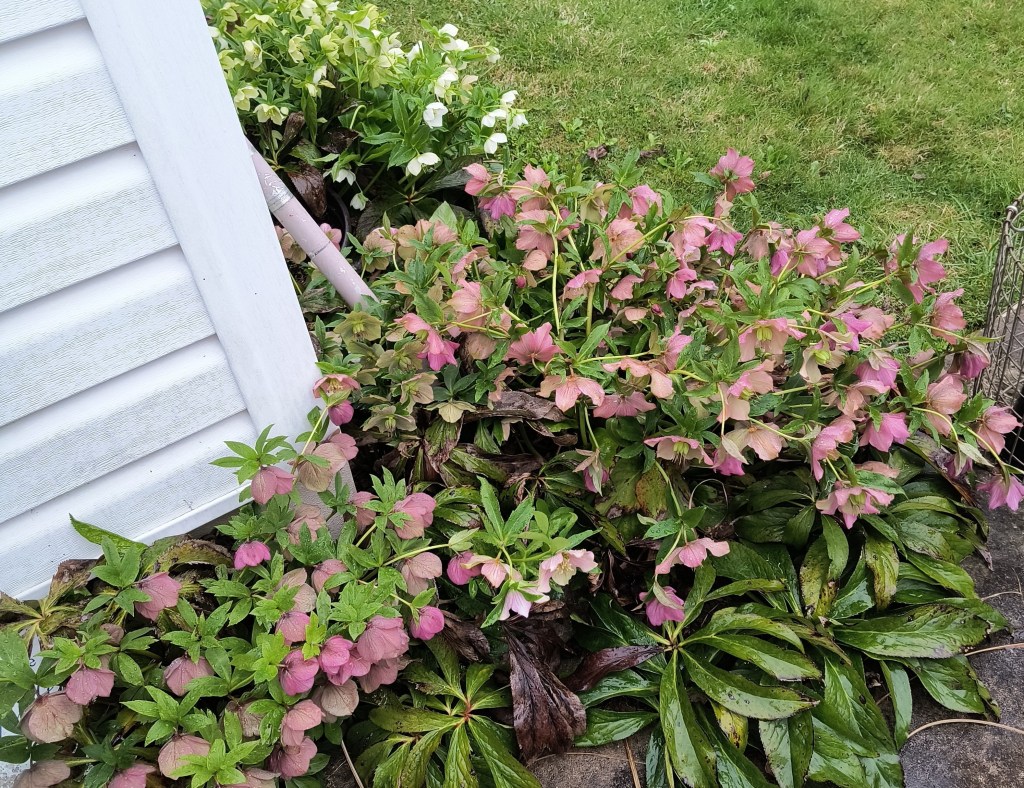
Don’t these anemones look like they’re singing? Shutterstock: LedyX

In light of our Revelation text, here’s a “new song” from Africa:

Sing Unto the Lord a New Song, by Newlove Annan, sung by One Voice Choir, Ghana,
New life: our part

But God holds us individually responsible

Romans 6:13 Give yourselves completely to God, for you were dead, but now you have new life. So use your whole body as an instrument to do what is right for the glory of God. [See also: Romans 5:18, 1 Corinthians 15:22, 2 Corinthians 5:15, Galatians 3:21, 1 Peter 1:23.]

Galatians 6:4-5 Pay careful attention to your own work, for then you will get the satisfaction of a job well done, and you won’t need to compare yourself to anyone else. For we are each responsible for our own conduct.

Ever since I posted that photo of our Lenten roses with the comment about living a confessional lifestyle, not just a discipline for Lent, I’ve been wondering what I could offer that might be helpful to us (starting with me) in practicing this daily grace. Alice Fryling gave me an answer through her book Aging Faithfully, which Dave and I are reading for an upcoming mission retreat. Fryling quotes ideas she learned from Adele Calhoun in her Spiritual Disciplines Handbook. (I love the interweaving that led to enrichment for me!)

I imagine you’ve heard of 16th century Ignatius Loyola’s Daily Examen rooted in his concepts of consolation and desolation (we can talk about them another day). The Daily Examen has helped people through the centuries to walk more closely with God and it can’t be “improved,” even while it requires some training to practice. Fryling takes the basic idea and suggests we ask six simple questions each day, similar yet more specific than the practice may of us are familiar with of identifying our high point and low point in a given period of time. I added the Scripture references to Fryling’s questions:

  • For what moments today am I most grateful? For what moment today am I least grateful (Colossians 3:15)?
  • When did I give and receive the most love today? When did I give and receive the least love today (John 13:34)?
  • Where was I aware of living out of the fruit of the Spirit? Where was there an absence of the fruit of the Spirit (Galatians 5:22-23)?

What do you think? Would you like to join me in responding to these questions daily through this short Easter season until Pentecost?

I think they will help us notice and be thankful for the new life God is growing in our lives.

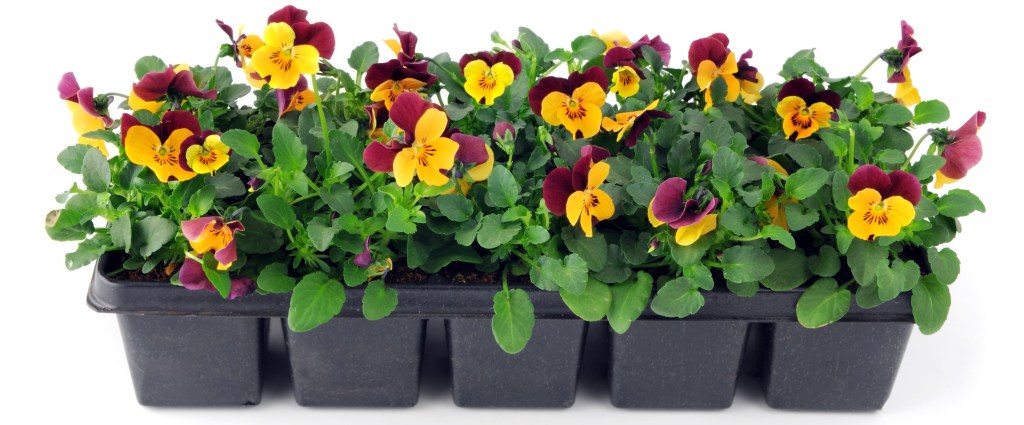
God gives pansies life and makes them grow, but he won’t plant them for me! Shutterstock: lcrms

A new and life-giving way

Hebrews 10:19-20 We can boldly enter heaven’s Most Holy Place because of the blood of Jesus. By his death, Jesus opened a new and life-giving way through the curtain into the Most Holy Place.

Mark 15:37-38 Then Jesus uttered another loud cry and breathed his last. And the curtain in the sanctuary of the Temple was torn in two, from top to bottom.

Our Lenten roses are still blooming, reminding me that the confessional life we practiced during Lent is meant to be not a fad but a lifestyle.

“Grammy, if it’s spring, why is it snowing?” asked six-year-old Caleb when he got off his school bus a couple of weeks ago.

“Caleb, we’re going to look for signs of spring!” his four-year-old sister Talita told him. “Come on!”

They didn’t stop at ten, the number I had suggested. They found sixteen signs of spring in their yard. And each time since that I’ve gone to their house, they’ve shown me more.

In this hemisphere, spring is associated with Easter. It’s a natural fit: the celebration of new life. In Brazil, though, Easter comes as fall begins to ease the heat of summer. Jesus is truly a man for all seasons.

Since I’m in Pittsburgh, though, I’ve been thinking about new things. A quick survey of the New Testament revealed references to 33 new things (plus repeated references) in the NLT New Testament. For this brief Easter season (which ends with Pentecost on May 19), I’m going to choose a few of those to highlight, beginning today with one of the consequences of Jesus’ death and resurrection: direct access to God.

This was a completely new concept for Jews steeped in God’s holy inaccessibility. God’s Presence filled a small space in the Temple protected by a thick curtain (9cm/3 ½ inches thick, according to Jewish tradition). Hebrews 9:7-8 reminds us that “only the high priest ever entered the Most Holy Place, and only once a year … the entrance to the Most Holy Place was not freely open as long as the Tabernacle and the system it represented were still in use.” (See Luke 1 for a story about this. The chosen priest entered the Most Holy Place with a cord tied around his ankle, so his body could be pulled out in case he was struck dead by the holiness of God.)

I find the tearing of this 3 ½ inches-thick curtain, from top to bottom, one of the most startling and intriguing collateral events associated with Jesus’ death. Clearly, no human could have done this. Hebrews tells us that now we can “come boldly to the throne of our gracious God” for his help and mercy (4:16). And Paul says our own bodies are now the Temple of God, where Christ dwells in us through the Holy Spirit (1 Corinthians 3:16, 6:19-20, 2 Corinthians 6:16). Think about that next time you’re tempted to abuse or misuse your body!

Jesus, through his incarnate life, brought God close to us. Through his death, he ended the separation between us and his Father. And in his resurrection and ascension, he left his Spirit to indwell, teach, nurture, guide, convict, gift, and empower us, growing beautiful fruit in our souls (Galatians 5:22-23).

What signs of new life do you find in the garden of your heart?

Let’s listen again to Kristyn Getty sing Before the Throne of God Above.