Yikes!!

But God will hold us accountable for our choices

Hosea 8:1, 4, 13; 9:17 My people have broken my covenant and revolted against my law. … By making idols for themselves they have brought about their own destruction. … To me their sacrifices are all meaningless. I will hold my people accountable for their sins. … My God will reject his people because they will not listen or obey.

Strong words from God through a prophet who himself was ordered by God to forgive and welcome back a wife who betrayed him, don’t you think?

And what about God’s words in the last chapters about God’s unfailing love and compassion; his desire to forgive, redeem, and heal his people?

Here’s another question: How DOES God hold together all the dimensions of his nature? His holiness and his mercy. His justice and his compassion. His gracious patience and his truthfulness. His forgiveness and our need for accountability.

Rather than suggesting trite responses, I invite you to sit with these questions.

One resource I recommend again is Jen Wilkin’s books. In a very approachable way, she takes on some of these questions in None Like Him (God’s unique character traits—ways he is different from us) and In His Image (ways we’re called to be like him, to reflect his character).

Why does it matter that we be held accountable for our sins? Can that be considered an act of care for us?

Another resource is what Scripture has to say about God’s discipline, for example in Hebrews 12.

Do we want the supreme Gardener to pluck the weeds from the gardens of our hearts?

Shutterstock: Kostenko Maxim

I would love to hear your thoughts!

A new grip

But God’s discipline is good for us April 22, 2024

Hebrews 12:10-13 Our earthly fathers disciplined us for a few years, doing the best they knew how. But God’s discipline is always good for us … there will be a peaceful harvest of right living for those who are trained in this way. So take a new grip with your tired hands and strengthen your weak knees. Mark out a straight path for your feet so that those who are weak and lame will not fall but become strong.

I’m writing to you from the beautiful mountains of Colorado, where the new life of spring looks a bit different from Pennsylvania.

My takeaway today from thinking about this passage from Hebrews? God’s discipline is not just for my personal growth, but even more, for those around me. My right living can open a pathway of peace and strengthening for others. And so can yours.

It’s not just about “me”—it’s about us. We’re all influencing each other.

Sometimes I’m the weak and lame one who needs extra support.

And sometimes, because God gives me the extra infusion of perspective I need in order to keep hanging on when things are tough, other people can say, as many told me after Karis died, “If she could find grace to not give up, with all she had to deal with, I can too, with what I face.”

Sometimes, when I “strengthen my weak knees” through prayer and worship, the Holy Spirit can transform my pity party, as Karis called any kind of griping, into the ability to shift my focus away from myself to listen, understand, and pray for others.

This idea of “new grip” reminds me of a Notre Dame football story. Karis innocently sat at the football players’ table in the dining hall while they were all getting their food. The team “adopted” her, and she helped tutor some of them so they could stay academically qualified. One Saturday morning she was still in her PJs when she heard a knock on her dorm room door. One of the football players filled the doorway.

“Karis, hurry and get dressed. We’re playing touch football and I want you on my team. I promise, I won’t let you get hurt. I’ll wait for you in the common room.”

This is a funny story for so many reasons. Little Karis, who didn’t even understand the rules (that’s another story!) playing in any meaningful way against massive opponents? Without getting hurt?

What the football player did during play was hand Karis the ball, tell her “Hold it tight,” pick her up, and race for the touchdown.

I think you can tell where I’m going with this. Karis had only one task: hang on to the ball. The rest was all about trust.

We’re all team players, in some way influencing the outcome of the game we’re playing. The “ball” God is asking me to hold on to has everything to do with trust in his game plan and in the other players. I don’t even fully understand the rules, and the opponents I face are way too big for me. My part? Strengthen my grip and trust him to carry me.

Broken Vessels (Amazing Grace), Hillsong

New life: our part

But God holds us individually responsible

Romans 6:13 Give yourselves completely to God, for you were dead, but now you have new life. So use your whole body as an instrument to do what is right for the glory of God. [See also: Romans 5:18, 1 Corinthians 15:22, 2 Corinthians 5:15, Galatians 3:21, 1 Peter 1:23.]

Galatians 6:4-5 Pay careful attention to your own work, for then you will get the satisfaction of a job well done, and you won’t need to compare yourself to anyone else. For we are each responsible for our own conduct.

Ever since I posted that photo of our Lenten roses with the comment about living a confessional lifestyle, not just a discipline for Lent, I’ve been wondering what I could offer that might be helpful to us (starting with me) in practicing this daily grace. Alice Fryling gave me an answer through her book Aging Faithfully, which Dave and I are reading for an upcoming mission retreat. Fryling quotes ideas she learned from Adele Calhoun in her Spiritual Disciplines Handbook. (I love the interweaving that led to enrichment for me!)

I imagine you’ve heard of 16th century Ignatius Loyola’s Daily Examen rooted in his concepts of consolation and desolation (we can talk about them another day). The Daily Examen has helped people through the centuries to walk more closely with God and it can’t be “improved,” even while it requires some training to practice. Fryling takes the basic idea and suggests we ask six simple questions each day, similar yet more specific than the practice may of us are familiar with of identifying our high point and low point in a given period of time. I added the Scripture references to Fryling’s questions:

  • For what moments today am I most grateful? For what moment today am I least grateful (Colossians 3:15)?
  • When did I give and receive the most love today? When did I give and receive the least love today (John 13:34)?
  • Where was I aware of living out of the fruit of the Spirit? Where was there an absence of the fruit of the Spirit (Galatians 5:22-23)?

What do you think? Would you like to join me in responding to these questions daily through this short Easter season until Pentecost?

I think they will help us notice and be thankful for the new life God is growing in our lives.

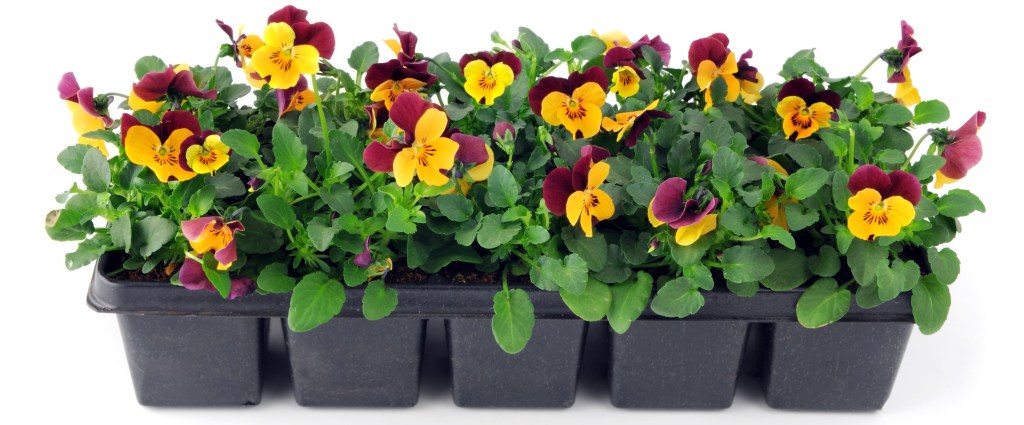
God gives pansies life and makes them grow, but he won’t plant them for me! Shutterstock: lcrms

I liked what I did

First, an Update on Luciene: Surgery had to be postponed because Lu’s ankle, foot, and leg are still too swollen. Her provisional new date–with a different surgeon–is June 29. Please pray the swelling will go down, that God will give her daily grace to deal with the severe pain and the disappointment of being stuck in a recliner during this special visit to her children and grandchildren instead of doing all the fun things they had planned. And pray for financial provision. All this is costing much more than their travel insurance! If you want to give Lu an encouraging message, send me an email or write it in the comments.

But God says “Listen to me”

Isaiah 1:3-4, 10, 17, 29 My people don’t recognize my care for them … They have despised the Holy One of Israel and turned their backs on him. … Listen to the Lord … Learn to do good. Seek justice. Help the oppressed. Defend the cause of orphans. Fight for the rights of widows. “Come now, let’s settle this,” says the Lord. “Though your sins are like scarlet, I will make them as white as snow.” … Be ashamed of your idol worship.

On Mother’s Day, one of my daughters wrote me a beautiful letter, listing some of the things she recognizes, now that she’s a mom, that I did for her when she was a child. Things she took for granted, as children do. Perhaps her own daughters won’t appreciate all she does for them until they too are parents.

Isn’t it hard, though, when our little ones turn their backs on us when we’re trying to serve and care for them? This too is a common experience, one that often requires some form of discipline.

A few weeks ago, I carried one of my three-year-old granddaughters—yelling “I don’t want to obey you!”—to her room to sit in a chair for three minutes because she refused to stop doing something destructive. While she sat sobbing in the chair, I rushed to repair the damage while I still could. As I worked, I heard her sobs lessen and stop.

When I returned to talk with her about what had happened, my granddaughter listened to me, then gave a big sigh and said, “Grammy, you might as well leave me here, because I liked what I did, and I want to do it again. I’m not sorry. I enjoyed it. I like the color. I think it should be everywhere.”

I told her, “I see. Well, when you’re ready to obey and not do it again, you can come out of your room and play.” Then I hurried downstairs to place all bottles of her mom’s nail polish where she couldn’t reach them.

What she had done was to “paint” the floor and the furniture within easy reach with, yes, deep pink nail polish.

Shutterstock: baibaz

By the time I had looked carefully to be sure there were no more traces of deep pink glommed onto the floor and furniture, she appeared, hugged me, and cheerfully began playing with one of her “stuffies.” Though I don’t know the exact mental process she engaged, I haven’t heard her reference nail polish since that day.

In Isaiah 1, God offers his people the same option. They’re under discipline, but they don’t have to stay there. They can repent, and receive forgiveness, and return to the rewards of obedience.

So can we. We too can learn to do good. We can learn to live in ways that please and honor the Lord. And one of the main things that pleases the Lord, as Isaiah observes, is our honor and care for one another.

Zion will be restored by justice; those who repent will be revived by righteousness (Isaiah 1:27).

Note: I’ve been asking the Lord where to focus during these months of “Ordinary Time,”—from Pentecost to Advent—and keep having my attention drawn to the Old Testament book written by the prophet Isaiah. I noticed that since starting this blog, I’ve referred to Isaiah 51 times; in some cases, because Isaiah was one of Karis’s favorites. But I haven’t gone through the book systematically, highlighting precious “pearls” left for us by this prophet.

A bit of orientation: Isaiah prophesied over a period of almost sixty years, through the reigns of four kings of Israel (Uzziah, Jotham, Ahaz, and part of Hezekiah’s), from 792 to 686 BC. He lived through civil war between Israel and Judah and saw the destruction of Israel in 722 BC. Thus, the first half of his book includes warnings, judgment and tragedy, and we find more comfort in the second half. But there’s a lot in the first half that seems directly applicable to our own time, going on three millennia later! That’s one of the amazing things about Scripture, how timeless it is, reflecting the fact that God does not change—and apparently, neither does human nature.

A call to holy living

But God’s word remains forever

1 Peter 1:13-2:3 So think clearly and exercise self-control … For the Scriptures say, “You must be holy because I am holy” [Leviticus 19:2]. Remember that the heavenly Father to whom you pray has no favorites. … Show sincere love to each other. … “The grass withers and the flower fades. But the word of the Lord remains forever[Isaiah 40:8].  And that word is the Good News that was preached to you. So get rid of all evil behavior. Be done with all deceit, hypocrisy, jealousy, and all unkind speech. Like newborn babies, you must crave pure spiritual milk so that you will grow into a full experience of salvation. Cry out for this nourishment, now that you have had a taste of the Lord’s kindness.

In the grocery store Tuesday with Caleb and Talita, I felt embarrassed when suddenly they broke away from me, chasing each other around the legs and grocery carts of other shoppers, yelling at the top of their lungs.

Why did I feel embarrassed? Because they represented me. Their behavior resulted in everyone nearby looking at me askance. They caused discomfort and could have caused harm to themselves and others. And they hindered my objective of getting out quickly so we would have more time to play, since we lost our place in line.

Thanks to Covid, Caleb and Talita have hardly ever been in grocery stores, I realized. They need to be taught proper behavior in that setting. I hadn’t explained to them what was appropriate. Once I did, they were contrite (at least, Caleb was).

Best of 26: a recent attempt to get all three of our cherubs sitting still, looking at the camera and smiling all at the same time!

We’re our Father’s “kids.” What we do and what comes out of our mouths reflects positively or badly on him just as surely as my beloved grandchildren’s behavior and speech impacted others at the store in their view of me. Fortunately, God does tell us what he expects of us.

True, holiness in speech and behavior—according to Peter, actions and words which show and promote love—is out of vogue in our society among adults who should know better. Damaging and deceitful actions and words are flung about publicly (and, I suspect, privately) as if adults believe they bear no responsibility for the harm they cause.

Peter says, NOOOO!!!! No more of this!! Don’t shame the name of God, claiming him as your Lord, yet “slipping back into your old ways of living to satisfy your own desires” (verse 14).

God has no favorites. He will judge or reward you according to what you do. So you must live in reverent fear of him (verse 17) and love each other deeply, from the heart (verse 22).

Our Father paid an enormous price to save us from empty living: “And the ransom he paid was not mere gold or silver. It was the precious blood of Christ, the sinless, spotless Lamb of God” (verse 19). When we hurt each other, we betray his sacrifice.

So how can we learn to speak and behave differently? Moses (1500 BC), Isaiah (700 BC), and Peter all remind us of the eternal, indestructible Word God has given to teach and guide us. Peter calls it spiritual milk, whose nourishment we babies need in order to thrive. “Cry out for it,” he tells us.

Shutterstock: LittleDogKorat

Lord, thank you that your word doesn’t pull any punches. Show me today my need to repent and be cleansed, so I can regard even my “enemies” with your kind of love. Make me hungry as a baby for your life-giving word, to strengthen me for holy, counter-cultural living and speaking that honors rather than shames you, and makes your heart happy.

But God’s judgment is discipline

1 Corinthians 11:31-32 If we would examine ourselves, we would not be judged by God in this way. But when we are judged by the Lord, we are being disciplined so that we will not be condemned along with the world.

Hebrews 12:5-6 Have you forgotten the encouraging words God spoke to you as his children? He said, “My child, don’t make light of the Lord’s discipline, and don’t give up when he corrects you. For the Lord disciplines those he loves.”

Ephesians 5:1-2 Imitate God, therefore, in everything you do, because you are his dear children. Live a life filled with love, following the example of Christ.

Happy Mother’s Day, all you moms!

Since today is Mother’s Day, I’m skipping chapter 10 and will come back to it in the next post.  The tension between judgment and discipline, and the way each is handled, seems to me an important theme for parents—dads too!

Those of us who grew up not feeling loved by our parents may have an especially hard time figuring out the judgment/discipline dynamic. I love the practical counsel offered by Cloud and Townsend in their book Boundaries with Kids: How Healthy Choices Grow Healthy Children because it focuses on love as the context for discipline. It showed me that my own choices as a mom were more important than my children’s behavior. I wish I had understood this when my children were young.

Judgment is the evaluation we make of behavior against a standard. It alerts us to the need for shaping, training, and instruction, the definition of the word paideuo used by both Paul and the writer to the Hebrews. How different that is from being told to perform a task—with little or no instruction or opportunity to practice—and then being punished for not doing it well. That was a frequent pattern in my home growing up. It does lead to self-judgment, but not in a positive sense of developing healthy internal boundaries based on knowing one can do what is expected. It makes one want to give up, because the parent is impossible to please.

Our Father/Mother* God isn’t like that. Jesus shows us what he is like. I’m enchanted with the way Jesus is depicted for us in the wonderful series “The Chosen”. Watching that may be the best Mother’s Day gift you can give yourself!

*See, for example, Psalm 27:10, Isaiah 66:13, Hosea 11:3-4, Matthew 23:37.