
For the Nations, by Claire Kornfield, Dallas, Texas

But God will rule with mercy and truth

Isaiah 15:5, 7, 8, 16:2-5 My heart weeps for Moab … their cries of distress can be heard. … The people grab their possessions and carry them … A cry of distress echoes through the land from one end to the other. … The women of Moab are left like homeless birds. “Help us,” they cry. … Let our refugees stay among you. Hide them from our enemies until the terror is past. When oppression and destruction have ended … then God will rule with mercy and truth. He will always do what is just and eager to do what is right.

Congratulations to Spain for playing the “beautiful game” so beautifully!

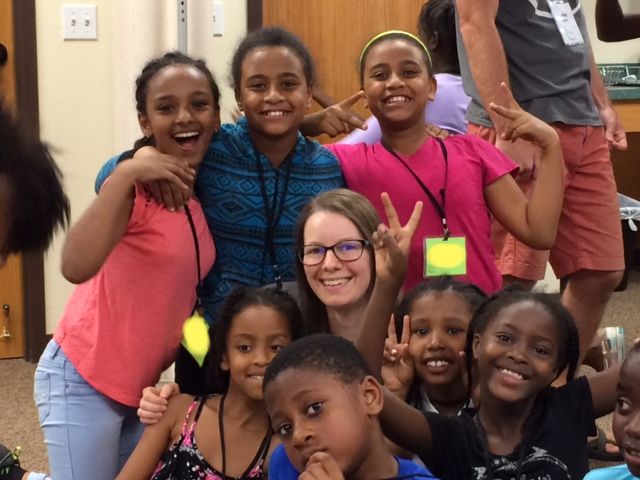
Since Isaiah continues the theme of refugees, I want to tell you about For the Nations, https://ftnro.org/ “Refugee Care that Changes Lives,” in Dallas, Texas. Our niece Claire Kornfield works fulltime with For the Nations teaching refugee children. Here’s what Claire says:

The nations are coming to us as refugees and God’s hand is at work in this. It is now shockingly easy to share the Gospel with people from cultures where Jesus is little known.

To understand this ministry, it is helpful to know what a refugee is. Refugees are people who were in grave danger in their home country. These dangers often arise because of race, religion, or politics. They flee from their home country and generally end up in refugee camps in a second country where they apply for refugee status with the United Nations. These camps can be very unsafe themselves. They usually remain in the camps for a minimum of a year and a half, but some have been known to be trapped there for 20 years. Some refugees are eventually, after much vetting, invited by the United States to come and live here as permanent, legal residents. This process of getting to the United States is very long and painful.
And it is just the beginning. Once they arrive here, they usually do not speak English. They also may not know how to read, drive, use a washing machine, go to the doctor, find a job, etc. They are given about three months of housing by the government (which they must pay back) and after that, need to provide for themselves.

This is very overwhelming and does not even touch on the traumas they have likely also endured. But it is exactly at this overwhelming and terrible moment that the people of God have the opportunity to be His hands and feet and welcome the sojourner. 

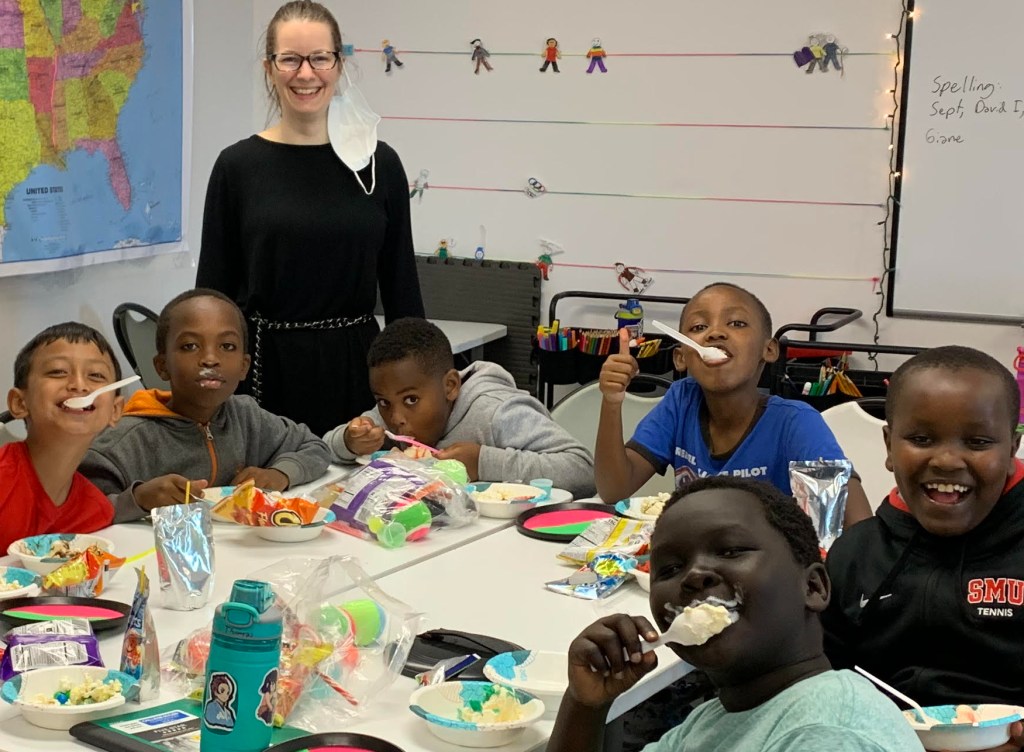
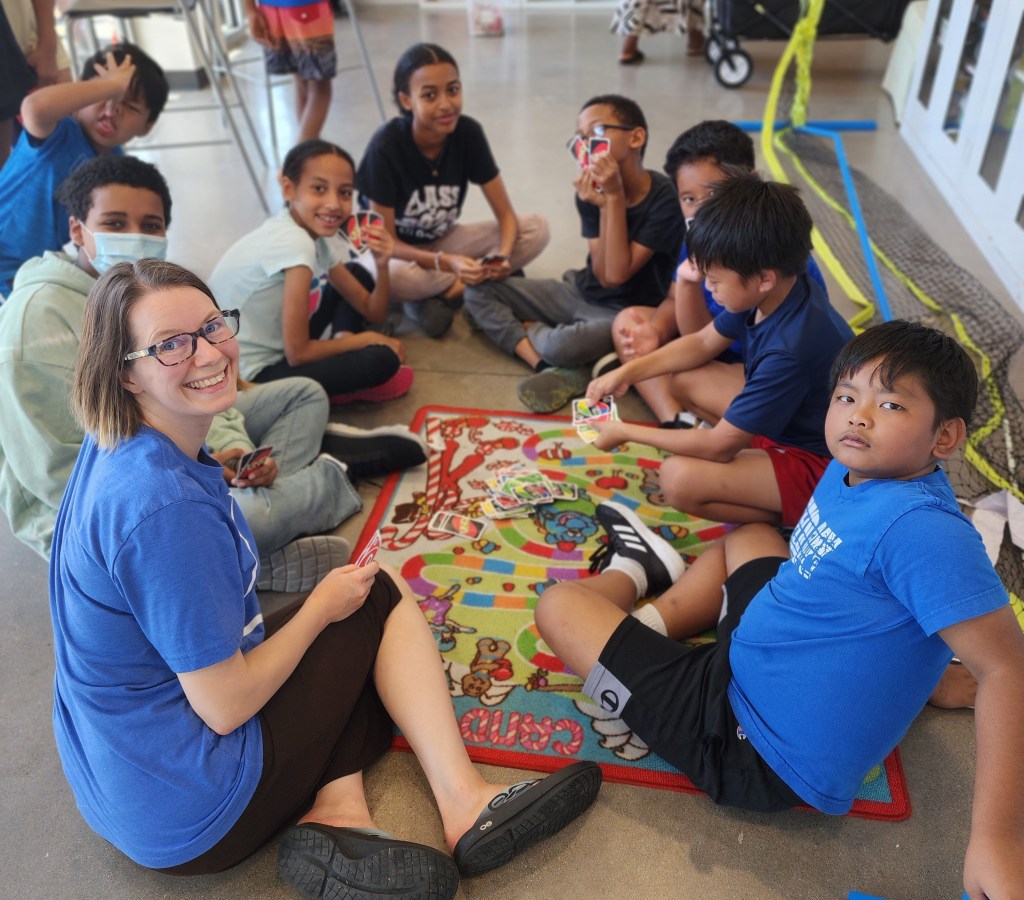
At For the Nations: Refugee Outreach we do this by focusing on education, family services, and sharing the Gospel. For education, we offer English and GED classes for adults and accompanying preschool/childcare for their little ones. This helps the adults get jobs and prepares their young children for kindergarten. We also offer homework help for older children after school. And in the summer (my favorite time of year), we run a program that is something like a cross between summer school and vacation Bible school for about eight weeks.
Family services include: helping them find a job, get a car, learn to drive, understand what to do with speeding tickets, learn how the bus system works, learn how to get medical help, etc. At times family services involve helping protect refugees from those who would exploit them, such as teaching them their rights and helping them with wrongful evictions.

We try to include sharing the Gospel in all of our programs. As I’ve already said, this is surprisingly easy. The founder of For the Nations began by simply tutoring children after school at their apartment complex. She asked their parents if she could also tell the children about Jesus and they readily agreed. We have a time for a Bible lesson in our adult and children’s classes. Additionally, we have Bible studies for seekers or those who are already believers. 

I really believe that refugees in this country are an example where “the harvest is plentiful, but the workers are few.” We have large wait-lists for our English classes and homework help program because we do not have enough staff or volunteers. These are missed opportunities of people who would willingly come and let us tell them about Jesus, but who we have to turn away; there are many such missed opportunities across this country.

Staff like me raise support like missionaries. We are able to do this missional work because churches and individuals partner with us in serving and sharing the Gospel. There are now many refugees in this country and what I want to say most is, “Seize the opportunity!” Maybe you can volunteer, tutor, teach, or befriend. And if you can’t, maybe you can support someone who does. I serve in Dallas and, personally, would be grateful for prayer or financial support (This link can be used for financial support: https://ftnro.org/claire/). However, it may be equally or more important to find or create services for refugees to support in your own city.

Healing wounds and trauma, by Alexandra Hudson

But God is compassionate

Psalm 145:8-9 The Lord is merciful and compassionate, slow to get angry and filled with unfailing love. The Lord is good to everyone. He showers compassion on all his creation.

Psalm 103:8, 13 The Lord is compassionate and merciful, slow to get angry and filled with unfailing love. … The Lord is like a father to his children, tender and compassionate to those who fear him. For he knows how weak we are; he remembers we are only dust.

Ephesians 5:1 Imitate God, therefore, in everything you do, because you are his dear children.

Compassion: to suffer together; to recognize the suffering of others and wish or take action to help them. It’s the desire to take action to help that separates compassion from empathy.

Our ability to have compassion toward others is nurtured by the compassion we extend to ourselves, just as Jesus calls us to love others as we love ourselves. For those of us who have experienced trauma, this can be difficult. This week Alexandra Hudson (https://www.civic-renaissance.com/?utm_source=substack&utm_medium=email) wrote about a book called The Body Keeps the Score by Bessel Van Der Kolk. I’m quoting an excerpt, with her permission. Another resource that I’ve found helpful is Try Softer by Aundi Kolber.

Here’s Alexandra:

Our trauma and wounds

We all have wounds that inform how we interact with others today.

Trauma is a specific kind of wound that can chronically inhibit our relationships with others and ourselves. Trauma is an upsetting experience that brings us to the point of being overwhelmed by feelings of helplessness, rage, confusion, and an inability to escape or function in the face of threat. Trauma isn’t about the event itself per se—it’s about how we respond to it, how we’re comforted after it, and how it continues to affect us.

If a child is in a horrible car accident but has a support system around him as he heals both physically and emotionally, the chances of him having long-term trauma are low.

By contrast, if a child endures sustained emotional or physical neglect or abuse growing up—and they have nowhere to turn, no one with whom they can feel safe and process their experience—the chances of long-term trauma are high.

When we encounter stress, it ends when the situation ends.

Trauma stays with us. It continues to be relived and played out in our minds and by our bodies.

Trauma begins as something that happens TO us, but then our brain begins to change: instead of smelling smoke just when there is fire, we begin to smell smoke everywhere. Everyone we meet is a possible threat to our safety and well-being.

The traumatic event is over, but we continue to react to the things around us as if we’re in survival mode. We are in a perpetual state of fight, flight, freeze, fawn, or mental collapse, which is taxing on the mind and body—“metabolically costly” as van der Kolk’s book says.

The brain and body are so preoccupied with survival—with interpreting everything around us as a life threat—that we are left with little energy to think, learn, be creative, perceive nuance, experience pleasure and joy.

We are emotionally, psychosocially and physically handicapped from bringing our best selves, and living our best lives, and bringing the fullness of ourselves to relationship with others.

The cost is not just exhaustion, but a variety of physiological issues that have no perceptible cause. The author of The Body Keeps the Score mentions chronic pain, auto-immune diseases, and headaches as just a few examples that he’s encountered in his practice.

We are not disembodied minds. We are mind, body and spirit. Too often, though, our treatments of malaise are segmented: treatments of psychological issues focus on the mind, while treatments of physiological issues focus on the body.

But seeing human beings in their fullness—as mind, body, spirit, all—and addressing the needs of each in turn and in relation to the other is the path toward fullness of life and healing.

Human beings are infinitely complex. There is so much that goes on within the human mind, body and spirit beneath the surface—beyond what people can see or understand.

Because we are uncomfortable with gaps in our knowledge—for example, “Why was my boss unnecessarily brusque to me this morning?”—we fill in those knowledge gaps with stories to help us explain things we don’t understand, even if the accounts are inaccurate or incomplete.

What would it mean to have a little more humility in our interactions with others—not presuming to know the entirety of their character and life story, reducing them to our experience with them in a single exchange—and be open to the stories that lie beneath the surface? Stories of tragedy, abuse, loss and grief that may help us better understand why people are the way they are and give us greater grace and empathy in interacting with them.

Who bore the blame?

But God is merciful

Psalm 86: 15-16 But you, O Lord, are a God of compassion and mercy, slow to get angry and filled with unfailing love and faithfulness. Look down and have mercy on me. Give your strength to your servant.

Psalm 56:1-3 O God, have mercy on me … When I am afraid, I will put my trust in you.

According to the Oxford Dictionary, mercy is “compassion or forgiveness shown toward someone whom it is within one’s power to punish or harm.” The best description of mercy I know is Psalm 103:8-11:

The Lord is compassionate and merciful, slow to get angry and filled with unfailing love. He will not constantly accuse us, nor remain angry forever. He does not punish us for all our sins; he does not deal harshly with us, as we deserve. For his unfailing love toward those who fear him is as great as the height of the heavens above the earth.

Yesterday God’s mercy was the theme of our entire service. Pastor Kevin’s sermon was wonderful, but the music was extraordinary, and I want to share it with you. You can turn them into a playlist or click on any of the links below. Or listen to or watch part or all of the service. “O Gracious Light” begins at 57 seconds. The sermon is 25 minutes-42:30. The second period of worship begins at 56:30.

O Gracious Light” by Andy Clark and Elise Massa: Show me this darkness is not too dark for you.

Each song title is a link:

Lord, Lord, Lord” by Ryan Flanigan: Please restore our trust.

What the Lord has Done in Me” by Hillsong Music: From the heavens mercy streams of the Savior’s love for me

O Come to the Altar” by Elevation Worship: Are you hurting and broken within?

He Will Hold Me Fast” by Keith and Kristen Getty: I could never keep my hold through life’s fearful path … He must hold me fast

We Will Feast in the House of Zion by Sandra McCracken: Every vow we’ve broken and betrayed. You are the faithful one.

Love (III) by George Herbert (published 1633)

Love bade me welcome. Yet my soul drew back

Guilty of dust and sin.

But quick-eyed Love, observing me grow slack

From my first entrance in,

Drew nearer to me, sweetly questioning,

If I lacked anything.

A guest, I answered, worthy to be here:

Love said, You shall be he.

I the unkind, ungrateful? Ah my dear,

I cannot look on thee.

Love took my hand, and smiling did reply,

Who made the eyes but I?

Truth Lord, but I have marred them: let my shame

Go where it doth deserve.

And know you not, says Love, who bore the blame?

My dear, then I will serve.

You must sit down, says Love, and taste my meat;

So I did sit and eat.

But God longs to heal us

Acts 28:17-31 Three days after Paul’s arrival [in Rome], he called together the local Jewish leaders. … “I asked you to come here … to explain that I am bound with this chain because I believe that the hope of Israel—the Messiah—has already come. … The Holy Spirit was right when he said to your ancestors … ‘the hearts of these people are hardened … their hearts cannot understand, and they cannot turn to me and let me heal them’” [Isaiah 6:9-10; Matthew 13:15].

I’m at Fall Run Park with two-year-old Caleb, his baby sister Talita in a pack on my chest. Caleb dawdles on footbridge #5, watching the brook gurgle over the rocks. I turn to see whether he’s coming. He looks up and runs as fast as he can to catch up to us, trips over a stone in the path and falls flat. In an instant he is up and running to me, shrieking, blood running down his arms and legs. Others on the path reach out, wanting to help.

But it’s to me he runs, even as I jog the few steps back toward him, wanting to care for his wounds, but even more, to comfort his heart. I know I can do this. The bond between us is strong. In that moment, there is nothing else in my mind and heart but the desire to restore my grandson to the joy he had been experiencing moments before.

Shutterstock: Maria Sbytova

“Turn to me and let me heal you.” Can you hear the yearning in the Father’s heart? He sees me in need, and he has the solution to my needs. His arms are open wide, an expression of love and compassion and tenderness on his face. He longs to care for me. But I am afraid and shrink away. It was my own fault I fell. I am so clumsy! I should have—so many things! Not run so fast, watched where I was running, not dawdled in the first place . . . I am ashamed. I turn to others, seeking comfort and protection and healing in other places, inadequate places. The Father’s face falls, even while his arms still stretch toward me. His heart is broken because I have listened to other voices, telling me I must heal myself before I can turn to him—something I can do no better than my two-year-old grandson could care for himself.

The Father’s invitation still stands, his arms open wide, hope and love on his face. Turn to me and let me heal you.