Hiding in plain sight

But Jesus asked, “Do you believe this because I saw you?”

John 1:47-50 Jesus said, “Now here is a genuine son of Israel—a man of complete integrity.” “How do you know about me?” Nathanael asked. Jesus replied, “I could see you under the fig tree before Philip found you.” Then Nathanael exclaimed, “Rabbi, you are the Son of God—the King of Israel!” Jesus asked him, “Do you believe this just because I told you I had seen you under the fig tree? You will see greater things than this.

“I see you!” or “I found you!” my granddaughter shouts gleefully. Then it’s her turn to hide, and at age two, she’s not expert in concealing herself. Part of my role is pretending to look in multiple places, detailing my “search” aloud, before I “find” her. A bit younger, she thought that if she couldn’t see me, if her eyes were closed or covered, I couldn’t see her.

Three of our littles, resting after an intense game of hide and seek

“’Hiding’ from God is like this,” I muse. “Even if I want to, I can’t actually hide from him, physically, emotionally, or spiritually.”

If you’ve seen the episode about Nathanael in Season 1 of The Chosen, you remember his turmoil and grief as he sat under that fig tree. In such a moment of despair, doesn’t each of us long to be truly seen, fully understood? There is so much more going on here than physical sight. Jesus sees Nathanael from a great distance, yes. But more than seeing his body, Jesus sees his heart, his soul, his desperate need.

As I’ve thought about Jesus’ earlier question, “What do you want?” highlighted in Monday’s blog, I realized this is what I want most, to be seen by the Lord. And to clearly see him. In all the complexity of life, all the competing desires and motivations, confusion of judgment and action, to be seen and to see truly, to be understood and to understand, feels to me right now to be the greatest gift I could ever desire.

The words “see,” “seen,” “saw,” occur twelve times in John 1, along with many other vision words: light in darkness, recognize, glory, reveal(ed), testimony (eyewitness), look (or behold), find, found. “Come and see,” Jesus invites two men (v. 39), and what he showed them in a few hours—far beyond what they had asked, simply to know where he was staying—convinced Andrew that Jesus was the Christ, the Messiah, the Anointed One for whom every faithful Jew had been waiting for their entire lives, for hundreds of years.

John states explicitly why he wrote his Gospel, some three decades after Matthew, Mark, and Luke had written theirs: “so that you may believe [continue to believe] that Jesus is the Messiah, the Son of God, and that by believing in him you will have life by the power of his name” (20:31).

John’s book is crafted with this purpose in mind, from the first chapter to the twenty-first. I’m intrigued by the names of Jesus John records in chapter one. He is the Word (the Logos, the source and expression of all creation). The true light. The unique One. Consistent with his prophetic insight, John the Baptist calls him the Lamb of God and the Chosen One of God. Andrew tells Simon Peter he has found the Messiah, the Christ.

And in the last few verses of the chapter, John offers us this sequential revelation:

              Philip calls Jesus the son of Joseph (v. 45).

(Not quite right, Philip, but good try. True, he’s the adopted son of Joseph.)

              Nathanael calls Jesus the Son of God (v. 49).

Amazing for him to recognize this on first meeting Jesus.

              Jesus calls himself the Son of Man (v. 51).

For a long time, I’ve puzzled over why “Son of Man” is Jesus’ favorite name for himself. I think now I kind of get it, in an awestruck kind of way. I’m writing a book that is largely set in Heaven. From Heaven’s point of view, the Son has always been Son within the holy Trinity. What is new, incredible, too remarkable to be contained in words, is that the Son of God became a son of mankind, born of a human mother, taking on our humanity, laying aside his glory—too bright for human eyes—so that, in the fullness of the Spirit, he can reveal God to us. Truly, for Nathanael to understand the meaning of “Son of Man” is a “greater thing” for him (and for us) to see (v. 50).

Like when I drive around a corner and a rising or setting sun shines straight into my eyes, I’m blinded to anything else and must shield my eyes to be able to see anything else and drive safely. Jesus shields his glory as Son of God within his human body so that we can look at him and understand the Father.

Shutterstock: CGN089

The name “Son of Man” references the miracle of incarnation, a turn of events the angels could never have imagined. John’s sequence of increasing revelation makes sense. And leaves me with goosebumps.

No one has ever seen God. But the unique One, who is himself God, is near to the Father’s heart. He has revealed God to us (John 1:18).

So, do you believe? Has John’s purpose in writing this Gospel already impacted your life? If so, what have you seen and understood of Jesus that led to this belief?

Or is it the case that he sees you, hiding in plain sight?

The mystery of hope

But God is the only Savior

Hosea 13:4 [The Lord says] You must acknowledge no god but me, for there is no other savior.

And what a Savior! I encourage you to take a few minutes to ponder the words of this wonderful celebration of mystery: the hope we hold even in tumultuous times.

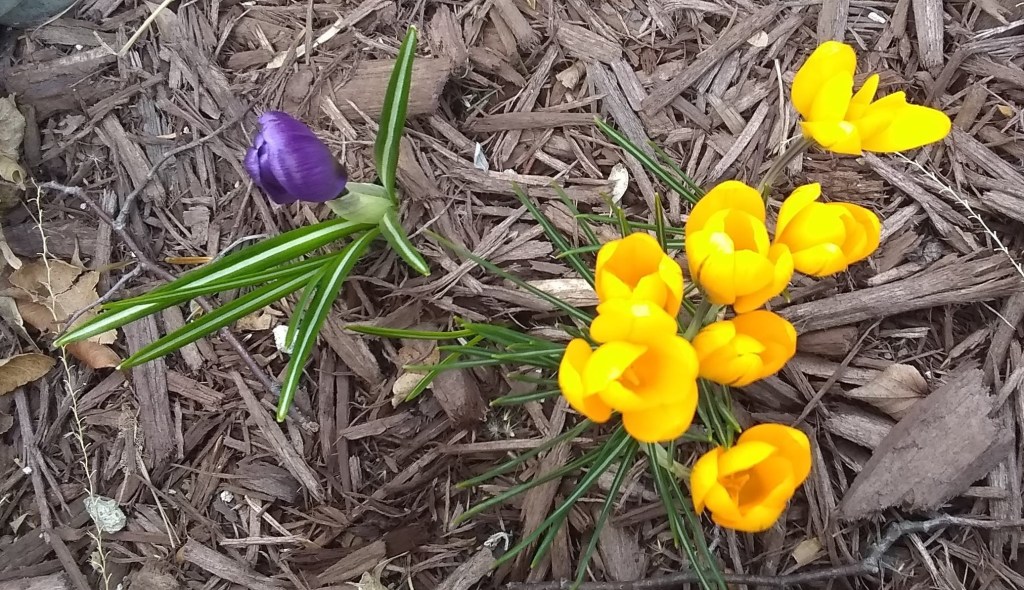
Blossoms in winter: 11 blooms this time.

Come, Behold the Wondrous Myst’ry

Keith and Krysten Getty, Matt Boswell, Matt Papa, Michael Bleeker

Come, behold the wondrous myst’ry in the dawning of the King,

He, the theme of heaven’s praises, robed in frail humanity.

In our longing, in our darkness, now the light of life has come.

Look to Christ, who condescended, took on flesh to ransom us.

Come, behold the wondrous myst’ry, he the perfect Son of Man,

In his living, in his suffering never trace nor stain of sin.

See the true and better Adam, come to save the hell-bound man,

Christ, the great and sure fulfillment of the law, in him we stand.

Come, behold the wondrous myst’ry, Christ the Lord upon the tree.

In the stead of ruined sinners hangs the Lamb in victory.

See the price of our redemption, see the Father’s plan unfold,

Bringing many sons to glory, grace unmeasured, love untold.

Come, behold the wondrous myst’ry, slain by death, the God of life.

But no grave could e’er restrain him: praise the Lor, he is alive!

What a foretaste of deliverance, how unwavering our hope:

Christ in power resurrected, as we will be when he comes.

What a foretaste of deliverance, how unwavering our hope:

Christ in power resurrected as we will be when he comes.

A challenging choice today

But the Spirit’s fruit is always in season

Hosea 1:7 I [the Lord] will show love to the people of Judah. I will free them from their enemies—not with weapons and armies or horses and charioteers, but by my power as the Lord their God.

Zechariah 4:6 It is not by force nor by strength [that God’s plans will succeed], but by my Spirit, says the Lord of Heaven’s Armies.

God spoke these words to and through Hosea and Zechariah at times of challenge and crisis, when it seemed there was no way for God’s people to overcome their enemies and return to peace and blessing.

We need these words today. I need these words today. My personal wellbeing depends on choosing to put my full trust in God’s sovereignty over history and nations and people. His plans will succeed—though not likely the way or in the timing I think best.

Meanwhile, despite my grief as I watch current events hurt people I love, I have the opportunity today, and then tomorrow, and then the next day, to affirm and to stand on God’s promises. And to open myself to the Spirit’s work—his way of doing things—in the garden of my heart, even when pulling out the weeds is painful.

The Holy Spirit produces this kind of fruit in our lives:

Love, joy, peace, patience, kindness, goodness, faithfulness, gentleness, and self-control.

Shutterstock: MVolodymyr

My daughter Valerie reminded our family yesterday of several of Martin Luther King Jr.’s sayings. One that particularly struck me is this: “Let no man pull you so low as to hate him.”

Hatred isn’t the Spirit’s way. It hurts us, and it hurts others. I’m challenged to put my mental, emotional, and spiritual energy into Spirit ways, while trusting God to manage what I can’t control anyway—even when I don’t see what he’s actively doing behind the scenes.

I’m remembering too one of my son’s middle school teachers telling him, “Don’t let people or circumstances rob you of your joy.” Letting myself savor joy—an expression of trust in God, even in the midst of grief—will accomplish more good in my small world than any amount of “warfare.”

It’s the Spirit’s way.

Advent 4, faith: we can’t do it alone

But Jesus perfects our faith

Hebrews 10:38, 11:1 My righteous ones will live by faith. … Faith is the confidence that what we hope for will actually happen; it gives us assurance about things we cannot see.

Hebrews 12:1-2 … Let us run with endurance the race God has set before us. We do this by keeping our eyes on Jesus, the champion who initiates and perfects our faith.

Collage by my friend Carol Amidi CarolAmidi.net

Have you ever had your confidence in God severely threatened? Have you come to the end of your own ability to keep on believing?

Often, I have found, people make judgments about each other regarding the sincerity and adequacy of their faith.

The thing is, life can be very tough, and messy, and confusing, and painful. Not one of us is strong enough to maintain faith all by ourselves.

The good news is that God doesn’t ask this of us. He surrounds us with love and support—his own, and the Body of Christ. Hebrews 12, coming just after the litany of faithful ones in chapter 11, encourages us that even those who have gone before us are supporting and rooting for us.

I’ve found too that people still alive do this also—sometimes in completely unexpected ways. Here’s a treasured example.

If you’ve followed this blog, you know that our daughter Karis was born with nonfunctional intestines. Day after day in the hospital, test after test came back normal, yet even a teaspoon of fluid by slow drip into her stomach prompted bilious vomiting, and nothing at all came out as waste. When the surgeons finally opened her up and biopsied her intestinal tract, they asked us to remove all life support and let her die, because there was no hope that her intestine would ever function.

A missionary friend of Dave’s from Florida visited us on a trip to Chicago. The timing couldn’t have been better. Though Dave wasn’t there, Harold inspired enough confidence that I was able to confess I didn’t feel I had any faith left. Harold said two things. Faith is not grounded in circumstances. It’s grounded in the unchanging character of God. And, he said, if my faith was faltering, it was time for the Body of Christ to have faith for us.

I’ve never forgotten Harold’s compassionate words. I felt so cared for, so supported, so understood. He didn’t criticize me or blame me or require something of me. He asked me instead to let go. To let others share my burden. To rest in God’s immutable love, for Karis and for our family, and for all whom her little life touched.

Faith, I think, asks us to find courage to share our needs not just with God, but with each other. As Advent so quickly morphs into Christmas this year, I pray you find a trusted friend with whom you can do just that.

Be a window

But God shines his light through us

Matthew 5:16 Let your good deeds shine out for all to see, so that everyone will praise your heavenly Father.

Hebrews 13:21 May the God of peace equip you with all you need for doing his will. May he produce in you, through the power of Jesus Christ, every good thing that is pleasing to him.

Last year, our church sent to be cleaned several of the stained-glass windows of our historic building. The difference is stunning, to the point that I’m sometimes distracted from the service by the play of colored light on the huge painting of Jesus’ ascension above the altar. I find this enriching, because I know what those windows convey of the Gospel story.

Cleaning of one of the smaller Ascension windows: photo Marilyn Chislaghi

I know too the passion and prayer of the church to not only receive light through its beautiful windows, but to reflect light into its cosmopolitan neighborhood of Oakland, which attracts people from around the world through its universities and medical center (including us from our beloved Brazil!).

Hence my appreciation of George Herbert’s poem “The Window,” which I’m connecting to chapter 3, “God Most Good,” in the book In His Image I’ve been referencing. Jen Wilkins says “Be good. Others will see it. You’ll be a light causing others to glorify the Father of lights.” Here’s the poem:

The Windows

Lord, how can man preach thy eternal word?

He is a brittle crazy glass;

Yet in thy temple thou dost him afford

This glorious and transcendent place,

To be a window, through thy grace.

But when thou dost anneal in glass thy story,

Making thy life to shine within

The holy preachers, then the light and glory

More reverend grows, and more doth win;

Which else shows waterish, bleak, and thin.

Doctrine and life, colors and light, in one

When they combine and mingle, bring

A strong regard and awe; but speech alone

Doth vanish like a flaring thing,

And in the ear, not conscience, ring.

George Herbert, 1593-1633

How clean is the beautiful window of my redeemed life?

Advent ABC: God of all the earth

Isaiah 54:5 (Acts 3:25) For the Lord is the God of all the earth.

I’ve been invited to write a chapter for a book on patriotism. Perhaps because I was born and grew up in Guatemala, have lived in several countries and have visited many others, when I think of patriotism, I first think of Jesus saying the Gospel would preached to every nation.

Shutterstock: magr80

The Lord is God of all the earth, with sons and daughters in every country who are my brothers and sisters. This makes every war feel to me like a civil war. Does this impact my sense of patriotism? Of course, it does. One day the “artificial” boundaries between countries that matter so much to the world today will no longer divide us. Advent helps us anticipate that day.

Come Let Us Worship the King Sandi Patty

Advent ABC: First and Last

Isaiah 41:4 (44:6, 48:12, Revelation 2:8) Who has done such mighty deeds, summoning each new generation from the beginning of time? It is I, the Lord, the First and the Last. I alone am he.

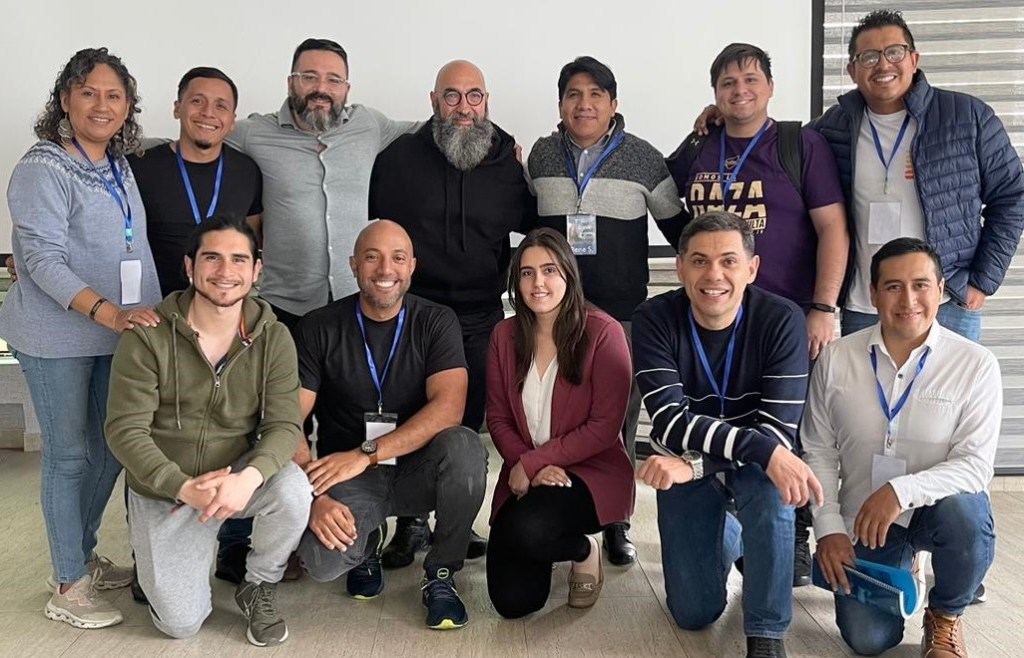
In Bogotá in October, we were heartened to see the enthusiasm of the “new generation” for discipling and pastoring of pastors. Their energy and their sense of calling ignited ours. Imagine all the generations from the beginning of time calling faithful people to worship and serve him.

The “nueva generación” from several countries and their mentors at the DPP (Discipling and Pastoring of Pastors) Leaders and Co-leaders retreat in Bogotá, Colombia, October 2023

The First and the Last, Hillsong