Matthew 18:1-5The disciples came to Jesus and asked, “Who is the greatest in the Kingdom of Heaven?” Jesus called a little child to him and put the child among them. Then he said, “Unless you turn from your sins and become like little children, you will never get into the Kingdom of Heaven. So anyone who becomes as humble as this little child is the greatest in the Kingdom of Heaven. And anyone who welcomes a little child like this on my behalf is welcoming me.”
Matthew 19:13-15One day some parents brought their children to Jesus so he could lay his hands on them and pray for them. But the disciples scolded the parents for bothering him. But Jesus said, “Let the children come to me. Don’t stop them! For the Kingdom of Heaven belongs to those who are like these children.” And he placed his hands on their heads and blessed them before he left.
Where Jesus is King, children are valued, welcomed, and blessed.
And healed.
When you and I come to him as children, God can heal what was harmed and provide what was missing when we were small. Like the little ones Jesus welcomed when he lived on earth, we too can receive the blessing of his comfort and care.
It’s OK to be little.
It’s OK to not know or to not know how to do something.
It’s OK to celebrate growing and learning.
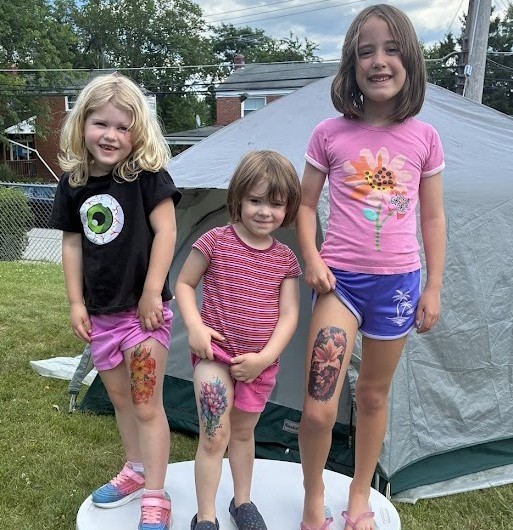
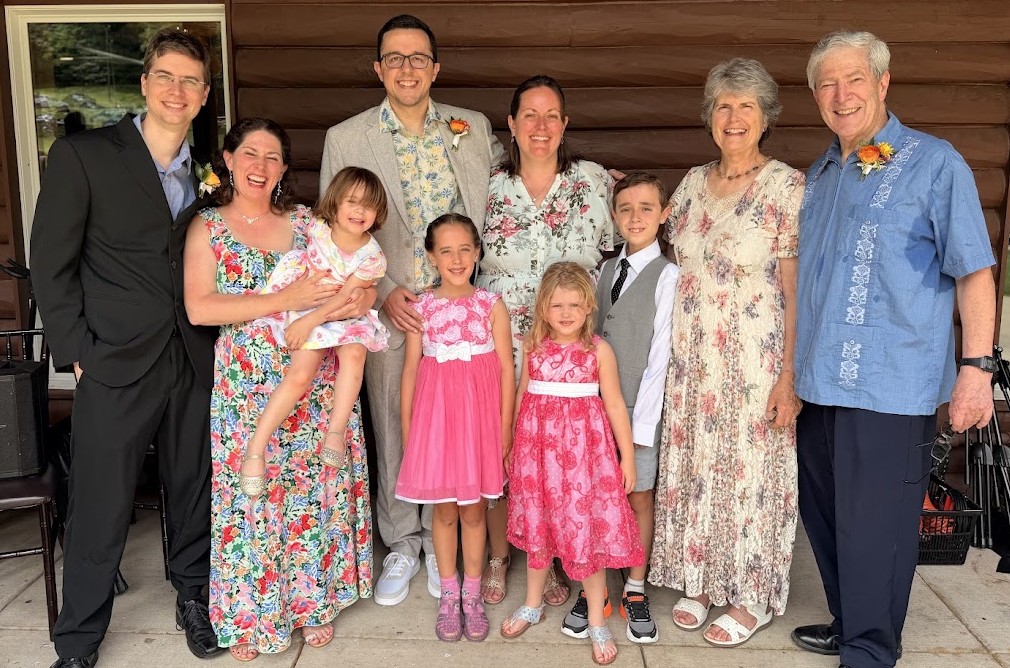
Last weekend the Pittsburgh part of our family spent a lovely time together in eastern Pennsylvania, delighting in the waterfall hike at Ricketts Glen State Park. Hiking a steep and rugged 3.2-mile loop, we enjoyed eighteen waterfalls, from 11 feet to 94 feet high! No image can do them justice. Our little ones, at 6 and 3, are enthusiastic hikers! The song in Portuguese, Aguas Purificadoras by Ana Paula Valadão (start at 50 seconds), kept running through my head. Click here for English (start at 1 minute).
The Airbnb where we stayed had a ping-pong table. On Friday evening after we arrived, my six-year-old granddaughter didn’t succeed in hitting the ball so it would land on the other side of the table. She spent much of Saturday afternoon, evening, and Sunday begging any adult available to practice with her. By the time we left at 4:00 on Sunday, she could volley 12-15 times without missing!
Meanwhile, her three-year-old sister, who could barely see above the table, contented herself with hitting (or more often, throwing) a ping-pong ball all over the house. “I’m too little for that,” she told me, pointing to her sister, thrilled at her success. “But when I’m six, I’ll do it too.”
In the Kingdom of Heaven, embraced by the King, we will always be small.
In the Kingdom of Heaven, we will always be learning and growing.
In the Kingdom of Heaven, it’s OK to be little.
Jesus prayed this prayer: “O Father, Lord of heaven and earth, thank you for hiding these things from those who think themselves wise and clever, and for revealing them to the childlike (Mt 11:25).
Exodus 33:20 [God speaking to Moses] You may not look directly at my face, for no one may see me and live.
Exodus 24:1-18Then the Lord instructed Moses: “Come up here to me and bring along … Israel’s elders. All of you must worship at a distance. Only Moses is allowed to come near to the Lord. … Then Moses and the elders climbed up the mountain. There they saw the God of Israel. Under his feet there seemed to be a surface of brilliant blue lapis lazuli, as clear as the sky itself. And though these nobles of Israel gazed upon God, he did not destroy them. In fact, they ate a covenant meal, eating and drinking in his presence. Then the Lord said to Moses, “Come up to me on the mountain. … Then Moses climbed up the mountain and the cloud covered it. And the glory of the Lord settled down on Mount Sinai … To the Israelites at the foot of the mountain, the glory of the Lord appeared at the summit like a consuming fire.
Hebrews 4:16; 12:28-29Let us come boldly to the throne of our gracious God. … Let us be thankful and please God by worshiping him with holy fear and awe.For our God is a consuming fire.
“I (Derry) walked from the garden back to the inn deep in thought, trailing Desta and [twelve-year-old] Jesus whose conversation I couldn’t hear … ‘Son has all the power in the universe’ [Derry thought] … ‘Even as a human. He can just lift his little finger and—’ At that moment, Jesus turned around and stood waiting for me to catch up to him. I caught his glance and threw myself to the ground before him in worship. Could people not see that this—this twelve-year-old boy—was the King of kings and Lord of lords, eternally one with Father and Spirit, his human body disguising magnificence beyond imagination?
“I trembled so much that the boy Jesus, two feet shorter than me, had to steady me as he pulled me up. ‘I don’t want to attract attention,’ he whispered, nudging me to walk between him and Desta. My body tingled as his touch strengthened me.” Three-in-One, page 73
Writing Three-in-One confronted me with how casually and informally I treat God.How I take for granted the access to him Jesus provided for us, eternally codified in the top-to-bottom tearing of the four-inch-thick* curtain shielding God’s glory in the Most Holy Place of the Temple the moment Jesus died. Derry lives in Heaven. One accidental glimpse of God’s glory was enough to blind him in chapter 1. Through his puzzled eyes, the mystery of Incarnation became viscerally overwhelming to me.
The wonder of Exodus 24 is the exception God made this one time, that people could see him and live. Isaiah also experienced this wonder and was overcome by it (Isaiah 6:5).
And God has not changed: His glory still blindingly bright; his greatness unfathomable to us. It’s only because Son made himself small enough to fit within a human body that we can see God and live.
So when I hear his invitation to come to him on the mountain, I now climb with awe and reverence and a powerful desire simply to worship. My small concerns fade in the glory of his Presence.
Matthew 11:28-30Then Jesus said, “Come to me, all of you who are weary and carry heavy burdens, and I will give you rest. Take my yoke upon you. Let me teach you, because I am humble and gentle at heart, and you will find rest for your souls. For my yoke is easy to bear, and the burden I give you is light.”
We thought our orchid had reached its end. But look how it surprised us! It’s been blooming for weeks!
These precious words are so familiar that I’m tempted to let them flow past me without in fact responding to Jesus’ invitation. But my husband is taking these verses seriously, so I’m starting to ask questions of the text. You’ll probably have your own questions.
Is it really possible to find rest for my soul?
How on earth can I exchange my weariness and my heavy burdens for his light one?
Am I capable of learning humility and gentleness?
How can life in this hurting, broken world be “easy to bear”?
Did you notice that all these questions are me-centered? That’s because I skip right over Jesus’s invitation!
When I go back to what matters—Jesus saying, “Come to me … I will give you rest … Take my yoke … Let me teach you …” the answers to my questions are obvious. I can’t do these things on my own. But I don’t have to. What I need to do is lay my burdens at his feet. Place my fears, anxieties, frustrations, confusion in his hands. Wait on him to give me his peace and rest.
This requires of me humility and the gentleness that comes from slowing down enough to reveal and name and submit the jumble and woundedness of my soul to him.
I can’t bear the weight and grief of the world. But he can. And he can show me the tiny little piece of it that he gives me to share with him. And the strength for that tiny little piece.
Aren’t you in awe of the wisdom and strength and patience he has?
Jeremiah 33:3 The Message This is what the Lord says, “Call to me and I will answer you. I’ll tell you marvelous and wondrous things that you could never figure out on your own.”
Lamentations 3:26 The MessageIt’s a good thing to quietly hope, quietly hope for help from God.
Dave and I only noticed this snake on a recent walk because we slowed down our normal pace to deliberately notice what was around us in the woods. See the bulge a few inches down from his head? He (she?) must have recently eaten.
I’m resonating in this season of my life with God’s invitations to us as recorded in Scripture. Like this one, so many of them contain a promise: “I will answer.”
We can absolutely count on the Lord’s promises! Yet Jeremiah reminds us that God’s timetable may not be ours, and that can feel very frustrating. Our whole culture is oriented toward instant gratification. If my daughter doesn’t respond to a text within a couple of hours, I start wondering whether something is wrong. If I have to wait ten minutes to get through a construction zone, it throws off my whole carefully calibrated schedule. If Prime can’t deliver what I want by tomorrow, I complain.
God’s purposes, though, can’t be accomplished instantaneously. What he most wants is to form us into people of integrity and nobility of character. Our convenience, comfort, pleasures, and preferences—mmm, not so much.
Sometimes that means having to wait. That’s hard for us. We’re like fussy, impatient, self-centered children. Sometimes it means a reshaping of what we think we want and think we need. Because God wants us to grow up, to mature. He wants us to grow in patience and all the other lovely fruit of the Spirit.
God’s work can be slow. It challenges all our impulses to have what we want when we want it. Right now.
Yet God truly loves us and promises good to us. The NIV translates Lamentations 3:25-26 like this: The Lord is good to those who depend on him … so it is good to wait quietly for the Lord.
What are you waiting for? Can you surrender today to the Lord’s loving wisdom, to his invitation to believe the promise he will answer, even when it takes more time and looks different from what you ask for from your limited perspective?
I didn’t intend to go so many weeks without posting on ButGod.blog. It just happened, a week at a time, as so much happened around me that I couldn’t keep up. Travel. Family events, including guests. Caring for our four grandchildren. Precious times and challenging times, including unexpected severe illnesses among my siblings.
Does this happen to you? You make plans and set intentions. And then life happens. James wrote about this (4:13-15): Look here, you who say, “Today or tomorrow we are going to a certain town and will stay there a year … How do you knkow what your lie will be like tomorrow? … What you ought to say is, “If the Lord wants us to, we will live and do this or that.”
Today I want to share with you a bit of the fallout from the double earthquakes that rocked northern Venezuela on June 24. I’ll do this by sharing two emails I sent to a group of friends who pray regularly for Venezuela and the faithful pastors who daily pay the price of staying and serving there under conditions you and I can’t imagine. They certainly didn’t plan a double earthquake and their ongoing enormous challenges. If you’d like to join this group, receiving irregular updates and prayer requests, please let me know (debrakornfield@gmail.com).
The first email includes three ways to make this personal, by giving financially in support of the earthquake recovery effort and by praying for the pastors who are wearing themselves out serving their families, many of whom have lost everything–loved ones, homes, their church buildings flattened, their lives permanently upended. There’s a link where you can receive updates from a coalition of churches working toward recovery of their communities.
The second email is a brief report from one of the pastors we are supporting, along with 300 workers from his network of churches, Pastor Álvaro Rea. Their focus is the city/state of La Guaira, where 80% of the buildings were flattened. Please pray for their success with each of the goals Álvaro outlines. Thank you.
Email 1:
Hello friends. I apologize for taking so long to write to you about the impact of the Venezuela earthquakes on June 24. I imagine that you’ve followed news reports and know that ~5000 people have been confirmed dead, ~17,000 injured, and tens of thousands still missing (the guesstimate varies widely depending on what report you read). They are presumed dead since so much time has passed without finding them. Because June 24 was a national holiday in Venezuela, many people were at home when the earthquakes hit and therefore more vulnerable.
The “facts” I just cited, though, are just the beginning of this story for Venezuelans, thousands of whose lives have been permanently upended. As you know, the great majority of Venezuelans were struggling for basic survival before the twin earthquakes hit. Now they lack shelter, food, clothing, clean water, and health care, for starters. Epidemics are common following disasters like this one. Even before the earthquakes, there was a broad resurgence of previously controlled preventable diseases in Venezuela due to lack of vaccines, clean water, adequate nutrition, and medical aid.
You can read dozens of articles to understand the scope of the disaster. I found this one helpful from a broader economic point of view, but if you take a few minutes, you can find a wide variety of information.
Dave and I are trying to help the pastors we know in Venezuela as they and their churches do all they can to care for their people. Many of them have lost their church buildings, but that loss pales beside the deaths and injuries of their people. Specifically, we are sending aid to:
* Pastor Álvaro Rea Ángulo, whose Las Buenas Nuevas churches in Barquisimeto and other locations are doing all they can to support earthquake relief in the city of La Guaira (pronounced with the emphasis on the “i,” Gua-EE-ra). In La Guaira, Venezuela’s main port on the north coast bordering the country’s main airport, half an hour from Caracas, 80% of the buildings collapsed. (Try to imagine that happening in your city!)
To contribute funds to Pastor Álvaro, you can use Zelle with the name Alvaro Angulo and the phone number 4076059351. He is David’s successor for leadership of his continent-wide ministry, DPP (Discipling and Pastoring of Pastors). We love Álvaro, trust him, and deeply admire his abilities and love for the Lord and for people. Specify “for earthquake relief.” Note: if you’re not familiar with using Zelle, contact me about other ways to send money to Álvaro.
* Pastor Freddy Dávila, executive secretary of the Assemblies of God (AG) in Venezuela, who lives in Caracas and is the point person for relief efforts there. The AG are the largest denomination in Venezuela.
To contribute funds to Pastor Freddy, you can use Zelle with the name Freddy Dávila, email freddy.davila22@gmail.com. Freddy is a personal friend whom we love and admire greatly. We have known and worked with him for twenty years. Specify “for earthquake relief.” Again, if you don’t know how to use Zelle, contact me about other ways to send money to Freddy.
* In addition, our friend Oscar Peña has helped organize Hope Venezuela, to coordinate relief efforts. You can access information both for concrete needs and specific daily prayer requests through WhatsApp or Instagram. Each post includes an English translation following the Spanish.
Whether or not the Lord leads you to give financially, please pray! Pastors are exhausted and grieving, as they carry such heavy loads of concern for their people.
At the beginning of World Cup games after the earthquakes, a moment of silence was observed for the suffering of the Venezuelan people. I found this heartwarming, as I knew that some people in those crowds used that moment to pray. How much more encouraging to know you pray!
Email 2 Translation of an update from Álvaro Rea
David and Débora, greetings and blessings.
Wednesday, July 15, I returned to La Guaira with my wife Aura, my daughter Mariangel, and an electrician from the church. We went to install power inverters at three locations—run by local churches—that serve as aid centers and shelters.
Afterward, we traveled up to Caracas and visited an industrial technical school in the working-class district of Catia. The school is sheltering around 150 families who have been affected by the crisis and have a family member in need of medical care. A pastor who works with us, along with his church, is providing spiritual support there. We plan to train them in trauma processing and child sexual abuse prevention.
If you would like to join us through prayer or by contributing to the travel, support, and resources we will continue to provide, here are the areas of action we are focusing on. Please support us in prayer for each of these goals:
1. Respite for pastors: We want to offer five-day rest periods at retreat centers for local pastors and their families, who are already showing signs of extreme burnout (“compassion fatigue”) after days of sleeplessness while responding to the crisis.
2. Light and water for shelters: Equipping churches serving as shelters with solar-powered generators and water purification systems for the community.
3. Health, mental and spiritual: Creating spaces for therapeutic and pastoral support to help people process their profound grief and anxiety.
4. Child sexual abuse prevention workshops, utilizing various strategies and educational materials; this is an urgent need given the vulnerability of the youngest ones amidst the catastrophe.
5. Reconstruction: Helping to rebuild—in safe areas—churches, parsonages, and the only Christian school in the central region of La Guaira.
We will carry this out with a group of over 300 volunteers from various congregations across the country.
Every prayer and every contribution—no matter how small—counts in bringing eternal hope amidst such great pain.
Thank you so very much for your prayers and your financial support.
Another look at Ephesians 5:18-19, with Kevin Antlitz
Ephesians 5:18-19 Don’t be drunk with wine, because that will ruin your life. Instead, be filled with the Holy Spirit, singing psalms and hymns and spiritual songs among yourselves, and making music to the Lord in your heart.
Zephaniah 3:17 The Lord your God is with you, the Mighty Warrior who saves. He will take great delight in you; in his love he will no longer rebuke you, but will rejoice over you with singing.
Life has been crazy. I simply haven’t kept up with everything, including this blog. The last time I posted was April 29, with a poem written by our daughter Rachel after the shocking death of our son’s best friend, Silas. Rachel’s poem witnesses our uneasy relationship with time, a struggle not one of us can escape.
Today’s post will be a bit longer than usual for me, but I hope you’ll take a couple of extra minutes to read it all.
Marsha’s roses
Ironically, traveling yesterday from Pittsburgh to Meridian, Idaho has given me a sort of reprieve—a chance to walk into a slower rhythm, a slow dance with time, if you will. I came to visit my sister Marsha, who lives in a different reality than I do. Delightfully, Alzheimer’s has not robbed her of music and praise. She seldom speaks. But she often sings! Her lovely voice captures a range of emotions, often acknowledging the tender care offered by her husband Vance. “He does all the things, alleluia!” she sings, gazing lovingly at him.
Yesterday Marsha surprised me by singing over me. I didn’t expect her to recognize me. But at one point she looked at me and sang, “My mother and my sister, alleluia!” Somehow, she seems to know I’m her sister and blessed me with her love.
It’s such a precious thing to witness Marsha’s repeated alleluias. There is so much she can no longer do or communicate. Yet her soul still resonates in harmony with her Lord.
On Pentecost Sunday, our church bid farewell to our assistant pastor, Kevin Antlitz, and his family. He has accepted an invitation to be senior pastor at a church in Atlanta. I will especially miss his thoughtful sermons.
I just did a search of this blog and discovered that I have recommended one of Kevin’s sermons six times. So today is number seven. You can listen here to “Why We Sing,” Kevin’s unusual discussion of the importance of singing together in praise to the Lord.
Kevin notes three reasons why Paul tells us to sing:
It’s evidence of the Holy Spirit active in our lives, drawing us into praise. The Spirit fills us with song. When we’re filled with the Spirit, love overflows. “Only the lover sings” (St. Augustine). A Christian is someone who sings.
Singing knits our hearts together into one heart and mind and soul.
Singing gives us an opportunity to bless and encourage and teach each other.
Sometimes we lose our voice, whether in grief, discouragement, or shame. Sometimes we need others to sing over us, helping restore our faith, our hope, and our love.
As Marsha is doing for me.
I invite you to let Sing Over Me (The Porter’s Gate) touch your soul:
1.When I am lost inside my mind, Sing me the hope I cannot find
When my despair has left me blind, Sing me the tune I’ve left behind.
[Chorus] Will you sing over me? Will you sing over me?
Sing of the goodness I cannot see. Will you sing over me?
2. When all the grief pours through my hands, When I’ve forgotten who I am
I can’t feel anything but shame, Sing out and give me back my name.
[Bridge] When I sink down beneath the fear, The weight is more than I can bear
Keep singing though I cannot hear. Someday I’ll sing for you, I swear.
[Chorus] Will you sing over me? Will you sing over me?
Sing of the goodness I cannot see. Will you sing over me?
Psalm 112:4, 6, 9 Light shines in the darkness for the godly. They are generous, compassionate, and righteous. … Those who are righteous will be long remembered. … They share freely and give generously to those in need. Their good deeds will be remembered forever. They will have influence and honor.
I last posted on March 24 and 25, the latter an invitation to write a short story inspired by a photograph. If you’re interested in this, the deadline is coming up soon!
I didn’t anticipate this month-long break from writing blogs. These weeks have been intense. If I can add to Allen Saunders’ quote (popularized by John Lennon), “Life and death are what happen to you while you’re busy making other plans.”
During Holy Week, while we remembered Jesus’ sacrifice of himself for us, our son’s best friend, Silas, suddenly died of a massive heart attack, leaving his wife and kids 6 and 3. As we joined a mosaic of people crowded into a large church and overflow room in DC a week later to honor Silas, the theme “Live generously” captured his life perfectly.
We arrived home from DC just a few hours before heading to the Pittsburgh airport in the wee hours of April 13 for a flight to Colorado Springs. While engaged with mission teammates there we received the shocking news that our beloved, vivacious niece Marie had suddenly died, also of a heart attack. How can it be true that she is gone from us?
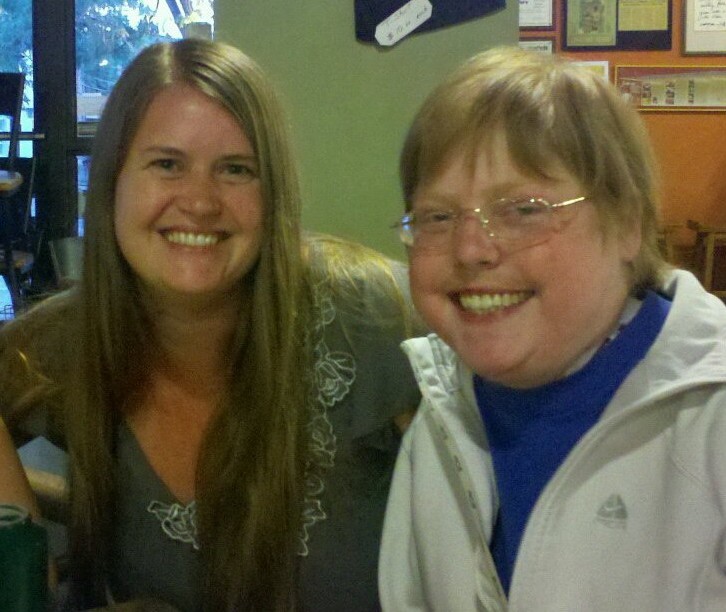
While looking through my photos of Marie, I found this one, with our daughter Karis in 2011. This is a special photo in part because Karis hated the way she looked at that time, her “chipmunk cheeks” a consequence of high steroids required to keep her from rejecting her second intestinal transplant. She rarely allowed people to take photos of her. But when her wonderful cousin Marie visited, she made an exception. Marie came to Pittsburgh from San Diego to care for Karis for a week while Dave and I traveled, an example of her generous nature.
Marie with her grandmother Margaret Daly. I posted a blog written by Margaret a few years ago. She helped translate the Bible into two languages. Marie loved butterflies. She grew up in Guatemala and called herself “Mariposa,” butterfly in Spanish.
A few hours after we arrived back home in the middle of the night Friday, our friend Lori (related to us by marriage) went Home. And at the same time Saturday, we learned that another person precious to us has stage 3 or 4 cancer. And now the mother of a dear friend is “actively dying.” I keep checking my phone for updates about her.
It’s a lot to grapple with all at once. Grief drains a lot of energy.
Silas, Marie, and Lori lived generously. Each of them left a legacy of love that won’t be forgotten.
Influenced by my own book, Three-in-One: The Mysterious Friendship of Derry and Benny, I’ve been imagining Karis greeting each of these dear ones and showing them the ropes in Heaven. I imagine the party they’re having: Silas, Marie, and Karis are all party people. I imagine Silas’s reunion with his father, who died when Silas was 17. I imagine Lori’s joy in her reunion with her daughter and husband, who went before her. I imagine Marie delighting in her Aunt Bev and in her grandmother Margaret and grandfather John.
And most of all, I imagine each of them thrilled to be with Jesus, discovering with him the grand mysteries of true Life.
Our grief is profound. It’s painful. And it’s temporary.
Joy, though, is eternal.
I think and dream about Karis, and Silas, and Marie, and Lori, and Bill, and Bev, and Margaret, and John, and other dear ones, asking: How can I honor their example by living more generously myself?
Romans 16:25, 27 Now all glory to God, who is able to make you strong. … All glory to the only wise God, through Jesus Christ, forever. Amen.
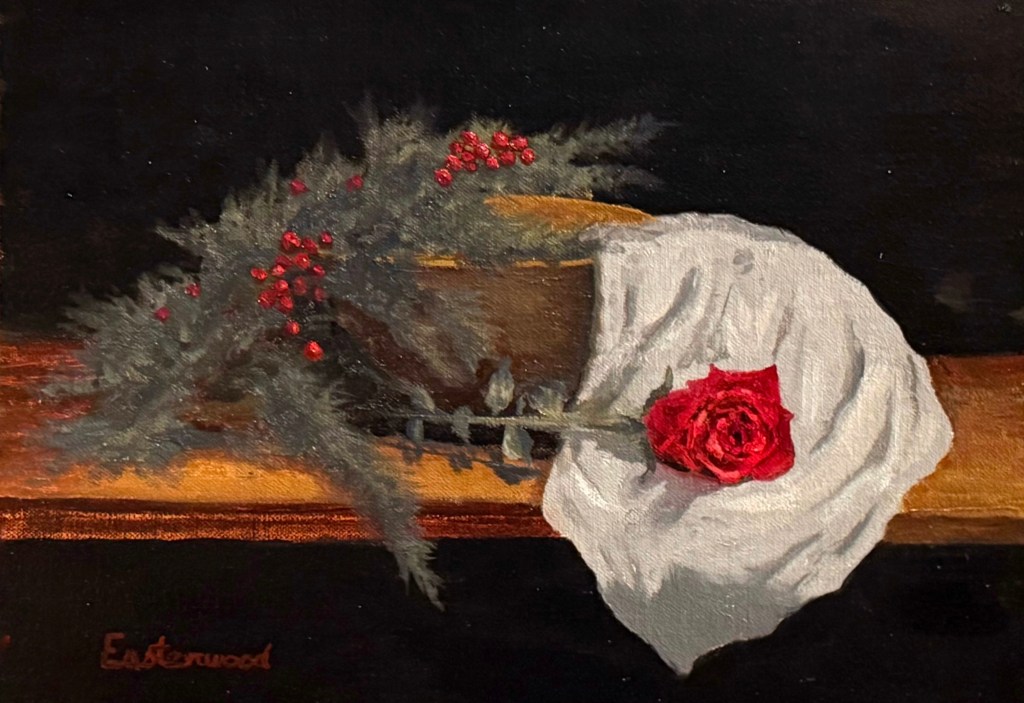
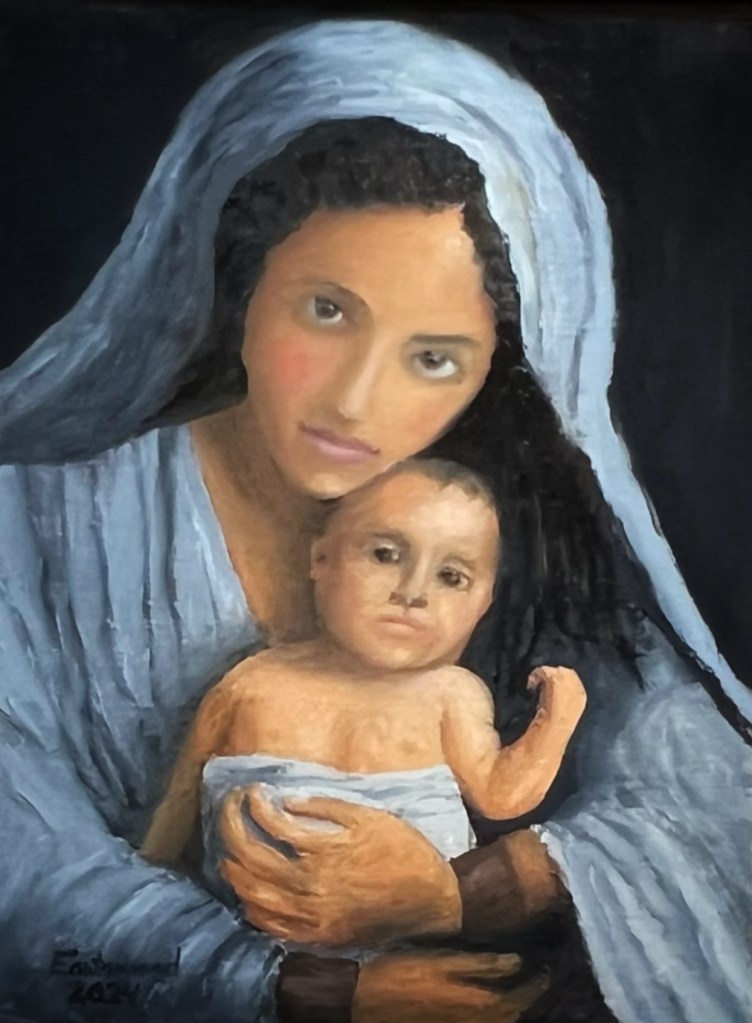
I met Steve in high school, when we both participated in the youth group at our church. He has a particular prayer burden for Ukraine. Pastor Steve is a gifted artist. See more of his work at SteveEasterwood.com. He invites you to email him at SteveEasterwood@gmail.com.
Above: The Christmas Rose, by Steve Easterwood How many symbols representing Jesus can you see in this painting?
Right: Mary, by Steve Easterwood. What stands out to you?
Here is Steve’s story:
Sometimes people who are not yet believers in Jesus ask me, “What difference does Christ make in your life?” He makes all the difference in the world!
In December 2020, I was having some minor swallowing issues, and after a scope, I was told that I had a seven-inch cancerous tumor wrapped around my esophagus.
We all wonder on those sleepless nights how we’ll respond if the diagnosis is cancer. I was no different. There were nights when I wondered the same thing. That night, as was my practice, I prayed and committed my situation to the Lord. I told Him that my life was in His hands and that I trusted Him, whatever His decision about my fate. With that, I fell asleep.
The next morning, I received a notification from my watch that I had experienced the best night of sleep I’d had in four months! How can that happen the night after you receive a serious cancer diagnosis?
I fell asleep absolutely convinced that my situation would have one of three outcomes:
First, God could heal me. I firmly believe that the God of the Bible still heals today.
Second, Jesus could return and take me home.
Third, I could die and, as the Bible says, to be absent from the body is to be present with the Lord (2 Corinthians 5:8). When someone dies, people say, “He lost his battle to cancer.” But where’s the loss? There are only three outcomes, and each one is a win for me!
That’s how you sleep like a baby after you’ve had a cancer diagnosis. So far, God has chosen option number one. He is still Jehovah-Rapha, God the healer.
Recently, I found out that the five-year survival rate for my type and stage of cancer is 0%. Yet, here I am, still alive today. I believe that God still has a mission for me to accomplish. Until that mission is finished, nothing, including cancer, can take my life. When that mission has been accomplished, nothing can keep me alive for another second.
Until the time when God chooses to take me home, I will put all my energy into taking as many people to heaven with me as possible. I’m 71 years old. There’s a party waiting for me soon in heaven. Until that time, I plan to share God’s message of Good News so that people can be confident about where they will spend eternity. My question to you is this: How would you sleep on a cancer diagnosis? If you have faith in God, you won’t have to fear the outcome, and you can sleep like a baby!
Acts 16:22-25 The [Philippian] city officials ordered Paul and Silas stripped and severely beaten with wooden rods. Then they were thrown into prison. The jailer was ordered to make sure they didn’t escape. So he put them into the inner dungeon and clamped their feet in the stocks. Around midnight Paul and Silas were praying and singing hymns to God, and the other prisoners were listening.
Last week some friends and I discussed how to deal with anger in our lives. I confessed that almost daily, my first reaction when I see or hear about cruelty and injustice isn’t praise; it’s profound frustration and anger. Frustration because of a feeling of helplessness, and anger because of how wrong it is to mistreat any of God’s beloveds, those for whom Jesus laid down his life. That is, every person. Sometimes I can’t sleep because of worry about who will be targeted next.
You too?
So I’m challenged by Paul and Silas’s reaction when they themselves were victims of cruelty and injustice. You can read the whole story in Acts 16. They suffered for doing good, for freeing a slave girl from bondage to a demon. Her owners lashed out against Paul and Silas because of greed: this girl had earned them a lot of money by telling fortunes.
I realize I’m writing this post primarily to myself! Would I sing and worship in the middle of the night if I were locked in a jail cell, my body aching from severe beating, my feet trapped in stocks making sleep impossible? How could Paul and Silas do this?
Flipping back to Paul’s conversion story in Acts 9, in verse 16 the Lord says, “I will tell Saul [who became Paul] how much he must suffer for my name’s sake.” Paul embraced the Gospel with his eyes wide open. No “health and wealth” promise here. Paul knew what following Jesus would mean for him. The treatment he and Silas received in Philippi was neither a surprise nor an isolated event.
Paul’s writings give us some other clues to why he could sing and worship in such dire circumstances. He considered suffering a privilege; in cahoots with Jesus in this way, he could draw closer to his Lord’s loving heart (2 Corinthians 1:5).
God taught Paul valuable lessons through his suffering:
We were crushed and overwhelmed beyond our ability to endure, and we thought we would never live through it. In fact, we expected to die. But as a result, we stopped relying on ourselves and learned to rely on God … We have placed our confidence in him. … We have lived with a God-given holiness and sincerity in all our dealings. We have depended on God’s grace, not on our own human wisdom(2 Corinthians 1:8-12).
God clarified Paul’s values: My old self has been crucified with Christ. … So I live in this earthly body by trusting in the Son of God, who loved me and gave himself for me (Galatians 2:20).
Singing and praise in the face of injustice and cruelty is above all an expression of trust. God is still sovereign. God is good, though people often are not. He already told us the end of this story: his justice will ultimately defeat evil perpetrated by the present but temporary ruler of this world, the enemy of our souls.
Further, while careful listening to our anger may clarify appropriate action to take in response, the first law of the Kingdom is love (John 13:34). Even for bad actors, as Paul himself was before his “But God” moment as he traveled the road to Damascus to kill the Lord’s followers there (Acts 9:1, 3). Won’t it be fun to hear stories of God’s grace coming out of the world’s present circumstances?
Today, all this is clear to me. I’m praying the Spirit will remind me to trust him and sing in the face of whatever darkness descends tomorrow.
And from now on all generations will call me blessed.
For the Mighty One is holy,
And he has done great things for me.
I saved Mary’s song for this week because the theme of Advent 3 is joy. Few songs in Scripture are as joy-filled as the Magnificat as Mary praises the Lord with her whole being.
When our daughter Karis was thirteen, she imagined what it might be like to be Mary and wrote what she called “Mary’s Diary.” It’s available as a booklet, which I’ll be glad to mail to anyone upon request.
Karis imagined Mary writing:
“I guess that’s when God seems the greatest: when he takes a nobody (like me) and makes something out of them. Oh, thank you, God, for your amazing grace … Oh, even this moment, I praise the Lord. Jehovah gave me a song that I have written down, and I am singing it back to him every day. … Oh, how my soul praises the Lord! All my fears for myself have been put to rest. How amazing is Jehovah.”
What song can you sing to the Lord today, from delight at his work in your life?