You had to have been there

But Jesus speaks about what he has seen and heard March 17, 2025

One of many rainy days in Ireland, we ate delicious fish pie at the Old Thatch, featured in Horse Thief 1898 and Facing the Faeries 1906. This inn ad bar has fostered community in the small town of Killeagh since 1650. Roaming the emerald isle, we could have used the umbrella Dave received as a birthday gift at his family party yesterday. Dave and I have learned to bundle up enough to walk in subzero weather. Now we can walk together in the rain too! A goal for the rest of 2025: walk outside every day, even if only around the block, once we get home from our trip to Colombia next week..

Happy birthday, Dave! Happy St. Patrick’s Day, everyone! Two years ago today, Dave and I landed in Dublin, with a triple purpose: to celebrate his 70th birthday, to (belatedly) celebrate our 45th wedding anniversary, and to experience and research parts of Ireland for Facing the Faeries 1906, Book 3 of the Cally and Charlie historical fiction series. I had already written this blog, featuring Ghana, when I realized it would be posted on March 17. I could have used Ireland instead, an equally relevant experience to communicate “you had to have been there,” as we consider our Lenten question(s) #3 from the gospel of John. Oh well, here you go …

John 3:7-10 Jesus replied [to Nicodemus], “I assure you; no one can enter the Kingdom of God without being born of water and the Spirit. Humans can reproduce only human life, but the Holy Spirit gives birth to spiritual life.” … “How are these things possible?” Nicodemus asked. Jesus replied, “You are a respected Jewish teacher, and yet you don’t understand these things?If you don’t believe me when I tell you about earthly things, how can you possibly believe if I tell you about heavenly things?

John 3: 31-32 [John the Baptist said] “We are of the earth, and we speak of earthly things, but he [Jesus] has come from heaven and is greater than anyone else. He testifies about what he has seen and heard. … For he is sent by God. He speaks God’s words, for God gives him the Spirit without limit.”

I’d read about Ghana, exchanged emails with Ghanaians, talked with a Ghanaian visitor to Pittsburgh, and even seen videos and documentaries based in Accra. But being there was something else entirely. Those few days enriched and changed me, not only sensorially but spiritually as well. I can try to describe to you, and you can imagine to some degree, but unless you visit Accra and participate in worship there, you’ll have only a shadow of understanding what my words mean: the wonder and joy of full-throated, dancing praise in a dozen languages at the same time, embellished by the blazing colors of Ghanaian fashions. I experienced it as a foretaste of Heaven.

So I empathize with Nicodemus, and I think Jesus does too. I’ve read Jesus’ question, “yet you don’t understand these things?” as a rebuke. But as I read it now, I imagine Jesus saying this with a different tone of voice, one of sympathy and acknowledgement of the limitations of Nicodemus’s experience. For all his learning, Nicodemus can no more understand Heaven than I could accurately imagine Accra. Even now, having been there only once and only for a few days, I know my knowledge of Ghana, vivid as it is in my memory, remains woefully small.

But Jesus lived in Heaven from all eternity. He speaks, John the Baptist says, of what he has seen and heard. When he speaks of the infinitely costly Trinitarian love behind his incarnation, for the sake of saving the world (not condemning it), he knows what he’s talking about. I imagine Jesus’s mind flooded with memories of the divine consensus that resulted in his sitting beside Nicodemus in the darkness of that night, shining eyewitness light into the dimness of this scholar’s third- (fourth-? fifth-? hundredth-?) person understanding of Scripture.

In concert with the Trinity, Jesus had created Earth and humanity. And now, he experienced human emotions, limitations, and frailties firsthand, allowing him to personally connect with Nicodemus’s doubts and questions and needs. Through the Holy Spirit, he does the same with us. Because he became a man, breaking down the barriers between Heaven and Earth, we can walk straight into God’s throne room to share our joys and sorrows, anxieties and hopes with the King of kings, with no fear of recrimination. The same ease, I thought yesterday, with which our grandchildren soak up Dave’s warm affection.

Birthday banner the four grandkids made for Dave yesterday

So then, since we have a great High Priest who has entered heaven, Jesus the Son of God, let us hold firmly to what we believe. This High Priest of ours understands our weaknesses, for he faced all of the same testings we do, yet he did not sin. So let us come boldly to the throne of our gracious God. There we will receive his mercy, and we will find grace to help us when we need it most (Hebrews 4:14-16).

P.S. The planning team for the huge event in Bogotá next week just sent Dave this sweet tribute:

Happy birthday, David.

https://drive.google.com/file/d/14vlyIDml6xHiXzdqW8b1kILvDiRUULxF/view?usp=sharing

Hiding in plain sight

But Jesus asked, “Do you believe this because I saw you?”

John 1:47-50 Jesus said, “Now here is a genuine son of Israel—a man of complete integrity.” “How do you know about me?” Nathanael asked. Jesus replied, “I could see you under the fig tree before Philip found you.” Then Nathanael exclaimed, “Rabbi, you are the Son of God—the King of Israel!” Jesus asked him, “Do you believe this just because I told you I had seen you under the fig tree? You will see greater things than this.

“I see you!” or “I found you!” my granddaughter shouts gleefully. Then it’s her turn to hide, and at age two, she’s not expert in concealing herself. Part of my role is pretending to look in multiple places, detailing my “search” aloud, before I “find” her. A bit younger, she thought that if she couldn’t see me, if her eyes were closed or covered, I couldn’t see her.

Three of our littles, resting after an intense game of hide and seek

“’Hiding’ from God is like this,” I muse. “Even if I want to, I can’t actually hide from him, physically, emotionally, or spiritually.”

If you’ve seen the episode about Nathanael in Season 1 of The Chosen, you remember his turmoil and grief as he sat under that fig tree. In such a moment of despair, doesn’t each of us long to be truly seen, fully understood? There is so much more going on here than physical sight. Jesus sees Nathanael from a great distance, yes. But more than seeing his body, Jesus sees his heart, his soul, his desperate need.

As I’ve thought about Jesus’ earlier question, “What do you want?” highlighted in Monday’s blog, I realized this is what I want most, to be seen by the Lord. And to clearly see him. In all the complexity of life, all the competing desires and motivations, confusion of judgment and action, to be seen and to see truly, to be understood and to understand, feels to me right now to be the greatest gift I could ever desire.

The words “see,” “seen,” “saw,” occur twelve times in John 1, along with many other vision words: light in darkness, recognize, glory, reveal(ed), testimony (eyewitness), look (or behold), find, found. “Come and see,” Jesus invites two men (v. 39), and what he showed them in a few hours—far beyond what they had asked, simply to know where he was staying—convinced Andrew that Jesus was the Christ, the Messiah, the Anointed One for whom every faithful Jew had been waiting for their entire lives, for hundreds of years.

John states explicitly why he wrote his Gospel, some three decades after Matthew, Mark, and Luke had written theirs: “so that you may believe [continue to believe] that Jesus is the Messiah, the Son of God, and that by believing in him you will have life by the power of his name” (20:31).

John’s book is crafted with this purpose in mind, from the first chapter to the twenty-first. I’m intrigued by the names of Jesus John records in chapter one. He is the Word (the Logos, the source and expression of all creation). The true light. The unique One. Consistent with his prophetic insight, John the Baptist calls him the Lamb of God and the Chosen One of God. Andrew tells Simon Peter he has found the Messiah, the Christ.

And in the last few verses of the chapter, John offers us this sequential revelation:

              Philip calls Jesus the son of Joseph (v. 45).

(Not quite right, Philip, but good try. True, he’s the adopted son of Joseph.)

              Nathanael calls Jesus the Son of God (v. 49).

Amazing for him to recognize this on first meeting Jesus.

              Jesus calls himself the Son of Man (v. 51).

For a long time, I’ve puzzled over why “Son of Man” is Jesus’ favorite name for himself. I think now I kind of get it, in an awestruck kind of way. I’m writing a book that is largely set in Heaven. From Heaven’s point of view, the Son has always been Son within the holy Trinity. What is new, incredible, too remarkable to be contained in words, is that the Son of God became a son of mankind, born of a human mother, taking on our humanity, laying aside his glory—too bright for human eyes—so that, in the fullness of the Spirit, he can reveal God to us. Truly, for Nathanael to understand the meaning of “Son of Man” is a “greater thing” for him (and for us) to see (v. 50).

Like when I drive around a corner and a rising or setting sun shines straight into my eyes, I’m blinded to anything else and must shield my eyes to be able to see anything else and drive safely. Jesus shields his glory as Son of God within his human body so that we can look at him and understand the Father.

Shutterstock: CGN089

The name “Son of Man” references the miracle of incarnation, a turn of events the angels could never have imagined. John’s sequence of increasing revelation makes sense. And leaves me with goosebumps.

No one has ever seen God. But the unique One, who is himself God, is near to the Father’s heart. He has revealed God to us (John 1:18).

So, do you believe? Has John’s purpose in writing this Gospel already impacted your life? If so, what have you seen and understood of Jesus that led to this belief?

Or is it the case that he sees you, hiding in plain sight?

Twenty questions

But Jesus asked, “What do you want?”

John 1:35-38 The following day [after his baptism by John the Baptist] John was again standing with two of his disciples. As Jesus walked by, John looked at him and declared, “Look! There is the Lamb of God!  When John’s two disciples heard this, they followed Jesus. Jesus looked around and saw them following. “What do you want?” he asked them.

Have you played the game Twenty Questions? When I was a child, my siblings and I entertained ourselves on long car trips playing this. A person thinks of an object, and the others try to guess it through asking fewer than twenty questions. The first question is, “Animal, vegetable, or mineral?” to narrow the field.

Shutterstock: moloko_vector

Jesus’ first question of two men following him also narrowed the field. They could have responded a zillion ways to the question, “What do you want?”

What do you want?

If Jesus showed up in your living room today asking this question, what would you answer?

Jesus is still, two thousand years later, asking this question. I invite you to take a few minutes to respond. And even to write down your answer. Think about it now. What do you really, really want?

Next time, I’ll share a few of my responses. I would love for you to share too.

A call and response for the beginning of Lent

But God’s love knows no bounds

Hosea 14

[Hosea says]

Return, my people, to the Lord your God

For your sins have brought you down.

Bring your confessions and return to the Lord.

Say to him, “Forgive all our sins and graciously receive us,

So that we may offer you our praises.

The Lord says,

Then I will heal you of your faithlessness;

My love will know no bounds,

For my anger will be gone forever.

I will be to my people like a refreshing dew from heaven.

My people will blossom like the lily; it will send roots deep into the soil.

Shutterstock: Damian Lugowski

O my people, stay away from idols!

I am the one who answers your prayers and cares for you.

I am like a tree that is always green;

All your fruit comes from me.

Let those who are wise understand these things.

Let those with discernment listen carefully.

The paths of the Lord are true and right,

And righteous people live by walking in them.

The mystery of hope

But God is the only Savior

Hosea 13:4 [The Lord says] You must acknowledge no god but me, for there is no other savior.

And what a Savior! I encourage you to take a few minutes to ponder the words of this wonderful celebration of mystery: the hope we hold even in tumultuous times.

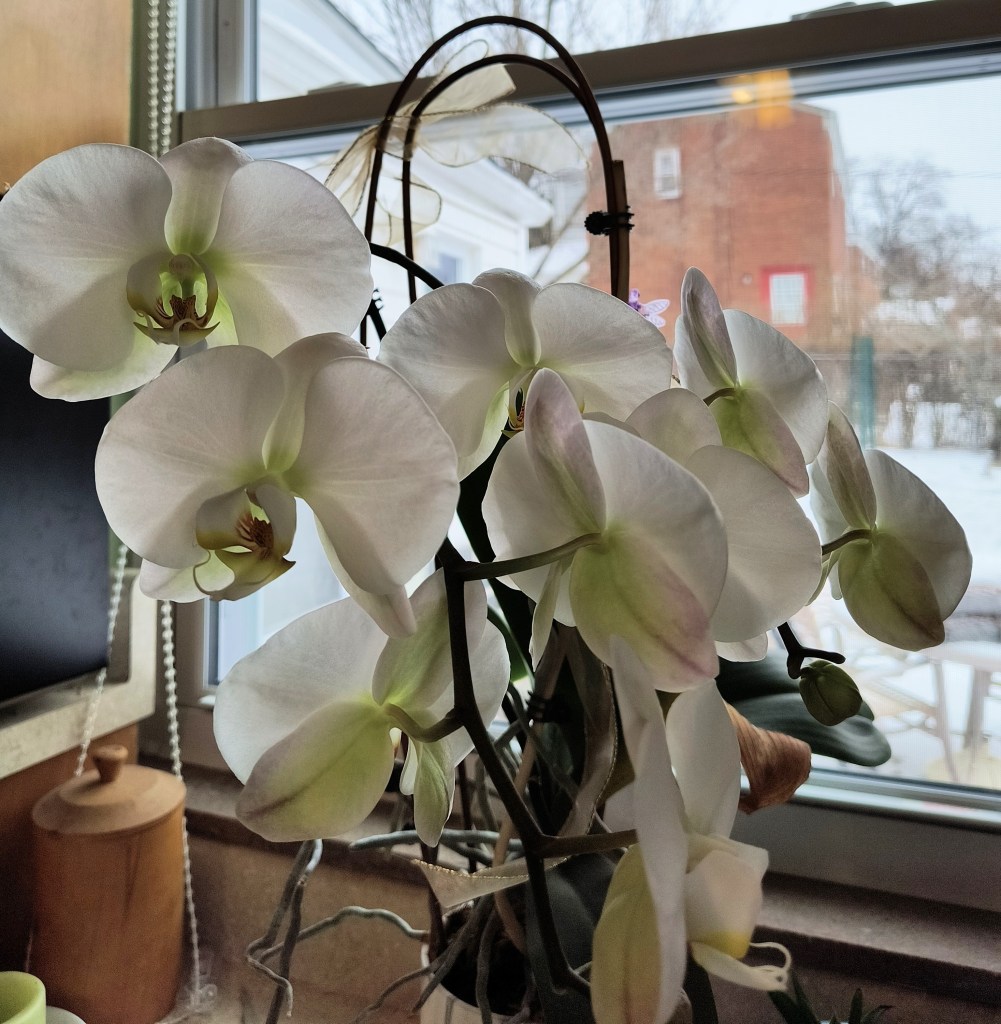
Blossoms in winter: 11 blooms this time.

Come, Behold the Wondrous Myst’ry

Keith and Krysten Getty, Matt Boswell, Matt Papa, Michael Bleeker

Come, behold the wondrous myst’ry in the dawning of the King,

He, the theme of heaven’s praises, robed in frail humanity.

In our longing, in our darkness, now the light of life has come.

Look to Christ, who condescended, took on flesh to ransom us.

Come, behold the wondrous myst’ry, he the perfect Son of Man,

In his living, in his suffering never trace nor stain of sin.

See the true and better Adam, come to save the hell-bound man,

Christ, the great and sure fulfillment of the law, in him we stand.

Come, behold the wondrous myst’ry, Christ the Lord upon the tree.

In the stead of ruined sinners hangs the Lamb in victory.

See the price of our redemption, see the Father’s plan unfold,

Bringing many sons to glory, grace unmeasured, love untold.

Come, behold the wondrous myst’ry, slain by death, the God of life.

But no grave could e’er restrain him: praise the Lor, he is alive!

What a foretaste of deliverance, how unwavering our hope:

Christ in power resurrected, as we will be when he comes.

What a foretaste of deliverance, how unwavering our hope:

Christ in power resurrected as we will be when he comes.

A love song from a broken heart

But God yearns for his people 

Hosea 11:1-4, 7, 8, 11; 12:6 When my people were children, I loved them … I myself taught them to walk, leading them by the hand. But they don’t know or even care that it was I who took care of them. I led them along with my ropes of kindness and love. I myself stooped to feed them. … But my people are determined to desert me. … Oh, how can I give you up? How can I let you go? My heart is torn within me, and my compassion overflows. … Someday, the people will follow me. … And I will bring them home again, says the Lord. … So come back to your God.

In Hosea 10, God spoke like a farmer. In chapter 11, he is a parent, broken over his children’s rebellion against him. A New Testament parallel is Jesus’ parable often called “The Prodigal Son.” In both cases, the father yearns for the return of his beloved, fugitive child, longing for restoration.

Shutterstock: Adam Jan Figel

I may have commented before that when I write stories, the characters themselves tell me what happens to them, and I just write it down. One scene, reminiscent of Luke 15, still brings tears to my eyes.

In Horse Thief 1898, Cally and Teddy went missing because they had been kidnapped by abusive relatives who wanted to use the orphans as farm labor. The loving people who had been caring for them did all they could to find and free them, but it was the children themselves who found their way home.

Nathanael, prepared to attend Ignacy Paderewski’s Carnegie Hall piano concert,

… sat on his porch swing singing an off-key tune to [his baby] Jimmy, waiting for James to bring the brougham. How grand to hear the famous Mr. Paderewski in the new concert hall!

Tobias wandered out holding the hand of his brother Ben, faces scrubbed, hair still wet.

“Father, look! Is that—”

Nathanael leaped to his feet, thrust Jimmy into Tobias’s arms, and ran down the street, his arms open wide.

Cally and Teddy were filthy. It didn’t matter.

Just so, our Father is thrilled when we come home to him. Even when we’re filthy. He is the one who makes us clean again; to quote Curt Thompson, “Seen, soothed, safe, and secure.”

The plow’s blades are sharp

But God’s planting produces a harvest of love

Hosea 10:1-4, 12 The richer the people get, the more pagan altars they build. The hearts of the people are fickle. … They spout empty words and make covenants they don’t intend to keep. So injustice springs up among them like poisonous weeds in a farmer’s field. … The Lord says, “Plant the good seeds of righteousness, and you will harvest a crop of love.” Plow up the hard ground of your hearts, for now is the time to seek the Lord, that he may come and shower righteousness upon you.

In April 2013, I asked Karis how she wanted to celebrate her 30th birthday. By then she wasn’t very mobile and often rested in the recliner we positioned for her in our dining room, looking out on our back yard. Most Pittsburgh yards slope either up or down. Ours curves up with a flattish strip along the back fence.

For her 30th birthday (May 5, 2013), Karis requested turning the grass strip into a perennial garden, created with transplants from her friends’ gardens. As she enjoyed the flowers, she would remember their amazing and beautiful love for her.

A Notre Dame friend, Georges, offered to take on the project of transformation. With a borrowed rototiller, he broke up roots and plowing the grass under.

Shutterstock: Janice Higgins

Once Georges declared the space ready, we invited friends to come over and plant something from their gardens. Spring brought a profusion of blooms to delight and encourage Karis as her kidney failure worsened.

All this came to mind when I read this passage from Hosea. Weeds (in our case, grass) can be dealt with several different ways. The most gentle and time-consuming is to pull them out. They can be killed with chemicals. Or they can be plowed, like Georges did to create Karis’s perennial garden, using sharp blades to destroy both the plants and their roots.

Through Hosea, God asked his people to plow up the hard ground of their hearts, so the seeds of righteousness could flourish. Georges’ rototilling illustrates for me how painful that work can sometimes be, when it’s not just a weed here or there, easy to pull out by hand, but rather a whole section of my heart given over to bad habits, attitudes, and behavior because of neglect or resentment or idolatry (something else becoming more important to me than loving God and others).

I’ve had to do some painful plowing of my heart the last couple of weeks. You too? I can’t wait to see the beautiful crop of love God promises to grow from his seeds of righteousness.

Yikes!!

But God will hold us accountable for our choices

Hosea 8:1, 4, 13; 9:17 My people have broken my covenant and revolted against my law. … By making idols for themselves they have brought about their own destruction. … To me their sacrifices are all meaningless. I will hold my people accountable for their sins. … My God will reject his people because they will not listen or obey.

Strong words from God through a prophet who himself was ordered by God to forgive and welcome back a wife who betrayed him, don’t you think?

And what about God’s words in the last chapters about God’s unfailing love and compassion; his desire to forgive, redeem, and heal his people?

Here’s another question: How DOES God hold together all the dimensions of his nature? His holiness and his mercy. His justice and his compassion. His gracious patience and his truthfulness. His forgiveness and our need for accountability.

Rather than suggesting trite responses, I invite you to sit with these questions.

One resource I recommend again is Jen Wilkin’s books. In a very approachable way, she takes on some of these questions in None Like Him (God’s unique character traits—ways he is different from us) and In His Image (ways we’re called to be like him, to reflect his character).

Why does it matter that we be held accountable for our sins? Can that be considered an act of care for us?

Another resource is what Scripture has to say about God’s discipline, for example in Hebrews 12.

Do we want the supreme Gardener to pluck the weeds from the gardens of our hearts?

Shutterstock: Kostenko Maxim

I would love to hear your thoughts!

Wailing on the couch?

But God wants to heal us

Hosea 7:1, 14-16 [The Lord says] I want to heal my people. … But they do not cry out to me with sincere hearts. Instead, they sit on their couches and wail. … They look everywhere except to the Most High. They are as useless as a crooked bow.

Wow. I did not expect to be so impacted by the writing of an obscure prophet writing almost 2500 years ago.

These verses from Hosea 7 pack a punch, don’t they? I have done altogether too much wailing in the last year, doing nothing constructive. Not even taking my grief, concerns, and complaints to the Most High in exchange for his peace that is so much deeper and broader than circumstances.

Shutterstock: fizkes

              Don’t worry about anything; instead, pray about everything.

              Tell God what you need, and thank him for all he has done.

              Then you will experience God’s peace, which exceeds anything we can understand.

              His peace will guard your hearts and minds as you live in Christ Jesus (Philippians 4:6-7).

The objective of living “in Christ Jesus” is not to obtain personal comfort. It’s to love and serve God and other people. But experiencing his peace is a good starting point for being of some use in the world. Wailing on my couch accomplishes little.

Dave and I made a plan for survival through the challenging events we’re living through: I’m allowed to “vent” my frustrations and anger once a week, so I don’t explode, and the rest of the week we don’t talk about it. This forces me to cry out to the Most High and to examine my heart in light of his love and sovereignty. And it frees us to do the work God has called us to do, without giving other people’s words and choices undo power over our time and emotions.

The phrase “wailing on the couch” has become our shorthand for reminding me to take my concerns to God, and to do whatever I can do for other people, rather than indulging in my own feelings of distress about what they are suffering.

Lord, please straighten my useless “crooked bow.” Teach me to listen to you rather than to wail. Direct my actions. Anchor my heart in your faithful compassion.

Press on

But God says our love matters more than sacrifices

Hosea 6:1-3, 6 Come, let us return to the Lord. He has torn us to pieces; now he will heal us. In just a short time he will restore us, so that we may live in his presence. Oh, that we might know the Lord! Let us press on to know him. … [The Lord says] I want you to show love, not offer sacrifices. I want you to know me more than I want burnt offerings.

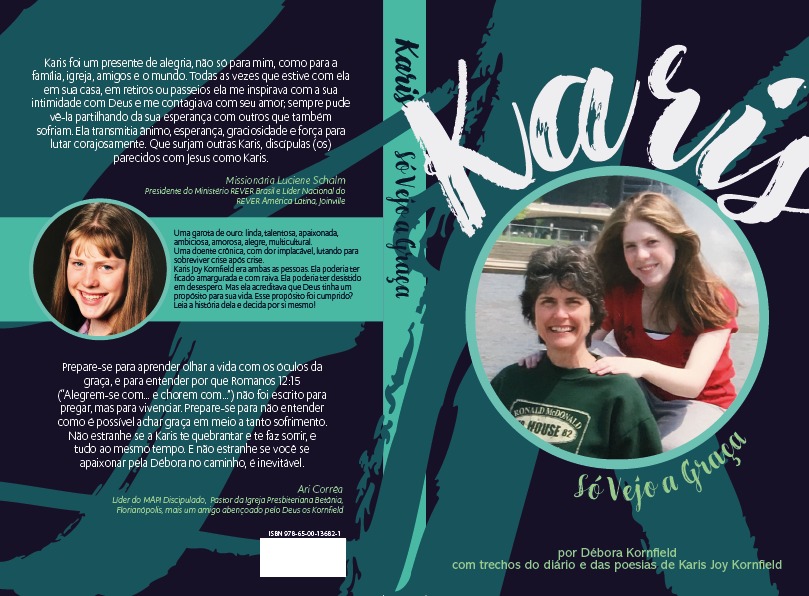
Over the last week and a half, as we marked eleven years since Karis left us, I have re-read Karis: All I See Is Grace. I couldn’t remember which parts of her life—of the three thousand pages of my first draft—had made the editing cut and into the book. I hadn’t remembered how often she referenced this passage from Hosea.

To understand this, it’s necessary to know that Karis had a high view of God’s sovereignty. She believed that NOTHING happened without the permission of God. He, all-powerful and all-knowing, could end or cause anything at any time. Often, she believed, he did not act when he could have because he so honors human free will. He wants us to choose him of our own volition. He wants us to obey him because we love him, not from force or manipulation. He gives us more latitude in our choices than perhaps we are wise enough to handle. Yet we learn from our mistakes. Painful as their consequences may be, God doesn’t usually step in to shield us from the results of what we have chosen. But this doesn’t mean he doesn’t see, or know, or care what we are going through.

A harder concept for me is Karis’s belief that her birth defect, with all its mosaic of positive and negative impacts on her life, was chosen for her by God. That his purposes for her required the suffering she endured. That had she not spent so much time in clinics and hospitals, she would not have met the people with whom she was meant to share God’s love.

I tend to think that Karis was born without functional intestinal nerves not because God so willed, but because we live in a fallen, imperfect world in which this kind of thing can happen. The question for me is whether we allow God to act within our circumstances to accomplish his desire to love others through us.

Either way, it’s clear God longs for us to know him. To personally know his heart of love toward us. To put ourselves intentionally in the way of knowing him better, in every way we can “pressing on” to know him and to love him, not whatever image of him we have inherited or invented. This, for Karis, was her lifelong quest.

Sovereign by Chris Tomlin