See him there

But God knows we are frail  March 21, 2024

Psalm 103:14-16 For the Lord knows how weak we are; he remembers we are only dust. Our days on earth are like grass; like wildflowers, we bloom and die. The wind blows and we are gone—as though we had never been here.

Shutterstock: MVolodymyr

Litany of Penitence 10

For our negligence in prayer and worship,

For our presumption and abuse of your means of grace,

Lord, have mercy upon us,

For we have sinned against you.

As we approach the end of Lent, this 19th century song is as reassuring now as it was when Charitie wrote it: Before the Throne of God Above, Charitie Lees Bancroft (1841-1892) and Vicki Cook, sung by Kristyn Getty

Before the throne of God above
I have a strong and perfect plea
A great High Priest whose name is love
Who ever lives and pleads for me
My name is graven on His hands
My name is written on His heart
I know that while in heav’n He stands
No tongue can bid me thence depart.

When Satan tempts me to despair
And tells me of the guilt within
Upward I look and see Him there
Who made an end to all my sin
Because the sinless Savior died
My sinful soul is counted free
For God the Just is satisfied
To look on Him and pardon me.

Behold Him there, the risen Lamb
My perfect, spotless Righteousness
The great unchangeable I Am
The King of glory and of grace
One with Himself, I cannot die
My soul is purchased by His blood
My life is hid with Christ on high
With Christ my Savior and my God


Oh merciful Lord …

But God is tender  March 18, 2024

Psalm 103:13 The Lord is like a father to his children, tender and compassionate to those who fear him.

Litany of Penitence 9

For all false judgments, for prejudice and contempt of others,

And for all uncharitable thoughts and actions toward our neighbors,

Lord, have mercy upon us,

For we have sinned against you.

Oh, merciful Lord …

We desperately need you to teach us your tenderness and compassion. Convict us and heal us. Show us that sin against others is sin against YOU, whom we claim to love.

I’m reading the biography of John Lewis. He taught and profoundly believed that nonviolent resistance required cultivating love for those who sinned against him (like multiple times beating him, bashing in his head, and arresting him dozens of times for simply asking for the most basic of human rights). An incredible example for us. Reminds me of something I heard a long time ago … oh yeah. Matthew 5:11-12. And 43-48.

A song based on The Breastplate of Saint Patrick, by Wendell Kimbrough and Dan Wheeler:

When my work takes me places I don’t want to go Christ before me
And my heart aches with sorrow as I hit the road Christ be with me

When the care of my family takes all that I have Christ within me
When I’m worn and exhausted, ashamed that I’m mad Christ defend me

Refrain:

I rise up today in a strength that is not my own
I’m held by the promise of God that I’m never alone

When I’m tossed to the side and I want to give up Christ beside me
When I’m breaking my back but it’s never enough Christ beside me
When I work hard but someone else gets the reward God’s eyes see me
I ask for promotion and they shut the door God’s ears hear me

When I climb the first steps toward a long-held dream Christ above me
And I leap out in faith and I hope to find wings Christ beneath me

Our “helping” can harm

But God’s love is unfailing  March 11, 2024

Psalm 103:11 The Lord’s unfailing love toward those who fear him is as great as the height of the heavens above the earth.

Other English translations render checed or hesed, ā€œunfailing love,ā€ as mercy, kindness, lovingkindness, steadfast love, faithful love, gracious love, and loyal love (also in verses 8 and 17). How does God make his love visible in the world? Through us, his Body, his hands and feet, animated by the Spirit within us, not motivated by any agenda other than love. But is this possible? Can we in fact, messy, broken, proud, self-centered and self-deceiving as we are, come even close to imaging God’s hesed love?

Litany of Penitence 7

For our blindness to human need and suffering,

And our indifference to injustice and cruelty,

Lord, have mercy upon us:

For we have sinned against you.

I like the fact that today’s confession comes after we’ve acknowledged our pride, vanity, hypocrisy, dishonesty, exploitation of others, self-indulgence, and all the rest of the sins named so far. Because it’s so easy

1) to reach out to others to be noticed for how good and generous we are and

2) to blindly believe we know best what other people need, without taking the time to listen and understand their stories or their deeper wounds and struggles and to respect what they say they need, and

3) to unconsciously feel and project that we are somehow ā€œbetterā€ than others because we think we have to be better to earn God’s favor or approval and to feel OK about ourselves. Too often we re-write history to favor ourselves, when in fact the reality is appalling.

Such ā€œhelpingā€ may not help at all. It may cause more harm that good. I’ve been there. I struggle with these three vulnerabilities all the time. All the time. They push me back to the mercy of God and his love for me as his child, with nothing to prove, everything to learn, and only gratitude to express.

Jesus walked, sat, listened, ate, played, laughed, grieved, danced, wept, and shared himself with people. He didn’t worry about what was PC or would win him likes. He dared to speak truth to power, with integrity, from his heart. He freed people from all kinds of oppression and lies, in many unorthodox ways, including from the unbearable rules of performative religion.

And his unfailing, compassionate, faithful, gracious love took him to the cross, where in the midst of his agony he said, “Father, forgive them. They don’t know what they are doing” (Luke 23:34).

Sometimes the flow of the Spirit in our hearts is a pounding torrent, not a peaceful stream. Shutterstock: Maridav

Instant gratification? No.

But God is compassionate, slow to get angry March 5, 2024

Psalm 103:8 The Lord is compassionate and merciful, slow to get angry and filled with unfailing love.

Litany of Penitence 5

For our self-indulgent appetites and ways,

And our intemperate pursuit of worldly goods and comforts;

Lord, have mercy upon us:

For we have sinned against you.

The Lenten discipline of fasting is transferable: it can teach us self-control, equipping us to say no to temptations that can hurt us or others. We say no to physical satiation so we can be filled with God’s unfailing love. If you listened to Kevin Antlitz’s sermon from February 25, recommended in my last post, this statement will sound familiar to you.

The Lenten discipline of fasting is abstaining from food for spiritual purposes. Not everyone can fast from food; perhaps you, like me, need to fast from something else. But here are guidelines for food fasting from Adele Ahlberg Calhoun’s Spiritual Disciplines Handbook (thanks, Kevin):

  1. Don’t fast if you are in a hurry and are fasting for immediate results regarding some decision. Fasting is not magic.
  2. Stay hydrated. Always drink plenty of water and fluids.
  3. If you are new to fasting, begin by fasting for one meal. Spend the time with God that you would normally be using to eat.
  4. Work up to longer fasts. Don’t attempt prolonged fasts without guidance.
  5. If you decide to fast regularly, give your body time to adjust to new rhythms of eating. You may feel more tired on days you fast. Adjust your responsibilities appropriately.
  6. Begin a fast after supper. Fast until supper the next day. This way you miss two meals rather than three.

Fasting benefits us, not God. We don’t do it to earn his approval or favor, but to grow in character like his. He’s not a mean, angry person just waiting to punish us. He wants our best, just like we desire for our own children. We reap the benefits over the long term. Spiritual disciplines are a marathon, not a sprint. In that way too they are counter-cultural. We need to train for them and build our tolerance and skills slowly, finding joy along the way.

Be still, my soul Shutterstock: Eva Pruchova

“Self-denial is incomprehensible to our culture”

But God wants us to know and reflect his pure loveĀ 

Psalm 103:7 The Lord revealed his character to Moses and his deeds to the people of Israel.

Litany of Penitence 4:

For our sexual impurity, our exploitation of other people,

And our failure to give of ourselves in love;

Lord, have mercy upon us:

For we have sinned against you.

What do you think of the heading to this post, from last Sunday’s sermon by Kevin Antlitz? (You can listen to the context of his statement here (Feb 25): we choose to say no to ourselves so we can say yes to God and to those we love and care for. How do you embrace self-denial personally?

O Love that will not let me go, sung by Dana Masters and Kristyn Getty

I trace the rainbow through the rain … Bray Head, Ireland, March 2023

Don’t believe everything you think

But God loves fairness

Psalm 103:6 The Lord gives righteousness and justice to all who are treated unfairly.

Litany of Penitence 3:

For our unrighteous anger, bitterness, and resentment

For all lies, gossip, and slander against our neighbors.

Lord, have mercy upon us:

For we have sinned against you.

There are two sides to this confession: our response to those who have hurt us, and our own unjust thoughts, feelings, words, and actions against others.

We need God’s mercy and healing in both. He longs to restore us rather than punish us.

For I, the Lord, love justice. I hate robbery and wrongdoing. I will faithfully reward my people for their suffering … The Sovereign Lord will show his justice to the nations of the world. Everyone will praise him! His righteousness will be like a garden in early spring with plants springing up everywhere (Isaiah 61:8, 11).

Shutterstock: StudioSmart

Be truly glad. There is wonderful joy ahead, even though you have to endure many trials for a little while. … Don’t repay evil for evil. Don’t retaliate with insults when people insult you. Instead, pay them back with a blessing. That is what God has called you to do, and he will bless you for it (1 Peter 1:6, 3:9).

One of Karis’s favorite songs:

Oceans (Where Feet May Fail), Hillsong

Open our eyes to the blessings

But God fills our lives with good things

Psalm 103:5 He fills my life with good things. My youth is renewed like the eagle’s!

Litany of Penitence 2:

For our self-pity and impatience,

And our envy of those we think more fortunate than ourselves;

Lord, have mercy upon us

For we have sinned against you.

IguazĆŗ Falls, Brazil Shutterstock:sharptoyou

Thou that hast giv’n so much to me,

Give one thing more, a gratefull heart …

Not thankfull, when it pleaseth me;

As if thy blessings had spare dayes:

But such a heart whose pulse may be

Thy praise.

George Herbert, 1633

I Thank God, Hillsong 

A way forward

But God forgives and heals Feb 19, 2024

Psalm 103:3-4 He forgives all my sins and heals all my diseases. He redeems me from death and crowns me with love and tender mercies.

Litany of Penitence:

For all our unfaithfulness and disobedience;

For the pride, vanity, and hypocrisy of our lives;

Lord have mercy upon us

For we have sinned against you.

If we confess our sins to him [tell the truth about them], God is faithful to forgive our sins and cleanse us from all unrighteousness (1 John 1:9).

His Mercy is More, Keith and Kristyn Getty

Ideas for Lent 2024

But God is holy Feb 16, 2024

Psalm 103:1-2 Let all that I am praise the Lord; with my whole heart, I will praise his holy name. Let all that I am praise the Lord; may I never forget the good things he does for me.

I didn’t manage to write a post yesterday, so I’m a day late with my ideas for this year’s Lenten season. Here they are:

  1. Key off Psalm 103, one or two verses at a time, so we keep in mind God’s character.
  2. Use the Litany of Penitence, one strophe at a time so we can think carefully about each one and make whatever confession we need to make, based on the Spirit’s conviction. The Litany has twelve stanzas, so using two per week will bring us to Holy Week.
  3. Keep track of our progress using a Lenten calendar. The one I’ve chosen (thanks, Suzanne Werder) is a journey with Jesus to the cross. I suggest you download and print this and use color and symbols of your choice to represent your experience day by day. Of course, you can use other Scriptures to enrich this plan.

It would be great for us to use half an hour each day for prayer during Lent, but anything we manage to do is better than nothing, right? Decide for yourself how much you want to invest in this spiritual heartcleaning.

Today, and the next couple of days, as we think with King David about God’s holiness in the context of how praiseworthy he is, let’s start with a general confession. ā€œWe have not loved you with our whole heart, and mind, and strengthā€ fits with the first two verses of Psalm 103. Try to write down at least a paragraph of response to the psalm and the confession (below). What does God’s holiness mean to you?

Most holy and merciful Father: We confess to you and to one another and to the whole communion of saints in heaven and on earth, that we have sinned by our own fault in thought, word, and deed; by what we have done, and by what we have left undone.

We have not loved you with our whole heart, and mind, and strength.

We have not loved our neighbors as ourselves.

We have not forgiven others, as we have been forgiven.

We have been deaf to your call to serve, as Christ served us.

We have not been true to the mind of Christ.

We have grieved your Holy Spirit.

Lord, have mercy upon us, for we have sinned against you.

Holy Forever, Chris Tomlin

Shutterstock: Galyna Andrushko

Combining Valentine’s Day with Ash Wednesday

But God wants our hearts

Joel 2:12-13 That is why the Lord says,
    ā€œTurn to me now, while there is time.
Give me your hearts.
    Come with fasting, weeping, and mourning.
13 Don’t tear your clothing in your grief,
    but tear your hearts instead.ā€
Return to the Lord your God,
    for he is merciful and compassionate,
slow to get angry and filled with unfailing love.

    He is eager to relent and not punish.

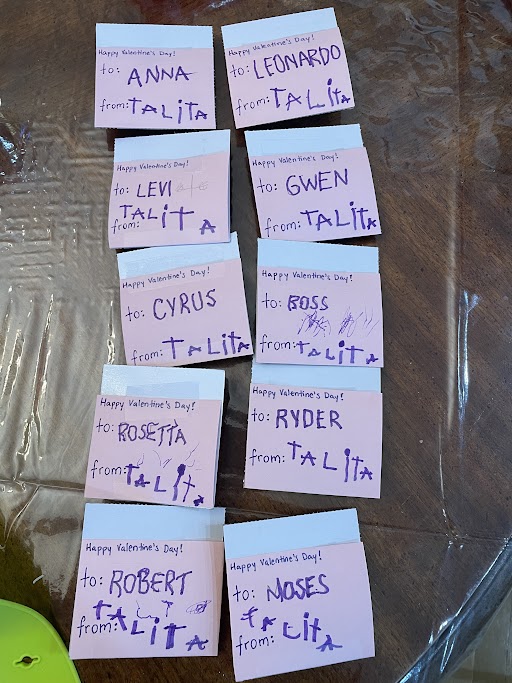
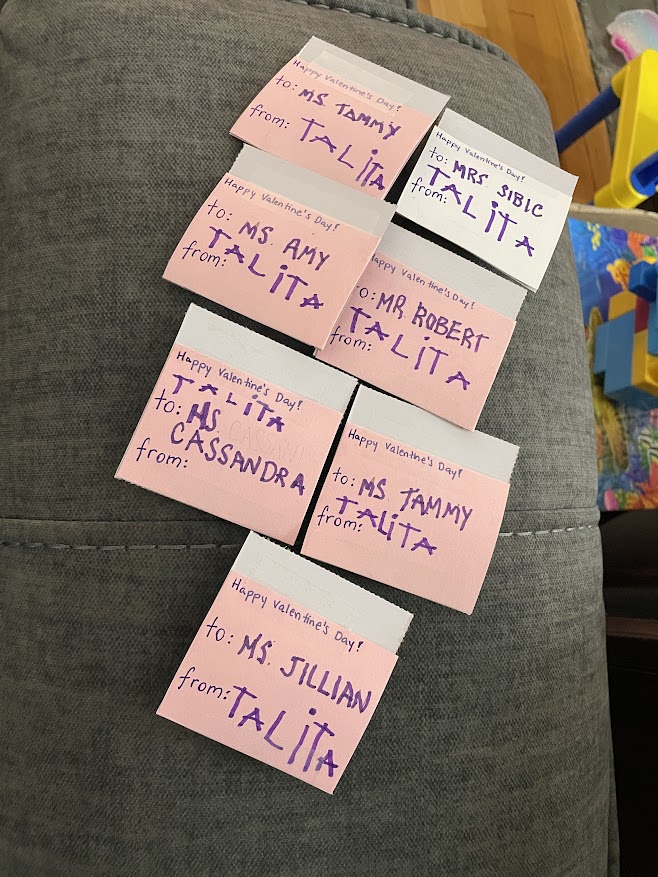
Today and tomorrow, I’m helping get Caleb and Talita to school and home again because their dad is traveling for work and their mom is a nurse who leaves home early and gets back late. The kids have spent hours laboring over their valentines for their classmates and teachers. Caleb wrote his greetings by himself.

Valerie ā€œdottedā€ the names for almost-four Talita to trace, and she wrote her name by herself on all these cards:

So much effort to communicate friendship and appreciation!

I’ve been musing over how to combine Valentine’s Day with Ash Wednesday. The prophet Joel gave me the answer. God’s heart is full of unfailing love for us, and he wants us to love him back. He wants to repair his broken relationship with us. He can do so if we turn back to him, admitting and grieving what we’ve done that hurts him.

Our “valentine” for him is humility, and honesty, and a desire to hear and honor his heart of love.

And there’s no better source of love for those we care about than his Spirit, free to flow within and through us (John 7:37-39). That’s why I’ve chosen a flowing river as an image for Lent. The Spirit wants to cleanse us and grow and water his fruit in the garden of our hearts. Starting with love.

Shutterstock: Liinna Lilli

The Holy Spirit produces this kind of fruit in our lives: love, joy, peace, patience, kindness, goodness, faithfulness,Ā gentleness, and self-control (Galatians 5:22-23).

River of Life by Mac Powell