Isaiah 33:5-6 Though the Lord is very great and lives in heaven … he will be your sure foundation, providing a rich store of salvation, wisdom, and knowledge. The fear of the Lord will be your treasure.
Last night Dave and I put together a jigsaw puzzle while listening to music on Youtube. Hillsong’s “Oceans” randomly came on and made me teary. It was one of Karis’s favorite songs, an articulation of her lifelong treasure hunt: to find God in the circumstances she faced each day, no matter how painful or challenging or disappointing or rewarding.
You call me out upon the waters The great unknown where feet may fail And there I find You in the mystery In oceans deep my faith will stand
And I will call upon Your Name And keep my eyes above the waves When oceans rise My soul will rest in Your embrace For I am Yours and You are mine
Your grace abounds in deepest waters Your sovereign hand will be my guide Where feet may fail and fear surrounds me You’ve never failed and You won’t start now
Spirit lead me where my trust is without borders Let me walk upon the waters Wherever You would call me Take me deeper than my feet could ever wander And my faith will be made stronger In the presence of my Saviour
I will call upon Your Name Keep my eyes above the waves My soul will rest in Your embrace I am Yours and You are mine
Isaiah 30: 15, 18, 26, 29-30 Only in returning to me and resting in me will you be saved. In quietness and confidence is your strength. … The Lord must wait for you to come to him so he can show you his love and compassion. For the Lord is a faithful God. Blessed are those who wait for his help. … Your own ears will hear him. Right behind you a voice will say, “This is the way you should go,” whether to the right or to the left. … So it will be when the Lord begins to heal his people and cure the wounds he gave them. … The people of God will sing a song of joy, like the songs at the holy festivals. You will be filled with joy … And the Lord will make his majestic voice heard. He will display the strength of his mighty arm.
People have been asking me, “When will Book 3 be out? I want to know what happens!” This is gratifying, of course. I had hoped it would be out by Christmas, but Easter is my new target.
So, I’m pouring my time and energy into completing the rough draft of Facing the Faeries 1906, Book 3 of the Cally and Charlie series. My big goal is to finish it and read through the whole manuscript once before the end of September. I want to send it to early readers before I travel for most of October. In November, I can make revisions based on their feedback, do the final edit, and send it–I hope!–to AE Books by Thanksgiving.
To accomplish this, though, I’m neglecting everything else. Other projects are piling up. People I long to spend time with are multiplying.
What tends to keep me awake at night, though, is this concern: By trying to write fast, will I miss hearing God’s voice? Will I leave out something he wants to be included in this book?Am I capable of writing the vision I believe he has given me, of how the distress of my characters will resolve into joy?
Last night was one of those nights. I believe God guided me to read a chapter from The Soul of Desire by Curt Thompson, as well as Isaiah 30. The verses I’ve cited speak directly to my heart and my concern. They encourage me to take time to go to him, be quiet. and listen for his direction. Even if it’s in the middle of the night. The Lord will make his majestic voice heard.
Here’s a brief excerpt from chapter 6 of Soul of Desire, in which Curt highlights Psalm 27:4, One thing I ask from the Lord …to gaze on his beauty. I felt like Curt gave me a flash of insight into Karis’s ability to find joy in even the most distressing circumstances:
“Earlier I noted that our imaginations must be stretched, at times painfully so, if beauty and goodness are what we are going to see, create, and become. … Every moment is a crossroads of choosingto move toward or away from integration, toward or away from Jesus and each other, toward or away from goodness and beauty. … One of the most difficult things we have to do is wrest our attention from the painful memories of the past or dread of the future and … imagine beauty while still lamenting what is painful.”
The Lord taught Karis to do this, to make this choice, from the time she was very young. A zillion examples spring to mind. But writing about that must wait for another day.
Here’s Curt again:
“When our attention is firmly ensconced in the past or the future, we remain outside the present moment, the only dimension of the temporal domain of integration in which we are able to find joy and create beauty, even in the presence of our suffering. … Who among us doesn’t have something in our life we have simply given up on—some wound we assume won’t ever be healed, some ruptured relationship whose future we can picture only in images of the injured past, some addictive behavior we believe we can’t overcome, some part of our character in which we are so embroiled that we no longer even consider that it can change? Our discouragement and even despair about such things are, more than anything else, deeply dependent on the degree to which our minds and hearts are living in isolation. Becoming deeply known, living interpersonally integrated lives, enables us to persevere in the face of all that tells us not to, to “will one thing” in order to see the beauty of the pure in heart emerge, to see God in places and ways that heretofore we could not.”
Isaiah 29:13, 19-21, 24 The Lord says, “These people say they are mine. They honor me with their lips, but their hearts are far from me. … [But] the humble will be filled with fresh joy from the Lord. The poor will rejoice in the Holy One of Israel. The scoffer will be gone, the arrogant will disappear … Those who convict the innocent by their false testimony will disappear. A similar fate awaits those who use trickery to pervert justice and who tell lies to destroy the innocent. … Then the wayward will gain understanding, and complainers will accept instruction.
1 Peter 3:14-16 Even if you suffer for doing what is right, God will reward you for it. So don’t worry or be afraid of their threats. Instead, you must worship Christ as Lord of your life. And if someone asks about your Christian hope, always be ready to explain it. But do this in a gentle and respectful way. Keep your conscience clear.
I’ve mentioned before an organization called Braver Angels whose purpose is to build bridges across the divides that polarize America. BA is committed to equal numbers of Republicans and Democrats throughout the organization, so everyone has a voice. I want to share with you part of a letter I received from a BA volunteer that seems directly connected to what Isaiah says in chapter 29 as well as Peter centuries later.
Here’s Julian:
At Braver Angels, we talk a lot about civility. But what does civility mean?
Civility isn’t just a desire to find common ground, or to bury our differences and sing “kumbaya” with people who disagree with us. It’s not a desire for ideological unity, a jettisoning of our core convictions, or a refusal to engage in healthy conflict.
Here’s what civility means to me.
1) If I want to criticize Critical Race Theory (for instance), then I need to read books and listen to TED talks by the most prominent supporters of CRT. I want to grapple with the best reasons that someone might support CRT, not the worst; and also get an accurate picture of what proponents like Robin DiAngelo and Kimberlé Crenshaw truly believe.
2) I won’t spend a lot of time reading or citing other critics of CRT. I want to avoid a game of telephone i.e. “I think that CRT is bad, and I’ll define CRT according to how this other critic defines it.”
Rules 1 and 2 are part of what Braver Angels calls “accurate disagreement.” In a republic, we the people should disagree vociferously. But we should also disagree accurately. We should try to learn what the other side thinks, and we should get this education from the horse’s mouth. Abiding by these two rules can help us to have more productive conversations on contentious topics, because it reduces the extent to which we all talk past each other.
3) Be hard on ideas and soft on people. Though I disagree with them, when I read their books, I get the sense that CRT proponents like Richard Delgado and Jean Stefancic are good, decent and smart human beings who just want to make their communities and their country a better place.
4) Whenever possible, I’ll mention the good ideas that an ideology brings to the table. Few ideologies are monolithically bad (though some are) and I want to acknowledge these shades of gray and also give credit where it’s due.
Of course, all of this sounds like a lot of work. What’s the point?
The first benefit of civility is that it reduces affective polarization. A world in which we hate every member of the other team is bad, both for our country and for ourselves as human beings. Accurate disagreement and seeing the good in our opponents’ views can help us forge a healthier union.
But there’s another benefit that’s not talked about enough: civility makes it possible to have bigger and better conversations. When we’re civil, our discussions get more rigorous and more intense, because we’re discussing bigger things—the future of civilization and what it means to forge a more perfect union—rather than mudslinging at our political opponents. When we spend less time and energy throwing insults and attacking the other side, we free up those resources to have the conversations that really matter.
So let’s all disagree a little more rigorously. And a little more civilly. But I repeat myself.
— Julian Adorney, Braver Angels volunteer
(Debbie again) Christians at least theoretically believe that God loves the world (John 3:16) and that he shows no favoritism (Romans 2:11, 1 Timothy 5:21, James 3:17-18) and that we are to love and pray for our “enemies” (Matthew 5:43-48). We’re to demonstrate the fruit of the Spirit in every part of our lives (Galatians 5:22-23). This is the heart close to the Lord (Isaiah 29:13); what James calls God’s kind of wisdom (James 3:17-18).
Isaiah 28:23-29 Listen to me; listen and pay close attention. Does a farmer always plow and never sow? Is he forever cultivating the soil and never planting? … The farmer knows just what to do, for God has given him understanding. … The Lord of Heaven’s Armies is a wonderful teacher, and he gives the farmer great wisdom.
Matthew 13:3-23 [Jesus said] Listen! A farmer went out to plant some seeds. … To those who listen to my teaching, more understanding will be given.
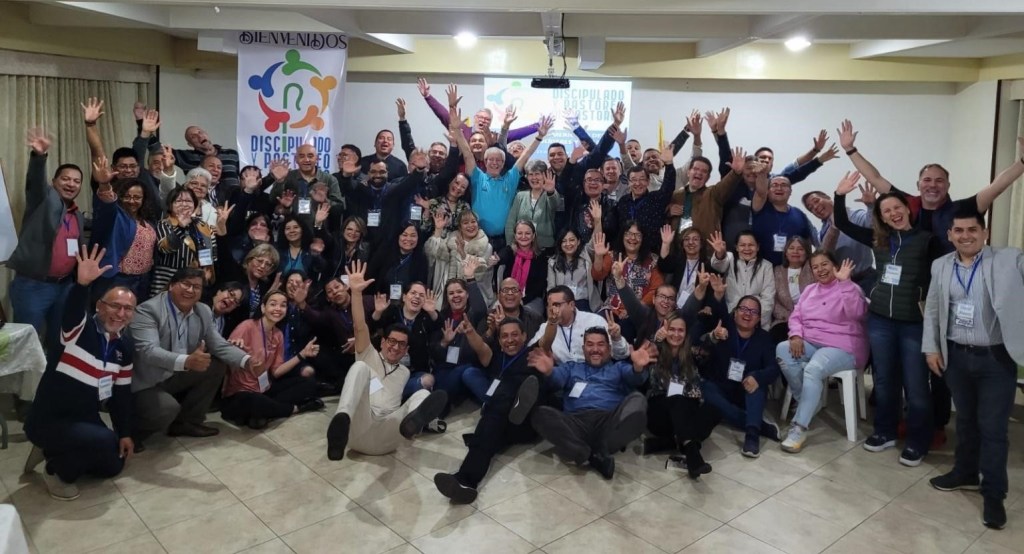
Dave’s ministry has many facets. One of them is to encourage pastors to form or join a discipleship/mutual care group with other pastors. They experience care for each other and grow together in intimacy with God, in pastoral skills, in balanced priorities, and in personal character. These groups often cross denominational lines. One of the blessings of this has been joint outreach projects between leaders who used to view each other as competitors. Now they are friends, committed together to the growth of the Kingdom in their city.
Dave has written a variety of tools to help pastors grow, care for each other, and rightly order their lives. His book O Lider que Brilha/El Líder que Brilla (“The Leader Who Shines”: Seven Relationships that Lead to Excellence) has been used in Portuguese and Spanish by thousands of pastors meeting in small groups, from Argentina to Mexico.
And THIS MONTH, a long-awaited ministry tool will finally be published in Spanish! It’s the Discipleship Bible, written by Dave and his co-author Josadak in Portuguese for the Brazilian Bible Society, and now available in Spanish for the rest of the continent.
A personal note about writing the Discipleship Bible: When it became apparent to Dave at the end of 2009 that Karis wasn’t getting better and he would have to leave Brazil and move to Pittsburgh, he felt like his world had fallen apart. It took him a year to fulfill existing ministry commitments in Brazil, deal with twenty years of living and raising four kids—I couldn’t help with the move because I was taking care of Karis 24/7 in Pittsburgh—and say goodbye. He knew it was the right decision. Dave and I had lived on different continents for six years already. But what on earth was he going to do in Pittsburgh?
Shortly before Dave left Brazil, toward the end of 2010, he received a surprise phone call from the Brazilian Bible Society. Would he be willing to write a Discipleship Bible?
If Dave hadn’t moved to Pittsburgh, he never would have found time for this work.
Dave still traveled a lot over the next years, back to Brazil and to other countries across Latin America. But whenever he was “home” in Pittsburgh with Karis and me, and later our other two daughters who wanted to be near Karis while she was still with us, Dave had work to do. A huge project that became a profound joy to him. He was able to integrate material from twenty books he’d published in Brazil, packed full of practical, challenging studies and motivation for people who want to grow as disciples of Jesus.
We’ve been using pieces of the Discipleship Bible in Latin America for years, translating individual studies and sending them around by internet. But finally, all its resources will be available for Spanish speakers everywhere. It’s a huge milestone for us. (Before you ask, yes, we would love to see it translated into English. You can pray with us for this to happen in God’s way and time!)
The Discipleship Bible includes introductions to each book describing what that book offers to a disciple of Jesus, seven courses, each with eight modules, each of them with eight studies for small groups (448 studies!) and application notes on every page Plus several other topical studies and a thematic index. The seven courses are:
1. Disciplemaking fundamentals
2. Relationships – a lifestyle of healthy personal relationships
3. Marriage, the most intimate and profound experience of discipleship
4. High-performing teams
5. Soul (emotional) restoration
6. Biblical disciplers
7. Godly character
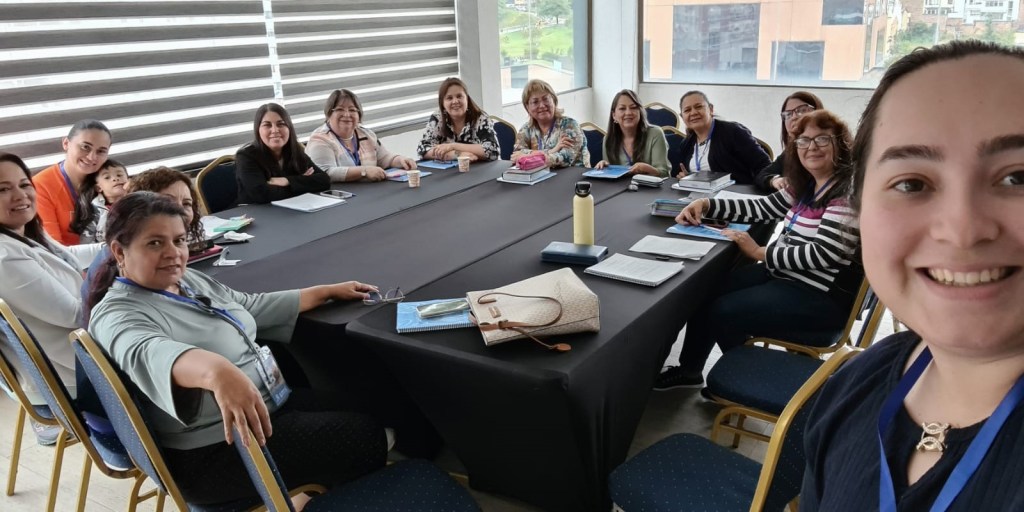
For two years, I’ve been using studies from the Discipleship Bible with my Monday evening Zoom group of women leaders from several countries. The studies are simple—five questions and two or three paragraph article—and they inevitably take us deep into Scripture and into our own lives. As soon as I post this, I’ll prepare the study for our next meeting. We rotate the facilitator role, but all of us prepare ahead of time. I’m surprised every week by how rich that week’s study is for us as we share how God is using it in our own growth and practice as disciples of Jesus.
Thank God with us for the wealth of his wisdom and for being such a great teacher through the Scriptures he has given us!
Isaiah 27:2-3 In that day, sing about the fruitful vineyard. I, the Lord, will watch over it, watering it carefully. Day and night I will watch so no one can harm it.
John 15:1-5 [Jesus said] “I am the true grapevine, and my Father is the gardener. … Yes, I am the vine; you are the branches. Those who remain in me, and I in them, will produce much fruit. For apart from me you can do nothing.”
Acts 20:28 Keep watch over yourselves and all the flock of which the Holy Spirit has made you overseers.
This is the rallying cry or slogan of my husband Dave’s ministry, Discipling and Pastoring of Pastors in Brazil and Latin America (see dppastores.com). It means “Alone, no!”
A Pastoring of Pastors retreat in Brazil
Many pastors in Latin America do feel alone. They’ve been taught that the success of their church is on their shoulders. Denominational leaders tend to communicate demands more than support. They don’t have anyone with whom to share their burdens and receive encouragement, either personally or ministerially. Often, they are afraid of potential consequences if they tell anyone they are vulnerable or needy in any way. Sometimes they are afraid to admit this even to their spouses. They don’t have help in “watching over themselves.”
And sometimes all that explodes into a scandal of one kind or another. Sometimes that’s because the pressure the pastor feels becomes overwhelming. Especially the pressure of loneliness.
Other times, the pastor simply quits. The stats on this are not pretty. The loss of pastors is part of what has been called “the great dechurching”**—in the US as well as Central and South America.
Over the years, Dave has had the privilege of participating in the restoration of pastors. The process is different, of course, in each case. But it always involves this basic concept: You can’t do ministry alone. It must be a team effort, with encouragement, support, and accountability. You must be connected to the vine AND to the other branches.
Sozinho, não!
I encourage you—and myself—to pray for your pastors, support them however you can, and be very careful about gossip and a critical attitude. Resolve conflicts directly and with love. Don’t “church hop” because of disagreements over nonessentials. Don’t turn your worshiping community into a political battlefield. And maybe most important: God didn’t ever intend us to be loner Christians. We need each other. Each of us needs to be a part of a body of believers submitted to Christ as Lord, growing in grace, and caring for each other. Alone, no!
When I started writing this post, I didn’t realize it would become so long. So I’m breaking it into two parts, with an exciting announcement next time!
**For example, in this book. You can Google other books and articles and discussions.
Isaiah 26:1, 3, 8, 12, 19 We are surrounded by the walls of our salvation. … You will keep in perfect peace all who trust in you, all whose thoughts are fixed on you! … Lord, we show our trust in you by obeying your laws; our heart’s desire is to glorify your name. … Lord, you will grant us peace; all we have accomplished is really from you. … For your life-giving light will fall on your people like dew.
I woke up at 4:00 to the rhythms of my husband snoring beside me and my son snoring in the next tent over. My heart filled with thankfulness for these two men, for who they are, for the richness and depth and beauty of what each of them contributes to those around them.
On this early Saturday morning at Raccoon Creek State Park, almost a week ago now, the day before our 46th anniversary, my mind wandered over God’s faithfulness to us, so amazing. Our marriage had every reason to fail, and honestly, but for David’s stubbornness and God’s grace, it would have. Our life together was off the charts traumatic and stressful for so many years that I came close to an emotional breakdown—long before I was diagnosed with PTSD after Karis’s death. Dave went through periods of depression. The kind where I might open the door to his office to ask him a question and find him lying on the floor in the dark staring blindly at the ceiling.
But God …
Friday evening our family had sat around the campfire singing silly songs, telling stories, even reciting “Jabberwocky.” We had joined our daughter Rachel singing “This Little Light of Mine,” which she had taught three-year-old Liliana to sing when she felt afraid of the dark. Valerie quickly followed with the Portuguese, “Minha pequena luz, vou deixar brilhar …”—so appropriate, because when Val was a teenager, her friends called her “Pequeno raio de luz”—little ray of light.
Here’s the thing: I could so easily have spoiled this precious time together. Not because I got distracted and the sausage hobo meals I had labored over with the “help” of Caleb and Talita—supper for ten of us—burnt to a crisp in the coals of Rachel’s fire. But because of my reaction to this fiasco.
Can you relate?
Everyone else took it in stride and ate more watermelon and s’mores made with Brian’s ginormous marshmallows. Caleb, Talita, and Liliana shrieked with laughter as Uncle Dan chased them around our tents. Baby Juliana blessed us with her marvelous smile and her enthusiasm for crawling not just in the grass but in the dirt.
I was so disappointed though that internally, all kinds of buttons were pushed—the perfectionist button, the “how could you” button, the “you are such a—” button, even the “could this be an early sign of Alzheimer’s” button. I was tempted to make my camp cooking failure an issue for the whole family. To make it about me.
Please tell me I’m not the only one to experience this temptation!
But God let me see instead the family laughing, talking, sharing what we did have to eat, even Cesar finding a consumable bite or two in the cinders of my burnt offering. The light of their smiles, each one of them, shone into the darkness of my heart and chased the shadows away.
This little light of mine … Minha pequena luz … surrounded me like a wall as Rachel and Valerie sang in the glow of the campfire Friday evening. I felt its protection still as I eased through the door of our tent into the dewy grass at the first lightening of the sky the next morning. As we hiked through the lovely woods and the kids swam in the lake. Even as we broke down our camp and said our goodbyes. And as Dave said “Happy anniversary” to me early Sunday.
Borrowing Isaiah’s words, Lord, you have granted us peace; all we have accomplished—even our emotional healing and growth—is really from you. My heart’s desire is to glorify your name.
Isaiah 25:7-9 God will remove the cloud of doom, the shadow of death that hangs over the earth. He will swallow up death forever! The Sovereign Lord will wipe away all tears. … In that day the people will proclaim, “This is our God! We trusted in him, and he saved us! Let us rejoice in the salvation he brings.”
Psalm 68:5 Father to the fatherless, defender of widows—this is God, whose dwelling is holy. God places the lonely in families; he sets the prisoners free and gives them joy.
Revelation 21:4 God himself will wipe every tear from their eyes, and there will be no more death or sorrow or crying or pain.
To my surprise, when I walked into church yesterday, Josh was singing “Rock of Ages”! It had nothing to do with my last post–except for me. Josh chose the song based on Isaiah 51:1 and Matthew 16:18. You can listen to Kevin’s challenging sermon on those passages here. You might need to give Wes a day or two to post it.
But I felt chills. I don’t remember hearing that hymn sung in our church. It seemed God was saying back to me, “Remember what you just posted? You, Debbie, too easily forget the Rock who can hide you.”
On my mind was the strong sense that God wanted me to write something very difficult into Book 3, Facing the Faeries 1906, something I will weep over, in my emotional attachment to my characters. And for which I fear criticism and negative pushback. I need to write it this week–my personal little “cloud of doom.”
I took my dilemma to a prayer team. They understood that my challenge is to trust—to trust that God sets prisoners free and gives them joy—even the characters in this book to whom I am inordinately attached. Even me. This is what he does. God reminded me of my “year verse”: Be truly glad. There is wonderful joy ahead, even though you have to endure many trials for a little while (1 Peter 1:6).
As you and I head into the challenges of this new week, let’s take a few minutes to reaffirm our trust in the Lord, and rejoice! Here are three artists to help us, each inspired by Isaiah’s words, “This is our God”:
Isaiah 17:10, 18:4, 19:20-25, 24:5, 16 You have turned from the God who can save you. You have forgotten the Rock who can hide you. … For the Lord has told me this: “I will watch quietly from my dwelling place” … The earth suffers for the sins of its people, for they have twisted God’s instructions, violated his laws, and broken his everlasting covenant. My heart is heavy with grief. Deceit still prevails, and treachery is everywhere.
I love this story:
Our family hiked in the Grand Canyon. Dave and Dan (11) had gone on ahead, more ambitious than I was with our three girls, 6, 8, and 10. Suddenly torrential rain poured down on us and the trail became slippery. Should we keep going down or head back up? Not knowing how long this might last, we turned around. Struggling to keep our balance, sliding back as often as we managed progress forward and of course soaked through, we rounded a bend and saw other hikers huddled under a rock overhang. They squeezed together to make room for us. Exhausted and shivering, I watched the grandeur of the tsunami pummeling the valley before us, vaguely aware that one family, with three teenagers, spoke French. Karis focused all her attention on trying to understand what they were saying.
When the storm eased, the mother of the French family, without attempting conversation, took Karis’s and Rachel’s hands and started with them up the trail. This stranger’s kindness freed me to give all my strength to helping little Valerie manage the slick climb. All I knew to say when we reached the top was “Merci. Merci beaucoup.”
Back home in Brazil, Karis started teaching herself French, an interest she pursued through college (adding Spanish and Arabic as well to her Portuguese and English). She was thrilled in high school to be able to visit France, the homeland of that lovingly remembered family.
A cleft in a rock during a storm yielded so much more than just shelter!
As I read Isaiah 17-24 it seemed eerily like today’s news. Syria. Israel. Ethiopia. Egypt. Iraq. Turkey. Jordan. Arabia. Palestine. These places, says Isaiah, are “watched quietly by the Lord” in the hope they will turn to him, away from their greed and selfishness and violence, and be spared anguish and destruction. God’s heart, broken by their betrayal of his covenant of love, is on full display. He longs to be known and for the people to follow his ways of peace and justice.
2,750 years later, we’re no different, are we? God still gives us freedom to decide. He invites us to know and follow him, instead of independently following our own way, suffering the consequences of our foolish choices. He still “watches quietly,” deeply desiring to bless us, wherever we live, whatever language we speak and whatever culture has formed us.
One day, Isaiah 24:14-16 promises:
All who are left will shout and sing for joy.
Those in the west praise the Lord’s majesty.
In eastern lands give glory to the Lord.
In the lands beyond the sea, praise the name of the Lord, the God of Israel.
We hear songs of praise from the ends of the earth,
songs that give glory to the Righteous One!
My song of praise TODAY echoes back through the centuries to gladden God’s heart. I want to remember the place of refuge he offers me in stormy moments. Don’t you? We can hide our souls under the shelter of the Rock of ages as thunder crashes around us.
As the young minister traveled through the rugged country near England’s Cheddar Gorge, the clouds burst and torrential sheets of rain pummeled the earth. The weary traveler was able to find shelter standing under a rocky overhang. There, protected from the buffeting wind and rain, Augustus Toplady conceived one of the most popular hymns ever written, “Rock of Ages, cleft for me, let me hide myself in Thee.”
In March 1776 Toplady published the hymn as part of an article in The Gospel Magazine, which he edited. He wrote that just as England could never pay her national debt, so man could never by his own merits satisfy the justice of God. In the middle of the article, he burst into song, printing for the first time the hymn “Rock of Ages”, which so ably describes Christ, the Rock of Ages, as the remedy for all our sin.
Augustus Toplady died of consumption [tuberculosis] at the age of 38. As he neared the end Toplady proclaimed, “My heart beats every day stronger and stronger for glory. Sickness is no affliction, pain no cause, death itself no dissolution…My prayers are now all converted into praise.”
Isaiah 15:5, 7, 8, 16:2-5 My heart weeps for Moab … their cries of distress can be heard. … The people grab their possessions and carry them … A cry of distress echoes through the land from one end to the other. … The women of Moab are left like homeless birds. “Help us,” they cry. … Let our refugees stay among you. Hide them from our enemies until the terror is past.When oppression and destruction have ended … then God will rule with mercy and truth. He will always do what is just and eager to do what is right.
Since Isaiah continues the theme of refugees, I want to tell you about For the Nations, https://ftnro.org/ “Refugee Care that Changes Lives,” in Dallas, Texas. Our niece Claire Kornfield works fulltime with For the Nations teaching refugee children. Here’s what Claire says:
The nations are coming to us as refugees and God’s hand is at work in this. It is now shockingly easy to share the Gospel with people from cultures where Jesus is little known.
To understand this ministry, it is helpful to know what a refugee is. Refugees are people who were in grave danger in their home country. These dangers often arise because of race, religion, or politics. They flee from their home country and generally end up in refugee camps in a second country where they apply for refugee status with the United Nations. These camps can be very unsafe themselves. They usually remain in the camps for a minimum of a year and a half, but some have been known to be trapped there for 20 years. Some refugees are eventually, after much vetting, invited by the United States to come and live here as permanent, legal residents. This process of getting to the United States is very long and painful.
And it is just the beginning. Once they arrive here, they usually do not speak English. They also may not know how to read, drive, use a washing machine, go to the doctor, find a job, etc. They are given about three months of housing by the government (which they must pay back) and after that, need to provide for themselves.
This is very overwhelming and does not even touch on the traumas they have likely also endured. But it is exactly at this overwhelming and terrible moment that the people of God have the opportunity to be His hands and feet and welcome the sojourner.
At For the Nations: Refugee Outreach we do this by focusing on education, family services, and sharing the Gospel. For education, we offer English and GED classes for adults and accompanying preschool/childcare for their little ones. This helps the adults get jobs and prepares their young children for kindergarten. We also offer homework help for older children after school. And in the summer (my favorite time of year), we run a program that is something like a cross between summer school and vacation Bible school for about eight weeks.
Family services include: helping them find a job, get a car, learn to drive, understand what to do with speeding tickets, learn how the bus system works, learn how to get medical help, etc. At times family services involve helping protect refugees from those who would exploit them, such as teaching them their rights and helping them with wrongful evictions.
We try to include sharing the Gospel in all of our programs. As I’ve already said, this is surprisingly easy. The founder of For the Nations began by simply tutoring children after school at their apartment complex. She asked their parents if she could also tell the children about Jesus and they readily agreed. We have a time for a Bible lesson in our adult and children’s classes. Additionally, we have Bible studies for seekers or those who are already believers.
I really believe that refugees in this country are an example where “the harvest is plentiful, but the workers are few.” We have large wait-lists for our English classes and homework help program because we do not have enough staff or volunteers. These are missed opportunities of people who would willingly come and let us tell them about Jesus, but who we have to turn away; there are many such missed opportunities across this country.
Staff like me raise support like missionaries. We are able to do this missional work because churches and individuals partner with us in serving and sharing the Gospel. There are now many refugees in this country and what I want to say most is, “Seize the opportunity!” Maybe you can volunteer, tutor, teach, or befriend. And if you can’t, maybe you can support someone who does. I serve in Dallas and, personally, would be grateful for prayer or financial support (This link can be used for financial support: https://ftnro.org/claire/). However, it may be equally or more important to find or create services for refugees to support in your own city.
First, a Luciene update: She’s going home!! From Pittsburgh to Brazil TODAY (well, arriving tomorrow–it’s a long trip).
The doctor cleared her at a checkup Tuesday to begin putting her foot on the ground, which will help a whole lot with getting into and out of airplane seats. We’re still waiting on a response from the medical center re. their petition for mercy with the incredibly high costs of her surgery and care. I’ll let you know when we find out! Thanks to those who have wanted to help!!
But God will have mercy
Isaiah 13:13, 14:1, 3, 30 “I will shake the heavens” … But the Lord will have mercy … In that wonderful day the Lord will give his people rest from sorrow and fear.
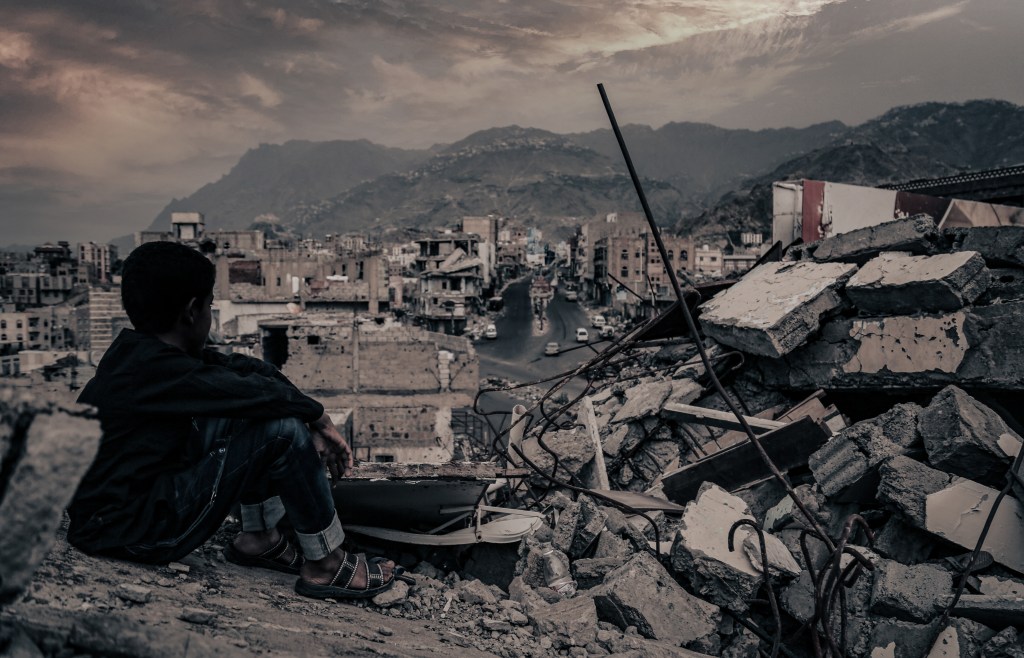
We don’t have to imagine “sorrow and fear.” We see it described and displayed in the news every day. Isaiah 13 and 14 are passages I want to skip over, just like I want to bury my head and block my ears from the atrocities and waste of life and devastation and trauma going on all over the world. I’m sure you do too.
How interesting that in the middle of destruction and despair, Isaiah chose to relate the story of Lucifer’s fall—“the shining star, son of the morning,” he who destroyed the nations of the world and made them into a wasteland, thrown down to earth from heaven (Isaiah 14:12-17). Lucifer’s actions sound all too familiar.
But God says, “I will feed the poor in my pasture; the needy will lie down in peace.” How long, Lord, until we see you do this, in Ukraine, in Afghanistan and Sudan and Ethiopia and Niger, in Venezuela and all the other places pouring refugeesinto the world seeking safety, sustenance, refuge, healing from trauma?
Though I wrote “How long, Lord,” people around the world and in our own country, my own city, are feeding the poor and providing safe refuge for victims of Lucifer-followers. Our church, as just one example, “adopted” two refugee families this year, partnering with “Hello Neighbor.” https://www.helloneighbor.io/ We have missionaries-in-residence, the Behrens family, working fulltime to reach out to refugee communities in Pittsburgh. Daniel Behrens preached last Sunday, inviting us to name our fears to the One who calms the storm—you can listen to his wonderful sermon here.
And because our church is located in an international neighborhood, thanks to the universities and medical center, our ESL program has a long waiting list of people wanting English classes. Dozens of people in the church contribute time to conversation, outings, hospitality, and Bible studies with those who want deeper engagement with us than just learning English. Lawyers in the church are available to help with legal issues. Children are cared for with love.
It’s all part of the working out of a vision God gave the church several years ago, of light pouring from our building to bless those around us.
So, though we still long for that “wonderful day” of complete rest from sorrow and fear, of final peace, we can meanwhile, today, align with the Lord’s work of providing refuge to oppressed people (verse 32), wherever God has placed us.