But God

Dependence

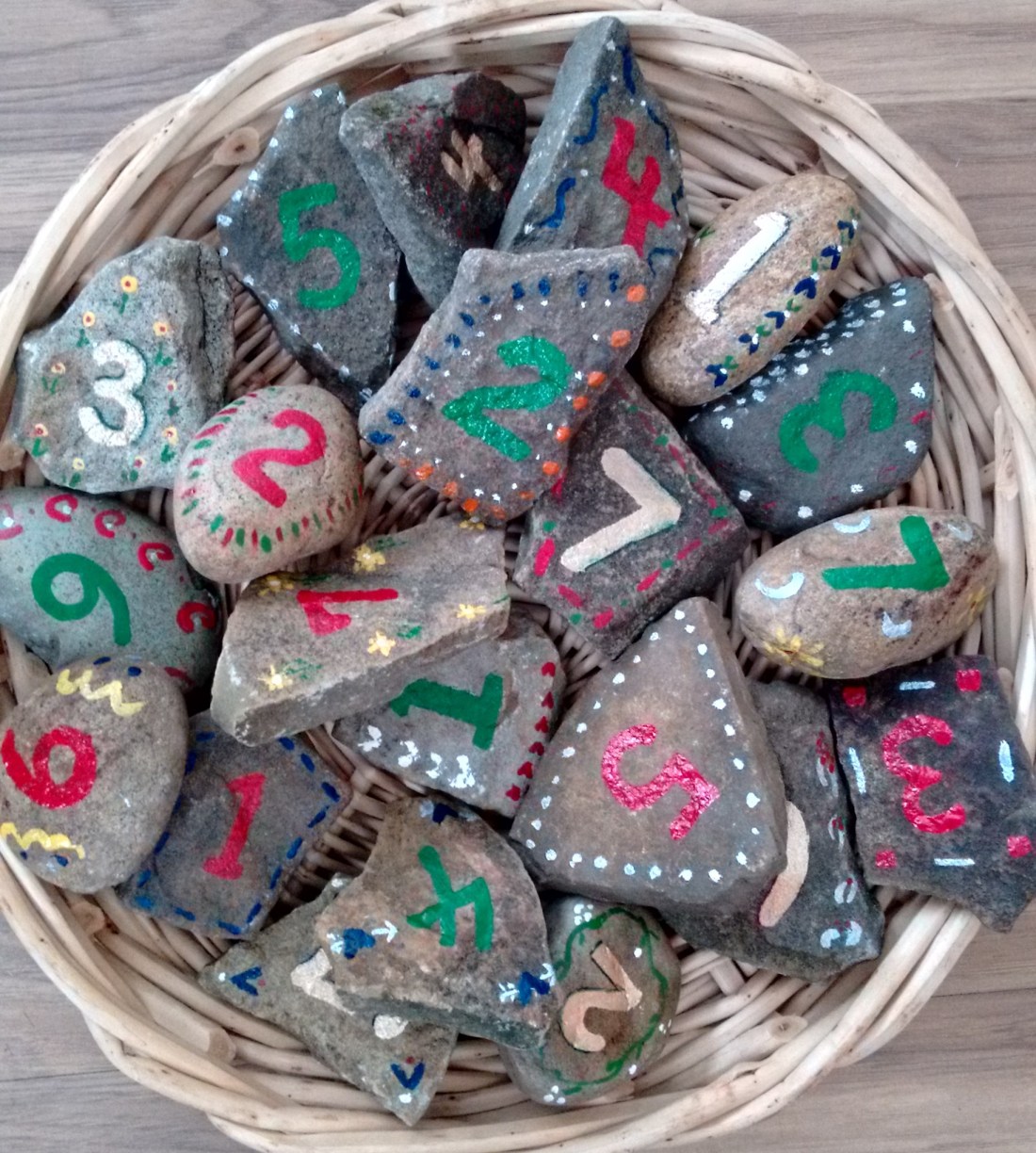
“What’s with the rocks?”

“Do you have a few minutes? Pick a rock and I’ll tell you a story.”

Rock #3 green: Lessons in trust

“How do you do it?”

“Do what?”

“Deal with—all this—[a gesture indicating all the medical paraphernalia] and still have a smile on your face?”

“I don’t. I can’t. It’s too much for me.”

“I don’t understand. I mean, I get upset when I have a flat tire, or the flu.”

“What do you do with that frustration?”

“I don’t know. I guess I get mad. I complain. Why are you asking me that?”

“I don’t think there’s really that much difference between what you have to deal with and what I have to deal with. In both cases it’s too much for us. We’re not meant to deal with life by ourselves.”

“What do you mean? Aren’t we supposed to be strong and spiritual and independent?”

“Well, no. I don’t think so. I certainly can’t live that way.”

“So we’re back to my first question: How do you do it?”

“When I wake up in the morning—if I’ve been able to sleep—before I even open my eyes, I tell the Lord I just can’t do this. I can’t face another day. I’m just not strong enough. I tell the Lord my particular frustrations and worries about this particular day. I ask him again to take me Home. But since he doesn’t—at least so far—[big grin] I ask him to live this day for me. I am weak but he is strong. His strength is my joy. His joy becomes my strength. Tell me what you’re dealing with today.”

I heard some variation of this conversation many times. People would come to visit Karis supposedly to cheer her up (and they did), but the focus soon shifted from her to them, to their worries and concerns. And Karis would pray for them, and help them pray for themselves. And they would leave with Karis’s smile on their own faces.

I have to tell you that Karis didn’t learn this dependence on the Lord from me. I was trained from infancy to be tough, to be strong. In my childhood home, any expression of a need was considered griping or whining, and that was simply not allowed. I didn’t learn how to admit weakness or distress or sadness. I learned to swallow or deny all that; to shut up and do my work. To keep my focus on other people’s needs and how I could serve them, because my own needs weren’t real; they didn’t matter.

I lived like that pretty much all the way through the hard years with Karis. And then, a few months after she died, after the five extra people who lived with us gradually went their ways, I fell apart. Grief swamped me, not just the grief of Karis’s death, but hundreds, thousands of big and little griefs piled up inside me that had never been mourned. I couldn’t contain them any longer. They showed up in nightmares to the point I was afraid to go to sleep. They flooded me when I was awake, three-D flashbacks that could suddenly intrude at the grocery store, or when I was driving, or having a conversation. I had what I think is a mild version of PTSD (Post Traumatic Stress Disorder).

Not by my own choice, I had to face into my own pain and losses and disappointments and trauma. I had to let myself feel. I thought I would not survive this. I had to admit my own fragility and neediness. All my life, being a wimp had seemed like the ultimate failure. I finally had to start paying attention to those overheard Karis-conversations and confess my own inability to do life in my own strength.

It took a long time to work through all that stuff. It felt like forever. When I was in the middle of it time stood still. The only way out was through. I couldn’t do it by myself. I absolutely had to rely on other people. And on the Lord.

I don’t ever want to go back there. I have to take life in small bits; deal with stuff as it happens. Deal with it by admitting my weakness, my neediness. Acknowledge to the Lord my inability actually to deal with the realities of life, with the suffering all around me in this sad and broken world. And do you know that when I’m willing to admit I can’t do it, and leave my disappointment even in this with the Lord, that’s when I find his strength. It’s the opposite of how I’ve lived most of my life.

Do you know why we sometimes gripe and fuss and whine? Why we get anxious and worried, can’t sleep, eat too much or not enough, hook into screens or shopping or chemical escape or whatever? Well, of course there are lots of reasons. But one of them is that we think we have to do life by ourselves. That we have to be strong and independent. That admitting our true needs and weaknesses and feelings is failure. We focus on complaining about the small stuff so we don’t have to face the big stuff that is too much for us.

Listen carefully to these words, not as a Band-Aid, not as a proof text or a way of judging yourself and others, but as a lifeline for your soul:

Don’t worry about anything; instead, pray about everything. Tell God what you need, and thank him for what he has done. Then you will experience God’s peace, which exceeds anything we can understand. (Phil 4:6-7)

Tell God what you need . . . That’s still hard for me. It’s much easier for me to tell God what I perceive to be someone else’s needs. Mine seem small and inconsequential; not worth taking up air time. Maybe you feel that way too. The problem is that small things not cared for pile up, until they’re big enough to be difficult to handle and I’m forced to pay attention.

So one of my big lessons in trust, that I expect to be learning the rest of my life, is to let God in on even the small stuff, admitting that even in that, I need his help. The more I practice being dependent on him in ordinary life, the more I’ll train myself to look to him for strength when tougher things come.

Our church and first home in Pittsburgh

“What’s with the rocks?”

“Do you have a few minutes? Pick a rock, and I’ll tell you a story.”

Rock #3 gold: Miracles

[Note: TPN is Total Parenteral Nutrition–feeding directly into the bloodstream with elemental nutrients, completely bypassing the digestive system.]

Just after midnight Friday night March 26th (or rather, the first minutes of March 27th 2004), Karis’s cell phone and mine rang simultaneously. She was on campus; I was staying with friends. Nerves taut, I listened to Karis say YES to a chance for transplant. We were told we had to arrive at the hospital in Pittsburgh by 4:00 a.m.

The only way to travel from South Bend to Pittsburgh within four hours in the middle of the night was by private jet. When we arrived, bag and baggage, at the Children’s Hospital of Pittsburgh, Karis was whisked away to a series of exams and blood tests—it seemed they sucked out about a pint of her blood while our things were locked into a storage room. Right at 5:00 a.m. as the nurses put Karis on a stretcher to take her to the operating room, the phone rang: the surgery was cancelled! The team “harvesting” the donor intestine in New Orleans was not satisfied with the condition of the organ.

Wow. Whiplash. The nurses gave Karis medications to reverse the immunosuppressants she had received, and then began organizing her discharge. Could I give them an address so they could set up delivery of Karis’s TPN?

An address . . .? We literally did not know a single person in Pittsburgh. I called the Ronald McDonald House: full. Each of the Family Houses: full. Home health would not deliver to a hotel. I had no idea what to do.

Karis, sensibly, having been up all night, went to sleep. I went to prayer and racking my brain for ideas. The nurse kept coming in to remind me insurance would not pay for Karis to stay in the hospital for no reason—she needed an address! It was Saturday and the home health care agency only worked until noon. She had to get Karis’s order in quickly to give them time to concoct her TPN. (Since Karis’s intestine wasn’t functioning, TPN is the way Karis was nourished—it’s elemental nutrition given straight into the blood.)

At some point that anxious morning as I begged God for a solution, I remembered an e-mail I had received several months before from someone in Pittsburgh saying she understood that my daughter and I might need a place to stay for a weekend. If I could give her a date, she would let me know whether her guest space might be available. I had written back thanking her but saying we could not predict when a transplant call might come, and we were actually looking for a place for six months. Hearing nothing more from her, I almost trashed her e-mail (I’m a compulsive deleter). With my finger poised over “delete” I thought, hmm, this is a friend of a friend of my sister Shari’s. Perhaps we’ll meet her some time. So I filed the e-mail under “Pittsburgh” and forgot about it—until this moment. What was the woman’s name? Carol something Italian-sounding?

I asked at the nurse’s station for help with retrieving my laptop from the storage room and connected to the hospital’s wifi. Yep, there was the e-mail! The woman’s name was indeed Carol, Carol Finelli Brown. She mentioned in the email her husband’s name was Battle. I went back to the nurses’ station to ask for a phone book. The unit clerk raised her eyebrows as I opened to the B’s—yes, there it was! Brown, Battle. “I think I may have found something,” I told the clerk. “I’ll let you know.”

Carol answered the phone, and claimed no recollection of our e-mail exchange. After listening to our plight she said, “Well, I have no idea who you are. I’ll have to discuss this with my husband. I’ll call you back.”

No other ideas came to me in the hours that passed before my phone rang. This time it was Battle, who plunged into giving me directions to their house. Ignorant of Pittsburgh, I absorbed nothing of what he said. When he stopped talking, I said, “If I can find a taxi, would you be able to explain all that to the driver?” “Oh—you don’t have a car? Then I’ll have to call you back.”

A nurse came in to say this was the last chance to order Karis’s TPN. Frustrated, I shook my head. No, I still didn’t have an address to give her.

A couple of hours later my phone rang again; Carol this time. “You’ve caught us on a very busy day. But I’ve figured out a plan. I am scheduled to read Scripture at our church’s Saturday evening service. Then, instead of listening to the sermon, I will duck out and go to the hospital to pick you up. Meet me with your things at the hospital entrance at 5:45.” Click. I didn’t know what Carol looked like or what car she would be driving, but I presumed she would recognize me, a half-dazed woman with a pile of luggage on the sidewalk outside the hospital.

Returning to the nurses’ station I pointed to the Browns’ address in the phone book. The unit clerk looked at me like I was crazy. “Do you know this person?” “Well, not exactly . . .” “What did you do, just open the phone book, close your eyes, and point? Is this a joke? Here, give me that.” She took the phone book and called the Browns’ number. “I have a woman here who thinks she is going to sleep at your house. Do you know her?” (Eyes roll.) “I see. And are you willing for home health to deliver TPN and medications for her daughter to your address?” (Eyes roll again.)

Since it was too late to order TPN that day, the nurses invented something to tell the insurance company about why Karis would stay in the hospital overnight, but exhorted me to pick her up bright and early the next morning. I said goodbye to Karis, gathered as many things from storage as would fit on a hospital cart, and took the elevator down to meet Carol.

Instead of taking me to her home, Carol drove back to her church, where an after-service dinner was in progress. She took me around the tables introducing me to dozens of people, then sat me down with a plate of food. She chattered with friends; I could hardly keep my face out of my plate. At some point she noticed. “Oh, are you tired?” She whisked me home and tucked me in to her third-floor guest bed under a huge fluffy white comforter. I was asleep before my head hit the pillow.

When I woke the next morning, I saw a note from Carol. “Here are car keys to the BMW. Pick up your daughter and then meet us at church. We’ll be sitting toward the front on the right side. You’ll need to get gas.”

I had no idea how to get back to the hospital, or from there to the church. And I was afraid to drive their BMW! I searched around until I found a phone book, which thankfully had a map of sorts. With help from a gas station attendant, I found the hospital, discharged Karis, collected the rest of her things, found the church, figured out how to park there, and located the sanctuary where the service was in progress. Karis and I tiptoed down the right side aisle all the way to the front and slid in beside Carol.

The service, it seemed, had been designed specifically for Karis and me. Every song and prayer, a sermon about trusting God in times of uncertainty . . . soon both Karis and I were weeping. Afterward Battle (whom we met for the first time through tears) and Carol, handing us Kleenex, said “We have people we need to talk to. Wait for us here.”

As Karis and I tried to compose ourselves one of the pastors approached us. “I couldn’t help noticing that the service, um . . . moved you,” she said. “May I pray for you?” Karis later told me the pastor prayed things for her that she had not told a single person were longings of her heart. When the pastor moved on, Karis said to me, “Mama, I don’t know where we’re going to live in Pittsburgh. But I think we’ve found our home.”

Yes. That church is home for us to this day.

Battle had a meeting, so Carol drove us home to the fluffy white comforter for naps. Finally, at supper that evening, we started getting to know each other: Carol, a radio announcer who left home each morning at 4:30 a.m., and Battle, an entrepreneur; both long-time active members of Church of the Ascension. Battle regaled us with stories about his mission work in Mongolia before we tucked in under the white comforter once more.

Monday morning at 6:30 my phone rang. I knew Carol had left for work hours before, but I could hear Battle downstairs. I ran down two flights calling “Battle! Battle!” just as he opened the front door to catch his bus for work. “Battle, Ronald McDonald House is on the phone telling me they now have space for us. Could l borrow your car to take Karis and our things over there?”

Battle looked at me quizzically and said “What does Ronald McDonald House have that we don’t have? Can’t talk now—gotta run or I’ll miss my bus. DON’T GO ANYWHERE—we’ll talk tonight!” And he was gone.

Puzzled, I nonetheless told the RMH person we had a place for that night, so they could go to the next person on their waiting list.

On my way back to the third floor, my phone rang again: transplant! There was another possible organ for Karis! They weren’t sure yet, so we should just sit tight, but this one looked like it might be the one.

Whiplash.

Mid-afternoon, transplant called us back instructing us to go to the hospital. I called Battle, secured permission to use his car and to leave our things in their guest room, repacked what I thought we might need for the immediate future, and drove to the hospital. Déjà vu: the same exams; drawing an unbelievable number of vials of blood from Karis’s arm . . .

At around 5:30 Battle showed up in Karis’s hospital room saying he would keep us company until she was called for surgery. He explained that he and Carol had decided we could stay in their third floor guest apartment for as long as we needed. We had no way of imagining then that this “upper room” would be our home for two and a half years!

Battle entertained Karis with a series of hilarious tales while we waited for the call from the OR. When the head surgeon walked in to tell us surgery was a go, Battle said, “Why hello, George . . .”! They had known each other for years. This was how I learned that our transplant surgeon was a committed Christian. We prayed together before Karis was whisked from the room.

Karis was anesthetized and the surgeons inserted a second central line, an arterial line, several regular IV lines, and were ready to make the first cut to remove her intestine when the phone rang in the OR. “Stop everything!! This donor intestine is flawed; we won’t be able to use it . . .”

Whiplash.

There would be two more aborted calls before the transplant actually happened five months later. With all the uncertainties of those months, and the post-transplant crises, our new church and our new home gave us stability and security we could not have experienced on our own. The church was walking distance from the hospital. Our new home was just ten minutes’ drive from the hospital and the church, and came with amazing compassion and support from our new family, Battle and Carol. Over time they hosted not just Karis and me, but Dave and our other children, and various members of our large extended family. They helped our daughter Rachel find a summer job in Pittsburgh so that she could be near us for a few weeks before returning to college. For the first time in years, at Christmas they put up a tree so that our kids could have a sense of holiday joy while their sister fought for her life in the ICU.

“God will supply all your needs” (Phil 4:19). Yes!

Too little, too late

“What’s with the rocks?”

“Do you have a few minutes? Pick a rock and I’ll tell you a story.”

Rock #3 red: humor

My husband traveled over Thanksgiving, so I decided the kids and I would go somewhere too. We were penny-pinchers, so I bought tickets on the cheapest airline available to visit relatives in Kansas City.

Our friend Steve offered to drive us to the airport, over an hour away. As a treat, we would stop en route for Happy Meals, since we wouldn’t be fed on the plane.


At pick-up time, Steve was nowhere in sight. Tension mounted while I tried to locate him. Finally he screeched into our driveway and I threw kids, suitcases, and little backpacks into the car. As we peeled out, the kids wailed that I had PROMISED them a Happy Meal.  At two, four and six, losing our flight didn’t matter, but that Happy Meal did. Steve swung into McDonald’s, grabbed three identical Happy Meals, and took off again for the airport.


We leaped from the car and raced to the check-in counter. Too late to check our suitcases. Almost too late to board the plane. The lady said she would phone them not to close the doors for five more minutes.


Of course, being the cheapy airline, our gate was the farthest one on the concourse farthest away from the check-in desk. My 7-month-pregnant tummy bumped against Rachel in the stroller holding her Happy Meal, with suitcases hung from each handle, a bag and Rachel’s little backpack over my shoulder. Danny and Karis clung to my coat one on each side, clutching their Happy Meals in their free hands, small backpacks on their backs. “Kids, we have to RUN!”


Our limiting factor was Karis’ four-year-old running speed. Soon we had another limiting factor: the Happy Meal Cokes were sloshing inside the quickly disintegrating cardboard containers. We stopped long enough to pile Danny’s and Karis’ Soggy Meals on top of Rachel’s in her lap. She clutched all three with the gleam in her eye of a girl with a mission.


Because it was a cheapy airline, when we got to the very last gate on the concourse, we had to go down two flights of stairs, out a door and across the tarmac–and then up a long flight of narrow stairs into the plane. Yeah. Two year old, four year old, six year old, stroller, suitcases, bag, backpacks, and the precious Sloshy Meals, with the flight attendant glaring at us from the top of the stairway.


Inside we faced a plane full of hostile faces, people disgusted with the delay of their flight. This cheapy airline had no assigned seats. The flight attendant pointed out the only seats left, scattered through the plane, but made no effort to move anyone so that we could sit together. I buckled Danny with his Squishy Meal into the first free one and Karis into the second, half way back. The seat left for Rachel and me was in the very back of the plane.


As I extended my seat belt to its maximum length to accommodate myself, my unborn child, and Rachel, the flight attendant began her routine.  “Welcome to Flight so-and-so nonstop to Des Moines . . .”


–a collective panicked intake of breath!–


“JUST kiiiddding; we’re going to Kansas City . . .”


Unbelievable.


After take-off, I settled Rachel in my seat with her limp French fries and ketchup, then lumbered up the aisle to help Karis rescue her Coke-drowned hamburger and on to the front to help Danny wipe off his little prize. Meanwhile Rachel spread ketchup as far as she could reach. I cleaned up as far as I could reach and settled her with crayons and a coloring book. Back up the aisle to collect the detritus of Karis’ Sloppy Meal, then Danny’s, then back to check on Rachel, just in time for seatbacks-and-tray tables-in-upright-position.  Waddle back to Karis, then Danny: check seatbelts, put away crayons and coloring books, then stumble all the way back to once again get that seatbelt around my “lap” and my daughter.


“Stay where you are and wait for me,” I had firmly instructed Danny and Karis, and “SIT STILL, Rachel!” While the flight attendant at the exit door tapped her foot impatiently, I reconstructed the stroller/Rachel/suitcases/bag/backpack arrangement, now mercifully minus three Squashy Meals.


I had just managed to pull the last item out of the overhead compartment of the now-empty plane when a voice came over the loudspeaker:

“Isn’t anyone going to help that pregnant lady with her nursery school?”

And that’s why I call this story, “Too Little, Too Late.”

In the face of deep losses

“What’s with the rocks?”

“Do you have a few minutes? Pick a rock and I”ll tell you a story.”

#2 green: Lessons in trust

I commented to a friend that I didn’t want to do Christmas. It was early December and Karis had died in February. My friend replied, “I’m so disappointed in you. I thought you would be over that by now. I always thought you were a woman of faith.”

Does faith mean we don’t feel grief? The “proof text” for this idea is 1 Thessalonians 4:13. Here is my favorite translation of that verse: “Beloved brothers and sisters, we want you to be quite certain about the truth concerning those who have passed away, so that you won’t be overwhelmed with grief like many others who have no hope” (The Passion Translation). The point of comparison is between those who have hope of seeing their loved ones again, because they believe life doesn’t end at death, and those who don’t. For those who have hope, Paul says, grief will be different from what it’s like for those who don’t.

That makes sense, right? But the text doesn’t say we won’t grieve, or how long we “should” grieve, or what any individual’s grief process will be like. I went through complex grief that included PTSD (Post Traumatic Stress Disorder) flashbacks and nightmares. This was because in the intensity of caring for Karis for thirty years, I didn’t have space to process my feelings along the way as both she and I experienced one loss after another, one life-and-death crisis after another, not just the loss that came with her death.

Does this mean I didn’t have faith? No. I never lost my faith in God. It means I went through complex grief. It took a lot of time, and I couldn’t have done it by myself. I needed help. Rather than criticize or judge me, God walked through those tough months with me, slowly healing me from the traumas I had experienced.

Does that mean I wasn’t actually trusting God all along the way? Well, yes and no. There were specific moments when I didn’t know how to trust him. One of those was early on, when Karis was just a few weeks old and doctors told us it was wrong to keep her alive artificially—we should disconnect everything and let her die. God sent a pastor to me in my distress who gave me hope I could cling to. When I confessed I didn’t know how to trust God in the agony of this situation, he said “Then it’s time for the Body of Christ to have faith for you.” Tears are coming to my eyes right now as I think about that day and the comfort of his words.

Let’s back up even further, to the time when Karis was a few days old and we realized something was seriously wrong. We had friends who told us all we needed was faith. They were disappointed in us when we took Karis to the doctor, and when she went through surgeries and took medication. I recounted to my brother-in-law the tension this introduced into our relationship with these dear friends, and he told me the story of the man in the flood who refused all of the help God sent to him. When he drowned and went to heaven, he was angry with God for not hearing his prayers. God said, “I sent you a canoe, and a rowboat, and a helicopter. Why did you send them all away?”

Just so, God opened doors for Karis to have the best possible medical care. Even so, for thirty years he intervened over and over again to preserve her life when the doctors reached the end of their resources. Until he chose to take her Home. When I read Karis’s journal from the last year of her life, I learned that she pleaded with God again and again, “Please, Father, take me Home.” I think he finally said, “OK. Let’s do this.”

Karis believed absolutely that God would keep her on Earth as long as he had use for her here. That belief was bedrock for her. It meant she lived exuberantly, because she didn’t fear death. Many times, when doctors told us it was the end of the line, I became anxious. Karis was always frustrated with me for this. She wanted me to have the same faith she had, that her life was completely safe in the arms of her Father, God. But I don’t believe God condemns any mother for fearing for her child in adverse circumstances. God built into mothers concern for their children’s safety. He understands us because he made us this way.

The Saturday morning before Karis died, the head of the transplant ICU met with our family. He explained that there was nothing more to be done for her, and that when we were ready, we could make the decision to take Karis off life support. But the doctor understood how difficult this decision would be for us, and he encouraged us to take all the time we needed.

We felt so supported by that doctor. The decision was challenging for us in part because God had intervened and given Karis back to us so many times in what felt to us like similar circumstances. We agreed as a family that we would disconnect her only when each of us was ready. Three days passed while each of us tried to work it through.

But for the ICU nurses, those three days were just wrong. One day Karis’s nurse confronted me. She said we were being selfish and were more concerned about ourselves than about Karis, whom she believed to be needlessly suffering. I told her that I was certain Karis was fine, and would be fine, whenever she died. But if we did not make this decision unanimously as a family, it would crack us apart. We might never be fine again. We might never be able to repair the damage such an action would cause.

Mercifully, God took Karis just a few hours later. We never had to make the agonizing decision to take her off life support, which felt to some of us like we would be participants in her dying, after fighting for so many years against all odds for her living. I know that was a gift to us, and that not every family has the blessing of experiencing that outcome. I can see how easy it would be to judge us from the outside, especially for someone who deeply loved Karis. But I hope that out of this situation I have learned greater trust, and less need to judge. Only God understands each person’s needs and all the factors involved. I think there is seldom a right and a wrong in complicated situations like this one and like so many others that our family experienced along the way. I believe that God, in his wisdom and in his love for each of his children, is the only one who is fully trustworthy. Even when we misjudge a situation and make a “wrong” choice, we do not thereby defeat his love and his determination to bless us. Nothing, Scripture tells us, can separate us from God’s love (Romans 8:38).

Financial Provision

“What’s with the rocks?”

“Do you have a few minutes? Pick a rock and I’ll tell you a story.”

#2 gold: miracles (this and all of the Rocks of Remembrance stories I’m posting are not in the Karis book)

One morning I said to the Lord, “We don’t have enough money to pay the rent.” A couple of hours later I picked up my mail. There was a card, and a check. The card said, “God told me to send this to you.” It was the exact amount of money that we needed.

I had not heard from that person before. I have not heard from her again.

This is only one of many surprising ways God cared for our family through the transplant years. Supporting two households (one in Pittsburgh and one in Brazil) with a daughter in college, numerous medical expenses, and Dave’s trips from Brazil to visit Karis and me every couple of months did not fit within our missionary budget.

In November, 2004, a few days into what would become 74 days in the ICU, I received a call from the hospital finance office. “Are you aware that your daughter will reach her lifetime limit on your insurance tomorrow?” No, I had no idea. “I think you better come down right now and talk to me.”

The financial officer quickly ascertained the facts of our situation, and said “We’ll have to apply to Medicaid. This means your daughter will become a ward of the state of Pennsylvania.” The woman put aside other concerns in order to help me jump through the hoops that very afternoon. Still, it was a week before Medicaid was approved, and that meant thousands of dollars of expenses flowing into Karis’s account.

I mentioned our situation on Karis’s blog, requesting prayer. A friend of Karis’s who worked at Notre Dame took it to the Vice President for Student Affairs. The first I knew of this was a call from his office requesting additional information. Next I received an email directing me to submit to the VP’s office all medical bills from that week between the end of our private insurance and the start of Medicaid. From an ND charitable fund managed by the Vice President, those bills were covered. Many thousands of dollars.

Later, from that same charitable fund, the Notre Dame VP decided to help cover Dave’s round trips from Brazil to visit Karis and me every couple of months. The next year they re-evaluated our situation and decided to include some help with our rent. And yes, they knew we aren’t even Catholic! Karis received in the mail a warm Notre Dame blanket from the President of Notre Dame, and a warm powder blue ND jacket from the Vice President, along with an even warmer note to her, which I still have. Karis wore that jacket and used the blanket for the rest of her life.

When Karis became aware of what being a ward of the state of Pennsylvania meant, she took it very seriously. On walks in her wheelchair she would say of strangers walking by, “I owe that person . . . I owe that person . . . I wonder if that person knows that I’m alive because they pay taxes?” She worried about whether people would want part of their tax money going to pay her medical bills. She tried to live as economically as possible, and tried to find way to give back, such as tutoring children through a Pittsburgh program. Her heart was warmed one day when a friend told her, “Karis, I used to gripe and complain about paying taxes. Not any more, now that I know I’m part of the great community of Pennsylvania that is supporting you. It’s a privilege, not a burden!”

A friend took me to an upscale resale shop to buy me winter clothing. Another, on her death bed, bequeathed us her car, seventeen-year-old Maxi. Maxi transported us for a year before he died and became an organ donor. When we moved into an apartment, we were inundated with gifts from people’s basements and attics: a set of dishes and flatware, pots, pans, curtains, bedding . . . A friend called after a garage sale offering a leftover double bed. Somehow, from nothing, our apartment was furnished.

A friend who lived a few blocks from the hospital offered us parking at her house so we wouldn’t have to pay the hospital parking fees. A friend treated Rachel, Valerie, and me to a Christmas high tea to give us a delightful break away from the hospital; to say to our other daughters, “I see you. You matter too.” People’s generosity came in every color and variety. It kept us afloat.

And here’s my favorite story of God’s miraculous provision for us: During the 74-day ICU nightmare, the day before our youngest daughter Valerie had to return from Pittsburgh to Brazil for school, she timidly informed me that she needed a dress for the junior-senior banquet coming up at the end of the month. She hadn’t wanted to burden me with her needs while we didn’t know from one hour to the next whether her sister would still be alive. But I was thrilled to be able to do something for Valerie. We immediately left the hospital to go shopping.

However . . . the dresses were amazingly expensive! Worse than that, we couldn’t find one that Valerie liked. Most of them were not adequate for her school’s dress code; those that were looked like “grandma dresses.” We went from one store to another, growing more and more discouraged.

Finally, I said, “Val, I hope this won’t hurt your feelings, but what keeps coming into my mind is a Salvation Army resale shop that someone recently told me about. I haven’t been there before so I don’t know . . . but would you be willing to try it?” She was, and hanging there was a dress that was the exact color Valerie wanted—a lovely dress that seemed to have been made for her. It fit her perfectly! And the extra-special bonus: its tag was the right color that day to be half off. We paid five dollars for a dress that made Valerie look like a million dollars, just as the store’s lights were being switched off for closing at the end of the day before she had to board a plane to fly away from me. Val carried in her suitcase a tangible reminder of God’s love for her, and mine as well.

It’s no wonder that like Karis, I feel that our family owes more to more people than anyone else on the planet. But especially to the Lord, who cared for us financially through some impossibly stressful years. Praise God from whom all blessings flow!


Big Brother Danny

“What’s with the rocks?”

“Do you have a few minutes? Pick a rock and I’ll tell you a story . . .”

Rock #2 red: Humor

On May 5, 1983, when Karis was born, our twenty-one-month-old little boy lost his secure place at the center of our universe. Eleven days later, when Karis was hospitalized, he lost his mom. The doctors didn’t think Karis would live, so I wanted to spend every minute I could with her.

Once I tried taking Danny with me to the hospital. By the time I sorted out Karis’s lines and tubes and settled her into a stroller for a walk, Danny had disappeared! Frantically I pushed Karis through the hospital corridors, discovering that my curious little son had left chaos in his wake, unplugging cords, pushing buttons and twisting any dials he could reach. When an elevator opened he walked in and pushed those buttons.

I was desperately running with Karis in the stroller around each of the twelve floors in sequence when I heard an announcement over the hospital P.A.: “A little boy who says his name is Danny is looking for his mommy. He can be retrieved from security on the first floor.” When I found him, Danny was having a fine time conversing with the security officer. I’m quite sure he had not been looking for his mommy.

Clearly, when I was the only adult, taking Danny with me to the hospital would not work. Bouncing around from one friend of mine to another was very hard on my little boy. To give him some stability I finally put him in nursery school. Months later, Karis would sob “My Danny, my Danny,” as she sat weeping by our front door while Dave took him off to preschool.

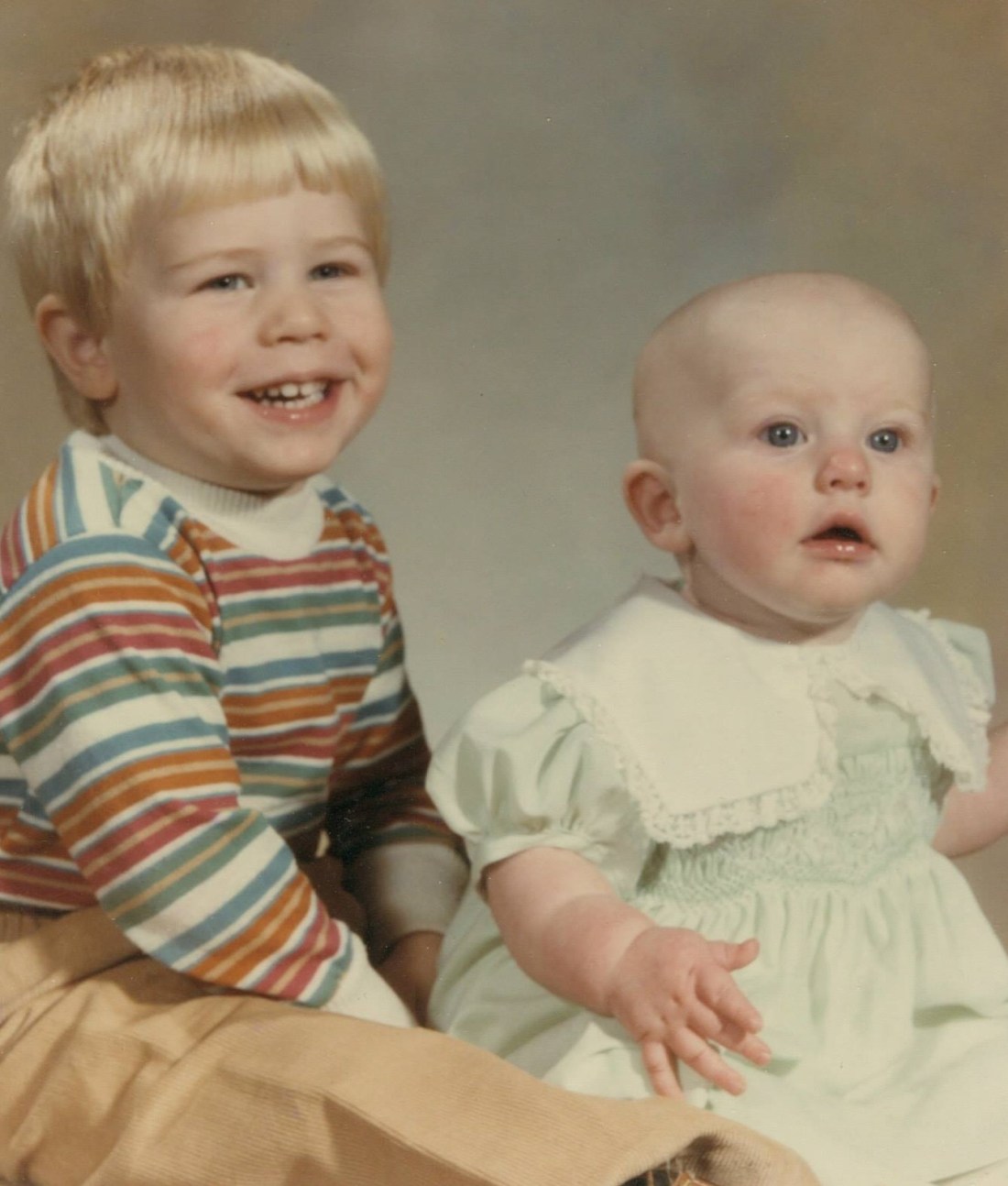
Danny 2 Karis 6 months

Danny 2, Karis 6 months

Bringing Karis home from the hospital did not resolve things for Danny, who would never again be the center of our little family. Karis required care and attention beyond the normal needs of a two-month-old. One day I heard Karis, whom I thought to be napping, start to cry, and then my son’s voice, “Mommy! Baby crying! Mommy! Baby crying!” He had climbed into her crib and was jumping up and down on her tummy, ileostomy, central line and all.

The hardest time was the 45-minute sterile procedure each day when I needed to change her central line dressing and flush the catheter. I had to “mummify” Karis with only her chest exposed and then pin her to the mattress to immobilize her. I couldn’t have Danny in the same room with us while her central line was vulnerable. Danny ignored his toys, books, and Sesame Street in favor of pounding on the locked door of Karis’s room and crying. It was awful for all of us.

One day mid-procedure, the pounding and crying stopped. What a relief! Finally (I thought) Danny learned fighting was futile and he might as well entertain himself until Karis and I emerged. When I unlocked the door, however, not-yet-two Danny was nowhere to be found. Still in my pajamas and slippers, I put Karis back in her crib and searched the entire house—no little boy! I ran outside. Danny’s red and yellow plastic car was missing from our porch, an ominous sign. Sprinting down the street in my PJs yelling Danny’s name, I saw an elderly neighbor sitting in a rocker on his front porch. He didn’t say anything, just pointed down the hill.

I tore downhill one…two…three blocks, terrified at what might have happened to Danny when he reached the very busy street at the bottom. But there was no sign of him: no emergency vehicles, no policemen detouring traffic around a smashed little red and yellow car or smashed little body. My worst fears relieved, I looked up past the flow of traffic to the train station on the other side. There he was, my small blond son sitting in his little plastic car gazing attentively down the train tracks. He could not understand why I was upset. “Mommy, I just wanted to see the train!”

Danny, an early talker who could win arguments with me at two years old, made it very clear he was not pleased to have a little sister in his life, even when we were not involved with medical procedures. One day it was ten-week-old Karis who disappeared. I finally found her fast asleep beyond my reach under our double bed. Danny played nearby with a satisfied look on his face. “Can we take her back to the hospital now?” he asked me.

Once as I toweled Karis after her bath, Danny lifted his shirt, studied his own round smooth tummy, and said, “Mommy, when am I going to get my ileostomy?”

Though Karis initially brought frustration and confusion into Danny’s little world, he was the hero in hers. Her first distinguishable words, “My Danny,” and her unwavering adoration won him over. He became her greatest advocate. They were best buddies, soulmates. Although, years later, after their two younger sisters were born, Karis told Danny, “God should have made me the oldest. I would do a much better job!”

43png

Karis and Dan after her first transplant

Control

“What’s with the rocks?”

“Do you have a few minutes? Pick a rock and I’ll tell you a story . . .”

Rock #1 green: a lesson in trust (not in the book!)

As I approached Karis’s transplant ICU room, I could hear her yelling. “Don’t come in here! The bomb is about to go off! Please, listen to me! DON’T COME IN HERE! It’s OK for me, but I don’t want you to die! Please, please, don’t come in here!”

Karis’s yelling dissolved into whimpers and then outright sobs as the nurse in fact entered her room. But when Karis saw me in the doorway, she started yelling again. “Mom, stop! There’s a bomb in the wall that’s going off any minute! Please, please don’t come in here!”

I respected Karis’s wishes because I saw her doctor coming down the hall. “I know. I heard. I’m trying to figure out what to do. Clearly Karis can’t stay here.”

Karis’s mental break had a name: ICU psychosis. The medication for ICU psychosis wasn’t working. Neither were my fervent prayers. Karis had been in this ICU so many times that everyone knew her, and seeing her like this was upsetting the whole unit.

I sat down in the hallway outside of Karis’s ICU room so that I wouldn’t upset her further by going in. Leaving Karis alone with the degree of fear I knew she was feeling went against every one of my mother-instincts. The situation was entirely out of my control.

Sitting there, I heard Dr. C talking with the head nurse of 11 North, one of two transplant floors. He had decided to try something very risky, which involved major sacrifice on the part of 11 North nurses: move a critically ill patient to a regular floor. This story is told in more detail elsewhere, but within hours back on 11 North, Karis was back to normal mentally and emotionally.

The nurses were as thrilled as I was to have “their” Karis back. Not once did I hear them complain about the extra work she caused them. For weeks the other nurses on the floor absorbed the patient load, each one caring for five patients instead of four, with the head nurse pitching in with more direct patient care than she had done in years.

The day came when only one nurse was assigned to Karis. Then the extra equipment disappeared, piece by piece. The day came when the unit was back to normal, with Karis just one of her nurse’s four patients.

The day came when I felt like things were back under control.

But there’s more to this story and to the lessons in trust God wanted to teach me through it. One day Karis spoke to me, looking into my eyes so I would know how serious she was. “I don’t ever want to return to the ICU. I would truly rather die than return to the ICU. Mom, don’t let anyone ever take me there again.”

With Dr. C’s help, Karis expressed her desires formally, legally, including a DNR order. That meant if her heart stopped or she was no longer breathing, she did not want to be resuscitated. The order was entered into her electronic record and taped to the front of her chart and posted by her bed. And Karis relaxed, more at ease than she had been since this whole episode began.

Until—her father arrived on a visit from Brazil and her brother came from DC. They walked onto 11 North and into Karis’s room together. After the initial greetings and hugs, one of them caught sight of the “No ICU, DNR” order. And they went ballistic, blasting out of the room to find Dr. C.

I sat by Karis’s bed and held her hand while we listened to them yelling in the hallway. Until I couldn’t stand it anymore, and went out to try to intervene. To regain some control. To advocate for Karis. I heard Dr. C firmly state, “No, I can’t change these orders. They are Karis’s express wishes.” My husband and my son charged right past me on their way back to Karis. To tell her that her wishes were unacceptable. To tell her their wishes had to be respected. That she had no rights over her own life. That she couldn’t just choose to die. That we all, as a family, had fought too long and too hard to just give up.

Barely containing my outrage, I watched Karis quietly listen to her father and her brother. Touching them, physically and emotionally. Calming them down. Telling them how much she loved them. Telling them it was OK; she would change the order. That she hadn’t meant to scare them or hurt them. I watched these two strong and beloved men weep as she tenderly cared for them.

And when they left to get something to eat, it was my turn to sit there as she cared for me. As she told me that it was OK. That God was in control of how long she would live, of when she would die. That when it was time, his will would be done—not hers, not her dad’s or her brother’s, not mine or anyone else’s. She didn’t need an order or a piece of paper with her signature. She had the Lord. And so did our whole family, even if we weren’t able to feel it all the time.

It took me a long time to fully work through the trauma of this situation; to sort it all through, especially with my husband. To find the lesson in trust the Lord had for me. A lesson Karis had already learned, long since. He holds the whole world in his hands, from the small people to the strong ones. All of us are vulnerable. All of us need to know someone else is in control. Someone worthy of our trust.

Legionnaire’s

“What’s with the rocks?”

“Do you have a few minutes? Pick a rock and I’ll tell you a story . . .”

Rock #1 gold: a miracle story (not in the book!)

After her first transplant in August, 2004 Karis went into rejection. This was expected, but treatment failed to turn it around. Four weeks after she had been diagnosed with “mild” rejection, we received sobering news. Now in severe rejection, she also had a dangerous virus in her intestine. She was balancing precariously on the rejection/infection tightrope. Treatments for these two conditions are opposite. The immune system must be suppressed to prevent or treat rejection, but we need our immune systems in order to deal with infection.

On Tuesday, November 2, Karis’s friend Tina talked the doctors into giving Karis a pass out of the hospital so she could vote. Karis said she wasn’t up to it, but Tina cajoled and encouraged her, and Karis finally agreed: out, vote, and back to bed, beyond exhausted. That evening she started coughing.

The next evening, Wednesday, a nurse appeared in her room saying Karis was to go down for a CT scan of her intestine. “I must be getting a cold. I’m having a little trouble breathing,” Karis told me. The nurse, concerned, hooked her up to oxygen. I remember Karis coughing, and the CT people turning up her oxygen.

The next morning, Thursday, Karis was taken on another road trip, this time for an endoscopy. She would be intubated, and a scope put down through her mouth to visualize the upper portion of her transplanted intestine. We didn’t know the surgeons were doing this to evaluate whether they should remove Karis’s graft. They had reached the end of their rejection treatment options and feared the viruses in her intestine would contaminate her blood, a dangerous condition that would be virtually untreatable with her immune system destroyed.

Karis and I had a lovely, cheerful conversation in the endoscopy waiting room. I waved as she was taken to the OR, saying “See you in about an hour, Sweetheart.”

A few minutes later, though, a doctor I didn’t know appeared in the waiting room, asking me to sign consent for a bronchoscopy while Karis was under anesthesia. For this, a scope would be inserted into her lungs, withdrawing fluid for culture. Alarm bells went off in my head, but the doctor was reassuring. “We just need to check out something that showed up on last night’s CT,” he told me. “This should only delay her procedure by a few minutes.”

Two hours later one of Karis’s transplant surgeons showed up, looking sober. “Let’s sit down in the conference room,” he said. Only someone who has been there can imagine the fear those few words instill in a mother’s heart. I was not prepared for what he had to tell me.

“Karis has inflammation and fluid in her lungs and they are very stiff, as if they are in crisis. We don’t know yet exactly what’s going on. She’s not breathing well enough on her own so we didn’t wake her up from the endoscopy. She’s gone straight to a ventilator in the ICU. And her intestine looks much worse. There are many open, bleeding, ulcerated patches. I advise you to call your family together—you can do it from here if you like—and then go to the ICU waiting room. There may be a moment when we can briefly let you see Karis. Also . . . if your pastor can come it might be good for you to make plans in case you need them.”

I had casually waved goodbye to Karis and that might be my very last communication with her??!!

After I contacted my scattered family and our pastor, the first waves of shock and panic rolled in. Dr. M allowed our pastor and me a few precious moments with Karis, to anoint her and pray for her healing. Then we started making funeral plans. But I was functioning on auto-pilot, with no idea how I would react if or when Karis took a major turn for the worse. By the time my children and husband arrived I wanted to be able to focus all my attention on them.

Our son Dan arrived first, driving from New York Thursday evening. The news from the ICU went from bad to worse. Antibiotics were having no effect at all. The pneumonia had gone from first symptoms to critical in 36 hours. There was now only a small area at the top of each lung that was not consumed by infection.

Friday morning Dr. M explained to Dan and me that they had transferred Karis from a normal ventilator to an oscillator. The oscillator shook Karis’s body to force oxygen into her lungs, but it only worked if she was in one position on her back. If they shifted or turned her body at all, her oxygen level dropped. The constant shaking of her body made every part of her care more difficult.

Dan left for the airport to pick up our daughter Rachel, flying in from Chicago. I called Dave in Brazil with an update. He and our youngest daughter Valerie would fly from São Paulo that evening, to arrive in Newark early Saturday and in Pittsburgh late morning.

Friday afternoon, Dr. M gave us a flicker of hope! Here’s what he explained:

Reviewing the CT performed Wednesday evening of Karis’s intestines, the transplant team noticed that the CT had also caught the lower portion of her lungs, showing nodules that looked like fungal pneumonia. Knowing Karis was at that moment undergoing endoscopy, they immediately ordered the bronchoscopy. The timing was a miracle: even an hour later, Karis was too sick to tolerate that procedure. But instead of growing fungus, as expected, the culture from her lungs was growing bacteria. They had been giving Karis the wrong antibiotics.

A second miracle was this: a doctor who rotated between labs at various hospitals happened to be on duty at our hospital that morning. This man, who had done his PhD research on Legionella, was probably the only person in Pittsburgh capable of recognizing this early that Legionella was the bacteria growing in Karis’s cultures. There had not been a case of Legionnaire’s disease in this hospital for twelve years. The head of infectious diseases had seen only one case in his entire life.

“What this means,” Dr. M said, “is that each hour Karis stays alive strengthens our tiny flicker of hope a tiny bit—our tiny hope that there will be time for the correct antibiotics to do their work against the Legionella.”

Why did he have to keep emphasizing the word “tiny”?! Hope was hope, and my heart was grabbing on and holding tight!!

As we absorbed this information about Karis’s lungs, Dr. M explained the other big challenge. Karis’s transplanted intestine was disintegrating, because they had stopped all immunosuppressant medication in order to treat the pneumonia. They had to get the graft out before Karis went into septic shock. But Karis was still dependent on the oscillator, and doing surgery on a shaking body was simply impossible.

We needed a magic window in the next two or three days, when Karis’s lungs were well enough to transfer to a normal ventilator but before she died from sepsis. That is, if she stayed alive long enough for antibiotics to work against the Legionella.

Valerie describes what was happening meanwhile in São Paulo, Brazil: “I was in PE at school running laps when I saw my dad walk onto the field. I ran over to find out why he was there and he grabbed my arm and told me he was taking me home. He was acting really weird but didn’t explain anything—he was completely quiet all the way home. Then he told me to pack a suitcase for myself and one for him; he was too upset to do it himself. I didn’t find out what was going on until we were on the way to the airport. When we boarded the plane we didn’t know whether Karis would still be alive by the time we landed in Newark ten hours later. That was the worst trip I’ve ever made.”

When Dave and Val’s plane touched down at Newark early Saturday we were able to give them good news: Karis was still alive! Dave and Valerie still had to fly from Newark to Pittsburgh, but with a little less anxiety than they had experienced on the long flight from São Paulo. That afternoon I heard the ICU doctor tell Dave he thought Karis had a chance of surviving.

Hour by hour with many others around the world, we kept vigil. Hour by hour word came that Karis was still alive. But getting her off the oscillator was just not happening. On 100% oxygen her blood gases began gradually to improve, but the nurses still could not alter her position in bed even a little without immediate decompensation. Her lungs were too compromised by the invasive Legionella. Every system of her body was impacted by the double threat of virulent pneumonia and runaway rejection. As her kidneys and liver began to fail, our tiny flame of hope was flickering.

Two days passed, then three—the outer limit the surgeons had postulated for finding the “magic moment” to attempt surgery to remove Karis’s disintegrating intestine. This surgery would be more difficult than the original transplant surgery, but they would have to do it as fast as possible to limit her time under anesthesia.

Finally, on Tuesday evening Karis was successfully transferred from the oscillator to a regular ventilator! Surgery was scheduled for 7:45 the next morning. Our family lined up in the hallway that connected the ICU to the surgical suite. The ICU double doors suddenly popped open and the medical team came through the doors RUNNING with Karis down the hall to the OR, one of them kneeling precariously on her bed pumping oxygen into her lungs as they ran. We barely had time to wave and yell “We love you, Karis!” before they disappeared.

And then it was waiting time again. We just moved from the ICU waiting room down the hall and around the corner to the surgery waiting room. The surgeons had given us no hope that Karis could survive such an invasive surgery, with her lungs, kidneys, liver, and intestine all in terrible shape. As the minutes ticked by, though, our hope increased, and seven hours later we were called to line up in the hallway again to watch Karis being rushed from the OR back to the ICU. Miraculously, she was still ALIVE!

Karis herself, deeply sedated, had no idea what was happening to her, or of the miracles that had preserved her life. For 74 days in the ICU, most of that time in induced coma, she battled one complication after another. When she was finally released from the coma, from the ventilator, and from the ICU, we were told she was the sickest patient ever to leave that ICU alive. Her reaction? “Mom, why were you so worried? Of course I didn’t die. God still has plans for me here!”

Two Minutes

“What’s with the rocks?”

“Do you have a few minutes? Pick a rock and I’ll tell you a story . . .”

Rock #1 red:

On a lovely spring evening in Wheaton, Illinois, Karis Joy was born full term, chubby, and perfectly healthy. A midwife handled the textbook delivery, inviting daddy Dave to cut the cord. Our obstetrician, available in case of complications, sat on the couch reading stories to our 21-month-old Danny. At 8:30 Dave settled Danny with Karis in the rocking chair and we delightedly watched his fascination as he explored the mystery of his brand new baby sister.

I cherish this winsome, joy-filled memory; the lull before a storm that was on nobody’s radar.

[However . . . Karis never passed meconium—the first stool after a baby is born.]

I put that phrase in brackets because it seemed like an “oh by the way,” hardly germane to the celebration of fingers and toes, chubbiness and baldness and bright blue eyes. [Did I really forget to mention the absence of dirty diapers when the midwife came to check up on us the next day?]

Saturday morning I felt so good that I went to a party, eager to show off our little treasure. While Karis and I reveled in the accolades of our friends, Karis started vomiting. Not just spitting up, no: this was bright yellow, with a force and trajectory unbelievable from such a small body. (There’s a reason it’s called “projectile” vomiting, a classic sign of bowel obstruction.)

On Sunday, I spiked a high fever and quickly became very ill, so ill I thought I was going to die—and hoped I would. I spent several days in the hospital.

Dave miraculously managed to track down my parents, who had just arrived in Florida from their missionary home in Guatemala. They were en route to Wheaton to attend my brother’s college graduation and his wedding a few weeks later. Mom caught the next flight to Chicago, while Dad drove north in a rental car following their planned itinerary.

IV antibiotics worked their magic. Three days in the hospital restored my life. I went home Wednesday feeling an emotional high I have not experienced before or since. I was giddy. The sky was sapphire, the grass emerald, the spring flowers and emerging leaves intoxicatingly lovely. My mother was a saint, my husband a hero, my children gorgeous, my little house a palace . . .

In my euphoria, I could not, could not, absorb the fact that something might be seriously wrong with my little daughter. She had continued “throwing up,” as Mom and Dave referred to her projectile bilious vomiting. Well, I gaily concluded, Karis must be reacting to the formula my mother had fed her while I was in the hospital. Surely once she got that out of her system her stomach would settle. At Karis’s one-week checkup the next day, I downplayed the situation, quickly agreeing with the doctor that “all babies spit up.” Mom failed to comment on the complete absence of dirty diapers. Karis had lost weight, of course, but all babies lose weight their first week of life. She still looked great, at least to me, and the doctor did not seem concerned.

[I know, I totally agree with you: it makes no sense that I was in such denial. I am a nurse, after all. Graduated with honors and all that.]

The weekend was surreal. Since I was home and well again, Mom rejoined my dad at their scheduled missionary meetings, leaving just Dave and me to clean up after Karis. She could hit objects several feet away. We kept our washing machine humming with the bedding, clothing, and even curtains Karis targeted with her “throwing up.” We scrubbed walls, floors, and furniture while we waited for her system to “settle down.”

Karis and I developed a rhythm. I figured out that if I let Karis nurse for two minutes, she promptly threw up. But if I stopped her after just one minute, she didn’t—at least, not immediately.

It is simply unbelievable that we plowed bull-headedly through that exhausting weekend without seeking medical help.

Mom and Dad arrived in Wheaton Sunday evening. Monday morning, May 16th, Dave went off to work and Dad came by take eleven-day-old Karis and me to attend my brother’s graduation from Wheaton College. Dad took one look at Karis, his first time meeting her, and said, in that Daddy-voice one daren’t disobey, “You are not going to the graduation. You are getting in your car and taking Karis straight to the nearest doctor.”

Startled into sudden, desperate clarity, I drove quickly to the nearest pediatric clinic and walked in clutching Karis and fighting tears. “My baby needs to see a doctor,” I told the receptionist, who informed me they didn’t take walk-ins. I stood there and looked at her, my voice flatly emphatic: “My baby must see a doctor now; she’s throwing up a lot.” (Almost I added, “My daddy said so.”)

Irritated, she responded, “All babies throw up. Maybe you’re not burping her properly.” I just stood there and looked at her. Finally she threw up her hands and walked to the back.

“All right, the doctor will see you. But just for a couple of minutes, because you’re interfering with the schedule of our patients.”

“Thank you. Two minutes is all we need.”

She glared at me as if I was nuts and walked us not to an examination room, but to the doctor’s office.

“So, what do you think is wrong with your baby?” he asked me sharply from the other side of his big desk.

“Doctor, in two minutes, I will show you.”

I nursed Karis while he sat drumming his fingers on the desk, his eyes fixed on the wall clock above my head. “Time’s up,” he announced.

I disengaged Karis and turned her around to face him. Right on cue, she projectile-vomited all over him, several feet away behind that big desk.

Instantly he was all action, dialing the hospital and yelling for the nurse while he swiped at the bright yellow milk dripping down his face.

I suspect Dr. White never forgot those two minutes that transformed him into our first medical ally.

Remember . . . and Tell!

Deuteronomy 32:7, 46-47 Remember the days of long ago; think about the generations past. Ask your father, and he will inform you. Inquire of your elders, and they will tell you . . .  Take to heart the words I have given you. Pass them on to your children . . . These instructions are not empty words–they are your life!

stones of remembrance

I’m making a temporary change to what I post on this blog. Last fall I traveled to various places in the US to share “Stones of Remembrance,” stories that are not part of the Karis book. Many people asked for the stories they didn’t hear at their particular event. So I’m going to post them here, one at a time, starting with the number 1s and going through in order to the 7s. There’s no particular logic to the order of the stories other than that they happened to get labeled with these numbers.

At the book parties, participants chose stones to select which stories would be told at that event. The red numbers indicate fun, lighthearted, family stories. The gold are miracle stories, and the green are lessons in trust that I learned (and continue learning!) through walking with Karis.

The idea came from Joshua 4. God performed a miracle similar to what he had done at the Red Sea. After Israel had crossed the Jordan River into the Promised Land on dry ground, God told Joshua to choose twelve stones, one for each tribe, as “stones of remembrance.” Joshua told the people, “In the future your children will ask you, ‘What do these stones mean?’ Then you can tell them, ‘They remind us of what God did for us.'” (Joshua 4:6-7).

Similarly, each of my stones reminds me of what God did for us. This is something you can do too! You can collect some stones, and number them, and for each one write down what God has done for you and your family. God wants us to remember and to tell–tell others how God has been involved in your life.

I would love it if, by the time I’ve posted my 21 stories, some of you have stories you would like to share about what God has done in your life and/or for your family. You’ll have a few weeks to start writing these things down, God’s wonderful works that should not be forgotten.

Later this week I’ll post the first story, red stone #1. Each of the red stones represents God’s grace in giving our family fun and joy, in the midst of and through and surrounding the challenges we faced. One suggestion: these stories were written to be read out loud, so you might want to try that.

I’m going to be using this time to write more stories of what God has done for me and for our family. I hope you will join me in remembering . . . and telling, to the glory of God and the encouragement of his people, while we still can. Our parents, and most of that generation, are gone now. We can no longer ask them, and so much has been lost to us. Let’s pass on to our children and grandchildren the strength of knowing that God cares and is involved in our lives!