Psalm 145:13-14 The Lord always keeps his promises; he is gracious in all he does. The Lord helps the fallen and lifts those bent beneath their loads.
Psalm 119:140 Your promises have been thoroughly tested; that is why I love them so much.
Matthew 11:28 Jesus said, “Come to me, all of you who are weary and carry heavy burdens, and I will give you rest.”
Last night Dave and I watched a movie reminiscent of “The Notebook,” called “Still Mine.” 89-year-old Craig (James Cromwell) tells his memory-challenged wife, Irene (Geneviève Bujold), “I have never broken a promise to you.” Amid the insecurities she experiences, Craig wants Irene (her name means “peace”) to know she can trust him to care for her.
Psalm 145 also links confidence in God’s promises to relief from the burdens we carry. We can trust him to help us bear the weights of our lives. As we trust him, our burdens ease. Isn’t it true that when we worry about whether we can trust someone, our concerns in relation to them are heavier?
It occurs to me that Jesus’s invitation can include sharing with him our doubts and concerns, even about God’s trustworthiness. We can tell him how it feels to want something very badly and not see God doing anything about it. We can tell him we don’t always understand why he doesn’t apparently act on our behalf. We can weep in his lap about the disappointments and betrayals we feel so keenly.
Doing so in itself is an act of trust. I love Psalm 116:10-11, I believed in you, SO I said, “I am deeply troubled, Lord.” In my anxiety I cried out to you.
We’ve reached the fourth week of Advent, the last week before we celebrate one part of what we’ve been waiting for: the Incarnation, the birth of our Savior. In one system of naming the Advent candles (there are many!), the fourth candle represents Peace. Peace is the direct result of trust, so easily seen in the comfort of a child relaxed in his or her mother’s lap.
Or in the case of Irene, resting in Craig’s embrace, his tears reveal his heart touched by her trust in him.
Psalm 145:10-13 All of your works will thank you, Lord, and your faithful followers will praise you. They will speak of the glory of your kingdom; they will give examples of your power. They will tell about the majesty and glory of your reign.
Luke 12:30-32 Your Father already knows your needs. Seek the Kingdom of God above all else, and he will give you everything you need. So don’t be afraid, little flock. For it gives your Father great happiness to give you the Kingdom.
1 Thessalonians 2:12 God called you to share in his Kingdom and glory.
In August of 2004 I had already lived quite a long time. For fifty years I had seen God provide for me. I had seen God touch my daughter Karis and restore her many times when doctors told us there was no hope for survival from the current crisis.
Yet the evening of August 23, after watching a video of a person who died on the operating table, I was terrified. For most of the night I could not sleep, agonizing over what Karis had agreed to do: undergo a highly risky transplant. The “good, bad, and ugly” of intestinal transplant had been drilled into us, complete with examples of patients who had died. The chances of her surviving were small. Why then had we signed up for this? Should I try to persuade Karis to change her mind?
Toward morning, I fell asleep, briefly. But shortly before 7:00 a.m. I woke up, startled, as if someone had shaken me awake. I heard a voice say, “Get up, get dressed, and go to church.” I tried to ignore it, snuggling back into my pillow, but the voice spoke again: “Get up, get dressed, and go to church.” What … ??!!
Karis was still sound asleep. I got up, got dressed, and went to church. I walked into the early morning service to hear the pastor concluding the sermon by saying the words from Luke’s Gospel quoted above. Don’t be afraid.
God had told me to get out of bed and go to church just to hear those words?
Later that morning, while visiting a friend, an immigrant from the Arab world, Karis received a transplant call and said yes.
Don’t be afraid.
Hour by hour through the fourteen-hour surgery, Don’t be afraid.
Seeing her in the transplant ICU afterward, tubes and wires sprouting from her body like the quills of a porcupine, multiple machines humming, Don’t be afraid.
Skipping ahead days, weeks, months, to Karis finally emerging from coma, irreversible rejection, one lethal infection after another, total debilitation … “Mama, why were you afraid? It’s not time for me to die yet. God still has plans for me here.”
January 2005: off the vent!!!
Why was I afraid? Because I’m human and I loved my daughter. Because I’m weak, not strong. Because being back in the ICU for 75 days straight wa an eternity.
Your Father already knows your needs …
Reliving those days, weeks, and months to write the Karis book, God showed me where he had been through that eternity of time: with me in the ICU. Calling people to give me support and care. Providing basics: Food. Occasional nights or days of sleep. His word, Psalm 118:5, with the mystery of feeling the walls of the ICU recede—larger inside than outside—when I became claustrophobic. The mystery and wonder of Karis still living, one more hour, one more day.
Your Father already knows your needs. Don’t be afraid. It gives him great joy to give you the Kingdom.
The mystery of the Kingdom: The King is your Father, who loves you …
Psalm 145:8-9 The Lord is merciful and compassionate, slow to get angry and filled with unfailing love. The Lord is good to everyone. He showers compassion on all his creation.
Psalm 103:8, 13 The Lord is compassionate and merciful, slow to get angry and filled with unfailing love. … The Lord is like a father to his children, tender and compassionate to those who fear him. For he knows how weak we are; he remembers we are only dust.
Ephesians 5:1 Imitate God, therefore, in everything you do, because you are his dear children.
Compassion: to suffer together; to recognize the suffering of others and wish or take action to help them. It’s the desire to take action to help that separates compassion from empathy.
Our ability to have compassion toward others is nurtured by the compassion we extend to ourselves, just as Jesus calls us to love others as we love ourselves. For those of us who have experienced trauma, this can be difficult. This week Alexandra Hudson (https://www.civic-renaissance.com/?utm_source=substack&utm_medium=email) wrote about a book called The Body Keeps the Score by Bessel Van Der Kolk. I’m quoting an excerpt, with her permission. Another resource that I’ve found helpful is Try Softer by Aundi Kolber.
Here’s Alexandra:
Our trauma and wounds
We all have wounds that inform how we interact with others today.
Trauma is a specific kind of wound that can chronically inhibit our relationships with others and ourselves. Trauma is an upsetting experience that brings us to the point of being overwhelmed by feelings of helplessness, rage, confusion, and an inability to escape or function in the face of threat. Trauma isn’t about the event itself per se—it’s about how we respond to it, how we’re comforted after it, and how it continues to affect us.
If a child is in a horrible car accident but has a support system around him as he heals both physically and emotionally, the chances of him having long-term trauma are low.
By contrast, if a child endures sustained emotional or physical neglect or abuse growing up—and they have nowhere to turn, no one with whom they can feel safe and process their experience—the chances of long-term trauma are high.
When we encounter stress, it ends when the situation ends.
Trauma stays with us. It continues to be relived and played out in our minds and by our bodies.
Trauma begins as something that happens TO us, but then our brain begins to change: instead of smelling smoke just when there is fire, we begin to smell smoke everywhere. Everyone we meet is a possible threat to our safety and well-being.
The traumatic event is over, but we continue to react to the things around us as if we’re in survival mode. We are in a perpetual state of fight, flight, freeze, fawn, or mental collapse, which is taxing on the mind and body—“metabolically costly” as van der Kolk’s book says.
The brain and body are so preoccupied with survival—with interpreting everything around us as a life threat—that we are left with little energy to think, learn, be creative, perceive nuance, experience pleasure and joy.
We are emotionally, psychosocially and physically handicapped from bringing our best selves, and living our best lives, and bringing the fullness of ourselves to relationship with others.
The cost is not just exhaustion, but a variety of physiological issues that have no perceptible cause. The author of The Body Keeps the Score mentions chronic pain, auto-immune diseases, and headaches as just a few examples that he’s encountered in his practice.
We are not disembodied minds. We are mind, body and spirit. Too often, though, our treatments of malaise are segmented: treatments of psychological issues focus on the mind, while treatments of physiological issues focus on the body.
But seeing human beings in their fullness—as mind, body, spirit, all—and addressing the needs of each in turn and in relation to the other is the path toward fullness of life and healing.
Human beings are infinitely complex. There is so much that goes on within the human mind, body and spirit beneath the surface—beyond what people can see or understand.
Because we are uncomfortable with gaps in our knowledge—for example, “Why was my boss unnecessarily brusque to me this morning?”—we fill in those knowledge gaps with stories to help us explain things we don’t understand, even if the accounts are inaccurate or incomplete.
What would it mean to have a little more humility in our interactions with others—not presuming to know the entirety of their character and life story, reducing them to our experience with them in a single exchange—and be open to the stories that lie beneath the surface? Stories of tragedy, abuse, loss and grief that may help us better understand why people are the way they are and give us greater grace and empathy in interacting with them.
Psalm 145:7 Everyone will share the story of your wonderful goodness; they will sing with joy about your righteousness.
Psalm 90:14-16 Satisfy us each morning with your unfailing love, O Lord, so we may sing for joy to the end of our lives. Give us gladness in proportion to our former misery! Replace the evil years with good. Let us, your servants, see you work again; let our children see your glory.
A couple of weeks ago, at the beginning of a small group meeting, the leader asked us each to share in one word what we were feeling. I surprised myself by saying “joy.”
Why is that worth telling you about? Isn’t that a fairly common experience?
Well, not for me, not at this time of the year.
Since 2014, the cold, dark, gray days have put a dragging sense of foreboding in the pit of my stomach. I know what’s coming. The constant struggle to keep Karis warm as she bounces in and out of the hospital. The quickly approaching end of November date the nephrologist gave us when Karis’s kidneys would stop functioning. Her increasing lack of strength and energy. Her most-of-the-night pre-Christmas conversation with Hildete, when she and Pastor Vandeir visited us from Brazil, about her death and how it would impact her family and all she had wanted to accomplish and her sense that the Promise and the Prophecy given to her at age 16 had not been fulfilled. The aborted trip to Florida when she developed a line infection the day before we were to fly. The wrenching I felt leaving her behind in the ICU. Her middle-of-the-night call, her hoarse voice barely audible: “Mama, please come.” The diagnosis of H1N1, swine flu. And all the events leading to her death in the wee hours of Feb. 5th, the roads so icy we couldn’t make it to the hospital for several more hours.
Every other year before this one, at this time of the year, I haven’t been able to shake the waves of grief associated with the holiday season. So, yes: for me, to realize I was feeling joy and anticipation instead of grief and dread was an amazing experience, this ninth year since it all happened.
My three-part story today is one of gratitude. The first part was the thirty years of life with Karis. The second part was the long grieving of living without her. The third part is the discovery that joy can take the place of grief. It’s such a hopeful feeling. I want to say to everyone grieving a huge loss, “Don’t despair! It may take a long time. Each person’s experience is different. But I know now it’s possible to reach the third part of the story, when tears flow out of deep joy and thankfulness instead of the deep pain of mourning.” I’m tasting the joy Karis herself feels now!
Psalm 145:4-6 Let each generation tell its children of your mighty acts, [Lord]; let them proclaim your power. I will meditate on your majestic, glorious splendor and your wonderful miracles. Your awe-inspiring deeds will be on every tongue; I will proclaim your greatness.
Psalm 89: 33-35, 38-40, 46 [God said] But I will never stop loving David nor fail to keep my promise to him. No, I will not break my covenant; I will not take back a single word I said. I have sworn an oath to David, and in my holiness I cannot lie. [Ethan replied] But now you have rejected David and cast him off. You are angry with your anointed king. You have renounced your covenant with him; you have thrown his crown in the dust. … O Lord, how long will this go on? Will you hide yourself forever?
In the first 37 verses of Psalm 89, the psalm appointed for today, the poet Ethan fits right into Psalm 145, praising God for his power, his unfailing love, his faithfulness, righteousness, and justice.
But in verse 38 there’s a jarring shift. Ethan suddenly reveals his broken heart, his doubt, his agonizing questions about what has befallen his beloved king, David. Ethan a musician appointed by David to sing in his choir, was known for his wisdom (see 1 Kings 4:31), but at this moment all he can see is God’s apparent betrayal evident through the disloyalty of some of David’s beloved sons and most trusted friends. You can read the stories in 2 Samuel 7 and on.
Psalm 89 doesn’t resolve the situation. It ends in lament. And this is the only psalm identified in our canon as written by Ethan. What happened next? Did Ethan sound the bronze symbols (1 Chronicles 15:19) during David’s song of praise in 2 Samuel 22? Was he present to hear David’s last words in 1 Chronicles 29, able to praise God along with his beloved sovereign?
We don’t know. Sometimes situations can’t be neatly tied up with a bow. You’ve seen that in your own life, right? I have. These tough things challenge us to dig deeper and sit longer before the Lord, saying with Ethan, “How long, O Lord? Where is your unfailing love?” (verse 49).
Perhaps we won’t receive answers until we reach Heaven. With Ethan then we have two choices: to turn away from God, reject him because we don’t understand, and allow bitterness to grow in our hearts. Or to continue believing there are answers, even though we don’t understand them, and trust God enough to share our deep grief with him, allowing him to comfort us even when we’re not capable of seeing things from his point of view. Like a two-year-old who can’t possibly understand the painful medical interventions he must undergo in order to treat the cancer the adults have detected in his body, yet clings to his mother for comfort.
The ability to lament, to bare our souls before the Lord, is a gift. Imagine yourself as that two-year-old, climbing into his mother’s lap, weeping his distress within the secure circle of her embrace.
The Lord is merciful and compassionate … The Lord helps the fallen and lifts those bent beneath their loads … The Lord is close to all who call on him (Psalm 145:8, 14, 18).
Psalm 145:1-4 I will exalt you, my God and King and praise your name forever and ever… No one can measure the Lord’s greatness. Let each generation tell its children of your mighty acts; let them proclaim your power.
Advent is a time for storytelling. Not just any story, but two stories filled with complex and vulnerable characters who grow and change, amazing adventures, and awesome rescues by the greatest, most powerful, most admirable actor of all time.
One story is about what happened on planet Earth two thousand years ago: the birth of a poor baby who was actually a Prince, sent by his father, the King, to rescue the world from the clutches of an evil tyrant.
The second story foretells the Prince’s return to Earth to set everything right. It’s the happy ending which will begin a new story, a wonderful sequel.
What story am I telling my children and grandchildren?
This Advent, I want to challenge you to think as well about your own story. In Psalm 145, David repeatedly calls us to share with others our own stories of God’s power and greatness, beginning with our children and grandchildren and others of the next generations.
I want to leave you with three questions today:
Does your story matter? Why should you invest in remembering, understanding, and sharing your story?
Where do you see God in your story? What mighty acts has he performed for you?
What impact can your response to question #2 have on your children and grandchildren and/or others of the next generations? What has your life experience shown or taught you that you would like to pass on to them?
I hope these questions will help you begin to see and value your story differently.
As I think about the legacy my husband Dave and I received from our parents and grandparents, I’m both sad and encouraged. Some parts of their stories were never resolved or healed, and we were bruised from the impact of their pain. In other ways, their stories challenge and strengthen us to move forward, to offer our descendants hope as we embrace and share God’s grace and mighty acts in our lives.
I hope you will join me in storytelling this Advent! Of both Great Stories, and the ways your experiences weave their unique part of the fabric the Great Stories continue creating.
The sun was beaming across the Laurel Mountains of Western Pennsylvania as I cruised the Turnpike on my way to gather with a group of friends I had come to know intimately over the last two years only on Zoom. We all share a common disease and meet five mornings a week just as millions of others meet in a wide variety of other places and ways and who fight the same disease together. I had my ear buds in listening to someone share his story. I was in the far-left lane doing the speed limit of 70mph when suddenly I realized my car was veering to the right. I saw the rear corner of a trailer being towed by a pickup truck in the lane to my right coming at my car much too fast. I knew I needed to brake, yet my foot seemed stuck to the accelerator. I slammed into the trailer full force. My car caromed off the trailer and spun around. I braked, landed on the berm of the road, drove off to the center, and came to a stop all in a matter of nanoseconds. I unhooked my seat belt and got out of my car completely uninjured. I stood on the side of the highway holding my cell phone in a total daze. What just happened? I thought I was going to an event at the Jersey Shore. It turns out God had other plans.
The next several hours passed quickly and included State Police, talking with the pickup driver, seeing the damage to his trailer, riding in the tow truck that would haul my car to a nearby garage, and, most of all, getting in touch with all those people I was so anxious to see face-to-face after two years of wondering…. How tall is Sammy? Is Charlotte left-handed? What does Sylvia really look like all dressed up? Would I ever know? Over the next several hours, I sat in the garage waiting room, and I began to hear from all those Zoom connections. Word travels fast in that group. Harry, Vera, Betty, Bob, Carol, Henry, Alisa, James, Lucy, Murray, the list goes on (the names are changed to protect their anonymity). Some texted. Others made real phone calls. Some sent emails reminding me they loved me and were praying for me. Not even one said anything about my being foolish to try to drive alone the 5 ½ hours to the Jersey Shore. Never did anyone say I “should” have done anything any different. That’s not what happens with people like that. There is unconditional love and acceptance. There is complete trust in God. There is a knowledge that God has a plan for each of us and our job is to stay open to God’s plan however it comes and to trust whatever form it takes. Faith and trust in God always come first. The idea that my car was totaled, and I was left unhurt was part of a plan God has in mind for some reason. Now it remains my job to accept my circumstances, pay attention, stay willing to see what that might be. And these close “Zoom” friends where with me in spirit – unconditionally. I knew that right away. I wasn’t frightened.
I called my insurance company. As they walked me through the questions, it felt harmless and even blameless to a degree even though it was my car that went wrong, and I was at the wheel. No one else to lay any blame on. Arrangements for having the car towed from that small town an hour outside my city were made. I took a taxi back home. It cost $200.00.
The next day a friend drove me to a local hospital ER so I could get checked out. I was given lots of appropriate tests for internal bleeding, bruising, a CT scan with and w/o contrast. All testing came back negative. I was very fortunate. God has a plan, I know. However, I also know God does not necessarily reveal His plan on my time. God’s time and my time are inevitably quite different. Coming home from the hospital ER, I began to realize that none of it felt “real” to me. I couldn’t believe I didn’t have a car. My insurance had arranged for me to get a rental car, but when Enterprise called to make those arrangements, I told them I wasn’t ready. There was a part of me that didn’t want to drive. Not yet.
The shock or trauma was slow to wear off, but eventually I got the rental car. I didn’t drive much at first and our local weather patterns presented us with unseasonal snowfall that also kept me indoors. I used that time to contemplate what God’s plan might be for me. I have one big project that is ending, and I am looking forward to what I want to do next. I like to be busy and productive. I like to be connected to others and feel useful. I know that God knows that about me. One thing for certain is that I no longer refer to what happened as a car “Accident.” I feel it was a “God Experience” that happened to involve my car. In the couple of weeks following that day, I have gone through my small apartment and removed items that are no longer necessary to my life as it is today. I am making room for whatever God has in store for me. I rearranged some furniture, got rid of two pieces and lots of books and clothing that no longer fits. I found breathing room and wall space.
Isaiah 30:21 “If you go the wrong way – to the right or to the left – you will hear a voice behind you saying, ‘This is the right way. You should go this way.”
I spend early morning time for about an hour and a half in prayer and meditation so I can stay close to God and available when He calls or opens a door, I’m ready. When Covid came and took over our lives in one way or another, it changed the way I lived in many ways including my decisions about being in groups or socializing at all. I find it difficult to return to any former patterns or make new ones. Hence, each new encounter is an opportunity to meet God in new ways and experience Gods gifts and His presence. I got a call yesterday from the insurance people telling me the amount of settlement for my car that was totaled. It is certainly a fair amount, and I could start to look for another car. I am not certain I want to do that right now. Maybe I’ll wait. Maybe I’ll wait and see what God has in mind for me next. I’m content that God’s plan for me doesn’t need flashing lights or a headline. I will stay Open and Willing. I sat in a meeting the other day – an in-person meeting – and raised my hand to say I would need a ride next week because I would no longer have a car. Afterward a woman came over and introduced herself to me and said she would love to offer to drive me. She is new to the area but lives near where I do. God’s plan can be walking down the street with New Life and Love in my Heart. Maybe that is Enough. Thank you, God.
2 Corinthians 3:18 “We all show the Lord’s glory, and we are being changed to be like him. This change in us brings ever greater glory which comes from the Lord, who is the Spirit.”
Psalm 107:41-43 But God rescues the poor from trouble . . . The godly will see these things and be glad. . . . Those who are wise will take all this to heart; they will see in our history the faithful love of the Lord.
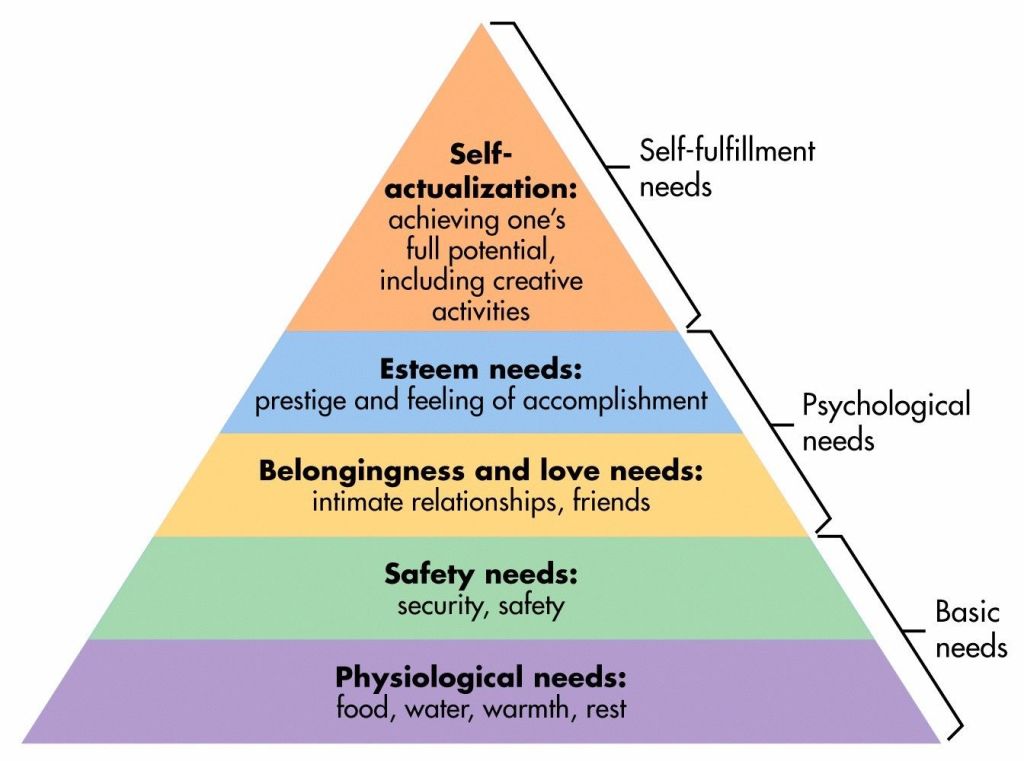
Every one of us has been “poor” in some way during our lives: lacking something important that we need. Whether our needs fall in the most basic ofMaslow’s Hierarchy of Needsor further up the pyramid, they create trouble and distress in our bodies, minds, souls, and spirits.
I believe God is present with us in these circumstances, caring for us in ways we may not be aware of in the moment of our anguish. And I believe significant healing can come from being able to see where God was in those anxious times. Not only did he not abandon us (although important people in our lives may indeed have done so) but he acted proactively on our behalf.
My own story is chock full of evidence to support this premise. I wrote about some of them in my memoir about my daughter, Karis: All I See Is Grace. But God has graciously let me see him present and at work in my life from my earliest memories: growing up in a violent and abusive home, boarding school, living as a “foster child” with a family in another country for high school, feeling forced into engagement for two years to an emotionally disturbed man, the challenges of my marriage to Dave, moving to Brazil with a chronically ill child, and so much more.
My PTSD after Karis’s death was not “just” about her death. It was about a long history of traumas I had never dealt with. Because of shame. Because of fear. Because I didn’t feel worthy of the kind of attention and support I needed in order to heal. Because I had been taught a super-spiritual kind of Gospel in which if I truly had faith, I wouldn’t be in emotional trouble.
I might have continued to struggle with the horrors of PTSD for much longer had God not spoken to a woman I hardly knew, telling her I had PTSD and needed help. She showed up at my house to tell me what God had told her and offered financial assistance so I could get the help I needed. How amazing is that? At a time when I felt God had abandoned me, he made it crystal clear that if I couldn’t hear the words of compassion he was whispering to me, he would speak to me through another of his children, able at that time to hear him and take action on my behalf.
Once I started viewing my story through this lens, I began to see him everywhere. I began to experience his love, not just know about it theoretically. I began to heal. I longed to share this way of seeing with others, first through the Karis book as she helped me see God present in her story. It’s the impetus behind the novels I’m writing. I pray those who read them will catch this vision and see God’s faithful love in their own stories.
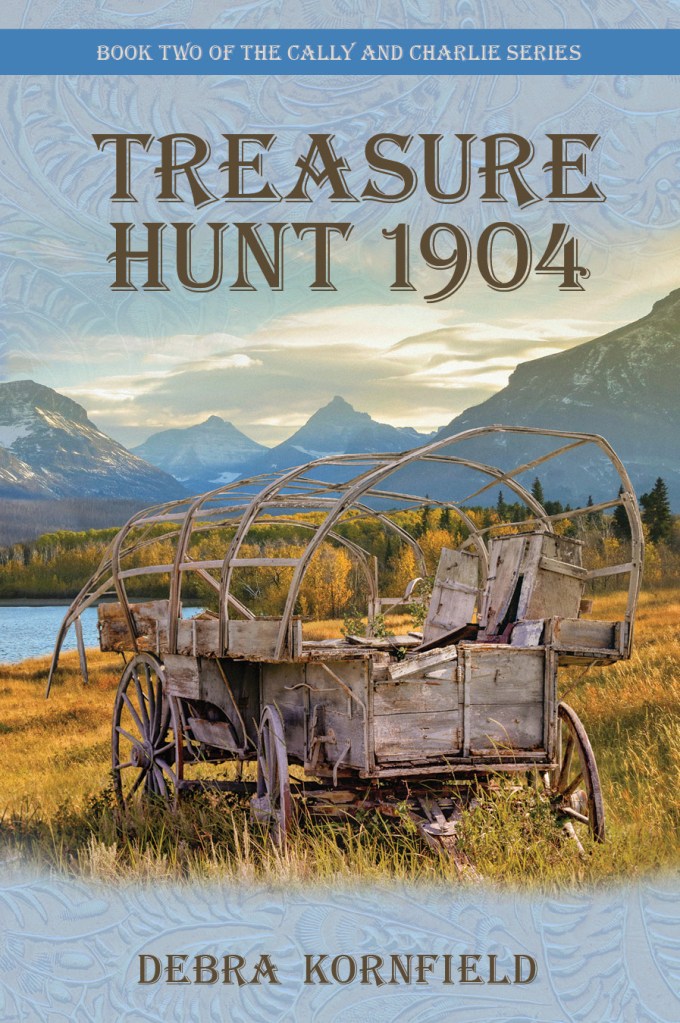
Friends, as you think about Christmas gifts, there may be someone on your list who loves reading history through the medium of story. Consider two books written about a time period not often addressed. Horse Thief 1898 begins in southern Ireland and ends in Kansas City.
Book 2, Treasure Hunt 1904, begins and ends in Kansas City, but most of the action takes place in intriguing Idaho, from April to August of 1904.
Goodreads Book Giveaway of the Kindle version begins today:
If historical fiction isn’t your preferred genre, you can also consider two books I’ve contributed to this year:
Book X of the “Short and Sweet” series: entries are written with one-syllable words unless there’s no alternative! It’s sold at Target and various other venues as well as on Amazon.
Psalm 142:3, 143:8-10 When I am overwhelmed, you alone know the way I should turn. … Let me hear of your unfailing love each morning, for I am trusting you. Show me where to walk, for I give myself to you … Teach me to do your will, for you are my God. May your gracious Spirit lead me forward on a firm footing.
Do you ever feel like life comes at you too fast and furiously?
That’s how I feel now, and I hate that feeling. The last few Karis years burned me out on high stress. In the past I could convert pressure into productivity. Now I find it paralyzing.
What about you? How’s your relationship with stress?
I dislike pressure in part because I believe God wants us to live peacefully and joyfully, not uptight and frustrated. To feel the impact of this from Scripture, do this (which I just did): Go to BibleGateway.com, search “peace” and skip to the New Testament. Then scroll through soak yourself for a while in these 89 verses (or however many there are in the version you choose).
The corollary, I think, is this: if I am NOT living peacefully, I’m not paying enough attention to the Lord’s guidance about when to say yes and when to say no, and how to follow through on the “yeses” in a different way. I must take time each morning to connect with my Lord and in the context of his love for me, hear his marching orders for the day rather than responding too quickly to all the other voices I listen to. And I need to be more selective about the voices I prioritize, under the Lord’s loving guidance.
The area of my life that most easily pressures and paralyzes me seems to be the area I end up giving the least effective attention to even though it hangs over me all the time: marketing. This year it happened that I published too many books and parts of books to keep up with. Two of them were “supposed” to come out last year, but for various reasons didn’t. Each one of them requires marketing to become the blessing I believe God wants them to be, and to justify the resources poured into them by me and by others.
I woke up this morning finally able to accept what Dave has been telling me for a while: I need to hire someone to help me. I have leads; I just haven’t taken the time to follow up on them. So that will be my next task: reach out to some people who love doing what I do not and find out whether one of them can use their gifts to aid me. I’ll let you know how it goes!







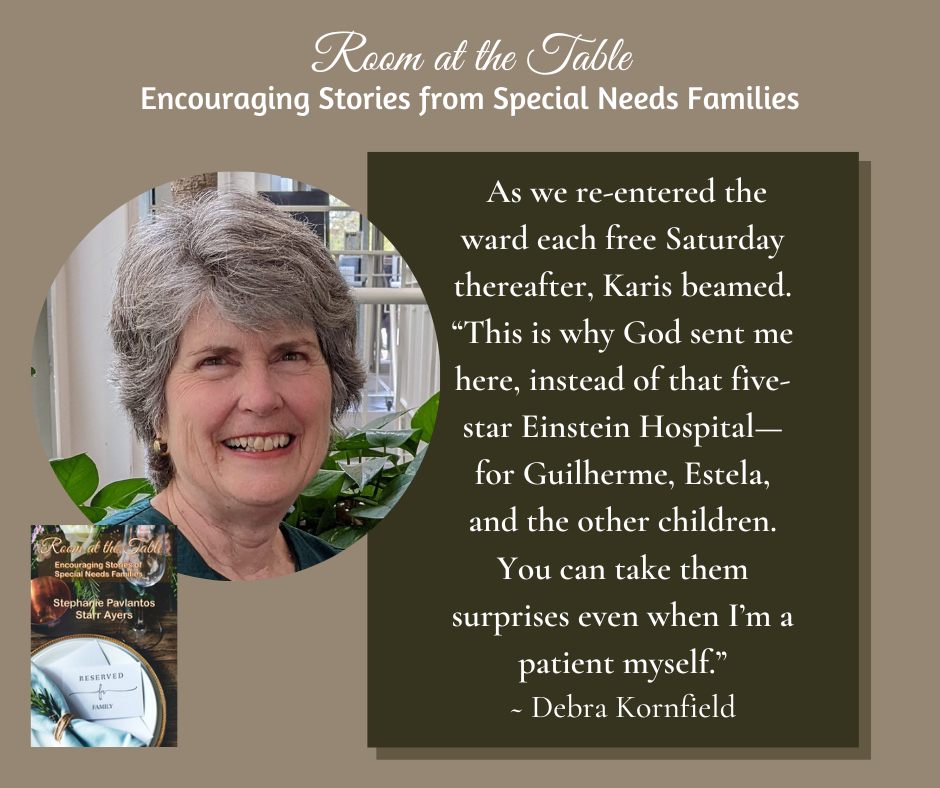


 Debra Kornfield