But God

Lament

My apologies for posting this out of order! I wrote it before traveling, so it would be easy to post on the run, and then forgot I never did it.

But God wants us to know him 

Isaiah 5:7, 12-13, 20-21, 24 The Lord of Heaven’s Armies expected a crop of justice, but instead he found oppression. He expected to find righteousness, but instead he heard cries of violence… “My people never think about the Lord or notice what he is doing. So they will go into exile far away because they do not know me. …

“What sorrow for those who say that evil is good and good is evil, that dark is light and light is dark, that bitter is sweet and sweet is bitter. What sorrow for those who are wise in their own eyes and think themselves so clever. … They have rejected the law of the Lord; they have despised the word of the Holy One of Israel.”

Lament.

Not ours, this time. God’s.

I imagine Isaiah writing this chapter with tears running down his cheeks, just as Nehemiah, after the exile Isaiah predicts took place, wept over news about the condition of Jerusalem (Nehemiah 1:4). And as Jesus, too, wept over Jerusalem (Matthew 23:37, Luke 13:34-35).

Commentators say no other portion of Scripture gives us such insight into God’s heart as the writings of Isaiah. In this chapter, he uses the phrase “What sorrow” six times as he details the indifference of his people to his love for them, and their foolishness in rejecting his wisdom.

God wants us to know him: what he values, what he cares about, what he is doing, what he longs for, what stirs him to holy anger, what delights him. Through Isaiah, God shows us his broken heart. He shows us that even he can feel disappointed and betrayed. Like a loving parent passionate about his children, investing everything in them—and then experiencing their rejection and having to watch them suffer the consequences of their misguided choices.

I’m reminded of Hillsong United’s song Hosanna: “Break my heart for what breaks yours.” Until we can feel God’s pain, we don’t really know him.

God is not distant from us, untouched by our daily lives. He longs for intimate relationship, open communication, transparency in the security of his love for us. He wants us to pay attention when he speaks to us, and to make choices worthy of him, in line with his holiness.

The sovereign Lord and Creator of the universe loves you and me enough to weep over us.

Wrongdoing is real

But God says, “Turn to me for healing”

Isaiah 6:5-6 Then I [Isaiah] said, “It’s all over! I am doomed, for I am a sinful man. I have filthy lips, and I live among a people with filthy lips. Yet I have seen the King, the Lord of Heaven’s Armies.” Then one of the seraphim flew to me with a burning coal he had taken from the altar with a pair of tongs. He touched my lips with it and said, “See, this coal has touched your lips. Now your guilt is removed, and your sins are forgiven.”

Isaiah 6:10 The hearts of these people are hardened… Their hearts cannot understand, and they cannot turn to me and let me heal them. (Greek version)

I remember, as a child (I think I was seven), not being able to sleep one night because I had told my father a lie. I tossed and turned and finally crept into my parents’ bedroom, woke Dad and confessed my sin. I still remember how relieved I felt when he forgave me. My heart filled with thankfulness as I returned to my bed and to sleep.

Shutterstock: Chernyshov Konstantin

Dad didn’t say, “Oh, honey, that’s nothing to worry about.” He took my confession seriously and extended the solution to my guilt: forgiveness.

God doesn’t say, “Oh, no worries, Isaiah. Don’t feel bad. I’m sure everything will turn out all right. Other people are worse than you. You should cultivate the ability to feel good about yourself.” This was, essentially, the message of the false prophets to the people of Isaiah’s time.

No. There is right and there is wrong. It’s not all fuzzy and gray and rationalizable. It’s no gift to sugarcoat sin, any more than it would be a kindness for an oncologist to deny the presence of cancer in a patient’s body.

God accepted Isaiah’s self-diagnosis, his recognition and confession of his sin. And he offered a solution, one that caused physical pain but healed Isaiah spiritually. (Isaiah has enough to say the rest of his life that we know the burn on his lips also healed.)

I used a translation of Isaiah 6:10 from the Greek version of the Old Testament because that’s the one Jesus quotes in Matthew 13:14-15/Mark 4:12/Luke 8:10 when he’s explaining the parable of the Sower to his disciples. And it’s the version Luke uses at the end of the book of Acts that Paul quoted while preaching the Gospel to Roman Jews from prison (28:26-27). Some were persuaded, but others did not believe. Paul quotes Isaiah to say, “Even if you Jews will not accept the Gospel, the Gentiles will” (Acts 28:28).

So, what is required of me if I seek God’s forgiveness and healing? I must:

1. Acknowledge my need. In the presence of God, Isaiah realized he could not fulfill God’s calling of him—to communicate God’s words to the people—with lips that had spoken sinfully. His need became clear when he encountered firsthand God’s sovereignty and holiness.

2. Recognize my part in causing my condition. I have made sinful choices, allowed sinful thoughts to occupy my mind, carried out sinful deeds that violate God’s holiness and harm other people as well as myself. Isaiah made no excuse for his sinful lips. He blames no one else.

3. Realize I can’t change myself with any amount of positive thinking, discipline, or willpower. Isaiah despaired; he believed his life was over because he could not help himself.

4. Accept the cleansing and forgiveness God offers. He is ready and wanting to heal me, when I “understand with my heart” and turn to him. The future sacrifice of Jesus (which Isaiah foretells in his writings more clearly than any other prophet) is symbolized by the burning coal from the altar, which purified his lips, the agents of sin in Isaiah’s confession.

Isaiah felt such gratitude for God’s cleansing and healing that he was ready to say, “Here I am. Send me.” He served God the rest of his life not to earn forgiveness, but out of thankfulness for his healing. He passionately desired to guide the people of his generation to likewise find release and forgiveness from their sinfulness.

One clear message for us from Isaiah 6: Understand with your heart your need for forgiveness, and turn to God for healing.

Flashback

But God will restore, cleanse, guide, and shelter

Isaiah 4:5-6 Then the Lord will provide a canopy of cloud during the day and smoke and flaming fire at night, covering the glorious land. It will be a shelter from daytime heat and a hiding place from storms and rain.

Psalm 31: 19-20, 32:7 How great is the goodness you have stored up for those who fear you. You lavish it on those who come to you for protection, blessing them before the watching world. You hide them in the shelter of your presence, safe from those who conspire against them. You shelter them in your presence, far from accusing tongues … You are my hiding place; you protect me from trouble. You surround me with songs of victory.

Whenever I see or hear the words “hiding place,” I flash back to a Saturday night Karis “should” have died. She was sixteen; I was with her at the hospital in São Paulo. Her eleven-year-old sister Valerie, home alone working on a project for school, sang “You are my hiding place … I will trust in you” over and over and over, afraid for Karis’s life.

Teen Karis with her sisters at Ibirapuera Park in São Paulo, sharing two pairs of rollerblades between the three of them

Meanwhile, the teens of our church were engaged with their regular weekly meeting. Suddenly one of them said, “We need to pray for Karis.” They didn’t even know she was in the hospital, but the entire group knelt and prayed for her until around midnight they sensed release from God. They only learned the next morning that at the time they felt compelled to pray, Karis’s fever had spiked beyond what the thermometer could measure, and she had managed to say “Goodbye, Mommy,” before passing out. Her doctor was struggling to reach the hospital through São Paulo traffic. Her nurse, too terrified to act, left it up to me to pack Karis in ice and, with the help of another nurse and an orderly holding her down—Karis was shaking uncontrollably—give her the injection the doctor had ordered before he jumped in his car. He repeated the injection, along with other emergency measures, the moment he arrived in her room, running full tilt up the stairs and through the hallways.

“Whenever I am afraid, I will trust in you.”

Isaiah too was afraid, of the judgment and stripping and violence he knew was coming (chapter three). He flashed back to the Exodus, when God had led his people escaping from slavery in Egypt with a cloud by day and a pillar of fire by night (Exodus 13-14). These stories were part of the people of Israel’s identity, told and retold through the centuries to illustrate God’s care and protection when they were weak and vulnerable.

Have you experienced God as your hiding place? I would love to hear your story.

Are you wealthy? Or poor?

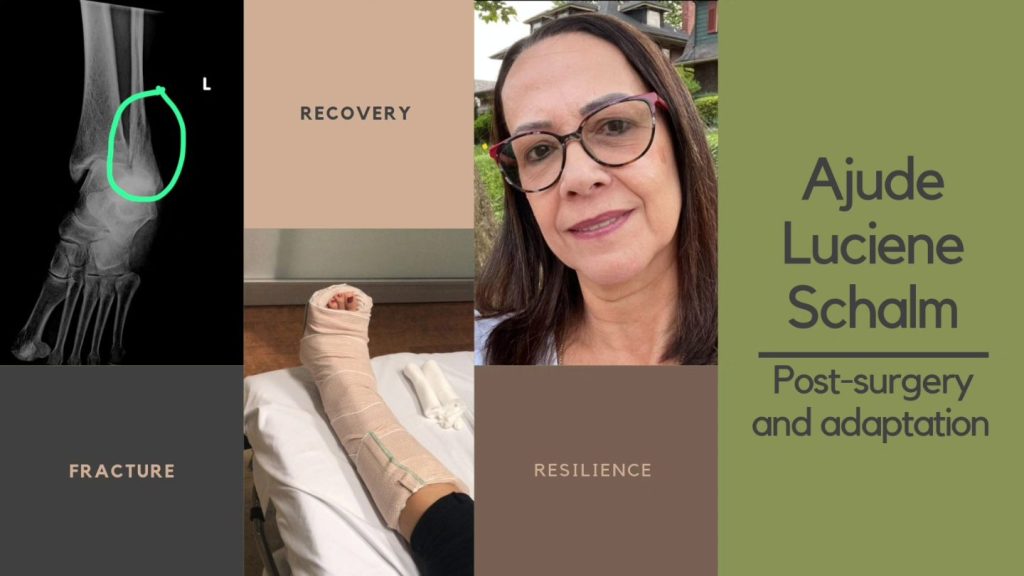
Luciene update: Surgery yesterday went well, and she is home at Val and Cesar’s house. Pray for pain management today and for God’s provision of $50,000 to pay for the surgery! Thank you!!

But God chose the poor to be rich in faith  

Isaiah 3:14-15 The Lord comes forward to pronounce judgment on the elders and rulers: “How dare you crush my people, grinding the faces of the poor into the dust?” demands the Lord, the Lord of Heaven’s Armies.

James 2:1, 5, 8 My dear brothers and sisters, how can you claim to have faith in our glorious Lord Jesus Christ if you favor some people over others? … Hasn’t God chosen the poor in this world to be rich in faith? … Yes indeed, it is good when you obey the royal law as found in the Scriptures: “Love your neighbor as yourself.”

Strong words from Isaiah today, echoed by James almost 800 years later, reminding us that God’s character doesn’t change. It’s so easy for us, who are among the world’s and history’s most wealthy, to equate poverty with crime, with character defects like laziness, with bad habits and lifestyle choices, with inferior intellect and wisdom. In so doing, of course, we elevate ourselves and justify our own ways of living.

As I sit here, though, a series of snapshots flit through my mind of people who would be considered poor by most standards who have, out of kindness and generosity, deeply blessed my life. Of wisdom and perspective I gained from the fruit of the Spirit shining through people living lives of grace within terrifically difficult circumstances. Of gentle care extended to me as a child by people living in one-room earthen floor thatched roof homes. Of friends who grew up in favelas (urban slums), who were abused and hungry and cold, yet whose hearts were wide open to God’s love and somehow carried forgiveness instead of grudges.

I feel like I’ve had the privilege of at least some insight into God’s tenderness toward his people, the ones he chose to be rich in faith, the poor.

Poverty is such a relative concept. Everyone (almost!) is “poor” when compared to some others—and wealthy when compared to a different set of people. I felt this viscerally when our family spent a year in the US when I was eleven. In our small village in Guatemala, we were considered unbelievably wealthy. Even though our house was small (especially for our large family!), we had a tile floor, and Dad devised a way for us to have running water, heated by our wood stove. We children went away to school. We each had more than one set of clothes. We ate fruits and vegetables. We owned a vehicle. We had games and toys and jigsaw puzzles and a crank record player. We had resources to help other families.

The complexity of two cultures (and ours as a third) with lopsided power and wealth sharing, occupying the same physical space in the town where I grew up (Shutterstock: Stefano Ember)

A week of travel, though, took us to a city in the US where we were considered poor. My classmates wore new clothes, not hand-me-downs. (We joked about the used tea bags included with missionary donations.) When special events came to town, they could attend. Their teenage siblings didn’t have to go to work after school as mine did, leaving me, at eleven, responsible for my four younger sisters and brother, along with housework and cooking. So they could visit each other’s homes and play after school or learn special skills like gymnastics or other sports. At age eleven, I resented being different from my peers.

But was I poor? No, I don’t think so. I had a home to go to, food to eat, clothes to wear. I spoke (to some degree) three languages. I had grown up amid two other cultures that interfaced in complex fashion in my part of Guatemala. (After I left home, my town was caught in the crossfire of a brutal, years-long civil war engendered by these disparities.) My parents were well-educated (Dad that year was earning an advanced degree in linguistics at the University of Chicago) and good at their work of Bible translation. I had been well cared for at my boarding school, learning enough that the academic part of life in the US seemed easy to me (except latitude and longitude—for some reason I could never remember which was which!).

God’s point, recorded by Isaiah, is of course about kindness and generosity, living by the royal law rather than greed and abuse. Today I am filled with gratitude, for the unexpected riches of a zillion blessings, for many opportunities to share them with others. And for daily invitations from the Lord to grow in faith.

Hope for our grandchildren’s future

But God will mediate between nations

Luciene update: Surgery is now scheduled for Thursday. Though it’s painful, Lu can wiggle her toes. She’s finding grace for enduring each day and says thank you for your prayers for her. Her son (my son-in-law) Cesar has found two possible pathways toward funding.

Isaiah 2:3-4, 11, 22 The Lord will teach us his ways … He will mediate between nations … Nation will no longer fight against nation, nor train for war anymore. … Human pride will be brought down, and human arrogance will be humbled. Only the Lord will be exalted on that day of judgment. (Verse 11 is restated in v. 17)Don’t put your trust in mere humans. They are as frail as breath.

The other day I had a conversation with another grandmother, both of us expressing dismay over the world we see our grandchildren growing up in.**

Juliana is now an expert crawler

That’s why I think Isaiah 2 is one of the most thrilling passages in the whole Bible. As I re-read it this morning, I found myself with goosebumps. Have you ever watched someone mediate a dispute, honoring the needs and perspectives of both parties and bringing them to a place of understanding? It’s one of the most beautiful creative endeavors I have ever been privileged to witness.

Imagine, then, the breathtaking beauty of God mediating between nations! Take a minute just to picture this in your mind.

Imagine no more war, with all those resources invested instead in positive purposes. Imagine a world without fear, without the greed for domination and power that propels people to devastate one another.

Imagine people trusting God so deeply that they understand and want what he wants and love what he loves.

With this post I want to honor those who, every day, humbly walk in God’s paths, creating, building, mediating, honoring and loving one another, generating peace wherever they go.

I want to honor the Lord, for giving us hope, a future to anticipate with joy!

**It’s becoming more acceptable to end sentences with a preposition—hurrah!

I liked what I did

First, an Update on Luciene: Surgery had to be postponed because Lu’s ankle, foot, and leg are still too swollen. Her provisional new date–with a different surgeon–is June 29. Please pray the swelling will go down, that God will give her daily grace to deal with the severe pain and the disappointment of being stuck in a recliner during this special visit to her children and grandchildren instead of doing all the fun things they had planned. And pray for financial provision. All this is costing much more than their travel insurance! If you want to give Lu an encouraging message, send me an email or write it in the comments.

But God says “Listen to me”

Isaiah 1:3-4, 10, 17, 29 My people don’t recognize my care for them … They have despised the Holy One of Israel and turned their backs on him. … Listen to the Lord … Learn to do good. Seek justice. Help the oppressed. Defend the cause of orphans. Fight for the rights of widows. “Come now, let’s settle this,” says the Lord. “Though your sins are like scarlet, I will make them as white as snow.” … Be ashamed of your idol worship.

On Mother’s Day, one of my daughters wrote me a beautiful letter, listing some of the things she recognizes, now that she’s a mom, that I did for her when she was a child. Things she took for granted, as children do. Perhaps her own daughters won’t appreciate all she does for them until they too are parents.

Isn’t it hard, though, when our little ones turn their backs on us when we’re trying to serve and care for them? This too is a common experience, one that often requires some form of discipline.

A few weeks ago, I carried one of my three-year-old granddaughters—yelling “I don’t want to obey you!”—to her room to sit in a chair for three minutes because she refused to stop doing something destructive. While she sat sobbing in the chair, I rushed to repair the damage while I still could. As I worked, I heard her sobs lessen and stop.

When I returned to talk with her about what had happened, my granddaughter listened to me, then gave a big sigh and said, “Grammy, you might as well leave me here, because I liked what I did, and I want to do it again. I’m not sorry. I enjoyed it. I like the color. I think it should be everywhere.”

I told her, “I see. Well, when you’re ready to obey and not do it again, you can come out of your room and play.” Then I hurried downstairs to place all bottles of her mom’s nail polish where she couldn’t reach them.

What she had done was to “paint” the floor and the furniture within easy reach with, yes, deep pink nail polish.

Shutterstock: baibaz

By the time I had looked carefully to be sure there were no more traces of deep pink glommed onto the floor and furniture, she appeared, hugged me, and cheerfully began playing with one of her “stuffies.” Though I don’t know the exact mental process she engaged, I haven’t heard her reference nail polish since that day.

In Isaiah 1, God offers his people the same option. They’re under discipline, but they don’t have to stay there. They can repent, and receive forgiveness, and return to the rewards of obedience.

So can we. We too can learn to do good. We can learn to live in ways that please and honor the Lord. And one of the main things that pleases the Lord, as Isaiah observes, is our honor and care for one another.

Zion will be restored by justice; those who repent will be revived by righteousness (Isaiah 1:27).

Note: I’ve been asking the Lord where to focus during these months of “Ordinary Time,”—from Pentecost to Advent—and keep having my attention drawn to the Old Testament book written by the prophet Isaiah. I noticed that since starting this blog, I’ve referred to Isaiah 51 times; in some cases, because Isaiah was one of Karis’s favorites. But I haven’t gone through the book systematically, highlighting precious “pearls” left for us by this prophet.

A bit of orientation: Isaiah prophesied over a period of almost sixty years, through the reigns of four kings of Israel (Uzziah, Jotham, Ahaz, and part of Hezekiah’s), from 792 to 686 BC. He lived through civil war between Israel and Judah and saw the destruction of Israel in 722 BC. Thus, the first half of his book includes warnings, judgment and tragedy, and we find more comfort in the second half. But there’s a lot in the first half that seems directly applicable to our own time, going on three millennia later! That’s one of the amazing things about Scripture, how timeless it is, reflecting the fact that God does not change—and apparently, neither does human nature.

Enough

But God’s grace is sufficient

2 Corinthians 12:9 But he said to me, “My grace is sufficient for you, for my power is made perfect in weakness.” Therefore, I will boast all the more gladly about my weaknesses, so that Christ’s power may rest on me.

Do you ever have days that seem just too much to cope with?

Wednesday our flight from Newark to Pittsburgh, coming home exhausted from an amazing week in Colombia, was delayed by two hours. It so happened therefore that as our plane was landing, Luciene, my Schalm grandchildren Caleb and Talita’s other grandmother, was running up the steps of Valerie and Cesar’s home here in Pittsburgh to reconnect with a Zoom call which had been interrupted by an urgent message for her husband. Luciene tripped on the steps and broke her ankle, completely doubling her foot backward. The pain was horrific. Five-year-old Caleb commented to me yesterday several times that his Vovó was crying.

Opa and Vovó in Pittsburgh!! Such joy for Caleb and Talita and all of us

So, as we drove home from the airport, my son-in-law Cesar Jr. and his dad were transporting Luciene first to urgent care and then, after x-rays, to the hospital ER. Even with massive morphine directly into her ankle, the pain of having her bones repositioned was intolerable. She was hospitalized, scheduled for surgery the next day (at the same hospital where our daughter Valerie was working).

However, Lu’s ankle was too swollen to operate yesterday, so Lu was sent home to bedrest for a week, in the hope of operating Thursday next week, to install metal plates and screws to support her ankle as it heals.

At the time Cesar Jr. was transporting Lu back to their house from the hospital yesterday and Cesar Sr. headed to our house to pick up Caleb and Talita, I was on an Instagram Live in Portuguese talking about Karis’s zest for life despite her pain and weaknesses, citing her life verse, this one (above) from 2 Corinthians. Lu herself, from the car going home from the hospital, coached me through connecting with the Live since I was having trouble getting on—turns out Instagram looks different in Brazil than here, so Ilaene’s instructions weren’t helping me. Huge panic that I might not figure it out in time! (If anyone reading this speaks Portuguese and wants to join Ilaene and me on next week’s Live, it will be 8:00 pm Brasília time/7:00 pm Eastern time on Instagram at Igrejas Discipuladoras. You can also watch last night’s Live there.)

There was so much emotion involved with all of this that I have no idea whether I said anything coherent or helpful to anyone on the Live. I’m still trying to find emotional equilibrium, devastated that this has happened to Luciene. Maybe that’s why I’m dumping it on you.

But one thing is vivid: the reality of God’s grace, PRESENT in our challenges and weaknesses and limitations and pain. Offered generously by our Lord to me and to you, today. Please pray with us for Lu as she faces (I almost wrote “walks through,” exactly what she can’t do!)–as she deals with some very tough days ahead. May God’s power resting on her be palpable.

At challenging times like this, I find worship in Portuguese reaches my heart more than English. “Tua Graça Me Basta” means Your Grace Is Sufficient. You can soak in the beauty even if you can’t understand the words. If you enjoy this, you can listen to more of Rachel Novaes here.

And here’s another beautiful song giving me comfort right now (in English this time).

One Name

But God is three in one June 7, 2023

Matthew 28:19 Therefore as you go, make disciples of all the nations [or all peoples], baptizing them in the name of the Father and the Son and the Holy Spirit.

Have you ever wished for a clear, accessible but carefully thought through reflection on the mysterious doctrine of the Trinity? I offer you a remarkable sermon by systematic theologian Dr. Joel Scandrett, just preached on Trinity Sunday. He even throws in a reference to the classic video, “St Patrick’s Bad Analogies.”

Celtic Triquetra

Seriously, have you ever read the Athanasian Creed? I don’t remember ever doing so until we read it aloud together last Sunday. Really, I think out loud is the only way to read it. You can find it here in modernized language and here in an older translation of the 4th century Latin.

It might be helpful to note that the word “catholic” means “common” or “comprehensive,” or “all-embracing.” This creed is not specifically referring to the Roman Catholic Church.

What most impressed me Sunday was the mystery, holiness, and power of the Name of God, encompassing all three Persons of the Trinity. The day will come when at the Name, every knee will bow. Try doing a search of the Name of God in Scripture (eg. through Bible Gateway). I think you’ll be inspired, as I am!

*Otto and Idagly apartment update: As of today, their debt has been reduced to $9,000, thanks to the generosity of several kind people. So encouraging for them, and for us!! We’ll be with them just two days from now, in Bogotá, Colombia, along with other country leaders of discipling and pastoring of pastors (DPP). We fly out tomorrow morning. If you don’t hear from me for the next ten days or so, please pray for us at this retreat. Thanks!

Does it still matter?

But the Holy Spirit gives dreams and visions June 3, 2023

Acts 1:8 But you will receive power when the Holy Spirit comes upon you.

Acts 2:4, 17-19 And everyone present was filled with the Holy Spirit … Then Peter stepped forward … “‘In the last days,’ God says, ‘I will pour out my Spirit upon all people. Your sons and daughters will prophesy. Your young men will see visions, and your old men will dream dreams. In those days I will pour out my Spirit even on my servants—men and women alike—and they will prophesy.

Galatians 5:17 The Spirit gives us desires that are the opposite of what the sinful nature desires.

With his permission, before this Pentecost week escapes us, I want to quote enough for you of Pastor Kevin Antlitz’s sermon last Sunday to interest you in listening to the whole thing:

“In 1968, Patriarch Ignatius, one of the leaders of the Eastern Orthodox Church, spoke at a gathering of Christians leaders from around the world and across denominations and traditions. While he had everyone in the room, he asked a very important question. It’s a question that the church should always be asking:

How can the death and resurrection and ascension of Jesus matter today? Put slightly differently: How can the message of the gospel matter for our world, in our time?

Patriarch Ignatius answered: the Holy Spirit. The only way Jesus can matter today is the Holy Spirit. Everything hinges on the Holy Spirit.

Without the Holy Spirit, God is distant, Christ is in the past, the Gospel is a dead letter.

Without the Holy Spirit the Church is simply another organization. Without the Holy Spirit, authority is domination, mission is propaganda, liturgy is nostalgia.

Without the Holy Spirit, Jesus is just a historical figure, and the church is a museum or a social club. At its worst, it is an institution of manipulation and control.

But with the Holy Spirit, the Risen Christ is present. God’s life-giving, life-transforming power is unleashed.  With the Holy Spirit, the church becomes a community where people can encounter the love of God, recognize their sins and brokenness, and be healed and empowered to extend God’s grace to others.”

Pastor Kevin showed us how Pentecost redeems Babel. The Holy Spirit speaks every language of the world. He knits the frayed fabric of humanity back together, harmonizing rather than fracturing. Rather than a physical tower, the Holy Spirit builds Christ’s Kingdom with living stones, all who honor Christ as their Lord. We’re each responsible for maintaining Body unity, honoring the Holy Spirit’s work.

As Kevin spoke, I thought of Jesus telling Pilate, “My Kingdom is not an earthly kingdom. If it were, my followers would fight …” (John 18:36). “My Kingdom is not of this world”—one of Jesus’s last statements. How often do you—how often do I—get this mixed up, reverting to the confusion and division of Babel, when Jesus calls us into an entirely new and different loyalty, to a Heavenly Kingdom where joy, harmony, generosity, kindness, and all the fruits of the Spirit are the recognized currency?

I hope you’ll take fifteen minutes to listen to Kevin’s whole sermon and with me, take his challenge to heart.

Heroes in Venezuela

But God never abandons us May 26, 2023

Hebrews 11:26, 13:5-6 Moses thought it was better to suffer for the sake of Christ than to own the treasures of Egypt, for he was looking ahead to his great reward. … For God has said, “I will never fail you, I will never abandon you.” So we can say with confidence, “The Lord is my helper, so I will have no fear: What can mere people do to me?”  

I usually post just twice a week, but I want to share a situation with you that’s happening right now. We could substitute the names “Otto and Idagly” for Moses in Hebrews 11:26: they too have chosen suffering rather than treasures in the way the world evaluates priorities. I wrote about them way back on October 11, 2020, so you might want to re-read that post.

Otto leads the Pastoring of Pastors movement Dave helped start in Venezuela. For a long time, as a husband and dad who cares deeply about his family, Otto has nurtured the dream of a house of their own. And now that is coming true!!

Currently their family of five lives in Idagly’s parents’ home, sharing the space also with Idagly’s sister and her family–12 people in a five-bedroom house. This means their two adolescent girls share a small bedroom with their brother, and Otto has his office in his and Idagly’s bedroom, and all twelve people share the kitchen, living room, and bathroom. 

Yuliana, Idagly, Eliam, Otto, Eliany

Otto created a plan eight months ago to build a four-bedroom house (one bedroom to be used for his office). An architect projected it would cost $15,000. We tried to raise money for this, but people responded with only $8,000, so there was no possibility of initiating construction.

With runaway inflation, the cost increased dramatically. Inflation in Venezula was 436% in April this year compared with April 2022. Think about that for a minute.

However, people leaving Venezuela have been selling their properties at a loss to obtain cash. A four-bedroom apartment became available in Otto and Idagly’s neighborhood for $23,000. We told them to jump on it. We “borrowed” $15,000 from our own retirement account to complete the cash payment. Otto and Idagly received the keys to the apartment two days ago! They want to paint and repair a few things before moving in after they are with us in Bogotá for a leaders’ retreat June 8-14.

Dave and I have been thinking and praying about a repayment plan that would work for Otto and Idagly. We gave them $2,500 as a gift, leaving them $12,500 to repay. That’s an enormous amount in a country where right now the minimum wage is equivalent to $5.40 per MONTH and they are understandably nervous about this. The proposal we have sent them is that they repay us $100/month, which would take them until the end of 2034. (That’s more than a third of what they receive through our Multiplying Grace effort.) Any month they are able to pay more, or any time someone makes a $100 contribution, their debt will be reduced by one month.

Would you enjoy helping them with this debt? If so, please send your gift directly to us. We can’t give you a tax break because we used personal money, not ministry money. You can send us a check (contact me through Messenger or debrakornfield@gmail.com for the address) or use Paypal or Google Pay. I’ll try to update you monthly on progress toward resolving this debt. 

Imagine how amazing it will be for this family that has chosen to STAY in Venezuela to care for pastors to have their own living space. Imagine Otto, leading a nationwide ministry, having an office of his own.

I think Otto and Idagly’s situation helps us understand why almost a quarter of Venezuela’s population has left the country, including most professionals. Recently public school teachers went on strike, protesting salaries of about $10-$25/month. University professors earn $40-$60/month. President Maduro said no and ordered them back to work, asking them to be content with being “heroes.” Wouldn’t you leave too? There’s no way for one person to eat at those salary levels, even only eating rice. And most of them have families.

Every time I read a story like this, I appreciate Otto and Idagly and our other Venezuelan pastor friends more, for their determination to stay in Venezuela to serve and care and give. Truly, they are heroes in the Kingdom of God.