Collector of "But God . . ." stories, through childhood as a missionary kid in Guatemala, high school as a "foster" kid in Raytown, Missouri, college at Wheaton, marriage to David Kornfield, nursing school at Rush in Chicago, four years in Port Huron, Michigan completing our family of four children, twenty years in São Paulo, Brazil split with ten years with Karis in Pittsburgh before she moved to Heaven.
Psalm 42:7-8 I hear the tumult of the raging seas as your waves and surging tides sweep over me. But each day the Lord pours his unfailing love upon me.
This video makes me laugh. But have you ever felt this way, like giving up on a project you’ve invested in? Or a relationship, or even life itself?
Oops–I don’t have the right level of WordPress to make this video work. Check it out on Facebook, All I See Is Grace.
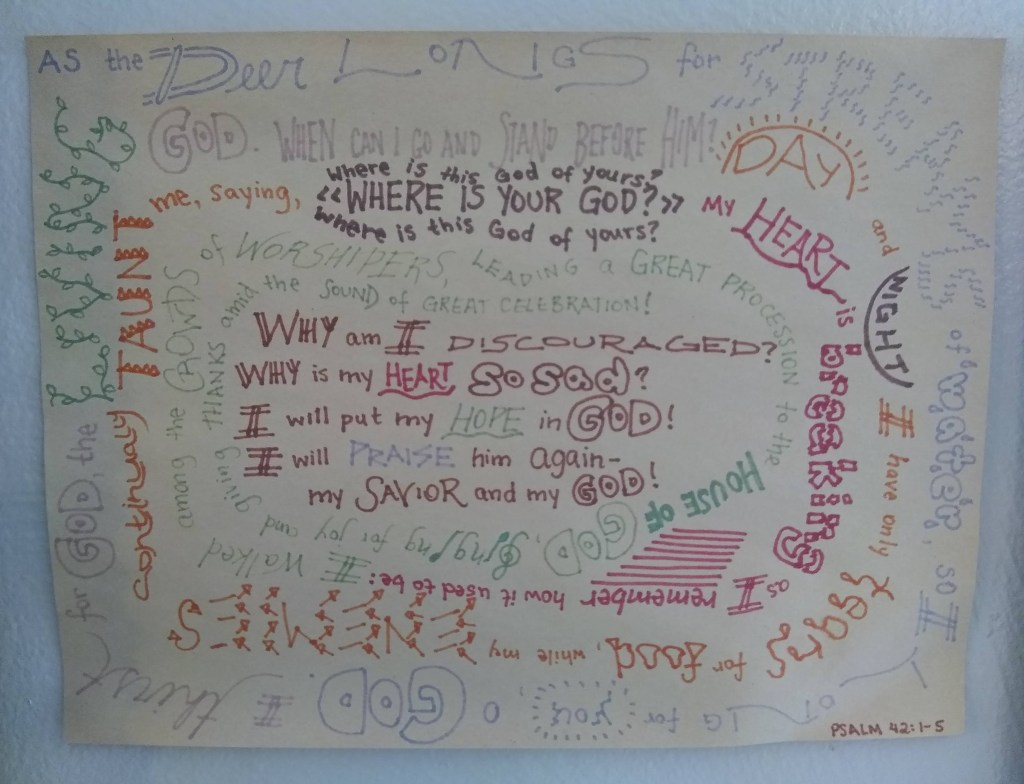
This morning as I prayed for a friend with severe chronic illness, I was drawn to this artistic rendering of Psalm 42:1-5, which Val made for Karis on one of her tough days. It’s hung on our wall for years and has faded, but I think you can still read it. I need this challenge today, to remember and seek the Lord’s unfailing love, poured out for THIS day.
Romans 3:20-22 No one can ever be made right with God by doing what the law commands. The law simply shows us how sinful we are. But now God has shown us a way to be made right with him without keeping the requirements of the law . . . We are made right with God by placing our faith in Jesus Christ. And this is true for everyone who believes, no matter who we are.
Our Waymaker. Miracle-worker. Promise-keeper. Light in the darkness.
Photo from Shutterstock by Amanda Carden
John 14:21-24 Jesus replied [to the woman at the well], “The time is coming when it will no longer matter whether you worship the Father on this mountain or in Jerusalem . . . But the time is coming—indeed it’s here now—when true worshipers will worship the Father in spirit and in truth. The Father is looking for those who will worship him in that way. For God is Spirit, so those who worship him must worship in spirit and in truth.”
1 Peter 2:9-12 You are a chosen people, royal priests, a holy nation, God’s very own possession. As a result, you can show others the goodness of God, for he called you out of the darkness into his wonderful light . . . Dear friends, I warn you as “temporary residents and foreigners” to keep away from worldly desires that wage war against your very souls. Be careful to live properly among your unbelieving neighbors. Then even if they accuse you of doing wrong, they will see your honorable behavior, and they will give honor to God when he judges the world.
Philippians 1:27 Above all, you must live as citizens of heaven, conducting yourselves in a manner worthy of the Good News about Christ. (See also Hebrews 11:13-16.)
Photo from Shutterstock by Tom Wang
One of the tenets Mom lived by was, “Always leave a place better than you found it.” As kids, we didn’t appreciate the extra cleaning, weeding, or whatever she deemed necessary to leaving a place better, such as the mission housing where we stayed when we visited Guatemala City, or the Panajachel lake property belonging to another mission where we went for vacations. Nor did we necessarily like the accompanying song, “Brighten the corner where you are.”
But Mom’s maxim is striking me today as an apt expression of Christian teaching in relation to the world we live in, whatever the country or circumstances. When our brief stay on Earth ends, will we leave it better than we found it?
I’m asking this question both as an individual and as part of the great international unshakeable Kingdom (Hebrews 12:27-28), embodying Jesus, his hands and feet here until he comes back, offering to him our first loyalty. If Jesus were here, how would he view the church’s track record in the place where you live? What would he care about? I suspect our personal safety, comfort, prosperity, and “rights” wouldn’t be as high on his list as how we are caring for others, wanting to leave a better world not only for our own children and grandchildren but also for other people’s children and grandchildren.
One thing is crystal clear: Jesus Christ came into the world to save sinners (1 Timothy 1:15). To save, not to condemn. To love, not to hate. To welcome, not to reject. To serve. To care and heal. To understand, not to judge. His stance wasn’t popular. He was criticized even by his “own” people (Matthew 11:19). It wasn’t about being “nice.” It cost him his life.
Today, on this Fourth of July here in the U.S., I’m asking myself: How can I add light and hope, Jesus-style, rather than deepening the darkness and gloom so pervasive locally, nationally and internationally? I believe he will show me my small part, if I open my heart and listen.
You are the light of the world . . . let your good deeds shine out for all to see, so that everyone will praise your heavenly Father (Matthew 5:16).
2 Samuel 22:17-20, 29 The Lord reached down from heaven and rescued me; he drew me out of deep waters. He rescued me from my powerful enemies, from those who hated me and were too strong for me. They attacked me at a moment when I was in distress, but the Lord supported me. He led me to a place of safety; he rescued me because he delights in me. . . O Lord, you are my lamp. The Lord lights up my darkness.
Photo from Shutterstock by Olha Rohulya
“I have drunk your light, though darkness was poured in my cup.”
Who or what are my enemies, you may ask upon reading David’s song of praise in 2 Samuel. I’ll turn it around: Who or what are your enemies in this (un)ordinary time? Depression, desperation, worry about the present, anxiety about the future, grief, exhaustion, impatience, family stress from too much confinement, lack of resources . . . We do have an enemy who wants to destroy us, and he plays dirty, kicking us when we’re down. Stomping on us, sometimes. He is a thief, trying to rob our peace and our joy. The thief’s purpose is to steal and kill and destroy (John 10:10). Pouring darkness into our cup.
But Jesus—oh my goodness. Tasting his Light, even in the worst of circumstances . . . Well, that’s what the Karis book tries to convey. Hope. Because Stacey’s experience, and Karis’s, and mine—it’s available to you, too. Today. To each of us as we walk, step by step, each with our own challenges, through this most unordinary time.
Matthew 10:29-31 What is the price of two sparrows—one copper coin? But not a single sparrow can fall to the ground without your Father knowing it. And the very hairs of your head are all numbered. So don’t be afraid. You are more valuable to God than a whole flock of sparrows.
In the hours after Dad died, all eight of us, his children, sat around his bed in Tahlequah, Oklahoma trying to absorb what had happened. He received the diagnosis of cancer on his birthday, October 20, 2008, and died just three weeks and two days later, November 12.
Dad was taken from us too soon—not just because of the brevity of his cancer struggle. For years he had devoted himself to caring for our mother at home. When she was finally placed in a care unit with advanced Alzheimers in 2007, Dad emerged like a person reborn. He deliberately reconnected with his children and grandchildren, traveling to visit us and taking part in family gatherings. For months, he called Karis every day. She was able to visit him briefly during that three-week window, before having to be re-hospitalized herself in Pittsburgh, in a severe health crisis made more difficult by her grief for her Granddad.
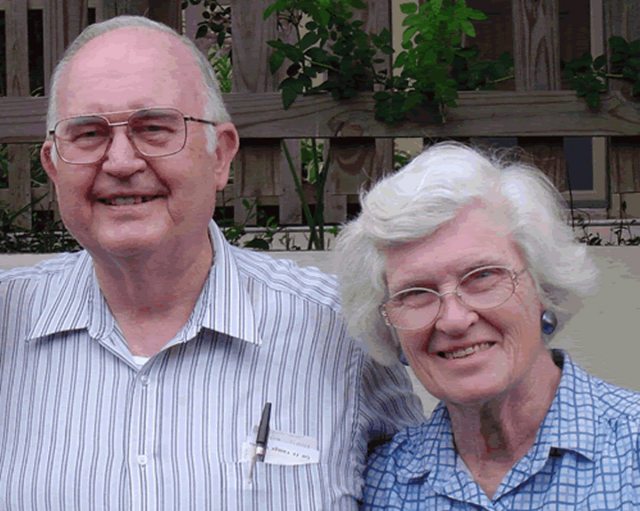
Dad and Mom in 2001
In a talk at Dad’s funeral, one of his grandchildren told us he had discovered that during an August family reunion in Guatemala, Dad had spent individual time with each of the seventeen of his grandchildren who had been able to attend. Karis, sadly, spent those days in the hospital in Pittsburgh. Several of the other six who missed the Guatemala time came to his service.
During Dad’s funeral, we also learned that Dave’s father had just died! So instead of returning to Pittsburgh with me to be with Karis, Dave flew to Florida to join his brother and sister in saying an unexpected goodbye to his father.
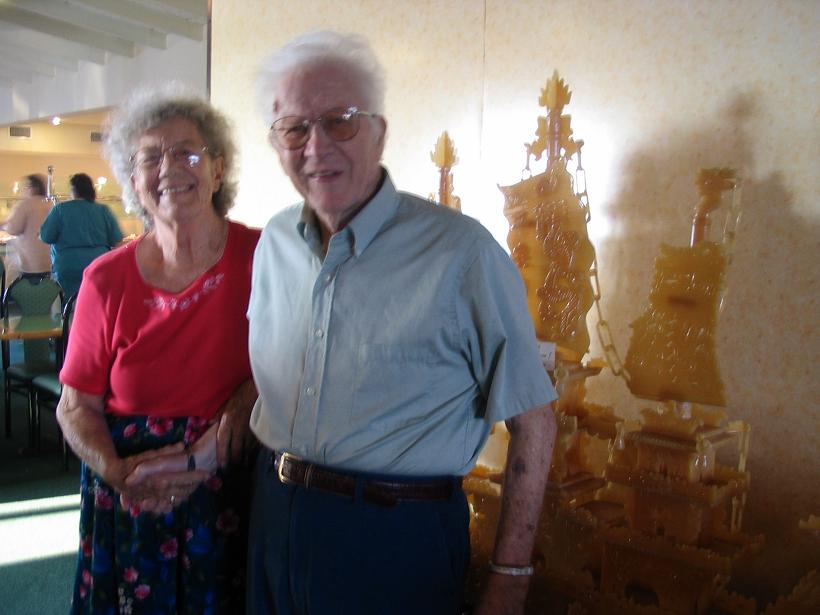
Dave’s mom and dad, 2006. Yesterday, June 21, would have been Dad Kornfield’s 96th birthday.
I kept wondering, yesterday, while we celebrated with joy the wonderful fathers God has given to our family, how many people around the world were grieving the loss of their fathers, uncles, or grandfathers to COVID-19. Since Karis died, I’ve been more acutely aware of how holidays and other special dates can be filled with both joy and sorrow, thankfulness and regret. So I was grateful for this Matthew lectionary text yesterday. Our heavenly Father knows. And he cares. Not just about the mixed emotions of yesterday, but about the challenge today to live forward into his “Don’t be afraid.”
Psalm 33:3-5, 10-11 Sing a new song of praise to the Lord; play skillfully on the harp and sing with joy. For the word of the Lord holds true, and we can trust everything he does. He loves whatever is just and good . . . The Lord frustrates the plans of the nations and thwarts all their schemes. But the Lord’s plans stand firm forever; his intentions can never be shaken.
As well, this particular June 19 marks thirty years since our family first landed in São Paulo, Brazil, joining a mission team with deep, long, and broad experience, benefitting from the platform for ministry they had already built in this huge country. We first felt God directing us to Brazil in 1984. It took six years before we felt confident Karis would be well enough to go. Dave and I were scared, sometimes, when we couldn’t find medical help for her. But she adored her adopted home, and wouldn’t have traded growing up there for anything.
Our children were two, five, seven and eight. The three girls had chickenpox, caught from their brother two weeks before. I made them wear long sleeves and pants, hoping not to be turned back by immigration authorities for bringing disease into their country. And hoping chickenpox blisters wouldn’t be our new team’s first impression of our family!
One team member, a single woman, had courageously offered to let us stay in her apartment while she was away for a few months, until we found our own housing—a ninth floor apartment considered large by Brazilian standards but small for us, used to a spacious home in Port Huron, Michigan. Our children repaid our host’s kindness by coloring all over her bedroom walls. I guess their coloring books had gotten boring.
Memories flood my mind, both of difficulties and of the amazing kindness of Brazilian people who befriended us, taught us culture and language, and loved our children.
This morning, I received an email that seems a gift to celebrate this thirty-year anniversary: an offer from a Brazilian publisher to take on the Karis, All I See Is Grace project in Portuguese. As I think about how we can help with marketing and distribution, my heart warms with the blessing of dear friends all over this great country, our second home, profoundly shaping the soul of our family still. We celebrate this deep connection every time we speak Portuguese to our grandson, every time we write emails or talk by Skype or Zoom to one of our Beloveds in Brazil. Not just our family, but Dave and I too, in significant ways, grew up during the twenty years we were privileged to live there.
Our daughter Valerie majored in Italian in college and presented herself during her year in Italy as Brazilian, not American. “English is my head language,” she told us. “But Portuguese is my heart language. And Italian? It’s dessert.” Sing with joy. For the word of the Lord holds true, and we can trust everything he does.
Psalm 91:1-4 Those who live in the shelter of the Most High will find rest in the shadow of the Almighty. This I declare about the Lord: He alone is my refuge, my place of safety; he is my God, and I trust him. For he will rescue you from every trap and protect you from deadly disease. He will cover you with his feathers. He will shelter you with his wings. His faithful promises are your armor and protection.
Several people I’ve talked with recently feel more insecure and fearful of the coronavirus now that their communities are re-opening. I found my sister Jan’s prayer letter for this month right on target. She and her husband Steve are missionaries in Mexico.
Dear Stuck-At-Home, Coronavirus, COVID-19, hand sanitizer, wash with soap, hoarding, stay-at-home, shelter-in-place, lockdown, social (read: physical) distancing, face masks … who knew these would become worldwide, everyday terms in 2020?
For me, most of these are significant but ominous terms. But one was a new term for me this year and immediately brought positive associations. I realize the official meaning is more serious, but I’ve come to hear/see the term “shelter-in-place” as a reminder of Psalm 91:1-2, 4 NKJV – a precious truth and invitation: “He who DWELLS (stays centered, keeps his thoughts on – an invitation; we choose/practice, see Isa 26:3-4) in the secret place of the most high WILL ABIDE (NTV says, ‘will find rest’ – God’s promise, something we can’t do or earn, John 15, Mt 11:28-30) in the shadow of the almighty.”“This I declare about the Lord, ‘he alone is my refuge, my place of safety; he is my God, and I trust him.’”“He will cover you with his feathers; he will shelter you under his wings …”
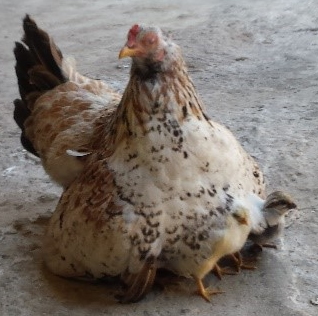
About a year ago, we visited dear friends in three different Mexican cities. The final stop was in Purepecha Indian country, and the two families we visited to teach and encourage pastors were not in town but in nearby Purepecha villages. We spent most of those days in Purepecha homes and churches. In one case, my friend suggested I wait near the wood fire in the kitchen while she ran a “quick” errand with the pastor’s wife. I became fascinated with this lovely, mottled-brown hen in the photo who was caring for 11 chicks. What did she consider a threat? When did she scold, peck, chase, and when was it OK for them to be chirping nearby or peek out from under her wing-skirt? Even when she didn’t seem to be paying attention, she was able to quickly gather her brood under her wings, and was taking no nonsense from the chicks or apparent predators!
Psalm 91:2 continues to challenge me. The right answer, especially for a missionary is, “Of course I trust God; HE ALONE is my place of safety.” But odd and difficult times tend to reveal the truth of what we really believe … while I trust God’s goodness and sovereignty for the big stuff, like dying, eternity, and “life beyond the virus,” what about serenity in the face of today’s chronic pain, limitations, feeling judged, dismissed, or dealing with “unfair” demands or disappointments? Do I naturally turn to God for my peace, joy, and love? Do these qualities characterize me? Hmm … So, I find myself praying not so much for the physical protections of Psalm 91 for myself and others, although those are essential and valid prayers, but more for the rest and transformation only God can accomplish as I choose to “shelter-in-place.”
May God accomplish his purposes in and thru his church during this season. May he be our protector and provider, our comforter, our “nudger”, and our transformer. May our lives bring him joy as we let him be all we need!
Jeremiah 9:23-24 This is what the Lord says: “Don’t let the wise boast in their wisdom, or the powerful boast in their power, or the rich boast in their riches. But those who wish to boast should boast in this alone: that they truly know me and understand that I am the Lord who demonstrates unfailing love and who brings justice and righteousness to the earth, and that I delight in these things. I the Lord, have spoken!
Words! So many words! I’ve felt hesitant to add to all the words flying around.
What are you saying, Lord?
I was drawn to Jeremiah, the “weeping prophet” this morning because I woke up with Hillsong’s “Hosanna” in my mind. Break my heart for what breaks yours . . . Perhaps no other prophet shows us so clearly what breaks God’s heart: hatred instead of love; injustice and unrighteousness in the way we treat him and each other.
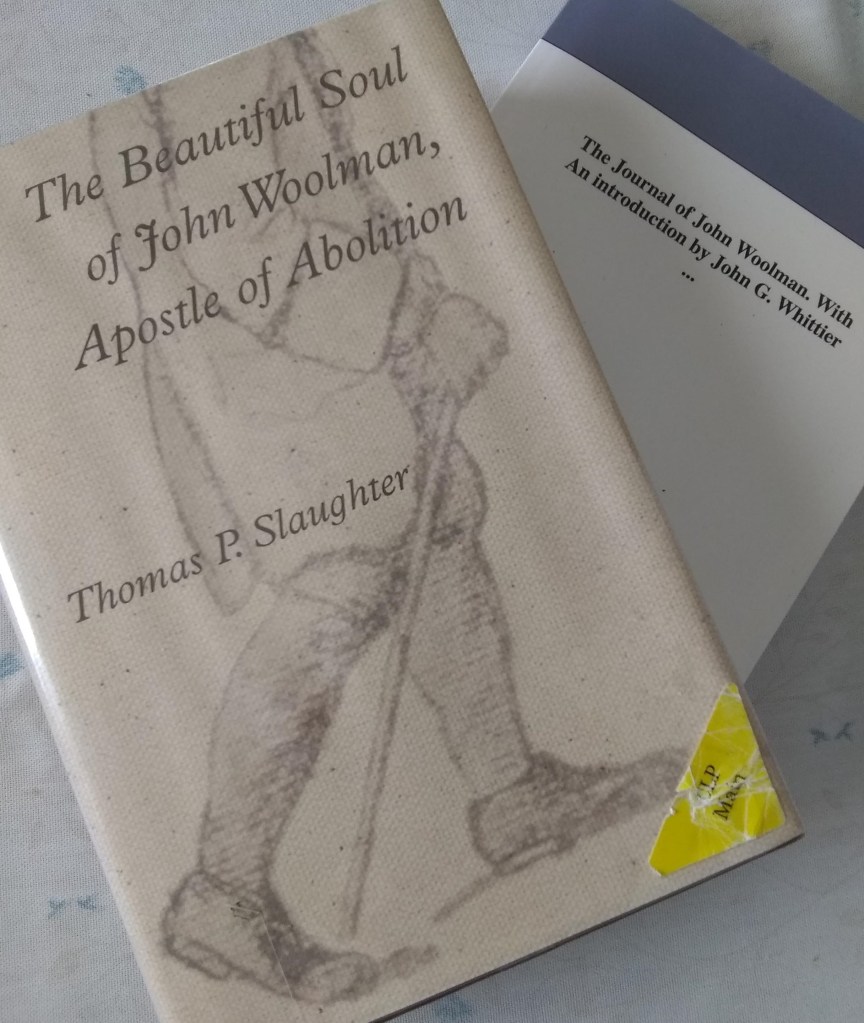
For the last few months I’ve been slowly reading and trying to absorb The Beautiful Soul of John Woolman, Apostle of Abolition by Thomas B. Slaughter. John Woolman (1720-72) identified closely with Jeremiah and committed himself to live out these words: Unfailing love. Justice. Righteousness. He was a Quaker minister, shopkeeper turned farmer and tailor who grew up in New Jersey at a time when Quakers owned slaves. Brokenhearted, John did all he could to show his people how wrong this was. Though it didn’t happen until after his death, the Quakers were the first group in America who stood up collectively for abolition. His influence stretches all the way to us: his Journal, published in 1774, two years after his death, has never been out of print.
What has impacted me most about John Woolman is the compassion with which he engaged every person and animal he knew. His journal describes his long, sacrificial and often painful process of growing toward what he called “universal love” and what it cost him. John watched Quaker contemporaries who felt as strongly about abolition as he did get chewed up and spit out of their positions of influence because of their rancor. He believed God guided him into a different way, the way of truth combined with love.
In John’s view, slave-owning Quakers were as enslaved as those in bondage to them, for despite their outward “piety,” they could not possibly please God or truly know him while they persisted in the sin of slavery. John’s radical lifestyle choices and unwavering stance in both print and speech buttressed his persistent, gentle persuasion that eventually won over many Quakers who had built their fortunes on the backs of slaves–fortunes which, in John’s view, led to pride and excess in all ways.
There’s much more to learn from John Woolman, but I leave myself and you with his challenge, to combine unflinching, sacrificial commitment to justice and righteousness with the pursuit and practice of love. How does this apply in each one of our lives and circumstances? I would be interested in your thoughts! May we open our hearts and minds to BOTH love and truth.
Sign on our front yard, front and back
Let’s do what we can do, even as small as a sign on a yard. Let’s support real, solid, enduring justice and righteousness for all people of color. Let’s learn compassion. Let’s bring delight to God’s heart.
Matthew 6:25-26, 32 I tell you not to worry . . . Look at the birds. They don’t plant or harvest or store food in barns, for your heavenly Father feeds them. And aren’t you far more valuable to him than they are? . . . but your heavenly Father already knows all your needs.
Image from Shutterstock by Yana Markovskaya
I’ve been pondering a phrase written to me by a friend: “Selfishly, I want to be seen.”
The same day, in conversation with another friend who lives alone and is feeling the pressure emotionally of these many weeks of COVID restrictions, we recognized that there is a categorical difference between being alone and having at least one physically present person—even if that person is not easy to live with. It’s more than the need to see other people, as delightful as that is. It’s the need to be seen.
It’s not selfishness. God built into humans the need for other people. To share our joys, troubles and responsibilities. To be touched. To be heard. To be seen. About Adam, before he sinned, when his relationship with God was still intact and perfect, God said, “It is not good for the man to be alone” (Genesis 2:18).
My friends’ comments reminded me of a day a few years ago when Dave and I were driving somewhere and started discussing how each of us defined love. I had not thought about it this way before, but what came out of my mouth was, “Love is being seen. I feel loved when someone sees me. My heart. My soul. When someone ‘gets’ who I am.”
And I thought of the breathtakingly lovely story recorded in Genesis 16 about Hagar, a mistreated Egyptian slave who had run away from her masters into the desert. God met her through an angel, who told her, “The Lord has heard your cry of distress.” Amazingly, Hagar was able to receive the message the angel brought her:
Thereafter, Hagar used another name to refer to the Lord, who had spoken to her. She said, “You are El-roi, the God who sees me.” She also said, “Have I truly seen the One who sees me?” So that well was named Beer-lahai-roi (which means “well of the Living One who sees me”). It can still be found between Kadesh and Bered.
One of the things that intrigues me about this story is that the writer of Genesis had to hear it from someone. That means Hagar related it to someone. Who was that someone? We don’t know. But it had to be someone who understood its significance to Hagar. Someone who, along with God, saw her. If Hagar was anything like me, she needed to tell someone her amazing story of encounter with God in order to validate her experience. Otherwise, it would soon become easy to doubt it truly happened. The God of the universe caring enough to find her in the wilderness and talk to her, a slave with no rights, a less-than-nobody?
Each of us, I think, has a deep need to be seen. That implies, I think, other people slowing down enough to both see God, who he is and what he cares about (“Be still and know that I am God!”) and to see each other. I want to be one of those who is both seen and can see.
Acts 1:8-11 But you will receive power when the Holy Spirit comes upon you. And you will be my witnesses . . . After saying this, he was taken up into a cloud while they were watching . . . Two white-robed men suddenly stood among them. “Men of Galilee,” they said, “why are you standing here staring into heaven? Jesus has been taken from you into heaven, but someday he will return from heaven in the same way you saw him go!”
John 17:11 Now I am departing from the world; they are staying in this world, but I am coming to you. Holy Father, protect them by the power of your name so that they will be united just as we are.
Karis used to say her idea of heaven was having all the people she loved in one place. As time passes, more and more she is getting her wish. This week, one more of her Beloveds has joined her there. Marian Kreithen played an important role both in Karis’s life and mine, and her Homegoing has reminded me of the Father’s love and care for us through Marian and others in the small group family he placed us in during our first years here in Pittsburgh.
Karis and I didn’t know a single person in Pittsburgh when we moved here to await her intestinal transplant. To say we were stressed is an understatement. Far from home and family and friends, I don’t know how we would have survived without the small group from Ascension, our new church, that rallied around us. They listened to us and prayed for us and encouraged us through Scripture. They shared their own lives with us, giving us a new circle of friends. They visited Karis in the hospital. Often, they fed us. They helped us move from a room to an apartment, and from that apartment to a house. We came to Pittsburgh with nothing; they helped furnish both the apartment and the house, even providing us with a car. They provided hospitality when family members were able to visit. They provided a getaway place where we could rest and renew our strength and nurture our family. That place was where we went the day Karis died.
Karis asked Marian to mentor her. I’m not sure what that mentoring consisted of. I was just the driver, taking Karis to meet Marian at her house, helping her up the long sets of stairs, until Karis couldn’t do it anymore. The time came when neither Karis nor Marian (suffering from congestive heart failure) could handle those stairs, and their conversations took place by phone. Karis loved and admired Marian deeply, profiting from her faith and wisdom. And now they are together again, along with Martha, another group member who went to Heaven before Karis.
On this Ascension Day, I am grateful for a representation of Jesus’ Ascension sent by my sister-in-law Elaine. This is the earliest known surviving depiction of the Ascension, carved in ivory around 400 AD. In addition to all the other rich imagery in this carving, I love, love, love this conception of Jesus going to his Father. Not just away from, but to . . . not only leaving loved ones behind, but going to joyful reunion with his greatest love.
My sister-in-law Elaine, by the way, is sharing her rich reflections on the book of Philippians through a daily email, each one illustrated through a work of art. If you would like to receive these emails, let her know at elaineathome@gmail.com.
This image comforts me as I think about Marian, the Father’s hand stretched out to meet her. And Karis. And Kaleb. And Crysta. And Ravi Zacharias, though I didn’t know him personally. And each one of our beloveds who have joined the community of joy in Heaven.
And I’m intrigued by the thought of Jesus returning in the same way he went away, hand in hand with the Father.
Let usrun with endurance the race God has set before us. We do this by keeping our eyes on Jesus, the champion who initiates and perfects our faith. Because of the joy awaiting him, he endured the cross, disregarding its shame. Now he is seated in the place of honor beside God’s throne (Hebrews 12:1-2).









 Debra Kornfield