What does this mean to you today?

But God cares about us

1 Peter 5:7 Give all your worries and cares to God, for he cares about you.

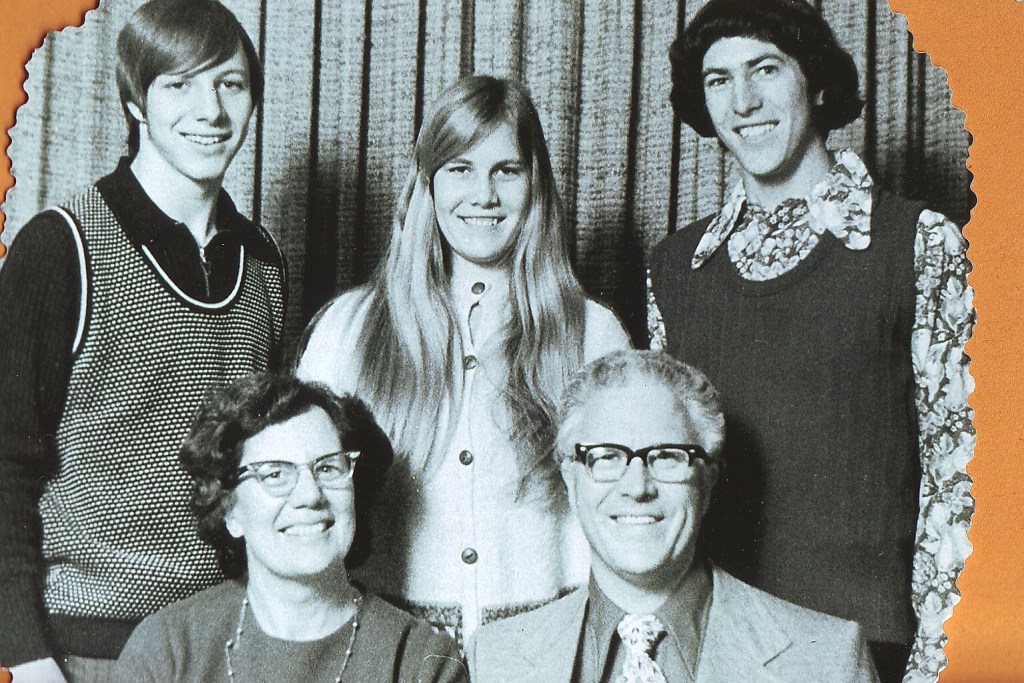
My dad was a Bible translator for the Nebaj Maya-Ixil people in Guatemala. He told us the story of translating this verse, 1 Peter 5:7, with the help of an Ixil assistant. Dad read to him his initial attempt and his assistant said, “No, no, you can’t say that.” So, Dad tried again. And again. Until he had exhausted all his vocabulary.

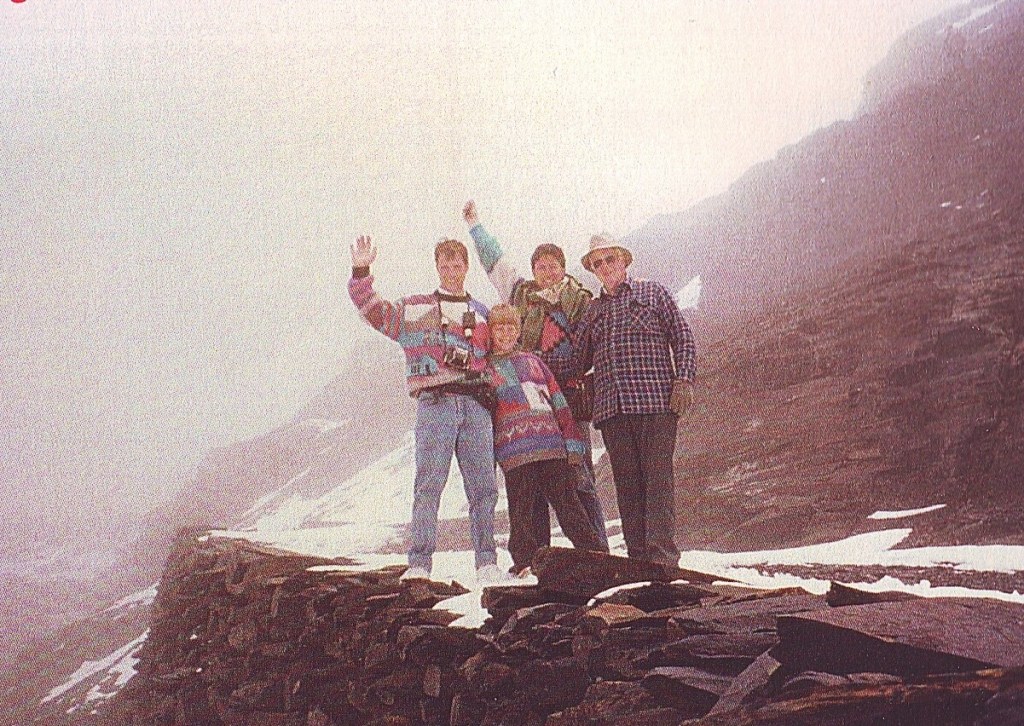
On the way to Nebaj, which is over the farthest mountain in this photo.

Then Dad had an inspiration. He went back to his original wording and asked his assistant, “If we were to say this, what would it mean to you?”

His assistant said, “Why, it would mean what matters to me, matters to God. That’s not possible!”

The god he knew was self-centered, cruel, and vindictive. He had no categories in his mind for a God of love. Eventually, he came to believe in a different God, one who knew him and thought about him with affection, who cared about him.

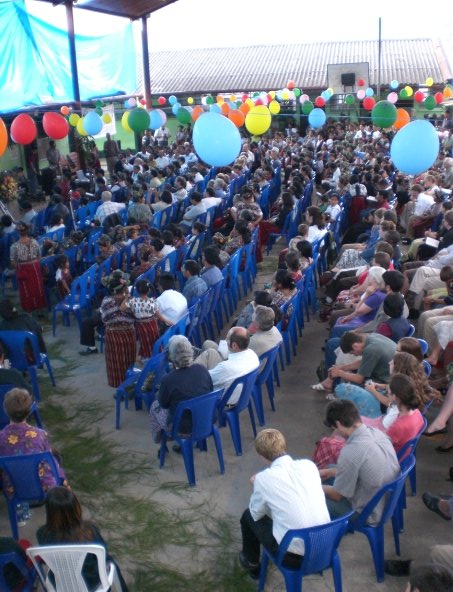
Dad speaking at the dedication of the Ixil translation of the New Testament in August, 2008. All of his children and 17 of his grandchildren were in attendance–you can see some of them in the photo to the left. In November, God took Dad Home.

Today, I’m asking myself and you Dad’s question: If we were to say God cares about you, what would that mean to you?

I’m entering this day with worries and cares. You too? God invites us to give our burdens to him. He’s the only one strong, wise, and caring enough to carry them.

What part of the Body are you?

But God will lift you up

1 Peter 5:2-6 Care for the flock that God has entrusted to you. Watch over it willingly, not grudgingly … Don’t lord it over the people assigned to your care but lead them by your own good example. … All of you, serve each other in humility, for “God opposes the proud but favors the humble” [Proverbs 3:34]. So humble yourselves under the mighty power of God, and at the right time he will lift you up in honor.

1 Corinthians 12:25-26  All the members of the body care for each other. If one part suffers, all the parts suffer with it, and if one part is honored, all the parts are glad.

In an online group recently we were asked, “What part of the Body of Christ are you?” I found the responses fascinating. “Lungs: I help the Body breathe.” “Liver: I recognize and cleanse impurities.” “Shoulder: I offer comfort.” “Hands: I’m a fix-it person.”

Thursday I had the opportunity to speak to a group of Brazilian pastors online. The topic they had assigned me was “Living with grace through times of crisis.” Several dear friends were among the attendees. The pastor friend tasked with introducing me before my talk said, “Débora é tudo coração” (Debra is all heart). The example he gave? “She made cookies for me. She knew how much I liked them, so every time I was in her home in São Paulo, she would say to me, ‘You know where the cookie jar is. Help yourself.’”

Shutterstock: Sarah Marchant

Maybe my role in the Body of Christ is making cookies. Certainly, my grandchildren think that’s one thing I’m good for. I told Dave about this, and he said, “You haven’t made cookies for me for a long time!” So, before I left Friday for a weekend in-person retreat (this one in English), I made him cookies. With raisins, his favorite. I hoped he would feel my love while I was gone, while he led a virtual retreat in Spanish for leaders from five countries.

Don’t you love those Holy Spirit moments when it’s clear the Holy Spirit directed the thought and empowered the action, simple or humble as it may be? I miss opportunities all the time because I’m too focused on my own stuff and not listening very well. But those special moments when we see the Holy Spirit at work, we do feel lifted up. And very grateful.

What role do you play in the Body of Christ? And who is part of the “flock” God has entrusted to you?

What love language do you speak?

But God has given each of us a gift, by David Kornfield

1 Peter 4:8-11 Most important of all, continue to show deep love for each other, for love covers a multitude of sins. … God has given each of you a gift from his great variety of spiritual gifts. Use them well to serve one another. Do you have the gift of speaking? Then speak as though God himself were speaking through you. Do you have the gift of helping others? Do it with all the strength and energy that God supplies. Then everything you do will bring glory to God.

I just spent two precious hours participating in a virtual retreat with beloved friends in Brazil, a wonderful gift from God to me. I felt deeply loved through their prayer for me after I shared what God had put in my heart to speak to them.

What makes the difference between doing something for someone as a job or responsibility and doing it with positive spiritual impact? I believe the difference is whether we offer our service with love mediated by the Holy Spirit. An example comes from the experience of my friend Carol. She told a group of friends Tuesday night that she believes God has put her in exactly the right place. She has started her new job at the information desk of a large hospital this week. Already a person requested a form to tell the hospital Carol’s service to him had been exceptional.

Shutterstock: Trong Nguyen

“It’s not me, it’s the Holy Spirit,” Carol told us. “I try to see each person who comes to the desk as God sees them. I’ve been amazed at what God has shown me and has filled my heart to say as encouragement to each one. Hospitals are stress-filled places. I want them to carry a sense of peace and support as they leave me.”

She then told us the story of a man who left the desk to visit his wife and returned to tell her his wife had died. “Why would a total stranger tell me that?” Carol wondered. “Only because he somehow felt the sweet presence of the Holy Spirit calming and comforting him.”

Peter’s linking of the concepts of love and gifts reminds me of Gary Chapman’s “love languages.” So I asked my husband Dave to share from a conversation he had with God about one of his growth goals, to better love the people around him. God showed him how he (God) expresses all five of Chapman’s love languages:

In my devotional life, I talk with God, and he talks with me. This calls for a sanctified imagination, but I believe it’s real. What follows is God speaking to me about His love languages.

I love you. I never get tired of telling you that. It would be tricky to try to limit my love to any given love language, but verbal love is certainly a very big part of my love! Consider how I express all five:

  1. Verbal love. “In the beginning, was the Word and the Word was with God, and the Word was God.” (John 1.1). My verbal love starts there and never stops. You can track it through other key references like John 1.14-18; 5.39, 40; 2Tm 3.16-17 and Heb 4.12 for starters. Then you can pick it up in my love expressed in my creation (Ps 19.1-7), spilling over to my written Word (Ps 19.8-14; all of Ps 119!).
  2. Touch or physical love. Go through the Gospels some time and notice how often Jesus touched people physically or they touched him physically. Dozens of times! And since his Ascension, the Body of Christ is his hands and feet, touching others physically and tangibly (Mt 25.31-46).
  3. Gifts. John 3:16 declares how my love expressed itself in the greatest gift of all, which opens the door for spiritual birth and transformation (John 1.12-18). And then my love goes on to spiritual gifts – Eph 4.9-116; 1Co 12-14; Rm 12.8-16; 1Pe 4.8-11 – all of them in the context of love. And that’s only the beginning of the gifts I’ve poured out on you – physical, financial, social, spiritual, relational – so many!
  4. Service. Mt 20.25-28; Ph 2.1-9. My utter and profound commitment to being ezer [helper, a frequent descriptor of God in the Old Testament, e.g. Psalm 46:1, and of Eve in Genesis 2:18]. Serving. Elevating. Raising up. For the Son of Man came not to be served but to serve others (Mark 10:45).
  5. Quality time. That’s what you experience with Me at the beginning of every day and in your divine encounters, in my kairos. I make everything beautiful in My time (Ec 3.11).

I am off any scale you can picture in using all five. Try finding the horizon of any of those and you will find it’s like looking at the ocean. There is a horizon, but that’s simply the limit of your vision. It doesn’t come close to reaching the end of the ocean! That’s how I am toward you in each of these five love languages.

Shutterstock: Zephyr_p

My (Dave’s) response to God:

Hmm, why am I not surprised, Lord? I guess the only surprise is that I haven’t seen this so clearly before. I’ll find it easier now to learn and use all five languages. Looking at you, I see how to do it. This adds depth to Your words “Walk with me and work with Me – watch how I do it!” [Matthew 11:29, The Message].

Help me today, Lord, to walk in Your love and be a conduit of Your love to each person I meet virtually, by email, WhatsApp, Zoom or in any other way, including personal connection with Deb and anyone else you bring to my home today. I pray in your holy name, so be it.

A suggestion from Dave:

Ric Warren’s The Purpose-Driven Life is a wonderful forty-day devotional describing how God fulfills His purposes in each of us. Days 29-35 focus on God shaping us for His service. Day 31 in particular highlights the S.H.A.P.E. he used for each of us: Spiritual gifts, Heart, Abilities, Personality, Experience. You can learn more about that here.

What gift(s) have you received from God? Today is a great day to tell him thank you, and to ask him to make his gifts to you even more effective in sharing his love, through the Holy Spirit.

Safely home

But God will both reward and judge

1 Peter 3:13-4:6, 4:14  But even if you suffer for doing what is right, God will reward you for it. So don’t worry or be afraid of their threats. Instead, you must worship Christ as Lord of your life. And if someone asks about your Christian hope, always be ready to explain it. But do this in a gentle and respectful way. … Christ suffered … to bring you safely home to God. … Remember that they [those who slander you] will have to face God, who will judge everyone, both the living and the dead. … So be happy when you are insulted for being a Christian, for then the glorious Spirit of God rests upon you.

Don’t worry. Be happy! Don’t these words evoke Timon and Pumbaa sashaying through the jungle? Hakuna matata, right? What do a meerkat and a warthog, a hornbill and hyenas have to do with suffering and judgment, rewards and courage?

Shutterstock: Volodymyr Burdiak

According to the Washington Post, “’The Lion King’ is not just a great story—it’s a true story,” the story of Sundiata Keita, the Lion of Mali, founder of the Malian Empire, the largest kingdom in West Africa in the 13th century.

“In some ways, this history makes for a better story than what Disney concocted. It’s a story of a mother who protected her family by fleeing to exile. It’s the story of a disabled man who overcame tremendous physical and political challenges and triumphed by building alliances. It’s about a kingdom in West Africa that eventually became the biggest and richest empire in history, as Sundiata’s reign witnessed dominance in agriculture, gold and trade, and introduced cotton and weaving.”

Each of us is living out a story. What story are you part of? If it were cast on the big screen, what role would you play? Most importantly, do you know who is in charge and how your story will end?

Writing novels has been an amazing experience for me. I sit down to write with an overall idea of the arc of the story and of what will happen at the end. But my characters themselves tell me what happens along the way. I often tell Dave at the end of a writing session, “I was so surprised to find out that Cally … and Charlie …” Dave always wants reassurance that no matter what, the book will end well.

It occurs to me that our life is like that. We don’t know what will happen along the way. But we do know who is in charge. We know he is good. We know he loves us and is on our side. We know we can trust him. We know he has the power to bring everything around to a wonderful conclusion. Even when things get tough, even when we suffer injustice and losses, that’s not the end of the story. The end of the story looks like this:

God himself will be with his people. He will wipe every tear from their eyes, and there will be no more death or sorrow or crying or pain. All these things are gone forever (Revelation 21:4).

So if you are suffering in a manner that pleases God, keep on doing what is right, and trust your lives to the God who created you, for he will never fail you (1 Peter 4:19).

We all need models

But Jesus’ example applies to all of us

1 Peter 2:21, 3:1, 3:7-15 For God called you to do good, even if it means suffering, just as Christ suffered for you. He is your example, and you must follow in his steps. … In the same way, you wives … In the same way, you husbands … Finally, all of you should

… be of one mind.

… sympathize with each other.

… love each other as brothers and sisters.

… be tender-hearted and keep a humble attitude.

… not repay evil for evil.

… not retaliate with insults when people insult you.

… instead, pay them back with blessing.

That is what God has called you to do, and he will bless you for it. For the Scriptures [Psalm 34:12-16] say, “… Turn away from evil and do good. Search for peace and work to maintain it …”

In the early years of our marriage, Dave believed a good husband should fix things in his home. So, when our washing machine broke, he spent days trying to figure out what was wrong and how to repair it.

Dave is nothing if not determined, when he gets an idea in his mind. Fortunately for me, he travelled. I promptly called a repairman, and by the next day was able to tackle the mounds of accumulated dirty laundry. To my relief, Dave eventually acknowledged he was neither called nor equipped to repair washing machines, and the cost of his efforts, both to him and to me, was greater than the expense of paying for someone who knew what he or she was doing.

A delightful image makes me smile when I remember this incident. I happened to be in the basement and watched Dave climb the steps expressing his frustration with his lack of prowess with solving physical and mechanical problems by saying “Fiddlesticks! Fiddlesticks!” Behind him climbed our small son, saying “Fiddlesticks! Fiddlesticks,” his head bowed in exact imitation of his father.

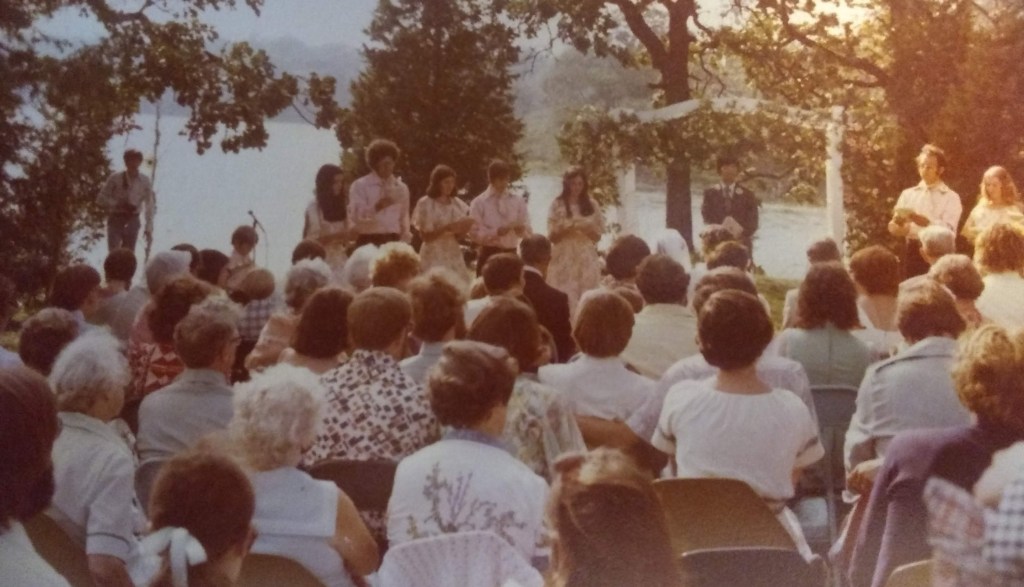
When Dave and I got married, we rented space at a camp and had a three-day retreat. Friends and family members were coming in from several countries and from across the US for the wedding, and we wanted to spend time with them and provide a context for them to spend time with each other. Our parents’ generation slept in cabins, and the rest of us slept in tents.

Dave emerging from his tent on our wedding day

As part of the program, we asked my dad to lead a Bible study on marriage. Dad emphasized that as part of God’s family, Dave and I were brother and sister first, and marriage partners only second. He showed us the “one anothers” in the New Testament, including in this passage. Most marriage problems, Dad said, would not even arise if we followed the Scriptural injunctions directed to every Christ-follower, male and female, husbands and wives and everyone else.

Dad’s teaching made sense. It sounded simple.

It wasn’t.

Dave and I had a lot of growing up to do. We needed healing from past traumas. We lacked basic relational skills. We caused each other (and sadly, our kids) a great deal of pain.

Our wedding at Camp Timberlee in Wisconsin

Now though, coming up on our 45th wedding anniversary, we look back with profound gratitude on the teaching that undergirded our marriage, and the many circumstances, challenges, and friends God used to teach us to care for one another more like Jesus cared for us. Looking at Christ’s modeling of love, we can course-correct more quickly and easily than we could in those early years. Thank you, Lord!

Christ will make his home in your hearts as you trust in him. Your roots will grow down into God’s love and keep you strong. … Speak the truth in love, growing more and more like Christ. … Get rid of all bitterness, rage, anger, harsh words, and slander. Instead, be kind to each other, tenderhearted, forgiving one another, just as God through Christ has forgiven you (Eph 3:17; 4:31-32).

Seventeen times!

But Christ suffered for us

1 Peter 2:21 God called you to do good, even if it means suffering, just as Christ suffered for you.

My husband Dave’s dad, William John Kornfield, was a decorated World War II hero. I didn’t know this until Dave’s brother Bill Jr. and his wife Jennie created a display case of Dad Kornfield’s medals and one of his buddies told stories at his funeral in November 2008 (which I missed, because Karis was critically ill sick at the time, and my dad died the same week). Dad K never made a big deal of his war experiences, so even his family didn’t know.

Dad’s medals included a purple heart, a bronze star, and sharpshooter awards

One story that was repeated to me was this:

A request was made for a volunteer to go behind enemy lines to gather information. Dave’s dad volunteered. His commanding officer made it clear that he would be risking his life, but he went anyway. He came back alive, and the next time such a call was made, he volunteered again. The third time, he was told no. No one had ever gone three times and come back alive.

“I’m ready to die,” Dad K said. “If I die, I’ll go straight to heaven. But most of my buddies aren’t ready. Let me do this.”

He went seventeen times before frostbite on his feet took him out. And was awarded a medal of valor.

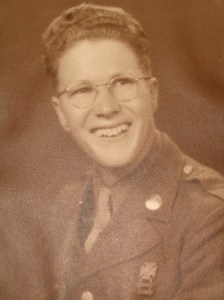
Dad K in 1943

Dad K showed the same kind of gutsiness after the war, as a pioneer missionary in Bolivia. He married Dave’s mom in May, 1952, and Dave was conceived on their honeymoon. In January 1953, Bill and Gloria arrived in Bolivia, where they joined an international team in Cochabamba, where Dave was born in March. Knowing neither Spanish nor Quechua, these newlyweds and first-time parents were assigned to a small Andean village named Capinota, where they lived without running water, heat, friends, or colleagues. But Dad K always told Capinota stories with humor.

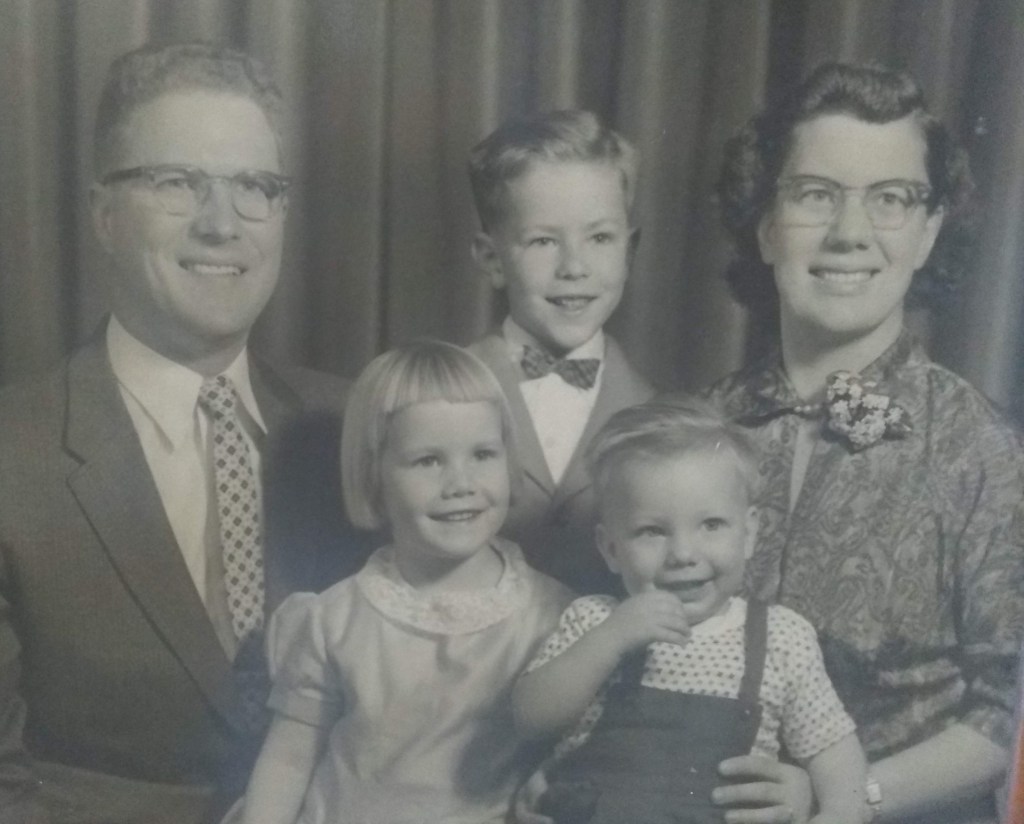
The family in 1957

Kathy joined the family fourteen months after Dave did. Then they lost a child, and finally Billy arrived. By then they had returned to Cochabamba, where Dad K directed a Bible school. They lived in the same three-story urban building that housed the denomination’s main church, a bookstore, the Bible school dormitories and classrooms, and the pastor’s apartment. The kids had nowhere to play. One of them discovered they could crawl into the attic, and they had a great time until the pastor’s wife heard and found them. She marched them into Dad K’s office to be disciplined. Dad K listened to her outrage, thanked her, and assured her he would care for the situation. After she left and he closed the door, he looked at his three children, tried to admonish them, but broke into laughter and gathered them in for a hug.

The family when I met them, 1972

On this Memorial Day, I want to honor Dad K for his courage, his resilience, his sense of humor, his delight in adventure, and his deep love for Christ and for people—loves he passed on to his children and grandchildren.

Still adventuring at my age (67)! An example to follow …
Dad K with his sons and grandson on the Inca Trail at 16,000 feet in the Andes Mountains, 1992

Dave says this:

Dad suffered in various ways as a missionary. He and Mom left their parents and siblings in an era when furloughs came only every five years. Their first term they had no vehicle. They brought up my sister Kathy and me in a small rural village in which their only running water was in the stream behind their house. After four years, Dad had to leave Bolivia and his wife and three young children for six months because of illness that couldn’t be treated in Bolivia. Mission policy dictated their children go to the mission boarding school so they wouldn’t “interfere” with their parents’ work. Dad and Mom’s marriage was very challenging, yet he never complained. Indeed, when he got Alzheimer’s and lost some of his inhibitions, he would break out in a declaration of love every time his wife entered the room.

Dad suffered, but you wouldn’t know it. The suffering didn’t enter his soul. It miraculously passed over him like water over a duck’s back. Looking back now, I realize that this might be one of the greatest ways Christ revealed himself in Dad. Christ in us, our hope of glory!

Unfading beauty

But God values inner beauty

1 Peter 3:1-12 Don’t be concerned about the outward beauty of fancy hairstyles, expensive jewelry, or beautiful clothes. You should clothe yourselves instead with the beauty that comes from within, the unfading beauty of a gentle and quiet spirit, which is so precious to God. This is how the holy women of old made themselves beautiful. They trusted God. … For instance, Sarah … You are her daughters when you do what is right without fear.

1 Samuel 16:7 People judge by outward appearance, but the Lord looks at the heart.

Last week, while taking a photo requested by the publisher of the Karis book in Brazil, I accidentally caught my face in an unguarded moment. When I saw it, I was dismayed and promptly deleted it. Is this what people around me have to look at? For the first time, I felt old.

Diane Morris, a friend since 1988 when she cared for missionary kids at our new mission agency, OC International, left a lovely little book with me after a recent visit. It’s called 31 Days of Encouragement as We Grow Older, by Ruth Myers. Diane told me, “It will be fun to know we’re reading the same thing!”

Tuesday’s topic was “Never Too Old to Change.” Ruth writes, “It’s never too late to grow in important ways. … We can pray, Lord, show me things you especially want me to overcome by growth in the three things so important to you—faith, hope, and love. We can pray for increased faith in God—for quiet trust in place of anxiety, fear, or an ‘I can’t’ feeling. Someone infinitely bigger than us is in control. More and more, Lord, may I choose to trust in you.”

Is anything more attractive than quiet, confident trust in our Lord? Teach me, Lord, to do what is right without fear. Increase my faith.

P.S. I wrote this post before reading about the Southern Baptist “Abuse Apocalypse,” here and in other accounts.

Without question, this fits with the theme of God looking at our hearts rather than appearances. Interestingly, I had just read two relevant chapters in Diane Langberg’s (a second Diane for today’s post!) must-read book, Suffering and the Heart of God, How Trauma Destroys and Christ Restores (2015). Chapter 12 is titled “Leadership, Power, and Deception in the Church and the Home”: Power has been given to us so that the world might see something of the glory of God in the flesh—full of grace and truth. That glory is evidenced in humility, love, sacrifice, and death to anything that is not like Jesus Christ. It is a hard road (p. 212).

I highly recommend Diane Langberg’s crystal-clear account of how self-deception leads to the abuse of power. In Chapter 13, “Sexual Abuse in Christian Organizations,” she says, “Some of us have faced the power of systems that name God’s name yet look nothing like him. … We forget that anything done in the name of God that does not bear his character throughout is actually not of him at all” (p. 220).

Here is how she closes the chapter:

Our God demonstrates again and again in his Word that his kingdom is the kingdom of the heart, not the kingdom of institutional structure. … God hates sin wherever he finds it and has gone to death to destroy it. Do we really think he wants us to avoid the death of an organization or institution by hiding sin, by failing to drag it into the light? He would rather see every human organization and institution fall than see such things preserved while full of sin. … When Jesus first called his disciples, to what did he call them—a profession, a creed, a task? No, he first and foremost called them to himself. I fear sometimes we have lost that call … breaking the heart of the Shepherd. He desires our primary allegiance to be love and obedience to him no matter the cost. When we pursue him above all else, the body of Christ will be the safest place on earth for the most vulnerable sheep. … May we, who are already in positions of power and influence, lead the way by falling on our faces, imploring God to make us like himself no matter the cost to our positions, our programs, our organizations, our ministries, or our traditions (pages 228-229).

We could add, I think, “or our politics.” We can’t put anything ahead of Christ in our hearts.

Healing work is an act of love, principles 6-10 by Elaine Elliott

But Jesus’ wounds heal us May 23, 2022

1 Peter 2:19-21, 24 For God is pleased with you when you do what you know is right and patiently endure unfair treatment. Of course, you get no credit for being patient in you are beaten for doing wrong. But if you suffer for doing good and endure it patiently, God is pleased with you. For God called you to do good, even if it means suffering, just as Christ suffered for you. He is your example, and you must follow in his steps. … He personally carried our sins in his body on the cross so that we can be dead to sin and live for what is right. By his wounds you are healed. [quoting Isaiah 53:4-6]

I could write a book about home health aides. Karis and I entertained each other with aide stories, many of them wonderful, and some leaving us shaking our heads. Here’s one of the latter:

It was transplant clinic day and I had multiple errands to run, so I asked our new aide to meet us in the waiting room at the hospital. She could care for Karis through the many hours we had to wait between the early blood draw and when the doctor showed up for clinic, so I could attend to my errands. I carefully explained to the aide what Karis needed, especially how important it was that she not leave her unattended, since Karis was unsteady on her feet and with her walker couldn’t navigate opening the heavy bathroom door, nor safely do all that was needed inside. “I’ll be back by 10:30,” I told her.

I buzzed through my errands and returned to the hospital earlier than I expected. The aide was nowhere to be seen and Karis was so desperate for relief she burst into tears when she saw me. “The aide left right after you did,” she told me. “I didn’t know what to do.”

We cared for her needs, which included a change of ostomy bag because the one she had was so full it was about to rupture. We had just made it back to the waiting room when the aide wandered in, chatting on her cell phone and munching fast food. When she saw me, her eyes widened, and she hastily ended her conversation. “I just stepped out for a few minutes because I was hungry,” she said.

I asked the aide to accompany me to a secluded place so we wouldn’t disturb others in the waiting room and described for her the condition in which I had found Karis and what would have happened if the ostomy bag had ruptured. I asked her why she had not followed my instructions. “But I didn’t!” she protested. “I was only gone for, like, ten minutes!”

Aides were hard to come by. Without one, I couldn’t leave Karis ever for more than a few minutes at a time. I didn’t want my relationship with this one to end before it had even begun. My spiritual director had been telling me God is easy to please because he loves us. I wanted to be easy to please too.

But Karis’s anguished face and her tears and what had almost happened, unbearable shame and mess in a public place, burned my heart.

“I’m sorry to hear you say that,” I said. “If you had told me the truth, we could have talked about giving you another chance. But I can’t entrust my daughter’s wellbeing to someone who disregards my instructions and then lies to me.”

A series of emotions crossed the aide’s face, then she said, “I understand that you are overly attached to your daughter because she’s been sick. For that reason, I have decided to forgive you for the terrible words you just said to me. But really, you need to let her grow up. Helicopter moms are not attractive.” She stood and walked away.

She decided to forgive me … ?

I called the home health agency, told them what had happened, and requested a substitute. They didn’t have anyone else, they said. It might take a few weeks for them to find another aide for us.

With the shortage of aides, did that girl get a by at the agency? Did she learn anything? I’ll never know. The experience was traumatic enough for Karis it took her a while to be able to laugh at what happened. A small illustration of Elaine’s healing principle #6:

Principle 6: Healing may take time

Among the many stories of healing in the gospels, one describes Jesus touching a blind man.  At first, the partially healed man saw people walking around, looking like trees. (Mark 8:24) The story shows that some healings take time, since Jesus’ second touch healed him completely.  Among family and friends, we have seen many healings, and most of them have taken time.  In fact, I now have a far less romanticized view of healing and realize it may take nursing care, doctor’s appointments, physical therapy, and patience.   Sitting patiently with someone ill, or simply prayer over a long period of time, is challenging. 

When my sister Sharon could not walk or raise her hands after a seizure and stroke, recovery took time.  She held on in faith and kept doing the physical therapy, and within several months had become completely well.

Principle 7: Healing ministry honors Christ and is a way of following him

When Jesus sent out his disciples, he told them to Heal the sick, raise the dead, cure those with leprosy, and cast out demons.” (Matthew 10:8) Healing became an important part of their message, bringing kingdom life through their good news. Today we still deal with life-threatening illness, bacterial infections, and psychological challenges.  We can follow Jesus’ instructions and include modern methods.

My mother-in-law had a “return to life” when headed to a life of ministry in Guatemala.  The tetanus shot given her sent her into anaphylactic shock, the doctor arrived late and found she was no longer breathing.  A shot to the heart brought her back.

Principle 8: The one healed has received a gift of healing

Some have suggested that those who are healed are the ones we should say have the gift of healing.  They received something amazing they can share with others and their testimony honors Christ and may encourage faith for others.  Those who Christ or the apostles healed became important parts of the story, evidence that something wonderful is at work in the world.  In the gospels, at least 37 individuals healed become characters we do not forget. Out of 3,779 verses in the four Gospels, 727 regard healing of physical and mental illnesses, nearly a fifth of the whole, demonstrating its importance. Our stories of healing today have similar importance in sharing Christ.

Principle 9: Simultaneously ask for healing and accept the current reality

We can always ask for people to be healed—we should have no shame or embarrassment in making the request.  When we have received positive answers, we are encouraged to keep asking for the next case.  When healing has not occurred, we still trust God’s wisdom.  As the Psalmist prayed, “My health may fail, and my spirit may grow weak, but God remains the strength of my heart; he is mine forever.” (Psalm 73:26)

This challenges us when we face chronic illness where medical research has not come up with any known cures.  In these cases, we can get discouraged and feel like it is hopeless to ask.  But faith keeps asking and stays alert for any help or aids to improvement, even small improvements.  We persist in prayer looking for breakthroughs, and as people exercise their trust in God in the middle of illness and suffering, they give him glory. 

Principle 10: Always be grateful

We can remain grateful however God chooses to act.  We remember that only one of ten lepers came back to offer thanks, but Jesus commended him. (Luke 17:17,18) We can say under the threat of suffering, If we are thrown into the blazing furnace, the God whom we serve is able to save us. He will rescue us from your power, Your Majesty. But even if he doesn’t…” (Daniel 3:17,18) “Even if he doesn’t” answer when we want and what we want, we will still be grateful.  And, unsurprisingly, gratitude has a healing effect.

My ten principles have emerged from my experiences.  Doubtless others can improve or add or change these to create a theological explanation of healing for our time that avoids the extremes of “healing doesn’t happen” versus “healing must happen right now if we have faith—no doctors needed!”

Karis’ life illustrates the principles:  she received cutting edge medical interventions which preserved her life far beyond expectations; when her suffering reached a critical point she received her entry into heaven; thousands of people became engaged in praying for her; many joined with faith when things seemed discouraging; clearly Karis did not have any fault in having a life-threatening birth defect and her story awakened compassion; some of her hospital stays were incredibly long, but she recovered; her story is an announcement of the gospel at work in a community of believers; her life became a gift of healing, a sign of God at work; many (like myself) never gave up hoping for healing while accepting reality; and Karis expressed joy and gratitude in a way that blessed so many of us.

I now know that healing is normally not flashy.  Instead, it is based on love responding to need, something Karis’ family certainly offered her.  Over and over, we are told that Jesus was moved with compassion, and his concern led him to heal.  It was one of the strongest characteristics of his ministry. Healing work is an act of love.  It is a way of loving our neighbor as ourselves.  Healing is far more about love than about power—love is at the root of this gift.  I think I liked the idea of the gift because it seemed glamorous and powerful.  Now I think of healing as humble, patient, and quiet, motivated by love.  We saw that at work in Karis’ story.

I (Debbie) will add that we saw God’s miraculous healing in Karis’s life so many times I lost count. In 2009, for example, doctors told us four times to call our family together (from Brazil, Italy, and several places in the U.S.) to say goodbye to her, because there was nothing more to do; this was the end. Each time God intervened, and Karis recovered. She was not surprised by this. “God still has work for me to do here on earth,” she said. “Why were all of you so worried? It’s nice to see you. But go back now to your own work.”

Compassion always matters: Principles of Healing by Elaine Elliott, Antigua, Guatemala

But God will judge the world May 19, 2022

1 Peter 2:11-25 Dear friends, I warn you as “temporary residents and foreigners” to keep away from worldly desires that wage war against your very souls. Be careful to live properly among your unbelieving neighbors. Then even if they accuse you of doing wrong, they will see your honorable behavior, and they will give honor to God when he judges the world.

A sweet, unexpected thing happened. I walked outside to get in my car and a stranger walking by spoke to me, saying, “I always like walking by your house because of your heart-shaped tree stump. It encourages me.” And her dog pulled her away.

The stump left from our beloved dead tree is heart-shaped? I hadn’t noticed.

My neighbor’s comment healed some of my sadness at having to cut down our aged beloved tree. Her “honorable behavior” blessed me. I don’t know exactly where she lives. I’m watching for her so I can meet her properly and thank her.

When I walked out this morning to take a photo of the stump, I noticed a thistle growing beside it. Thanks to all the rain we’ve had, weeds are flourishing. I decided the thistle illustrates the heart-weeding I need to do of the “worldly desires that wage war against our souls.” So for the moment, I left it in the ground, and in the photo, to remind me to do both kinds of weeding.

Thistle vs. heart-stump. “Worldly desires” vs. “honorable behavior” flowing from hearts filled with God’s love. Peter offers twelve indicators of honorable living. Look up the passage and count them!

I want to focus today on the last one, “you have turned to our Shepherd for healing of your wounds and for spiritual protection,” in verses 24 and 25. I’ll do this by sharing with you ten thoughtfully penned Principles of Healing recently sent to me by my sister-in-law Elaine Elliott. Check out Elaine’s Art and Scripture posts. You’ll love the way she illustrates Scripture with inspiring art from a wide variety of artists.

Elaine’s explanation is longer than what I usually post, but so worth your consideration. I’ve bolded the principles to help you return to them when you need them. I’ll post five today and five next time.

As one of Karis’ aunts, I watched her life (usually from afar) with wonder. The fact that she survived beyond her first month made her a miracle baby. The sacrificial care Debbie gave to her repeatedly prolonged her life. When the family moved to Brazil as Karis seemed completely healed and well, this marked another miracle.  When her health declined and eventually led to her transplants, we followed the ups and downs with prayers for her. When in a medically induced coma after the first transplant failed, I assumed this was the end of the story so was astonished when she traveled to Brazil before transplant #2.  Her example of patience with pain and determination to enjoy life despite her limits served as an inspiration.

For me, Karis’ life, and the book Karis: All I See Is Grace remains an inspiring story of healing despite the messy medical procedures, her suffering, and her ultimate death.  My own journey to understand healing explains why.

The following ten principles have emerged for me over the years. 

Principle 1: Accept and use wisely the advances in medical science

During my freshman year of college, I heard for the first time about the baptism of the Spirit as a post-new-birth experience which led to increased gifting and power.  I was immediately on-board and immersed myself in this exciting new way of being a Christian.  Of all the gifts, healing struck me as the most glamorous, and I read books by contemporary healers hoping to receive this gift.

My immediate thought as a healthy person was to pray that my eyes would heal, thereby removing the need for contact lenses or glasses.  When this did not come about after about three months of unnecessarily poor eyesight (while in college squinting at the blackboard!), it suddenly struck me that I was ignoring the obvious:  if God gave mankind wisdom to come up with something as ingenious as contact lenses, then I should accept that healing could come through medicine. 

This became an important principle for my understanding of how God works, teaching me we must simultaneously pray and trust God as we collaborate with medicine and doctors. We should not be like King Asa of whom it says he “developed a serious foot disease. Yet even with the severity of his disease, he did not seek the Lord’s help but turned only to his physicians.” (II Chronicles 16:12) Nor do we want to be like the woman Jesus healed who “had suffered a great deal from many doctors, and over the years she had spent everything she had to pay them, but she had gotten no better. In fact, she had gotten worse.” (Mark 5:26)

God has used scientific advances to transform treatment of leprosy, such a scourge throughout the Bible. Identified as caused by bacteria in 1873, the first disease so recognized, the accidental discovery of antibiotics in 1928 led to an effective drug in the 1940s and became multi-drug therapy by the 1980s. The disease has nearly been eliminated. I think of how important it was for Jesus to heal lepers with no cure available then or for nearly 20 more centuries. For new cases today healthcare workers diagnose the disease and prescribe some pills. This all can be celebrated as a gift from a wise God who shares his wisdom with curious people.

Using the wisdom regarding preventative illness correlates well with some of the sanitation, dietary, and admonitions to rest in the OT law.  We do well to eat well, exercise, rest, and reduce our stress—all things consonant with living in the Spirit.

Principle 2: Accept the possibility of death as God’s way of healing

I learned another principle when in my second year of college, we went to pray for a girl about eighteen years old whose family went to our church. The girl was so developmentally disabled she was confined to a crib, which I found horrifying. I prayed diligently for her healing. One afternoon I was so convinced she had been healed that it shocked me completely when my grandmother told me she had just died.

After the shock subsided, I suddenly realized, “She is completely healed in heaven!”  Ever since, I have held the strong belief that God, who has the power of life and death, knows when it is best for someone ill to be with him, relieved of their suffering. When things are uncertain, we know death can be an acceptable outcome.  As Paul says, “when our dying bodies have been transformed into bodies that will never die, this Scripture will be fulfilled: ‘Death is swallowed up in victory.  O death, where is your victory? O death, where is your sting?” (I Corinthians 15:54,55) We may grieve, but we have hope.

Principle 3: Prayer close by and from a distance both matter

Often those praying for healing lay hands on someone or anoint with oil or remain present in prayer. But prayers from far away matter too. As the Roman officer who trusted Christ’s authority said, “Just say the word from where you are, and my servant will be healed.” (Matthew 8:8) Our family experienced a profound healing of my sister Bev who had convulsions at the age of 18 while in Mexico. She went into a coma and the doctors predicted either death or brain damage. I learned about her situation while far away in Tucson but prayed for her as did many friends far and wide. She opened her eyes, but at first seemed like a small child. By the time I saw her several months later at Christmas time, she had partially recovered—perhaps to grade school level—but by the following fall went to the university with no ill effects and no one aware of her severe illness unless she told them. Though far away, I felt very present to her through prayer as did many others. It convinced me my prayers mattered.

Principle 4: We can have faith for others even when they lack faith

Another principle is that while it may be helpful for the sick person to have faith for themselves, it also works for us to have faith for others. It is unnecessary to guilt anyone about their illness or to demand they exercise faith. The disciples praying were the ones exhorted that their faith had been inadequate when they failed to heal the epileptic child. (Matthew 17:19,20) 

Someone I knew who struggled with alcoholism did not have much faith for change.  We who cared provided the faith that this challenge could be overcome and rejoiced when that happened.

Principle 5:  Exercise compassion rather than ascribing sin or judgment as the cause of illness.

We do not have a right to explain illness as God’s judgment for sin. When the disciples saw a blind man, they asked “Why was this man born blind? Was it because of his own sins or his parents’ sins?” “It was not because of his sins or his parents’ sins,” Jesus answered. “This happened so the power of God could be seen in him.” (John 9:2,3) God’s power then proceeded to heal him.

Even if someone contributed to their own illness in some way, including sin, Jesus is present to heal, not to condemn. Jesus wasted no time castigating the paralyzed man brought by friends on a mat but pronounced forgiveness and told him to stand. We too can receive forgiveness and forgive others as we have been forgiven, a critical part of inner healing which leads to physical changes.

I remember a woman telling me “Depression is just sin.” But traumatic events that create depression often are not the fault of the one suffering. Seeing trauma and depression healed, I am convinced that loving presence helps transform painful experiences into something full of wisdom. Compassion always matters.

Hold on a little more

But Jesus is the cornerstone of his house

1 Peter 2:4-10 You are coming to Christ, who is the living cornerstone of God’s temple. … And you are living stones that God is building into his spiritual temple. What’s more, you are his holy priests. Through the mediation of Jesus Christ, you offer spiritual sacrifices that please God. … You are a chosen people. You are royal priests, a holy nation, God’s very own possession. As a result, you can show others the goodness of God, for he called you out of the darkness into his wonderful light.

Genesis 18:18-19 All the nations of the earth will be blessed through Abraham. I have singled him out so that he will direct his sons and their families to keep the way of the Lord by doing what is right and just. (See Galatians 3:8-9, Acts 3:25.)

Genesis 22:18 [After saving Abraham’s son by supplying a substitute sacrifice, God said] Through your descendants all the nations of the earth will be blessed.

1 Corinthians 3:16 Don’t you realize that all of you together are the temple of God and that the Spirit of God lives in you?

It’s fun to feel loyalty to a particular country or tradition. Our family will probably always root for Brazil in the World Cup. We’ve been there; we have the t-shirts. The Brazilian flag evokes for us layers of experience from living in Brazil for twenty years. Our children grew up there. Brazil is part of our hearts.

But we’ll get in trouble if we place Brazil in the center of our affections. That sacred space belongs only to God. And our heavenly Father has no favorites (not even Brazilians!). He cares equally for each of his children, as Peter already reminded us (1:17).

Now, in just a few words, Peter references the whole history of God with the Jewish people, descendants of Abraham whom he called his special possession (the Old Testament cites this name at least fifteen times), called for a special purpose: to bless all the nations of the world.

But Peter turns that history on its head by saying believers in Jesus are now God’s special possession, chosen with the same purpose as Abraham and his descendants: to bless the nations. Because God loves the world (John 3:16), Jesus became the once-for-all-time sacrifice for all people. Through Jesus, God revealed his goodness and his love, not for any one type of people but for everyone.

And Peter tells us Jesus is the cornerstone of a new temple, not the one in Jerusalem. And believers in Jesus are living stones, together being built into the place where God dwells by his Spirit. A cornerstone is the first stone set in the construction of a masonry foundation. All other stones are set in reference to this stone, thus determining the position of the entire structure.

So, when people claim to be believers in Jesus yet elevate themselves over others, they are taking God’s name in vain. They have lost their connection to the cornerstone.

We must not dishonor the name and goodness of Christ by confusing earthly loyalties with the Gospel. Or think Jesus is all about us. He calls us to bless those different from us. And show them God’s goodness.

After this I saw a vast crowd, too great to count, from every nation and tribe and people and language, standing in front of the throne and before the Lamb … (Revelation 7:9).

Take a minute to savor the text of this song, as with me you examine your own heart, and pray today for the victims’ families in Buffalo, the ongoing tragedy of Ukraine, and people in your own city suffering violence of all kinds–some of it perpetrated, unconscionably, in the name of Jesus.