“Here I raise my Ebenezer” by Bonnie Budzowski, author

But God wants us to remember and tell how he has helped us

1 Samuel 7:12 Samuel then took a large stone and placed it between the towns of Mizpah and Jeshanah. He named it Ebenezer (which means “the stone of help”), for he said, “Up to this point the Lord has helped us!”

[Debbie] I’m delighted to introduce you to Bonnie Budzowski, who offers not just a blog post but a whole book dedicated to noticing, remembering, and sharing with others what God does in our lives. I asked her to do this for Thanksgiving since it’s such a perfect time to begin a lifestyle of intentional honoring of the Lord in this way. As always, I would love for you to share your “But God …” story with me and with the readers of this blog.

Here’s Bonnie:

Sometimes I purchase a greeting card that I’m reluctant to send. It might be the perfect picture, the sentiment, or both that I want to hold onto. Is it a sin to hoard a greeting card?

Once such card features a photograph of a young girl reading from a book. The girl looks to be about six years old. She is happily reading to a dog that is bigger than she is. The dog sits with rapt attention, his pink tongue hanging out of his dog-smile.

The sentiment below the photo is a quote attributed to the poet and activist Muriel Rukeyser: The universe is made of stories, not atoms.

For more than fifteen years, my job as principal of Gravitas Press was to act as a story whisperer, to help people find and articulate their stories in compelling ways. Even before those years, I knew I would one day write a book chronicling the stories of God’s surprising grace in my life. I knew the project would wait until I was near retirement.

What I didn’t know was that in the process of writing the book, something new and fresh would once again surprise me. I would discover a spiritual discipline that is largely missing in people who are otherwise devout Christians.

I discovered that God’s people have always intentionally created memorials to commemorate God’s acts in their history.

For example, following encounters with God and his promises, Abraham built altars. Jacob anointed the stone he used as a pillow the night he saw angels climbing a ladder between heaven and earth. Joshua instructed representatives from the twelve tribes of Israel to each contribute a stone to create a memorial to mark the miraculous crossing of Jordan River. Samuel set up a stone memorial to mark the time God sent a display of raucous thunder to defeat the Philistine army. Samuel called his memorial ebenezer, a word meaning “stone of help.” The psalmists continued the tradition, using words rather than stones. And Jesus commanded we practice a meal of remembrance.

What’s the purpose of this pattern of remembrance? It’s to ground us in the biblical story of God’s work and repeatedly draw us back to trusting in God’s faithfulness. Ebenezer Chronicles: The Missing Spiritual Practice invites you to consider what might happen if you added a practice of intentional remembering into your prayer life, around your table, and in your everyday conversations. It’s also a collection of stories of God’s amazing grace in my broken life. It’s a book in which God is the hero.
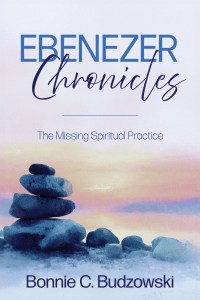
Ebenezer Chronicles, The Missing Spiritual Practice is available at Amazon.com. To read the first chapter, visit me here and learn about workshops for your group, including a virtual book club.

“Here I raise my Ebenezer …” Come Thou Fount of Every Blessing, sung by Chris Tomlin

Love expels fear

But God’s Spirit eases our fears

Haggai 2:5 The Lord of Heaven’s Armies says] “My Spirit remains among you, just as I promised when you came out of Egypt. So do not be afraid.”

Exodus 23:9 You must not oppress foreigners. You know what it’s like to be a foreigner, for you yourselves were once foreigners in the land of Egypt.

See also: Leviticus 19:9-10, 33-34; Numbers 15;15-16; Deuteronomy 10:18-19, 24:14-18, 27:19; Psalm 146:9; Jeremiah 7:5-7, 22:3; Zechariah 7:10; Malachi 3:5; Matthew 25:35-40; Hebrews 13:2

Read this poem top to bottom, then bottom to top.

Refugees

by Brian Bilston

They have no need of our help

So do not tell me

These haggard faces could belong to you or I

Should life have dealt a different hand

We need to see them for who they really are

Chancers and scroungers

Layabouts and loungers

With bombs up their sleeves

Cut-throats and thieves

They are not

Welcome here

We should make them

Go back to where they came from

They cannot

Share our food

Share our homes

Share our countries

Instead let us

Build a wall to keep them out

It is not okay to say

These are people just like us

A place should only belong to those who are born there

Do not be so stupid to think that

The world can be looked at another way.

(Now read from bottom to top.)

The Kingdom of Jesus, Porter’s Gate

This is what God says is good

But God’s Spirit fills us with justice, strength, and boldness

Micah 2:7, 3:8 Should you talk that way, O family of Israel? Will the Lord’s Spirit have patience with such behavior? If you would do what is right, you would find my words comforting.But as for me, I am filled with power— with the Spirit of the Lord. I am filled with justice and strength to boldly declare Israel’s sin and rebellion.

Micah 6:8 The Lord has told you what is good, and this is what he requires of you: to do what is right [act justly NIV], to love mercy, and to walk humbly with your God.

At our May annual event, Sisters Celebrating Diversity focused on God’s requirements of us in Micah 6:8. Participants were each given a bracelet that says, “Do justice, love mercy, walk humbly.” I wear mine often. It reminds me to walk into any situation I may encounter with those three principles in mind. It reminds me to ask the questions, from God’s perspective, what does justice look like here? Am I conscious of his merciful heart? Is my chief aim that he and his ways be honored, including the lives of anyone I interact with, each one beloved by God?

Can I do this on my own? No way at all. Only through the Holy Spirit’s guidance and grace.

Sometimes acting justly requires naming wrongdoing, that which hurts God’s heart and other people, so that it can be dealt with and injuries healed. Through the Holy Spirit, Micah found the courage, wisdom, and boldness to do this. A difficult task indeed, and no easier now than it was then. The false prophets were the ones saying, “Hey, everything is OK, nothing to worry about—God’s on our side” (Micah 3) while they made decisions based on bribes and twisted justice for their own profit and idolized their own comfort and power and success.

Yet the Spirit kept reminding beleaguered Micah—and through him, us—that God longed to heal his people and restore their land. That was the goal, like an oncologist who must locate and name a cancer to treat it appropriately.

And he reminds us today that no matter what anyone says, these three matter to God: justice, mercy, and humility.

God said to Micah, “My people’s wound is too deep to heal,” (1:9) and devastation was coming. But later, he said, “But you, O Bethlehem Ephrathah … a ruler will come from you. … And he will stand to lead his flock with the Lord’s strength, in the majesty of the name of the Lord his God … and he will be the source of peace” (Micah 5:2-5; Matthew 2:6).

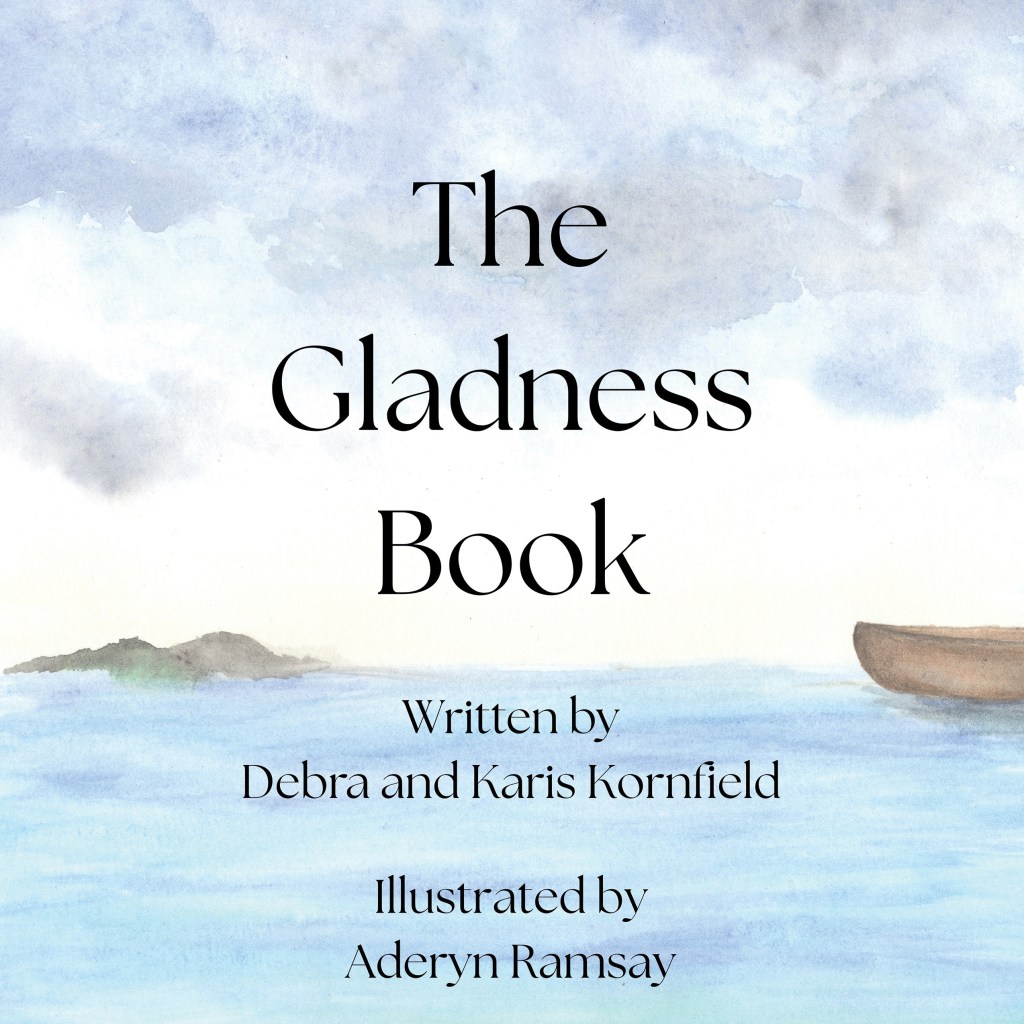
Just out! The Gladness Book: Fun for Kids who Love to Write

This child has just been born!

Available now for kids who love to write.

Karis is the “teacher” in this unique writing book for kids age 9-12. It’s organized around excerpts from an autobiography Karis wrote when she was thirteen. If kids follow the prompts, by the end they’ll have written their own autobiography, as well as stories and poems. After each entry by Karis, questions are offered at two levels, for beginners and for writers who are more advanced. Aderyn’s mice illustrations add to the fun.